EY helps clients create long-term value for all stakeholders. Enabled by data and technology, our services and solutions provide trust through assurance and help clients transform, grow and operate.
At EY, our purpose is building a better working world. The insights and services we provide help to create long-term value for clients, people and society, and to build trust in the capital markets.
Navigating the future of banking: AI and risk management
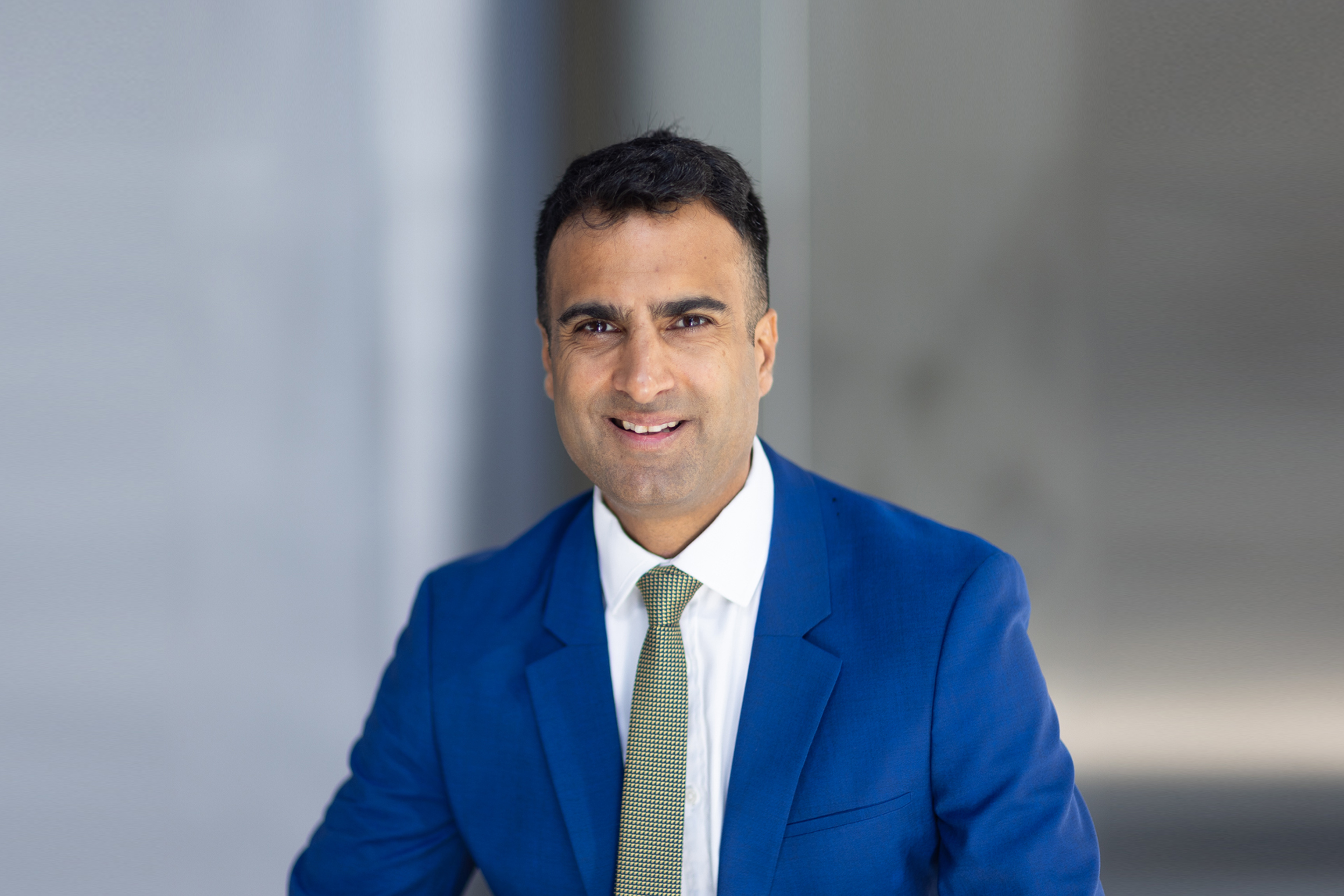
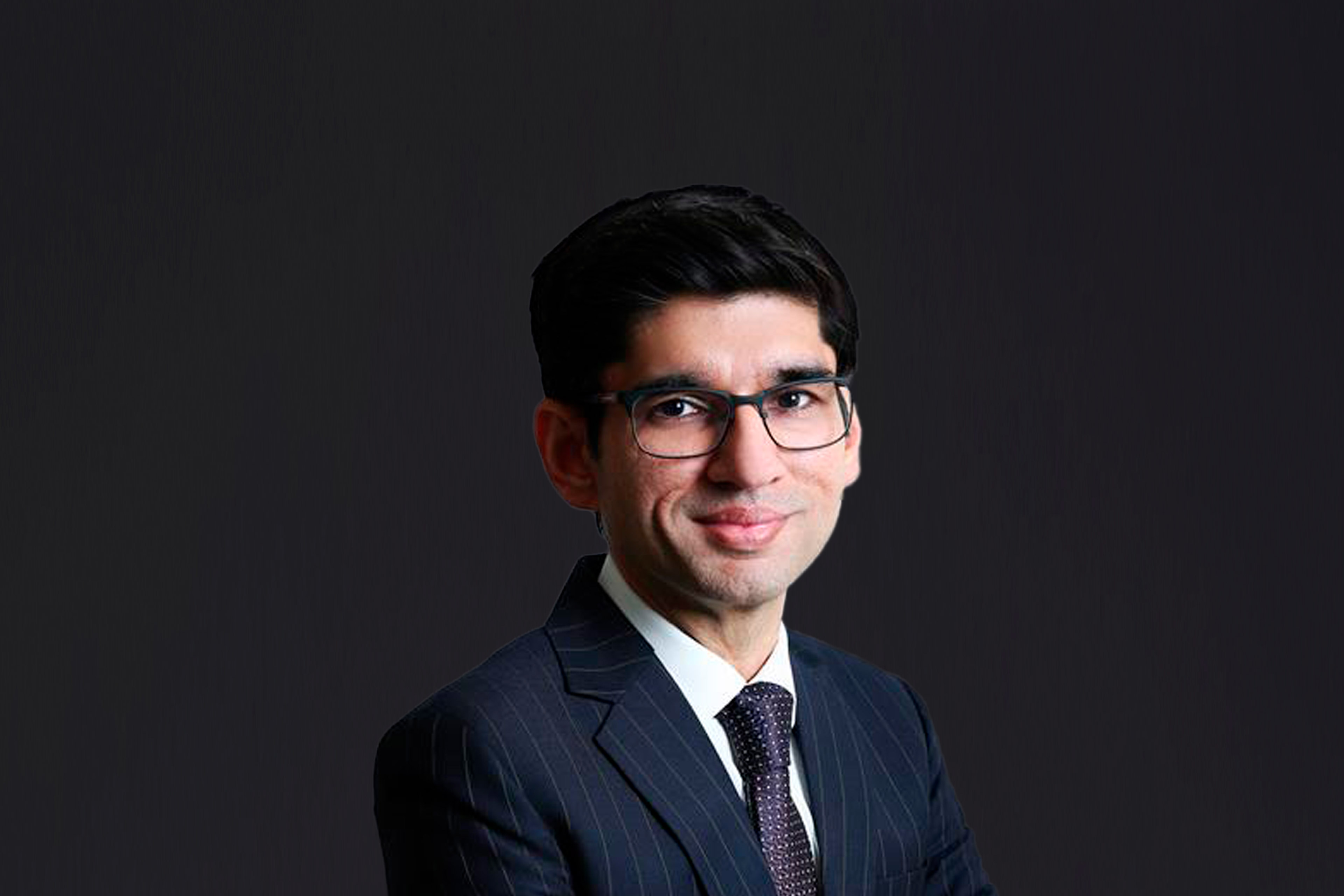
In this episode, Mayur Pau and Khurram Ali explore how AI is transforming risk management in banking, highlighting its impact on fraud detection, credit scoring and regulatory compliance in the Middle East.
The MENA Financial Services podcast series explores the latest trends, emerging technologies and key insights shaping the financial services industry in the Middle East and North Africa (MENA). Join Mayur Pau, EY MENA Financial Services Leader, as he engages in thought-provoking conversations with MENA leaders, offering insights on the transformative changes reshaping the financial services landscape in the region.
In this episode of the MENA Financial Services podcast, Mayur Pau and Khurram Ali discuss one of the most critical aspects of modern banking, risk management, where artificial intelligence (AI) is becoming a key feature. It’s no longer just about human expertise and historical data; AI and machine learning (ML) are revolutionizing the way banks assess and mitigate risk. From fraud detection to credit scoring and regulatory compliance, advanced analytics are changing the game. Join us as we explore the latest trends and insights that are defining the future of financial services in the region.
Key takeaways:
Transforming risk management from reactive to proactive systems in MENA banks, AI is playing a key role.
Blending regulatory innovation with cultural specificity, the region emphasizes ethical guidelines.
Presenting challenges to AI adoption, legacy systems require modernization efforts.
Combining AI insights with human judgment for critical decisions, hybrid governance is essential.
Digital-native banks are likely to outpace traditional institutions in adopting advanced risk tools.
Prioritizing data unification, ethical upskilling and co-regulation is crucial for MENA banks embarking on their AI risk journey.
EY Host – Mayur Pau:
Hello! Welcome to the EY MENA Financial Services podcast, where we explore how banking is evolving in the Middle East.
I’m your host Mayur Pau, and I lead our MENA Financial Services practice.
Risk management has always been at the heart of banking, but the speed and complexity of financial threats today demand new solutions. As AI [artificial intelligence] continues to evolve, the real challenge isn’t just about adopting technology, it’s about ensuring it’s used responsibly and effectively. It’s evident that the future of risk management will be data-driven. So, where is AI and risk management in banking headed in the future?
I’d like to welcome Khurram Ali, one of our MENA Risk Consulting Partners, who focuses on the risk agenda at banks to the podcast. It’s great to have you with us today Khurram
EY Speaker – Khurram Ali:
Great to be here Mayur.
Pau:
So Khurram, how is AI redefining the core philosophy of risk management in MENA banks compared to traditional models?
Ali:
That’s an interesting question, Mayur. AI is indeed shifting MENA banks from reactive, rules-based frameworks to proactive, predictive systems that integrate real-time data and unstructured inputs, such as social media sentiment and geopolitical trends.
Traditional models heavily relied on historical financial metrics, often missing out on emerging risks such as climate-related credit risk and supply chain disruptions. For example, UAE banks now deploy NLP [natural language processing] to analyze Arabic-language news for early warnings of market volatility, aligning with EY’s observation that MENA institutions prioritize "anticipatory risk mitigation" over static compliance.
Saudi Arabia’s SAMA [Saudi Central Bank] uses AI to simulate oil price shocks under Vision 2030, reflecting a broader regional shift toward scenario-based stress testing, as was recently highlighted in the EY GCC Banking Report.
Pau:
You have highlighted some significant developments in the risk space in the UAE and Saudi Arabia resulting from effective uses of technology. In your view, how does the MENA region's approach to AI-driven risk management differ from trends observed globally?
Ali:
What’s distinct about MENA’s approach to AI in risk management is its blend of regulatory innovation with cultural specificity. For example, the UAE’s AI Ethics Guideline mandate explainability for high-stakes AI tools, such as credit risk models, ensuring transparency in decisions that impact loan approvals and market exposure. Another example, Saudi Arabia’s Vision 2030 prioritizes AI adoption to address risk tied to economic diversification, a very key strategic agenda including simulating the impact of oil price volatility on liquidity buffers.
We very well understand the rationale of risk-centric AI governance models adopted in MENA, for example, the central banks and other regulators require AI audits for anti-money laundering (AML) systems to ensure compliance with both Sharia compliance and Basel requirements. This contrasts with the EU’s one-size-fits-all AI Act, as MENA regulators use sandboxes to test AI-driven fraud detection models against regional threats, such as hawala-linked financial crimes.
Pau:
That’s great insights on the regulatory and the governance side of things, Khurram.
If we pivot to technology, you know the technology solutions at banks are currently undergoing major transformation in some places. Is fragmented legacy infrastructure a bigger barrier to AI adoption than skill gaps? And if so, how can banks overcome some of these challenges?
Ali:
Well, I would say yes. While talent shortages persist, legacy systems continue to pose significant challenges. As you know, we have worked with many of our clients, and EY’s analysis shows that MENA banks allocate substantial IT budgets to modernize as old as 40 years old core platforms, with cloud migration dramatically reducing processing times.
Solutions that are being considered include:
Public-cloud partnerships.
Regulatory sandboxes, for example, Bahrain’s "AI Accord," lets banks test tools without overhauling the infrastructure.
Pau:
Yeah, I fully concur with you on the legacy platforms point posing a challenge, and it’s been fascinating to work with our clients over the past five to 10 years to shape their future with modern technology.
But, how do you think regulators will balance innovation with accountability in AI-driven risk models, especially in cross-border banking?
Ali:
That’s a fantastic question.
The UAE’s risk-tiered approach offers a very practical blueprint: high-impact AI, for example, credit scoring, undergoes mandatory audits per central bank guidelines, while low-risk chatbots face lighter oversight. EY advocates GCC-wide sandboxes, like SAMA’s 2024 FinTech hub, which harmonizes cross-border testing of liquidity models.
For cross-border banking, EY emphasizes “ethics by design” certification to align with frameworks like Singapore’s AI governance model, ensuring transparency without stifling innovation.
Pau:
That’s great insights, from the region and further afield, Khurram.
How is the adoption of AI in risk management reshaping financial stability across MENA, given its potential and systematic risks?
Ali:
AI enhances stability through real-time systemic monitoring, but introduces risks, such as third-party dependency. EY warns that over-reliance on external AI vendors could amplify crises, as evidenced by the 2024 vendor-related defaults at one of the UAE banks.
Mitigation strategies that could be considered include:
Algorithmic diversity mandates such as Qatar’s draft AI Stability Laws
Explainable AI: the UAE’s requirement for auditable fraud detection models
Pau:
And Khurram, if we look to the future outlook and strategic priorities, will MENA’s digital-native banks outpace traditional institutions in adopting cutting-edge risk tools?
Ali:
In short term, yes. Digital banks leverage AI agility, while traditional banks lag in retiring legacy systems. However, hybrid models combine scale with hyper-personalization, capturing millennial markets — a trend EY calls “the phygital imperative.”
Pau:
I like that term Khurram, “phygital imperative.” Will AI eventually replace human judgment in critical risk decisions?
Ali:
Well, I don’t think so. I think augmentation is the key. We note that some banks in MENA flag 95% of fraud cases using AI but it still requires human review for some areas, for example, Sharia compliance.
In my view, “hybrid governance” will be important, critical and the way to go. Where AI informs decision, but committees and individuals retain veto power for ethical and market nuances.
Pau:
I tend to agree with you, with some form of “hybrid governance” Khurram. If you had to prioritize three actions for MENA banks starting their AI risk journey, what would they be?
Ali:
That’s a great question Mayur. I would say:
Data unification: break silos to enable cross-functional AI.
Ethical upskilling: partner with universities for compliant AI certifications.
Co-regulation, join GCC initiatives like Bahrain’s AI Accord to shape standards.
Pau:
Thanks, Khurram, for the great perspectives that you have shared with us today. We covered a range of topics from governance, technology and innovation, and thank you so much for an insightful discussion.
AI will continue to pose many challenges and opportunities for the banking industry, and I’m sure we’ll continue to have many of these conversations while supporting our clients. I appreciate your time today.
Ali:
I’m sure we will. Thanks, Mayur.
Pau:
That’s it for today’s episode on “Navigating the future of banking: on the AI and risk management” topic. Stay tuned for our next episode in the MENA Financial Services podcast series available on ey.com, where we’ll dive deeper into other financial services topics. Thanks for listening.