


EY refers to the global organization, and may refer to one or more, of the member firms of Ernst & Young Global Limited, each of which is a separate legal entity. Ernst & Young Global Limited, a UK company limited by guarantee, does not provide services to clients.
Recent Searches

"Czech businessmen are now building regional champions," says Petr Kováč, a mergers and acquisitions matador at EY. In an interview, he assesses the market mood and compares Czech entrepreneurs with their Western counterparts.
Czech businessmen are not afraid to go abroad, where they buy up competitors and create multinational companies. And the trend is growing.
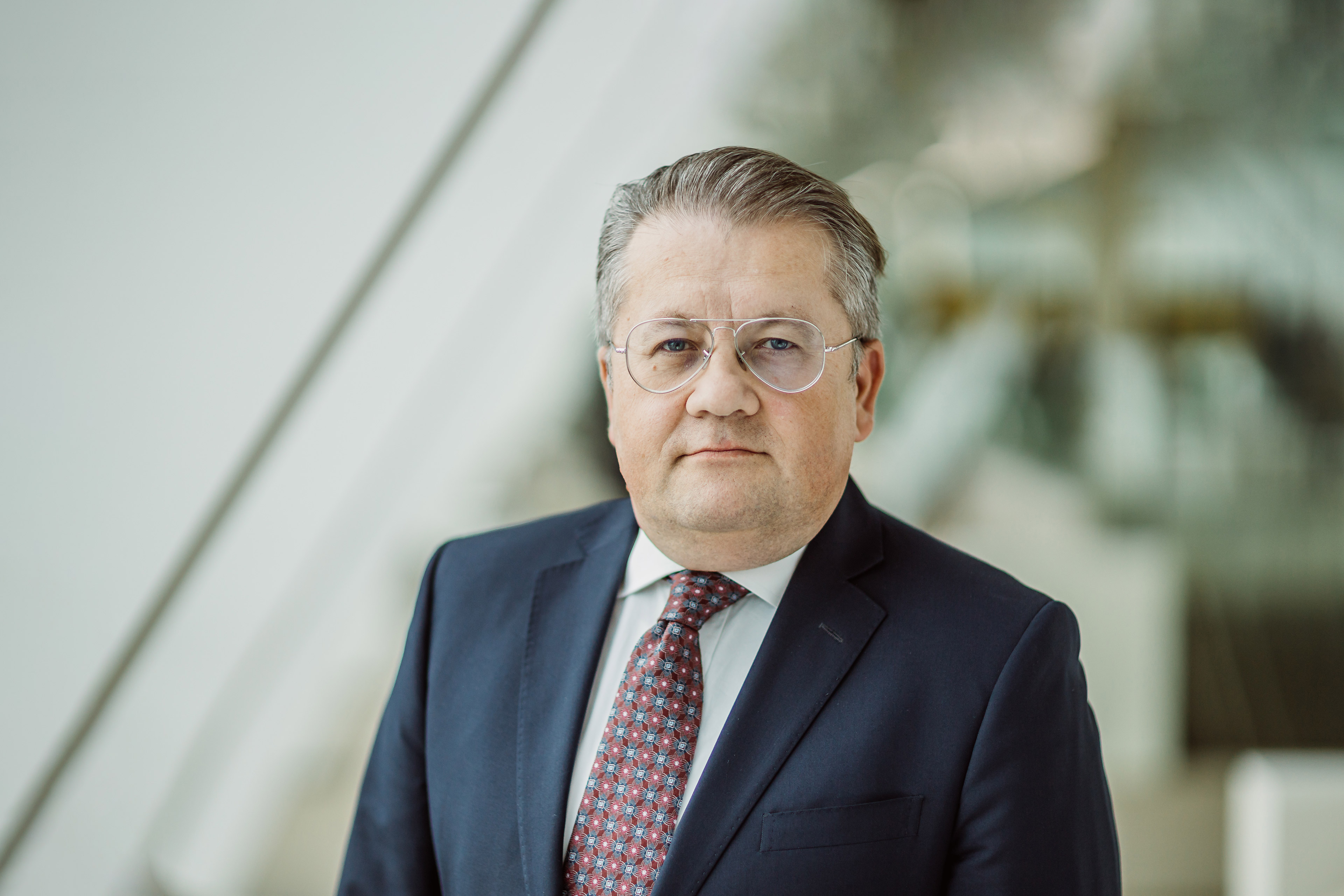
"Maybe a new paradigm is emerging here in the Czech Republic, where Czech business groups such as EPH, Sev.en, Vafo and others are simply saying: 'We are not small guys, we have ambitions that go well beyond the Czech Republic'," says Petr Kováč, a director in EY Czech Republic's Strategy and Transactions team who has worked in the industry for almost 30 years, in an interview with SZ Byznys.
"Maybe they don't say it as loudly as the Poles or Hungarians, for example, where it is a national feeling. Here, the private sector is the driver of activity and the positive results are obvious."
Why has the Czech Republic become less attractive to foreign investors in the last few years?
This is inaccurate information that has been repeated recently. The fact is - and it is easy to prove - that the activity of selling and buying companies is still very high. There are some fluctuations, but it is still an upward trend. We are talking to hundreds of companies a year and there is not really a flight of investors. There are a lot of transactions going on and they are big.
What has changed is that there has been a huge increase in Czech capital, or Central European capital in general, and a lot more deals are happening at home. There is just a clear rule of thumb that investors who invest in assets within a 400 to 500 km radius have much better starting conditions to buy a good company at a good price.
And does the property market prove this, with foreign funds and institutional investors leaving and being replaced by local, mainly billionaire groups?
From my point of view, real estate transactions are not like mergers and acquisitions. Real estate is often part of M&A transactions, but real estate investing is a different category, with different rules and results.
Over the last 18 to 24 months, however, there has been a big increase in the amount of money being managed in funds in the Czech Republic, and a significant portion of these funds are real estate funds. These are qualified investor funds, but also retail funds. So there is a mobilisation of local capital, which is simply more efficient in transactions.
How many deals are you currently working on? And try to estimate how many are happening in the whole Czech market?
There are no exact numbers to estimate the whole market, because the main part of the market is in small and medium-sized transactions, which often don't even make it into the statistics or the details are not published. They are simply "under the radar", in the lower tens of millions of euros.
However, the activity is very high. Our team is currently working on more than 20 projects at various stages of development. I am talking about mandates under contract. The EY M&A team is one of the top 3 largest M&A advisory firms in the Czech Republic and I estimate that a number of other advisors are also quite busy.
In what sectors are firms selling?
It's all sorts of sectors: new economy, old industrial economy, e-commerce, and more often we also deal with transactions in the area of distressed assets, i.e. the sale of companies in financial difficulties. The significant change is that we are no longer just selling, but quite a large number of transactions are about assisting in the purchase of companies.
What is the motive for buying companies?
It's a new quality in the market. We have transformed ourselves from a territory where historically it was mainly selling to foreign investors. Generational changes have run and are running, and this generates investment opportunities for buyers. That will always be the case and it has its own dynamics.
But there are two new phenomena. With sales, it's no longer the case that when someone is 70 years old, they start selling because they don't have a successor. But we see an interesting segment here where people are in their 40s, they've built a company to a certain size that they've been able to get to on their own. And either they look for an investor to take the company to the next level, or they sell the company at 40 and go into a completely different area.
The other trend?
Perhaps even more interesting is the building of not only Czech but also regional champions. It is not only the big ones like Daniel Křetínský's EPH or PPF Group's InPost or Pavel Tykač's Sev.en Energy, but there are many more. In terms of foreign expansion, according to statistics, here in the Czech Republic we outperform the Poles, Hungarians and other neighbouring countries in relation to the size of the economy.
Take, for example, the building of the UCED group, which is the energy arm of Pavel Hubáček's Creditas group. They have been building it for 10 years, but they have already created a group that is very visible on the map. It's not only in the Czech Republic, but also in Slovakia, Poland... We had the opportunity to assist them in this and I'm really happy about it. But it is not the only group that is growing dynamically through acquisitions.
Hubáček also financed its expansion mainly with bonds sold to retail investors. But unlike, for example, the solar group Solek, the expansion has been successful so far?
Yes, that's a completely different story. Others are, for example, the pet food producer Vafo or the chemical group Draslovka. As an M&A advisor, we are in a new situation because we used to be asked to advise in the sense of "help us sell", so now we assist in strategic considerations on how to develop companies and build their value.
Building international champions is a phenomenon of the last three or four years. What do you think is behind this?
The Czech environment is relatively conservative, which can be demonstrated, for example, by the savings rate. However, we are not unsuccessful.
I see a huge energy here in the sphere of people who are not afraid and are building their businesses beyond the Czech Republic. They are young and old businessmen, it is not differentiated by age. Maybe a new paradigm is emerging here in the Czech Republic, where Czech business groups like EPH, Sev.en, Vafo and others are simply saying, "We are not small guys, we have ambitions that go well beyond the Czech Republic." Maybe they don't say it as loudly as the Poles or Hungarians, for example, where it is a national sentiment. In our country, the private sector is the engine of activity and the positive results are obvious.
You talk a lot to companies. Germany, our main partner, is in crisis. How do you perceive the current mood among businessmen?
One thing is that the mood here in the Czech Republic is not great and not super optimistic. Germany, the closest economic machine, has put the brakes on. There is a lot of negative news right now. Covid was undoubtedly a big cut and we are entering a period similar to 2008/2009 - we are sorting the good from the bad.
When everything is going up, it's difficult to have a discussion about whether or not we could have grown five percentage points more, whether we're doing it wrong and growing with the market, for example. That discussion becomes interesting when there is a crisis or an economic downturn.
You also work with the Strnad family's CSG group, which has been very active in acquiring companies recently. How do you assess their strategy?
We don't work with the CSG group so intensively that I would presume to evaluate their strategy, nor would it be professional. Generally speaking, the arms industry is very dynamic and attracts a lot of talented people coming into the industry (I'm not just talking about CSG), for example through acquisitions. We have seen purchases of Czech armourers in Italy, Austria or the USA.
If you are asking about my broader view of the development strategies of Czech industrial groups, I would like to compare them over time. It is a huge difference from the 1990s, when we saw some "Soudeks" in Škoda or other owners/privatisers in other post-communist conglomerates who were ambitious (Lubomir Soudek, a state security confidant, was director and co-owner of Škoda Plzeň in the 1990s, ed.) but did not have the skills for successful business in a market economy.
Today, however, it is a completely different quality, whether it is the management of companies or how businessmen behave or think. When you saw the megalomaniacal plans of Soudek at Škoda, it was clear even to a layman that he was out of touch with reality. There was a phenomenon in the 1990s of a kind of "Czech way" of privatisation and transformation of the economy. Today, Czech businessmen, who primarily built their businesses on their own, "read" the situation as well as their Western European colleagues and are successfully building a very interesting business both in the European and global dimension.
The author of the article, which was originally published in Seznam Zprávy, is Jiří Zatloukal, editor of SZ Byznys.
Summary
Rozhovor s Petrem Kováčem, ředitelem v oddělení Strategií a transakcí, pro Seznam Zprávy, který vyšel 19. 2. 2025.