


EY refers to the global organization, and may refer to one or more, of the member firms of Ernst & Young Global Limited, each of which is a separate legal entity. Ernst & Young Global Limited, a UK company limited by guarantee, does not provide services to clients.
Recent Searches
Press release
12 Mar 2025
|
Jakarta, Indonesia
Strengthening Indonesia’s Infrastructure: An Integrated Approach for Success
- Urgent needs for proactive risk management approach to safeguard economic stability and investment confidence.
- Indonesia’s infrastructure investment faces pressure from budget cuts, making alternative financing and regulatory certainty crucial for growth.
- Expected rise in transactional decision-making on the global stage in 2025.
- ESG-driven financing and regulatory stability are key to attracting long-term infrastructure investment.
JAKARTA, 12 MARCH 2025. In an era defined by unprecedented disruption and evolving public expectations, the foremost challenge for government and public sector leaders is to navigate the rapidly changing risk landscape without compromising public service delivery or fiscal responsibility. Given the financial pressures and economic uncertainty facing both governments and people, “business as usual” is no longer a viable option. According to a recent EY report, Top 10 Risks for Government and Public Sector in 2025, there is a critical need for integrated risk management to navigate and address the top 10 public sector risks of 2025.
- Inability to achieve sustainable public finances
- Weak or unsustainable economic growth
- Labor shortages and growing work informality
- Deficient digital capacity and cybersecurity
- Failure to adapt to a new geopolitical landscape
- Limited or no supply chain visibility and traceability
- Low employee resilience hampering public sector talent advantage
- Failure to close the gap between climate ambition and action
- Lack of resilience to climate-related shocks
- Unconnected to constituent experiences and needs
Government and public sector organizations will need to make a series of difficult and potentially unpalatable trade-offs that are necessary to mitigate risk and prevent larger crises down the line.
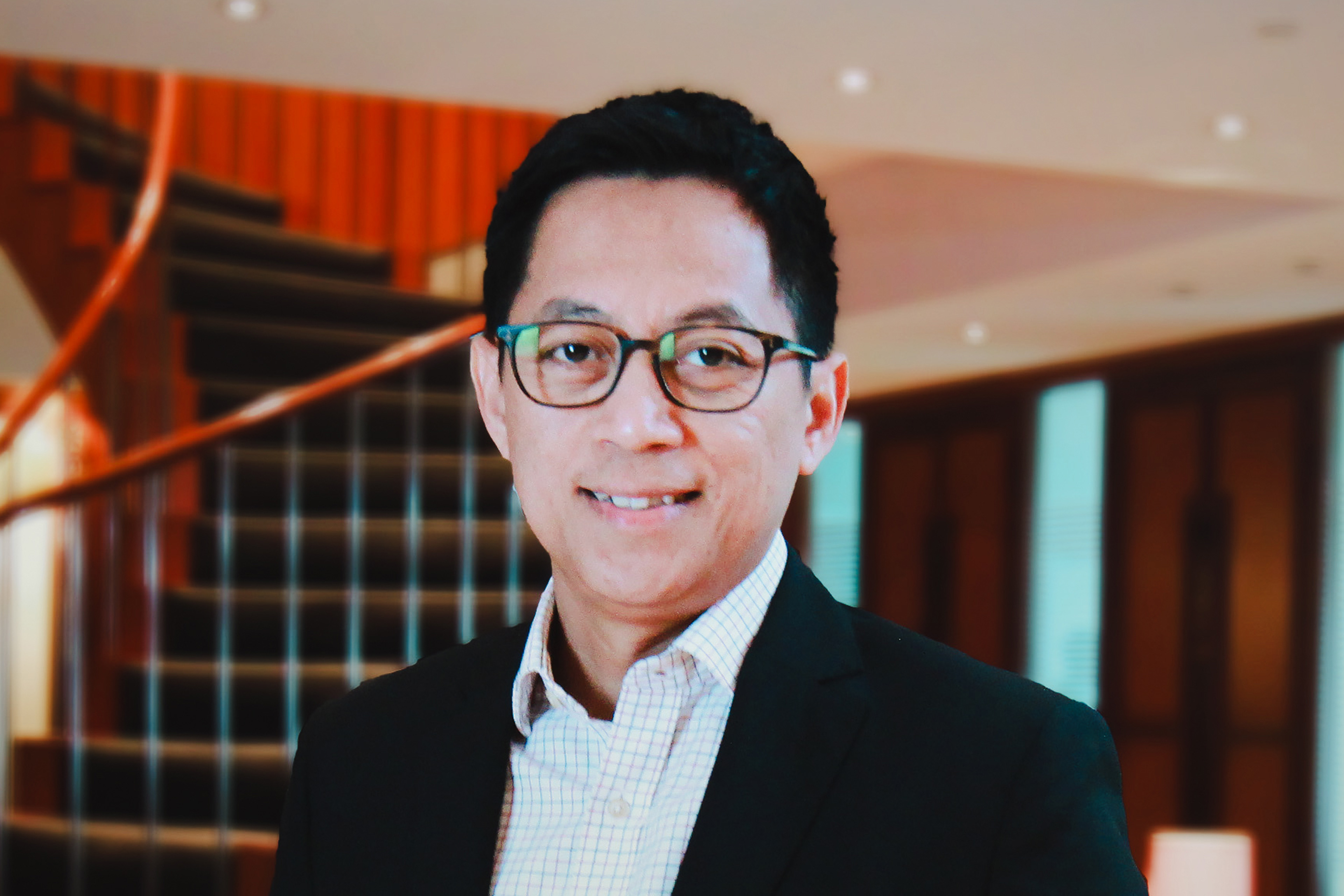
Benjamin Chiang, EY Asean Government and Public Sector Leader, says:
“Maintaining sustainable public finances is the number one public sector risk globally, a challenge that governments across Asean are also grappling with. This signals the need for a more comprehensive approach to evaluate public spending, moving beyond measuring inputs and outputs to focusing on outcomes. Such an approach ensures that public funds are prioritized for programs and initiatives that deliver long-term value for citizens, which, in turn, strengthens public trust and confidence in government actions. This is especially critical in the current climate, where public funds are shrinking due to geopolitical uncertainty, trade wars, tariffs and rising influence of regional power blocs.”
Sustaining Indonesia’s Infrastructure Growth Amid Economic and Regulatory Challenges
Indonesia’s infrastructure development is a key driver of economic growth, yet challenges persist in balancing expansion with fiscal sustainability. With a relatively high forecasted debt-to-GDP ratio of 44.0% for an emerging economy and rising global borrowing costs, the government must explore alternative financing mechanisms to secure long-term investment while ensuring financial stability.
Public-Private Partnerships (PPPs) play a crucial role in mobilizing private sector capital while maintaining fiscal discipline. A key example is the Batang Power Plant Project, where PT Perusahaan Listrik Negara (PLN) successfully engaged private investors to develop large-scale infrastructure without significantly increasing sovereign debt. Similarly, multilateral development banks (MDBs), including the Asian Development Bank (ADB), Japan International Cooperation Agency (JICA), and the World Bank, have provided low-interest loans to support Indonesia’s infrastructure expansion.
To further strengthen investor confidence, Indonesia can also leverage infrastructure guarantees to help mitigate political and regulatory risks, making Indonesia’s infrastructure projects more bankable for global investors.
Setio Prabowo, EY Indonesia Strategy and Transactions Partner states:
“Indonesia could focus on financing strategy that align with global best practices. Expanding Limited Concession Schemes, leveraging Land Value Capture, and strengthening PPP frameworks will allow Indonesia to attract sustained infrastructure investment without increasing fiscal burden. Government infrastructure guarantees also provide the necessary risk mitigation that investors seek in emerging markets.”
By implementing strategic, risk-managed financing models, Indonesia can mobilize capital, sustain infrastructure expansion, and maintain economic momentum while managing fiscal constraints effectively.
Strengthening Public Trust in Infrastructure Development
Beyond financing and regulatory stability, public trust in infrastructure projects is essential for long-term success. Historically, lack of transparency, corruption risks, and inadequate community engagement have led to project delays and public opposition.
To gain public trust on infrastructure development, the government must prioritize:
- Transparent governance with clear project disclosures, budgets, and real-time tracking of progress.
- Independent oversight mechanisms to improve accountability and minimize corruption risks.
- Community engagement strategies that involve local stakeholders in infrastructure decision-making.
Setio adds:
“Infrastructure is not just about financing; it’s about long-term sustainability, trust, and resilience. Transparent governance and community engagement will be key to Indonesia’s ability to sustain infrastructure growth in the coming decades. Initiatives such as public consultations for major urban projects can help ensure transparency while ensuring local needs are addressed. Furthermore, establishing independent oversight bodies will further enhance project monitoring and accountability. The government can also leverage technology for real-time tracking of project progress and expenditures, improving public access to information.”
By embedding best practices in governance transparency, Indonesia can reinforce public confidence in its national development initiatives.
Unlocking Investment Potential Through Regulatory Stability and ESG-Driven Financing
The urgency for change in the public sector is growing as global disruptions become more interconnected, exacerbating governance challenges and requiring resilient, long-term solutions. In 2025, increasing transactional decision-making may destabilize international agreements, impacting supply chains, trade, and migration—further highlighting the need for regulatory clarity, policy consistency, and ESG-driven financing to ensure infrastructure investments remain competitive and resilient in an evolving landscape.
Investors are prioritizing sustainability, climate resilience, and social impact, making ESG-aligned projects more attractive. A notable example is PLN’s USD 750 million Syndicated Green Loan, which successfully secured international investment for renewable energy expansion. This model highlights how ESG-aligned infrastructure can unlock capital while advancing Indonesia’s sustainability goals.
Setio conveys:
“Global investors are increasingly prioritizing sustainability in their infrastructure portfolios. The success of PLN’s Green Loan demonstrates Indonesia’s ability to attract global capital. By ensuring regulatory certainty and integrating sustainability principles, Indonesia can establish itself as a preferred destination for long-term infrastructure investment.”
To capitalize on this opportunity, Indonesia must integrate ESG principles into infrastructure planning, project structuring, and financing frameworks, ensuring that sustainability-linked investment opportunities remain competitive on a global scale.
Chiang adds:
“For Asean, climate change and the growing gap between climate ambition and actual action is another major risk plaguing governments. Asean countries are among the most vulnerable to the adverse impacts of climate change, be it rising sea levels, heatwaves, floods or droughts. To address these impacts, Asean governments should work together to set more ambitious emissions reduction targets, establish stronger disclosure requirements and harmonize sustainable financing standards. These efforts could close the investment gap needed to fund sustainable infrastructure and achieve net zero by 2050.”
Effectively Mitigating Risk Can Demonstrate Value
The report finds that managing risk can no longer be a siloed activity relegated to annual planning or discussions between high-ranking officials. Public sector leaders, regardless of rank, need to continually evaluate risks on the horizon and engage stakeholders in and outside their organizations to effectively adapt and respond.
The full report with the top ten risks can be found here.
-ends-
Notes to editors
About EY
EY is building a better working world by creating new value for clients, people, society and the planet, while building trust in capital markets.
Enabled by data, AI and advanced technology, EY teams help clients shape the future with confidence and develop answers for the most pressing issues of today and tomorrow.
EY teams work across a full spectrum of services in assurance, consulting, tax, strategy and transactions. Fueled by sector insights, a globally connected, multi-disciplinary network and diverse ecosystem partners, EY teams can provide services in more than 150 countries and territories.
All in to shape the future with confidence.
EY refers to the global organization, and may refer to one or more, of the member firms of Ernst & Young Global Limited, each of which is a separate legal entity. Ernst & Young Global Limited, a UK company limited by guarantee, does not provide services to clients. Information about how EY collects and uses personal data and a description of the rights individuals have under data protection legislation are available via ey.com/privacy. EY member firms do not practice law where prohibited by local laws. For more information about our organization, please visit ey.com.
This news release has been issued by EYGM Limited, a member of the global EY organization that also does not provide any services to clients.
About Top 10 risks for the government and public sector in 2025
Between July and November 2024, the EY organization collected a variety of inputs to inform the selection on the top 10 risks for the global government and public sector in 2025. EY professionals conducted a horizon-scanning exercise based on the EY Risk Universe™ framework, which divides government and public sector risk into four areas:
- Compliance threats that originate in policies, regulations or governance
- Operational threats that impact the processes, systems, people and overall value chain of government organizations
- Strategic threats that are related to constituents, politics, the private sector and the natural environment
- Financial threats that stem from volatility in investment, markets and macroeconomic conditions
More broadly, EY professionals considered these threats in the context of governments seeking to build a better working world by shaping the future with confidence. Based on this analysis, the EY organization identified the key megatrends and signature issues driving risk and the need for strategic transformation in the sector globally. Interviews with EY professionals around the world, along with proprietary and external data, also informed how the EY organization chose the top 10 key risks for this year. Our Top 10 risks for the government and public sector in 2025 ranks each risk based on how likely it is to occur, along with the breadth of its impact should the risk become a reality (in other words, how many governments would be affected).