

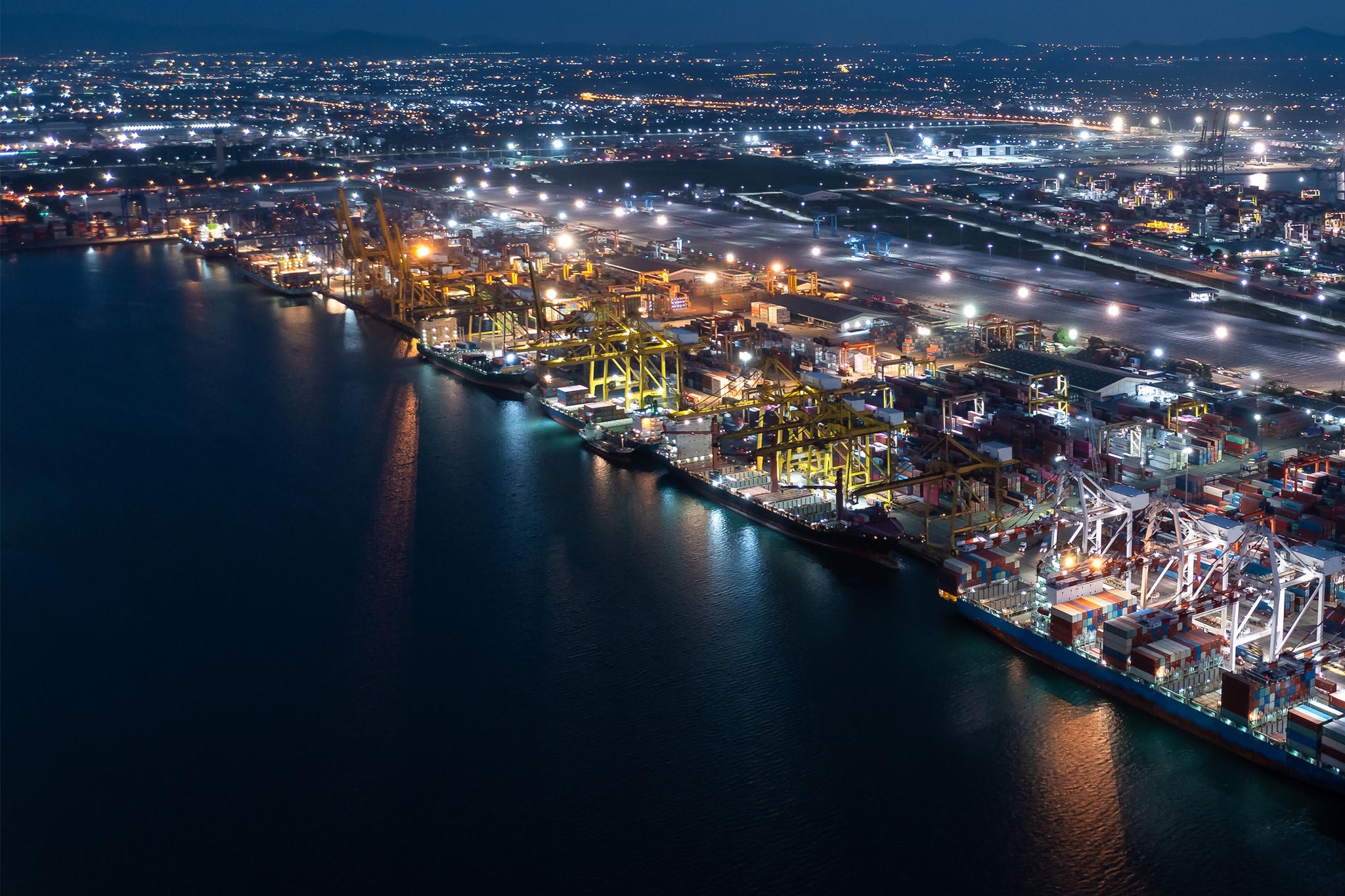


Aerial view of a shipping port

How to master the great supply chain reset

In a highly volatile world with new trade tariffs, companies are segmenting their supply chains for agility, resilience and sustainability.


In brief

  • Geopolitical, economic and other pressures – including inflation and supply uncertainty – are causing a rethink of traditional global supply chain models.
  • Linear, lowest-cost, lean supply chains are giving way to multi-dimensional segmented networks that better balance risk, sustainability, speed and agility.
  • Companies need a new roadmap to rethink geographies, materials, suppliers, footprint and operating model, taking into account tariffs and incentives.

Over the last 20 to 30 years, many supply chains became linear and global. They were stretched to their limit in pursuit of efficient, mass production in low-cost countries, characterized by just-in-time inventory and limited inherent resilience. These models were often geared toward low-cost and growing volumes of open, cross-border trade in a relatively stable world.

That is no longer the world for which supply chains should be optimized. Today, an average trade dollar travels more than 4,000 km (2,485 miles), exposing trade flows to disruption, tariff challenges and a poor sustainability performance.

In the EY-Parthenon Geostrategy in Practice 2025 survey, 74% of global executives said political risks have impacted their company’s supply chains in the past 24 months. For the majority of companies, 63% that impact was negative.

That’s probably why reconfiguring supply chains and relocating operational assets are two of the top three strategic shifts that companies are making in response to political risks.

Welcome to the great supply chain reset. In the face of dramatic international trade policy change and global tax and tariff reforms, the war in Ukraine, China-US dynamics and environmental regulations, companies in many sectors are being forced to shift to segmented “supply networks.”

In this model, companies need to place their supply chain assets according to major trade blocs.  Some segments will run on more historic low-cost trade-offs, while others are in more need of flex. Rather than creating resilience through high safety stocks, companies can use other techniques. These include agile and strategic spare capacity, supplier material buffers, postponement strategies (where final assembly happens in the market of consumption), and higher equipment efficiency – at the right, segmented stages of the supply chain.

This supply chain reset involves more than just tinkering with the edges. It impacts the entire business model from strategy, marketing and design to sourcing, manufacturing, packaging, storage and transportation. In many cases, companies will be reconstructing their entire value chain, including their business management and supply chain control hubs, and associated tax models.

Moving to segmented supply networks does not happen overnight. Sector-specific dynamics and the entire supplier ecosystem need to be orchestrated. Creating a strategic supply chain segmentation strategy and roadmap enables business leaders to allocate growth capital now and in future phases, thereby supporting long-term segmentation goals.

The reset is not a “one and done” proposition. Tactical operations and supply chain teams will need to continually assess if additional actions are needed based on new tariffs and trade policies, shifting regulatory environments, talent availability and other factors. A properly segmented supply chain, supported by appropriate digital visibility tools and artificial intelligence (AI) agents, enables this much needed dynamic supply chain flexibility in the current geopolitical landscape.

There are five key elements to the great supply chain reset, each of which can contribute to creating more agile, cost-efficient, resilient and sustainable supply chains. Read on to learn more about each of the elements:

Various pipe metal in a warehouse
1

Chapter 1

Simplify for growth

Geographic rationalization: product-market combination and strategic source locations.

Geopolitical risk, tariff and trade change combined with a radical review of the product portfolio and bill of materials may reveal products that — regardless of their manufacturing location — are no longer profitable to make and sell in certain geographic markets, or at all. If a manufacturer is unable to pass on inflationary costs such as tariffs or cannot produce a particular product sustainably, some products may become obsolete.
 

For some, trade tariffs may be the tipping point – and they have been a trend for some time already. According to Global Trade Alert1 the number of trade interventions has increased more than 200% over the past five years and almost 400% over the past decade. Many of these trade barriers have been put in place by governments seeking to strengthen their country’s economic security, with the current US tariff policies increasing the urgency and significance of these actions.


Leading companies are using product tear down and cost modeling together with product and bill of material (BOM) value engineering to both rationalize the portfolio and BOM complexity. Companies are also reworking BOM items to find alternate suppliers or different materials with different suppliers to reduce the total delivered cost – including rules of origin and tariff impacts.

And in many sectors, the cumulative effects of the rising costs of products and reduced working capital, logistics, carbon charges for border crossings, and frequent supply disruptions are increasing the cost-to-serve, reducing gross margins and making it unprofitable to hold inventory as a buffer.


These dynamics have forced a focus on whether to enter or exit certain geographies. For example, in a tariff-dominated world profit potential may be low or opportunistically high in certain geographies, or companies may be less exposed than their competitors in different geographies. This could drive specific action on exiting or entering certain markets. Some political programs are also steering companies to more local supply chains, effectively taxing those that fail to move this direction, and tax-incentivizing those that do move. These dynamics are at the core of designing more segmented footprints.

A lady looking at a handmade tote bag
2

Chapter 2

Segmented supply footprint and challenging traditional management hubs

Creating segmented supply networks with the right level of short-, mid- and long-term agility built into the supply chain footprint design.

In the era of mass offshoring, manufacturers enjoyed the huge scale efficiencies of large manufacturing centers in low-wage countries. But for many products, there is a now a pronounced shift to get closer to the end customer and more responsive to their demands – while reducing tariff and logistics costs and reducing their carbon footprint. In many cases, advances in technology have become more cost-effective, enabling companies to pursue increased automation as an alternative to low-cost labor.

An early example of this trend is “China plus one,” where companies avoid concentrating all their sourcing in a single market. However, even this may not be sufficient in the face of continued price inflation coupled with trade policy changes aimed at improving countries’ supply chain resilience.

One company we spoke to has already significantly reduced its reliance on China by diversifying to Vietnam, India and Mexico – but is now considering on-shore production for some key markets. Another company has implemented a policy that sets a maximum global volume share that any single country can supply into the network. The company has roughly five sources around the world, and can flex them to create agility. Building in this flexibility and redundant capacity is increasingly being seen as a strategic investment, versus a pure cost.

Technology is starting to make such decisions easier too, in two ways:

  • Digital supply chain visibility combined with supply chain control towers allow companies to make faster and better trade-offs across their supply networks.
  • Manufacturing technologies like 3D printing allow highly personalized and increasingly sophisticated parts and finished goods to be produced locally and often to order, while robotics enables factories and warehouses to operate at or near “lights out.”

New factory design with modular production line technologies that are “plugged in” to utilities also allow for entire production lines to be moved between locations. This mid-term agility provides companies in some sectors with additional flexibility to move far more quickly than in the past.

But diversification to new markets may not reduce underlying exposure to companies or products from countries that are geopolitical rivals with a company’s home country. This highlights the imperative for executives to have full visibility into their more diversified and segmented supply chains. Plus, it requires supply chain leaders to consciously choose which supply chain nodes need flexes, buffers or alternatives to maintain resilience. Investing in resilience and even some selective redundancy may be the difference between the ability to trade or not in certain markets or with certain products.

Geopolitics and the great supply chain reset: are you ready?

Courtney Rickert McCaffrey, EY-Parthenon, EY Global Geostrategy Insights Leader, is joined in this video by Brad Newman, EY Global Consulting Supply Chain Leader, as they discuss the impact of geopolitics on global supply chains.

Another key factor to consider in designing global supply chains is the use of supply chain management hubs. In recent decades, we have seen global multinationals establish hub structures to house “above market optimization” supply chain teams. These were often co-located with commercial, sales, marketing and product management functions. Hubs are extending in scope to cover strategic decision-making, including the ability to trigger resilience measures by using alternative suppliers or plants to supply certain markets. 

Many of these hubs were established in jurisdictions attractive for fiscal reasons, as well as the ability to attract and retain talent pools. With improved visibility tools and larger supply networks, these central supply chain management teams were able to extract significant value from procurement right down to manufacturing logistics and return flows, while benefiting from competitive corporate tax treatment.

Now, considerations such as control, cost, remote co-location and decision intelligence technology have started to drive change in the size and location of supply chain management hubs, and this effect is expected to increase over the next decade and will require careful inclusion of the associated tax effects.

Full length of people working on a building
3

Chapter 3

Resilient, circular operating model

Embedding circularity and sustainability into the design, sourcing, manufacture and transportation of products.

Circular and as-a-service models are a foundation of the great supply chain reset. Consumers are demanding higher quality and locally made products. From manufacturers’ refurbishment of cars, phones, laptops and other white and brown goods, to the textile collection and waste reduction by global fashion brands, companies are pivoting to sustainability.
 

Countries around the world are increasing their circularity regulations too. For example, the EU Carbon Border Adjustment Mechanism is a tariff on carbon-intensive products like cement and steel,2 which could make these goods less attractive to import and encourage companies to build recycling capabilities and source recycled ingredients.

As part of these regulations, brands will need to offer a digital product passport containing details of materials, sources and ability to remanufacture. In many cases this comes with minimum quotas for recycled materials, for example in batteries, electronics and garments. We are already witnessing efforts in the fashion sector to use recyclable fibers, collect and re-use discarded garments, use lasers as opposed to water in “washing” jeans and educate consumers about a “consume smarter” concept.

The policy and regulatory environment has been uneven across markets, but the broad direction of travel seems clear: in a future circular economy, products will be engineered to last, be able to be constantly repaired and upgraded, with increased recycled content. This opens up new revenue streams with modular design, enabling different parts to be easily replaced and serviced. The production process will avoid exploiting scarce mineral resources and water, be energy-efficient and net zero, and minimize waste and pollution.

Even in markets where there is low government focus on sustainability there are still benefits – for example, using less power and water reduces costs, and using recycled material reduces reliance on new strategic materials and lowers the quantity of imported new raw materials and associated duties. Companies are also looking at their global network and now seeking to optimize operating cost, taxes and their carbon footprint.

All these factors determine the kinds of products a company makes, and where and how they make them. In many cases, all the components required to produce a product, the BOM, may have to be revisited, including raw materials, semi-finished products, or ingredients. It may be possible to reconfigure existing products to become more circular, while others may have to be discontinued. Taking a detailed view of the entire product journey, from design to delivery and beyond, can also help to simplify sourcing, by standardizing as many elements as possible, reducing the range and specification of materials used for production and packaging.

A more circular model with subscription components introduces a new set of trade-offs in tax, legal and customs-trade that require careful consideration. For example, service subscription income may be taxed differently from a traditional product sale, and cross-border service/recycle activities will give rise to new transactional models, asset ownership, registrations and compliance challenges. Carefully integrating these aspects with the redesign of products and supply chains can resolve challenges and often lead to incremental benefits.

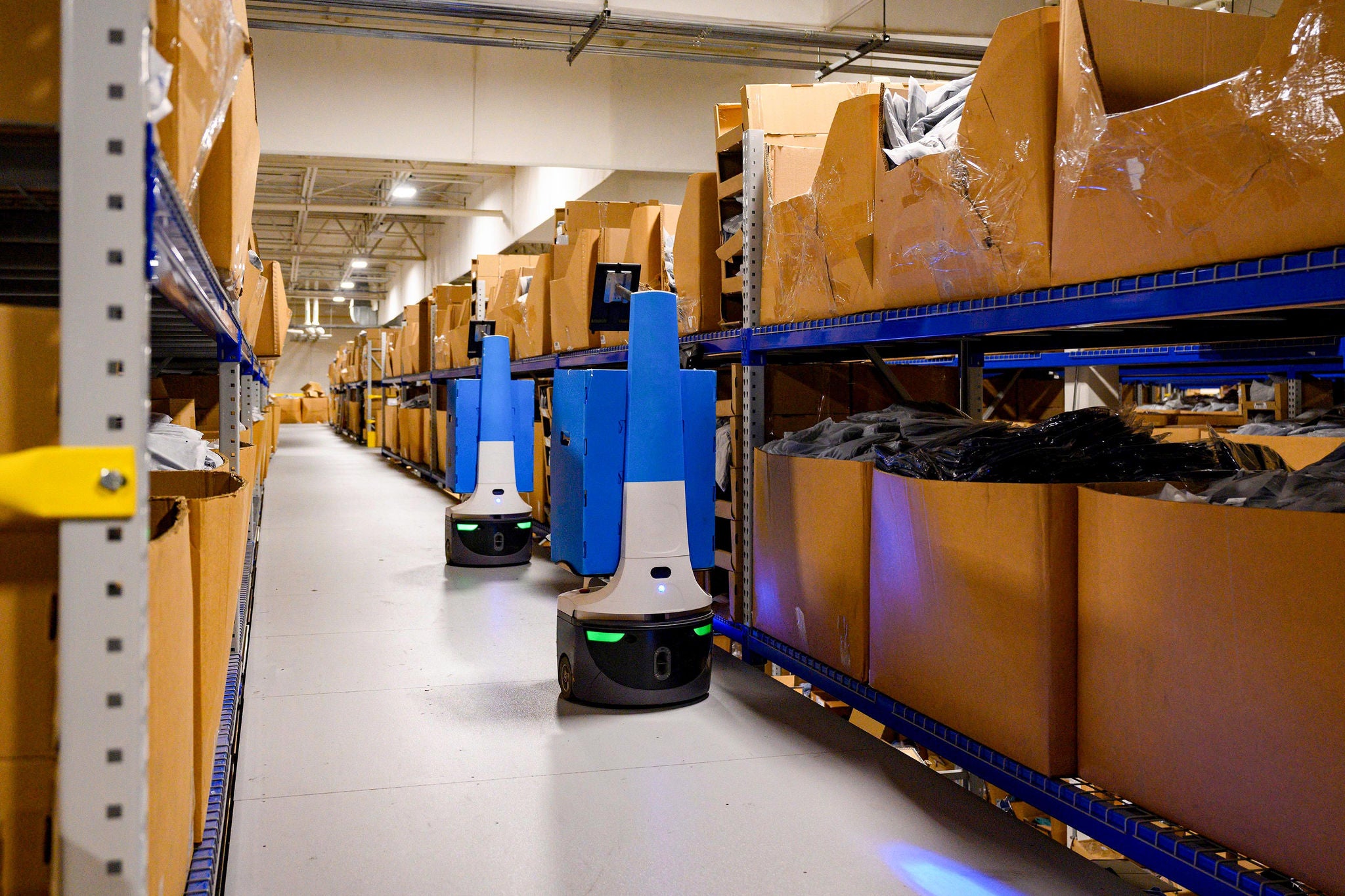
two robots stopped in ecommerce warehouse
4

Chapter 4

Automation and cognitive decision support

Use technology to increase supply chain transparency, auditability and control across complex supply networks.

The opacity of traditional supply chains can frustrate managers’ ability to increase agility and responsiveness, dynamically balance supply with demand across segmented supply networks, and monitor and improve sustainability and resilience performance.

Advances in technology and generative AI (GenAI) promise to transform this, by enabling companies to design new processes, forecast future demands with greater accuracy to alleviate external shocks, and seamlessly identify the most cost-efficient routes and carriers in the event of a disruption. An EY survey in 2024 found that 73% of companies were planning to deploy GenAI in their supply chains.

In much the same way that modern aircraft pilots are supported by fly-by-wire systems and autopilot, segmented supply networks need systems that provide visibility and decision intelligence to create the desired resilience, and guide the decision-making of the “pilots” of the network.

The latest ERP and advanced planning systems (APS) with control tower solutions, decision intelligence and GenAI deliver insights and recommend next best actions, and agentic set-ups have the capability to automate decision-making back into source systems.

Armed with greater visibility, supply chain leaders are investing in adding flexibility and multi-sourcing to critical stages of their supply chain so that they can act on the insights the systems provide.

For example, a large global FMCG business runs 95% of its trading routes on the lowest cost modus (sea plus road) but actively opens up 5% of a secondary (all road) trading route. Having this option open, with all forwarders, operators and customs clearers running, means flexing volume at short notice becomes a realistically available option.

Visibility, and thus auditability, can also help compliance with emerging regulations around sourcing due diligence. For example, legislation like the EU’s Supply Chain Due Diligence requires companies to trace natural products all the way through the end-to-end supply chain, in some cases even at batch level. Building structural supply chain visibility can simultaneously serve these requirements as well as the overall agility agenda. We now see more companies investing in end-to-end supply chain data platforms that stretch beyond the wall of their own business to build the foundations for this capability.

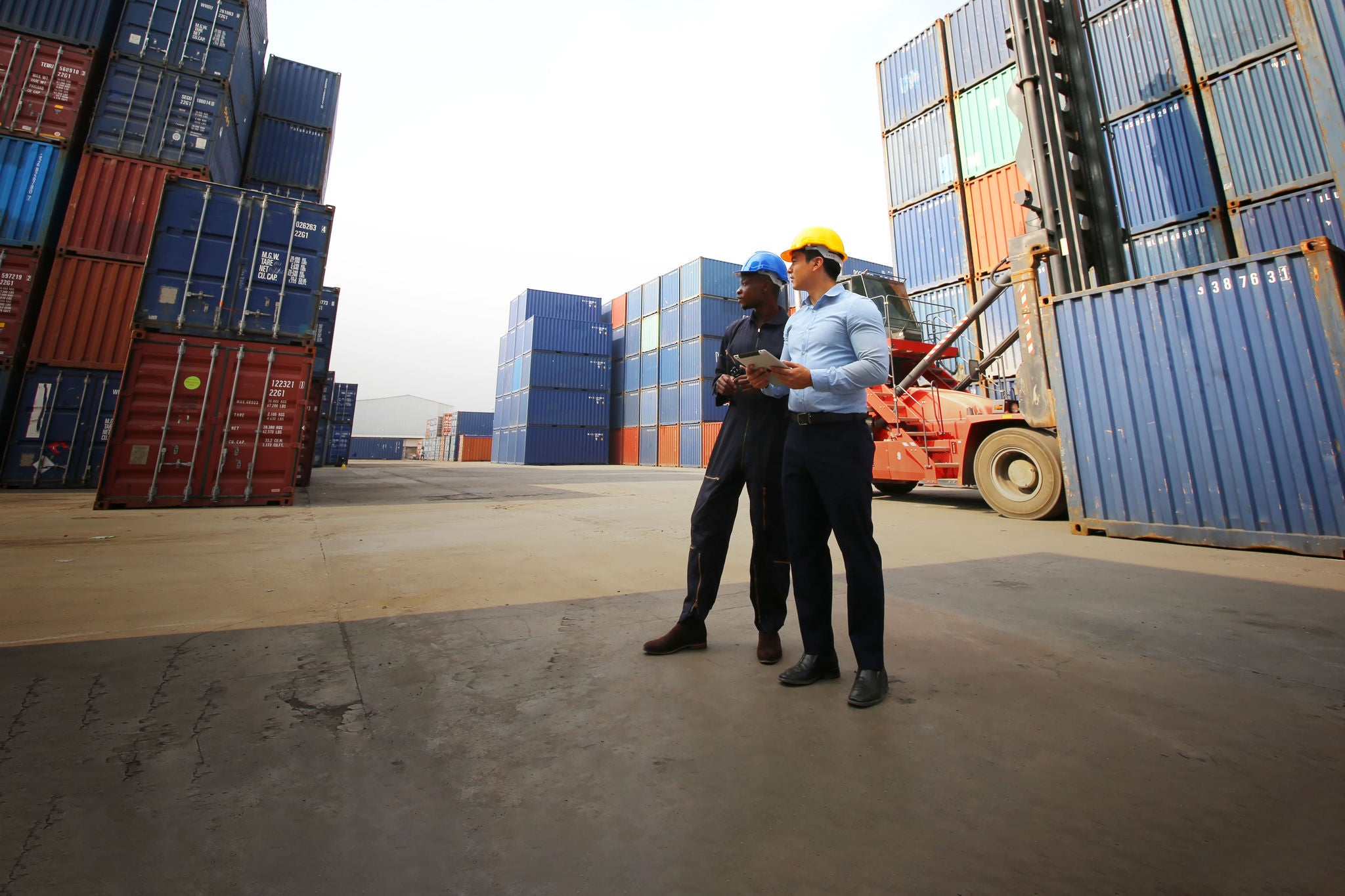
Female and male colleagues discussing at a warehouse
5

Chapter 5

Collaborative relationships built on value — not cost

Relationships with suppliers thrive on collaboration toward a common goal, not just transactional exchanges.

Tomorrow’s supply chains will be less linear and sole sourced, involving a more complex, connected network of onshore, friendshore and farshore players. They will work as partners, linked into common approaches to circular design, sustainable sourcing regulations, manufacturing, packaging and logistics. Sourcing decisions will consider resilience rather than merely minimizing costs.

Although manufacturers should aim for a diverse range of suppliers to spread geopolitical risk, they also need to develop deep, trusted strategic relationships. Many manufacturers are restructuring their supplier network, focusing more on outcomes not transactions, to foster collaborative partnerships in which other members of the value chain are incentivized to innovate and get involved earlier in the product process — ideally at design stage.

Another key decision is whether to manufacture in-house or contract out. The former brings greater reliability and control, but potentially higher costs and exposes companies to the global talent shortage. Contracting out, on the other hand, can provide more flexibility to scale up and down at short notice, with contractors able to deliver manufacturing “centers of excellence” to access the latest skills and technology.

However, outsourcing production risks IP leakage and a breakdown between manufacture and design, as well as making companies dependent on fewer suppliers, which can reduce bargaining power.

In some industries, this will make way for vertical integration: companies want to reduce dependency and increase control over critical supply. And with more segmented supply networks, manufacturers will need to develop material supply capacity in new geographies. Take for example the IT equipment supply chain: it is heavily anchored in China, but gradually more assembly and sub-component suppliers are emerging in India. However, with pressure from the US to manufacture IT equipment onshore, the IT industry will need to create a complete supplier ecosystem from scratch in the US. The pace of transformation to these new models will be heavily influenced by government action, notably tax incentives and grants, and taxes and levies for non-compliance with sustainability legislation. These are all dimensions that need to be part of the strategic roadmap for the great supply chain reset.

Reconfigured, rebalanced, resilient

Many of today’s supply chains have become too long, brittle and opaque to adapt to an increasingly disrupted world. If the byword for the past 20 years or so was scale and low cost, then the next decade will be characterized by agility, sustainability and a broader definition of value.

In the great supply chain reset, companies need to reconfigure from linear supply chains to segmented supply networks, rebalance from primarily offshore to multi-sourcing combining far, near, friend and onshore.

They need to become more agile and resilient by forming longer-term, mutual partnerships. To do this, they should demonstrate critical capabilities in supply chain segmentation, portfolio and lifecycle management, sustainability and circularity, ecosystem partnering, data analytics and risk, underpinned by innovation.

All of this needs to be brought together in a strategic roadmap that ensures that today's capital investment and supply chain changes are a logical step towards a much more profound view on strategically segmented supply chains.


Summary

Volatility, disruption, geopolitics and tariffs – these are just some of the drivers of a great supply chain reset that is seeing linear, low-cost models giving way to segmented supply chain networks. This is forcing organizations to rethink where they operate, what they produce and where they sell it, and where they route materials and products. The future of supply chains will focus increasingly on agility, resilience, sustainability, and redefining value.

About this article

Authors