





EY refers to the global organization, and may refer to one or more, of the member firms of Ernst & Young Global Limited, each of which is a separate legal entity. Ernst & Young Global Limited, a UK company limited by guarantee, does not provide services to clients.
Recent Searches
Discover how banks use operational risk management to boost resilience, stay compliant and thrive in a digital landscape.
In brief
- Operational resilience is now a strategic priority as banks face increasing regulatory demands to manage disruptions, cyber risks and data threats.
- Digital transformation and AI are reshaping risk management, enabling automation, real-time monitoring and predictive insights for proactive resilience.
- ServiceNow Governance, Risk and Compliance (GRC) implementation in Malaysia demonstrates how integrated frameworks enhance governance, strengthen oversight and support long-term sustainability.

1
Chapter
When risk strikes, preparedness matters.
Operational risk emerges as the cornerstone of trust and resilience in today’s financial sector.
Operational risk is no longer a back-office concern — it’s front and center for financial institutions navigating cyber threats, tighter regulations and mounting complexity. Unlike credit or market risk, operational failures can halt services, erode trust and damage reputations overnight.
That’s why operational resilience has become a strategic imperative. Banks must not only respond to disruptions but anticipate and absorb them — keeping critical services running and customer confidence intact.
The message from industry leaders is clear. Recent findings from EY and the Institute of International Finance (IIF) reveal a growing recognition among chief risk officers (CROs) on the need to enhance operational resilience, particularly in response to cybersecurity, data and regulatory risks.
Notably, 38% of CRO expect operational resilience to be the second most significant issue after cybersecurity.
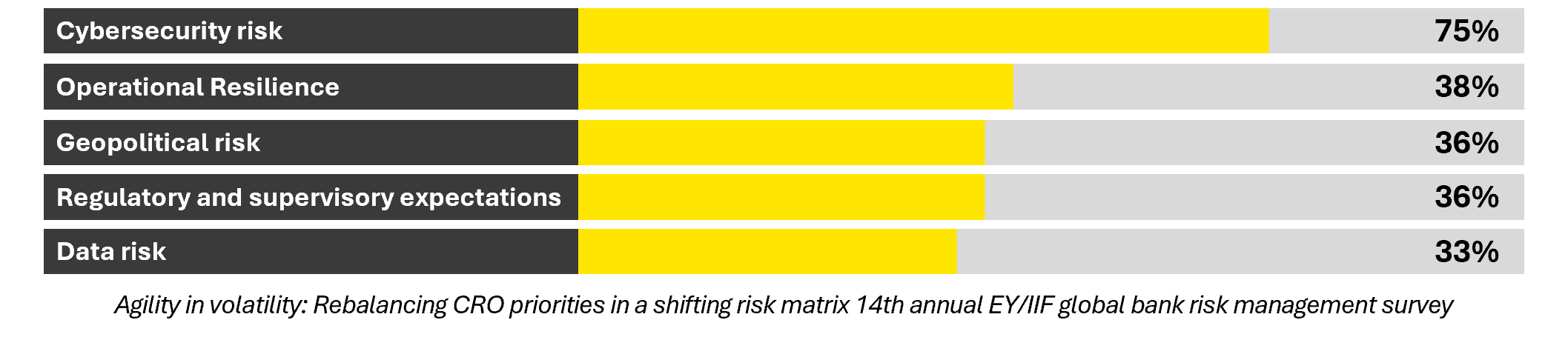
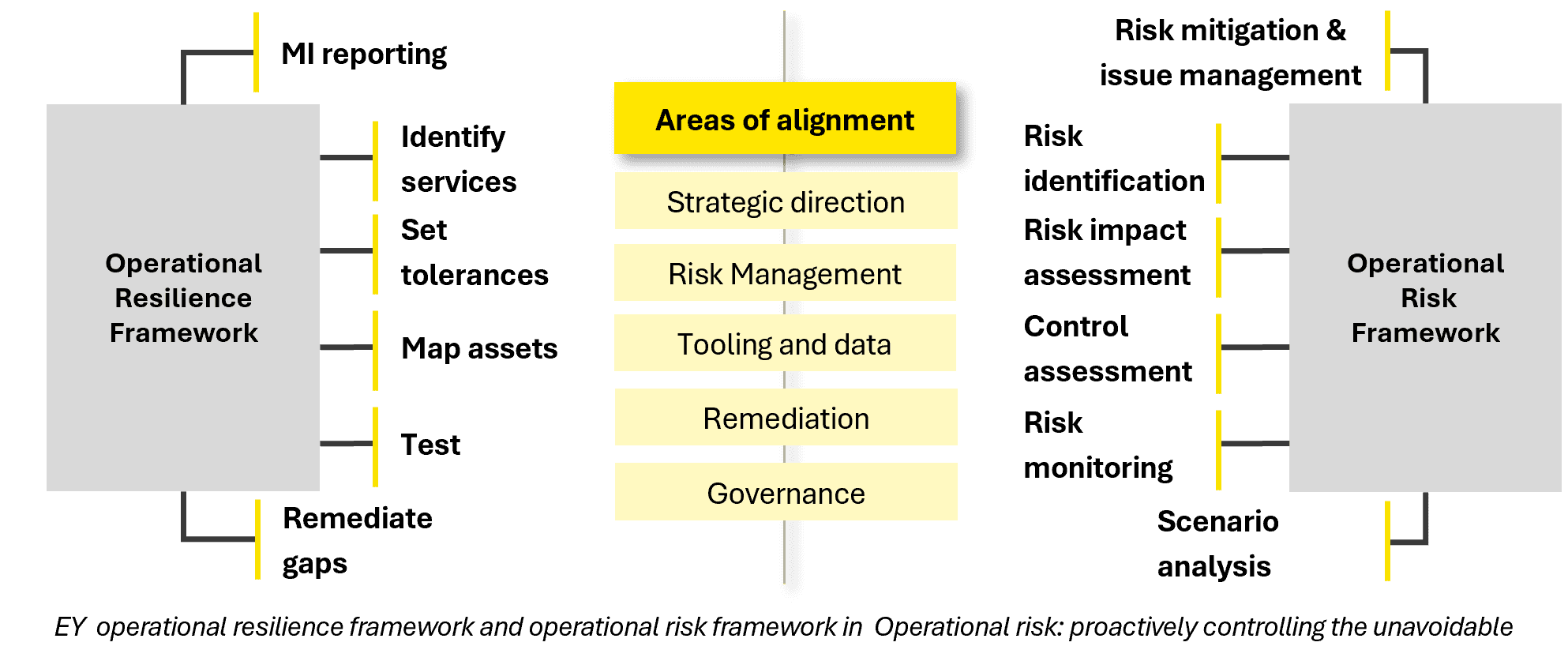
Operational resilience is increasingly being integrated into the broader risk management frameworks of financial institutions, reflecting a shift from reactive recovery to proactive preparedness. Regulators now expect firms to maintain robust strategies that ensure the continuity of critical services during times of disruption, whether caused by internal failures or external shocks.
The distinction is subtle but powerful — risk management identifies vulnerabilities; resilience ensures institutions can withstand and adapt to them. Together, they form the foundation of a stronger, more sustainable financial system.

2
Chapter
Digital-first banks turn risk into insight
Financial institutions must modernize operational risk management through automation and artificial intelligence (AI) to enhance resilience and proactively address emerging threats.
Manual processes cannot keep pace with today’s digital-first banking landscape. To stay ahead, banks must embed automation, real-time monitoring and predictive insights into their risk frameworks — shifting from reactive controls to proactive resilience.
Digital resilience isn’t just about technological upgrades; it’s about rethinking how risk is managed. By centralizing dashboards, automating controls and applying continuous monitoring, banks gain the agility to respond faster and smarter to disruption.
Banking executives increasingly recognize the transformative power of artificial intelligence, with more CROs applying AI across various aspects of risk management. According to the “EY and Institute of International Finance Bank Risk Management Survey,” CROs acknowledge the growing impact of AI in their transformation and innovation plans, relying on it to generate insights and streamline routine tasks.
Unsurprisingly, the top three use cases within risk management today are related to data analysis, automation of operational tasks and document analysis. Insights from the survey reveal that CROs looking to instill operational agility should consider the following strategic and transformation actions.
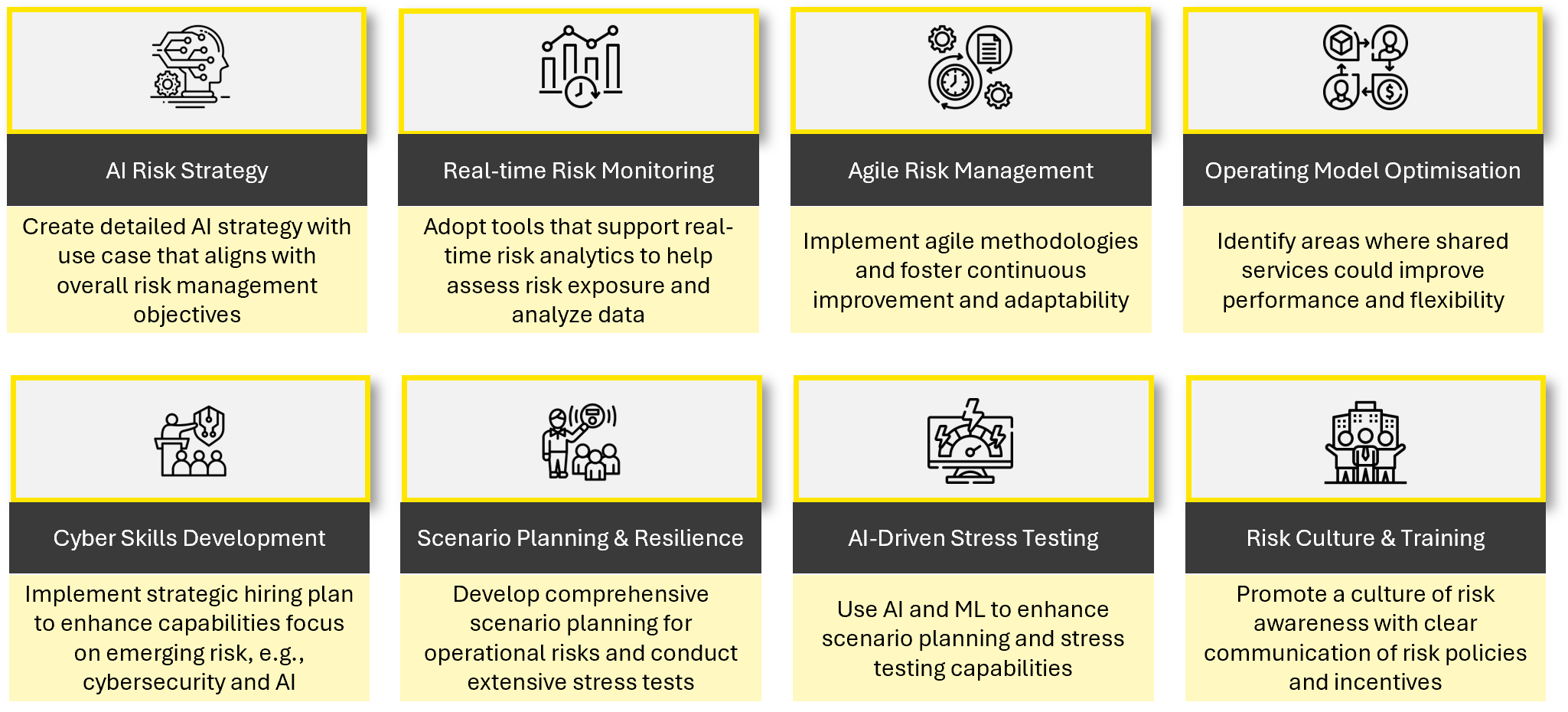
The direction is clear — banks that embed AI and digital tools into risk management aren’t just meeting regulatory expectations, they’re future-proofing operations, strengthening governance and building sustainable growth.
Those who move first will do more than manage risk. They will earn trust, safeguard resilience and lead in a digitally-enabled financial ecosystem.

3
Chapter
Turning compliance into competitive advantage
EY helps banks in Malaysia harness ServiceNow GRC to break silos, drive automation and transform compliance into a catalyst for smarter, resilient risk management.
Over the past year, the EY organization has collaborated with multiple banks across Malaysia – from large regional banks to digital banks – to implement ServiceNow GRC module. Whilst the operating environment and business models differ between banks, the foundation for success remains consistent:

Collaboration with experienced partners
Operational risk is constantly evolving and working with the right partner reduces implementation risks. EY’s depth of experience helps us to anticipate challenges, adapt to industry nuances and accelerate time-to-value.

Compliance with regulatory requirements
It is crucial to anchor the ServiceNow GRC implementation in local and relevant regulatory requirements, so that banks remain fully compliant while maintaining the flexibility to adapt to future regulatory developments. This structured alignment enables banks to proactively manage regulatory changes and sustain confidence in their governance practices.

Data-driven risk management
A data-driven approach empowers banks to harness existing information effectively while remaining agile in response to emerging risks, evolving regulations and technological advancements. By leveraging analytics, structured reporting and predictive insights, banks can make informed decisions and enhance their risk mitigation capabilities.
By embedding these success factors into ServiceNow GRC implementation, EY teams have helped banks break down silos and move to an integrated and automated environment to strengthen their risk management and governance capabilities.

4
Chapter
Resilience in action
Real-world collaboration with Malaysian banks highlight how digital risk management through ServiceNow GRC enhances resilience, streamlines processes and fosters compliance.
Case study #1: Local digital bank - transforming operational risk management
EY teams have embarked on a transformative engagement with a local digital bank, to strengthen its operational risk management capabilities. Operational risk is becoming a critical concern in the financial industry, driven by stricter regulations, growing third-party dependencies and the complexities of scaling digital services. Digital banks now face an urgent need to embed integrated risk management at the core of their operations.
As a digital bank operating with a steep curve to compliance governance, the bank encountered significant challenges in establishing effective risk management, primarily due to reliance on manual tracking methods. This affected the accuracy and timeliness of risk records, creating inefficiencies in risk identification, delayed reporting and ultimately impacting the bank’s ability in securing long-term sustainability.
EY in Malaysia collaborated with the bank to map business processes and operational requirements to ServiceNow GRC workflows. This involved defining data structures, user roles and approval paths, in line with the bank’s governance and practices. Based on these requirements, the bank, working with EY, established a platform to support end-to-end lifecycle activities, including loss event data (LED), risk and control self-assessment (RCSA), key risk indicator (KRI) and key control testing (KCT) execution for operational and IT risk and third-party risk management (TPRM).
These improvements have strengthened risk oversight, supporting management and the Board with timely, data-driven insights, ultimately enhancing operational resilience and supporting the bank’s long-term strategic goals.
Key achievements:
- Regulatory compliance: Achieved compliance readiness ahead of regulatory deadlines, bolstering audit confidence.
- Consistent processes: Established uniform risk assessment processes across risk event reporting, risk and control self-assessment (RCSA) and third-party risk management (TPRM).
- Centralized data: Developed a single, centralized source of risk data, enhancing cross-department collaboration.
- Efficiency improvement: Reduced manual reporting time and minimized reporting errors, streamlining operations.
Case study #2: Large regional banking group – enhancing operational resilience
In collaboration with EY, a large regional bank has embarked on a multi-phase implementation of ServiceNow GRC’s operational risk management module to strengthen their operational resilience. This multi-phase implementation approach gives business units time to adopt, test and optimize each operational risk management module prior to full deployment.
To meet the growing demands and complexity of its operational risk landscape, the bank transitioned to ServiceNow GRC as their legacy risk management system was no longer able to cater for their continued regional expansion as well as heightened regulatory expectations.
Given the bank’s diverse regional footprint, which includes distinct processes across different countries, consolidation and standardization of processes at the group level became essential. Guided by EY’s technology experience, the transition to ServiceNow GRC enables the bank to adopt a more integrated, centralized and automated approach to risk management, offering greater flexibility, real-time visibility and the ability to manage complex operational scenarios across multiple entities and jurisdictions.
The implementation of ServiceNow GRC has delivered measurable improvements in efficiency, governance and risk oversight.
Key achievements:
- Centralized risk management: Established a single source of truth for operational and compliance risks, enhancing data consistency.
- Real-time insights: The platform enables customizable reporting and real-time risk identification, empowering proactive decision-making.
A key achievement is the establishment of a single source of truth across all regions and departments, facilitating the integration of stakeholders into a centralized, user-configurable risk management platform. This consolidated view of operational and compliance risks enhances data consistency, traceability and transparency.
Additionally, the ServiceNow GRC allows for user-configurable scoring, notification capabilities, issue management and real-time insights, empowering risk owners to take ownership and control to proactively make key decisions. Covering end-to-end risk lifecycle, the system supports customizable real-time integrated reporting, audit trails and automated workflows to streamline risk management and facilitate internal and regulatory compliance.
The platform also enables real-time aggregation and analysis of risks using advanced analytics and AI/ML, with interactive dashboards and drill-down capabilities for detailed risk data. This supports the bank in performing real-time risk identification and leveraging AI-powered insights to improve visibility and responsiveness.
Overall, this implementation has strengthened the bank’s ability to manage operational risk in a more data-driven, integrated and scalable manner. The implementation has been enabled by EY’s strategic support, ensuring a fit-for-purpose platform that aligns with risk management aspirations, meets regulatory expectations and drives broader business outcomes that meets risk management aspiration.
Case study #3: Local cooperative bank – building a comprehensive risk framework
The local cooperative bank has initiated its implementation of ServiceNow GRC with the primary goal of establishing a comprehensive risk library, focusing on technology risk. With EY’s guidance, the bank has implemented a structured framework to strengthen oversight, standardize processes and create a single source of truth for risk-related activities, enabling proactive management of technology risks while aligning with regulatory and governance requirements.
The implementation covers key risk components critical for effective risk governance. EY teams supported the bank in deploying ServiceNow GRC’s risk and compliance module to consolidate scattered policies into a central repository, facilitating clear linkages between policies, entities and controls, while introducing compliance scoring for each policy
Key achievements:
- Standardized processes: EY teams helped consolidate policies into a central repository, improving oversight and compliance.
- Integrated framework: The implementation transformed fragmented oversight into a cohesive, data-driven risk management approach
Furthermore, EY teams collaborated with the bank to establish a robust risk framework, including risk statements, risk assessment methodologies, risk and control self-assessment (RCSA), key risk indicators (KRIs) and key control testing (KCT).
Together, these capabilities have transformed fragmented oversight into an integrated and data-driven framework, enhancing the bank’s ability to manage technology risks effectively
.
Summary
Banks are increasingly prioritizing operational resilience to navigate a complex and evolving landscape. As regulatory pressures mount, they recognize the need for bold transformation in risk management strategies. By embracing digital solutions like ServiceNow GRC, banks can enhance their compliance and governance frameworks while leveraging data-driven insights for informed decision-making. The shift from manual processes to integrated systems not only streamlines operations but also positions banks to proactively address emerging risks, ultimately fostering long-term sustainability and value for stakeholders in an unpredictable environment.
Related content
Blending tradition with innovation: Pioneering digital transformation in Islamic Banking.
How a collaborative approach accelerated Bank Rakyat’s digital transformation journey
Licensing and Regulatory Framework Digital Insurers and Takaful Operators DITOs
Licensing and Regulatory Framework: Digital Insurers and Takaful Operators (DITOs)