EY helps clients create long-term value for all stakeholders. Enabled by data and technology, our services and solutions provide trust through assurance and help clients transform, grow and operate.
At EY, our purpose is building a better working world. The insights and services we provide help to create long-term value for clients, people and society, and to build trust in the capital markets.
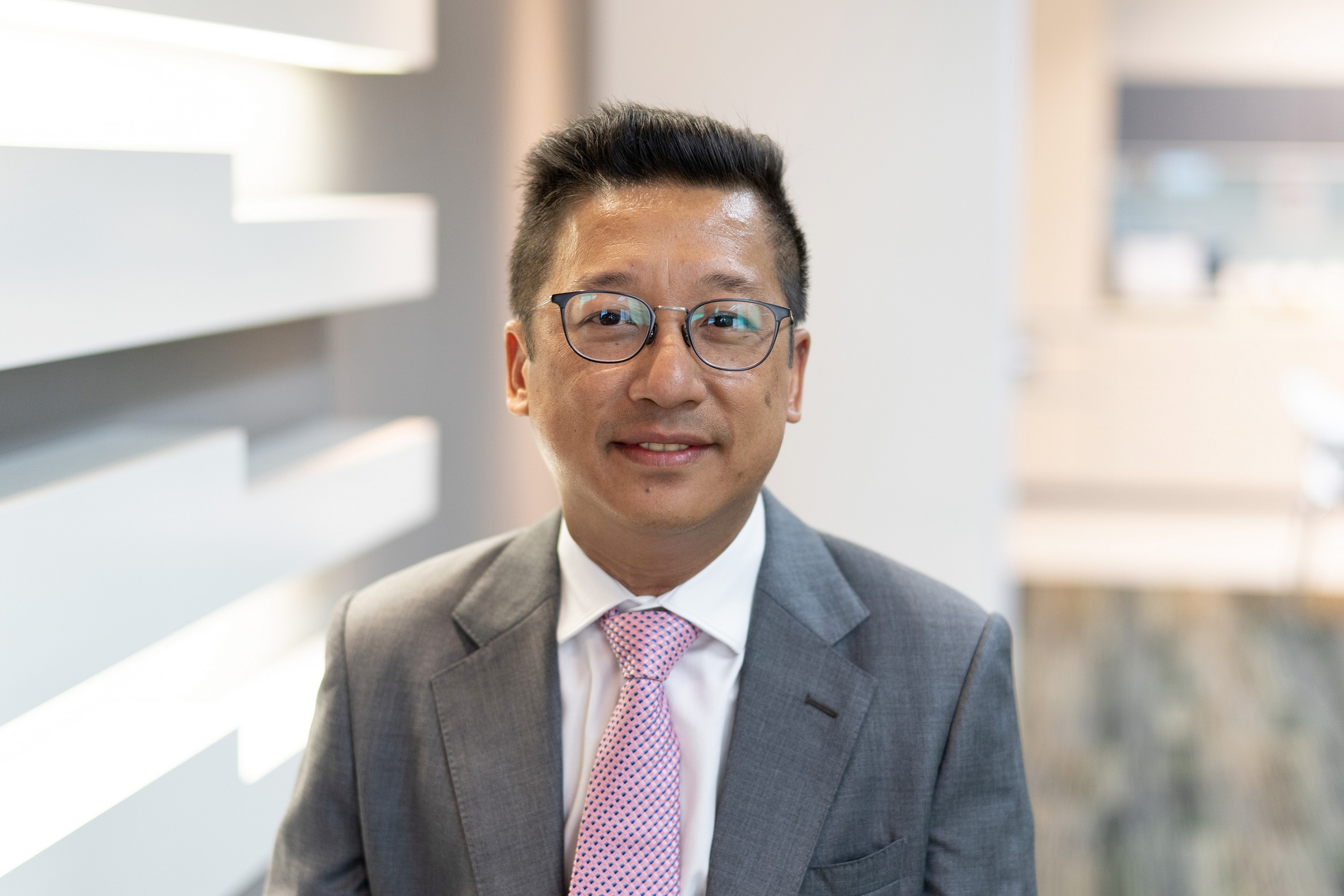
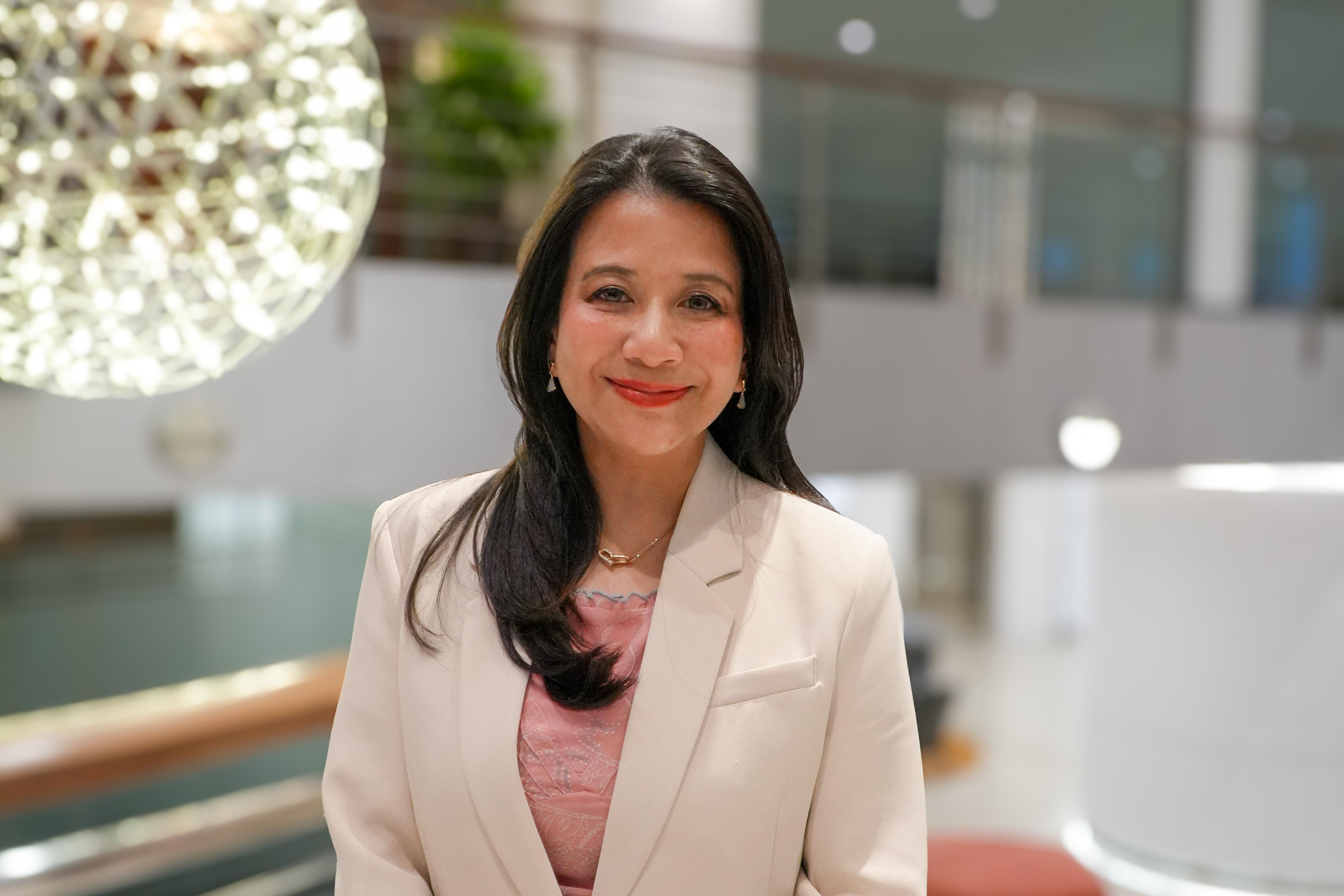
Insights Malaysia host Bernard Yap speaks with Farah Rosley, Malaysia Tax Managing Partner, Ernst & Young Tax Consultants Sdn. Bhd., about the future of tax, exploring predictions and trends for Budget 2026 and beyond.
Bernard Yap and Farah Rosley talks about taxation trends in Malaysia, digital transformation for tax, global tax reforms and integrating sustainability into tax.
This episode is part of our podcast series on the Budget 2026.
Key takeaways:
The future of taxation in Malaysia includes rising consumption taxes, new sustainability taxes, and more compliance measures to boost government revenue.
Digital transformation is key for tax administration, with e-Invoicing and the use of analytics and AI making compliance easier.
There is a stronger emphasis on global tax compliance to fight tax evasion, including initiatives like the global minimum tax.
Integrating environmental, social and governance (ESG) principles into tax policies encourages sustainability and social inclusivity in Malaysia.
Hi everyone! Welcome to a new episode of our EY Insights Malaysia series. My name is Bernard Yap and we will look into a special episode where we will focus on specific topics for Budget 2026.
Today's episode is on the future of tax trends where we will explore the predictions and the tax trends upcoming from the Budget 2026 and beyond. So stay tuned for more.
Because of the constant changes in the way our businesses are operating, tax environment is going to be crucial. Environment will be more sophisticated. People will become more talented and digital and IT will be more apparent.
So as we move towards a digitalized and interconnected world, where do you see the future of tax trends for Malaysia, not just for the year coming in the 2026 Budget, but beyond that as well?
Farah Rosley
Yeah, Bernard. The tax system now is more, I would say, modernized, as compared to years back. There is also the requirements to comply with international standards. And as well as addressing the complexities of the digital economy. But, as we have always spoken about, Bernard, you and I when we talk about taxation, the trend that is happening in Malaysia is no different than whatever that we are seeing around the world.
We are so interconnected that any new measures that is being introduced overseas or in other jurisdictions would definitely be picked up here. And whatever that we have introduced will also be spoken about in other countries. But what I can see is that if I were to list the trends that we are seeing, you can see then that if there is no new introduction of consumption tax, the rate will go up. And that's no different than what we have seen in Malaysia when more goods and services were included in the SST, or Sales and Services Tax category.
And that has been going on for a few years. In Budget 2024 we saw that. In Budget 2025, we saw that too. And also as I mentioned, things like Low Value Goods Tax is now subject to tax. Digital Service Tax was also introduced. Things like measures to encourage green practices. Or to discourage bad green practices, for the lack of a better word, was introduced and carbon tax is one of them.
For example, other countries in this region have have also introduced carbon tax. Singapore has already introduced carbon tax back in 2019, and the rate has been on an increase. Indonesia has also introduced some form of emissions trading scheme. And that is also aligned with what we in Malaysia have been doing.
And the third, if I can just shortlist three things, Bernard in the interest of time, I would say then that Because as governments around the world are trying to increase revenue or trying to plug in the hole that they have post-pandemic, and with all these uncertainties geopolitical, supply chain pressure and all that we are seeing more increased measures on compliance.
And that's what we are seeing either in Customs audits or an income tax or Inland Revenue Board audits or investigations will also be conducted. And Bernard, the introduction of e-Invoicing will shape and change how compliance is being done by the authorities.
Bernard
So Farah you've talked about digital transformation and also in the Budget 2026 which is coming up we are focusing on reform and governance. How do you think digital transformation reporting – not just from a financial perspective but for tax reporting and governance – can play an important role in the future for Malaysian taxpayers
Farah
That trend is really one of the key trends that we are seeing emerging around the world, not just in Malaysia but many jurisdictions are already looking at digitalizing their tax administration and ensuring them that tax collection becomes more effective and seamless. And that's what we are seeing in Malaysia.
The trend such as e-Invoicing that was introduced. Now, I think it's almost two years since everyone was talking about e-Invoicing. And that means that tax submission is almost in real time. And that is really shaping how things have moved. Maybe your tax submission is no longer required in the future because everything is online, the moment you purchase something or you receive income, those expenditure or income has already been recorded as I've mentioned, in real time.
And the use of analytics, right, to pick up on trends. You know, in the future, maybe with a touch of a button, the authorities and the regulators will be able to pick up on whether Bernard, whether you have paid more taxes than you should or less tax, or too little tax than you should. Or even when it comes to trends, for example, which companies actually enjoy incentives or which companies have actually submitted their tax returns on time?
All that will be picked up, in a touch of a button. And in addition, I will have to touch on this point, Bernard, artificial intelligence, right. The use of AI to ensure and to make taxation more seamless. It's not just what you see in Malaysia. We are also seeing questions being raised, being addressed by robots, for example. Chat bots that talk about or address questions, or maybe, Bernard you and I will be redundant. No one will be asking us anymore. No one will be asking tax consultants any more based questions. All that can be answered by AI or a robot in the form of Bernard perhaps in the future.
So that's why, where we are seeing digital transformation has taken place and will continue to evolve and will really shape how taxation is being conducted, how regulators implement compliance and the use of analytics to even select cases for tax compliance. And I forgot to mention even the use of online portals to submit your tax returns. And recently we were talking about stamp duty and stamp duty filing will all be done online with the introduction of self-assessment system for stamp duty, as well.
Bernard
Yeah. So it's also very important. It’s not just the business getting ready for digital transformation. You know, in the past going through e-Wallets, online trading, we tax practitioners also need to evolve ourselves in making sure we are also technologically savvy in order to make sure that we still remain relevant and have a job to do. So you heard it from Farah from a Malaysian perspective for the upcoming Budget. But Farah, what about from a global tax perspective? Are we coming on with the trend or are we behind from a global perspective?
Farah
Bernard, there is greater emphasis on global tax compliance. Again, more than ever before to combat tax evasion, the setting of global minimum tax to ensure countries are able to collect the right amount of taxes.
And this is something that has been spoken about, many times and over the years. And this really made a change to the format of international taxation or how international tax planning used to be, how we used to do international tax planning, Bernard has changed now.
But there is also the focus on individuals as well, Bernard. From an individual perspective there’s also greater transparency, right? What do you think?
Bernard
You're absolutely right, Farah. In terms of individuals as we analyze data you talk about AI and machine learning and analyzing data analytics from that perspective. Today around the world, all financial institutions are exchanging information from an individual perspective. So we can't run away from the olden days from offshore banking which became very highly confidential.
Today, it is all about transparency. It's all about sharing of data and making sure that at each country where we operate from, we will have to pay the right amount of taxes.
So Farah, with ESG now playing a very continuous important role in the way we operate, plus also our future generations are more aligned with this new concept. Given that there is also a growing trend of integrating sustainability into our tax policies. And you as one of our past presidents of CTIM, how much dialogue and discussions do we have in Malaysia with the Malaysian government agencies where tax plays an important role in the way we move forward with ESG?
Farah
Bernard, that discussion on the use of taxation to drive behavior, to drive direction in terms of where we want to go as a country has always been there. And taxation as we all know is a tool that would lead certain policies or direction that the country wants to get into. And certainly as what you have said ESG is one of them. And in two, at least, of the three elements of the environmental, social, as well as governance, we have tax playing a role quite significantly in at least two of those pillars. In terms of environmental, we have I've mentioned earlier the introduction of carbon tax that as a country we are looking at, perhaps in 2026.
And that is also aligned with the National Energy Transition Roadmap that was announced as well as enforced further in the 13th Malaysia Plan that is aligned to all the measures that the government has introduced in the direction that we want to get as a country.
And in addition, there is also the governance Bernard, I can't help mentioning about tax corporate governance, where everything is actually embedded into a making sure there is cooperative compliance and paying tax is also an act of sustainability, because the tax collection goes into infrastructure development, as well as giving back to the society in terms of making sure then that there is social inclusivity. Reducing the gap between the high income, middle income, as well as the low-income earners.
Bernard
Yup, very important where you will see the earning of the income and then being cycled back to the community via tax. And I guess that's how we play a very important role in shaping the world today. Well you heard from Farah in terms of where the future tax trend is going to be. So where are we with the upcoming Budget 2026?
It is aligned with the MADANI economic framework, focusing on number one: Raising the ceiling of national growth for businesses; raising the floor of living standards for individuals; and driving reform with specific focus on governance and public participation in policymaking.
Farah
We are looking at what potentially can be or will be introduced. In the past years' Budgets, we are seeing new tax measures that have been introduced. There was a capital gains tax. Before that, there was the exemption, removal of the exemption on foreign-sourced income. Last year dividend tax, 2% dividend tax was being introduced. There was also the Low Value Goods tax. There was also the Digital Service Tax that was introduced a couple of years ago.
It's a bit tricky trying to predict what will happen and what will be announced. But I would say, Bernard it is also important to look at what is the sentiment surrounding the introduction of new tax measures. But most importantly is that businesses, industries, taxpayers need time before an introduction of any new taxes.
And it's very important that if there is any new introduction of taxes, it will not create the outcome that is not intended for. And time is given for businesses to implement those taxes.
Bernard
So, sounds like the policy is good. Let's make sure that very successful implementation can be brought forward into this country. With that, it has been a fantastic session. Thank you, Farah.
This episode is just one of our Budget 2026 podcast series. For more insights into tax in Malaysia, please leave us a suggestion on which topics you'd like us to explore in more detail, or reach out to us on our LinkedIn. Thank you everyone for joining us today.