



EY refers to the global organization, and may refer to one or more, of the member firms of Ernst & Young Global Limited, each of which is a separate legal entity. Ernst & Young Global Limited, a UK company limited by guarantee, does not provide services to clients.
Recent Searches
Press release
27 Jan 2026
EY survey: GenAI boosts productivity for 81% of Malaysian employees, but 68% say workloads have grown
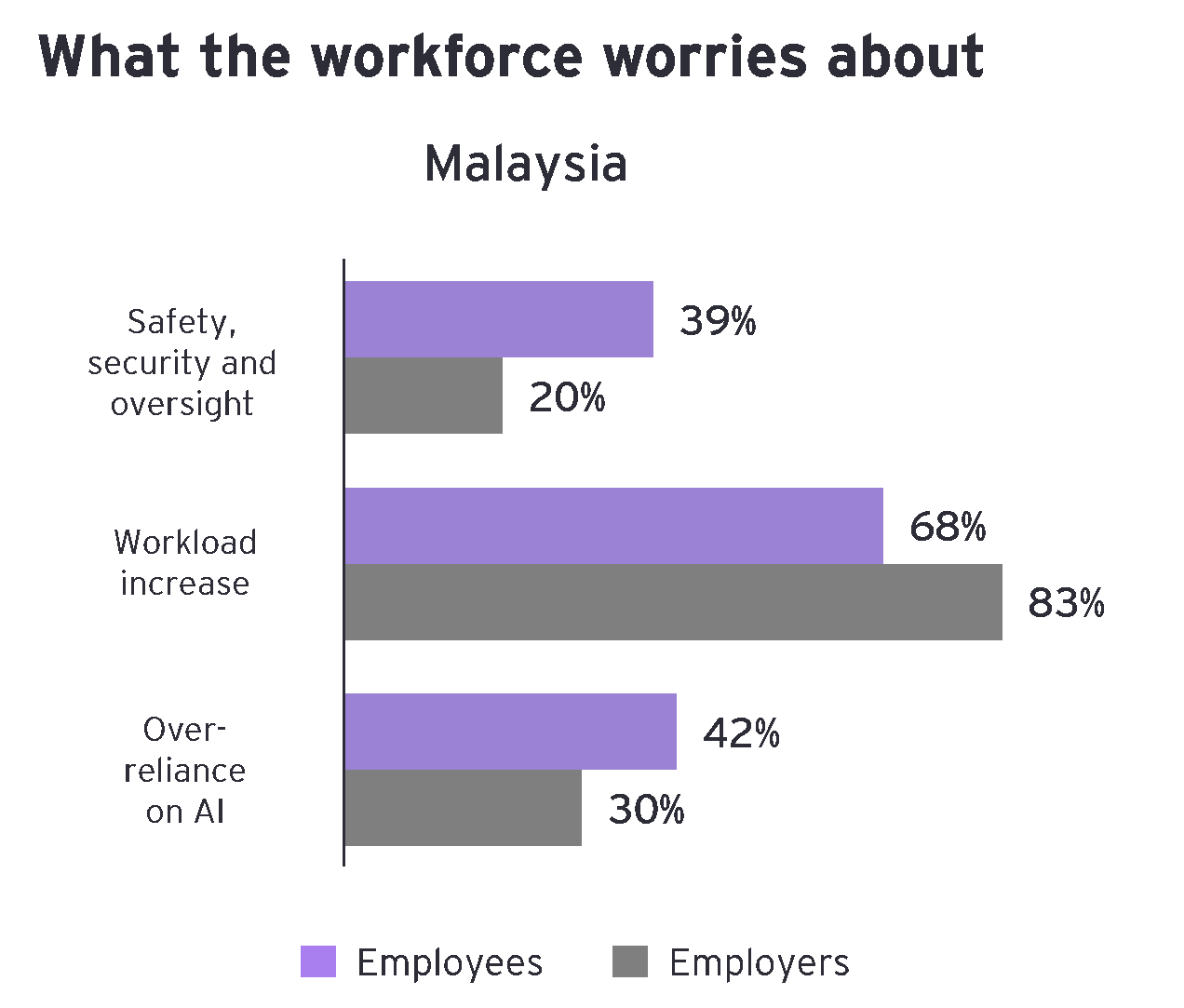
- 81% of Malaysian employees using GenAI save significant time, but 68% say their workload has increased.
- Retention improves, but 1 in 4 employees still plan to leave, driven by demand for AI exposure and career growth.
- Employers overestimate pay satisfaction by up to 25%.
- Only 12% of employees go through sufficient AI training, while employers focus more on human skills than technical AI skills.
- 80% of Malaysian employees are confident in transformation (as compared to 74% globally), and innovation is the top cultural priority.
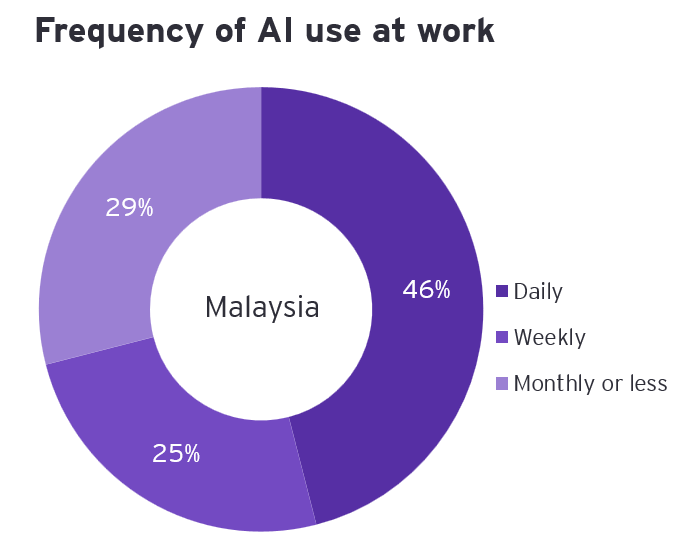
Kuala Lumpur, 26 January 2026 — Malaysian companies are embracing artificial intelligence (AI) faster than the global average, but many are still leaving significant productivity gains untapped. According to the EY 2025 Work Reimagined Survey, 81% of Malaysian employees who actively use generative AI (GenAI) report significant time savings. Yet, 68% say their workload has increased, which could implicate loss of productivity gains to stress and burnout.
Conducted annually as a global survey, this announcement focuses on the Malaysia findings, which is drawn from 300 employees and 30 employers across seven industries with selected comparisons to global results for context. The Malaysian findings highlight a critical opportunity: organizations should leverage strong trust in leadership to redistribute tasks and integrate AI effectively, for capacity optimization and employee wellbeing.
AI learning falls short as skills misalign
The survey also reveals a gap between adoption and capability. Although AI adoption is high, only 12% of Malaysian employees receive sufficient AI training to fully benefit from its capabilities. Employers should act now to expand AI learning opportunities now as employees who integrate AI into their workflows report:
- Up to 15+ hours saved per week.
- 76% improved work performance.
- Enhanced energy and wellbeing, with 80% employee confidence in future transformations.
“AI is no longer a future concept; it’s a present-day productivity engine. Malaysian organizations that fail to invest in new skills risk losing hundreds of hours per employee each year. Companies should act now to expand AI learning opportunities to match employee demand while balancing development of human skills, in order to boost efficiency and strengthen their talent proposition in a highly competitive market,” said Anil Shivadas, Partner, People Consulting, Ernst & Young Consulting Sdn. Bhd.
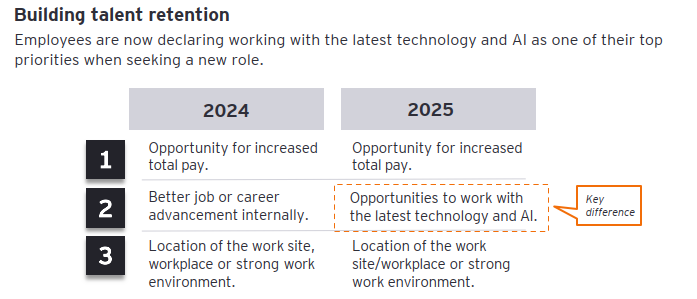
This is further illustrated by Malaysian employees sharing that opportunities to work with latest technology and AI have now become the second most important factor in attracting them to new roles, overtaking traditional considerations like workplace location.
Pay perception gaps persist, as employers overestimate satisfaction
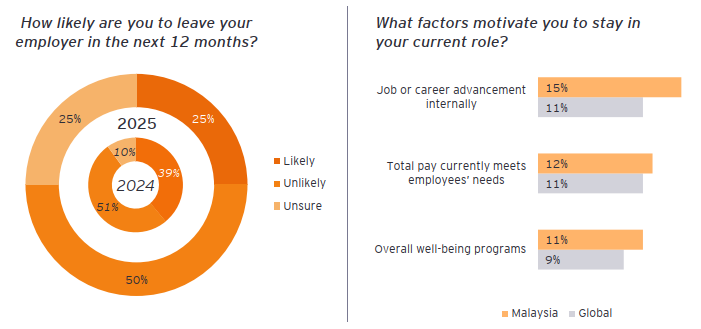
A total-compensation perception gap persists in Malaysia, with employers overestimating employee satisfaction by up to 25%. Furthermore, while attrition intent has dropped, one in four employees still plan to leave, driven by demand for AI exposure and career growth.
“The survey shows that employees want to work with the latest technology and AI. This is now a top factor in career decisions. By combining fair compensation with AI-driven flexibility and personalized learning, employers can create an employee value proposition that resonates with talent, keeping them engaged for the long-term,” said Low Choy Huat, Malaysia People Consulting Leader; and Partner, Ernst & Young Consulting Sdn. Bhd.
High confidence in transformation, where innovation is key
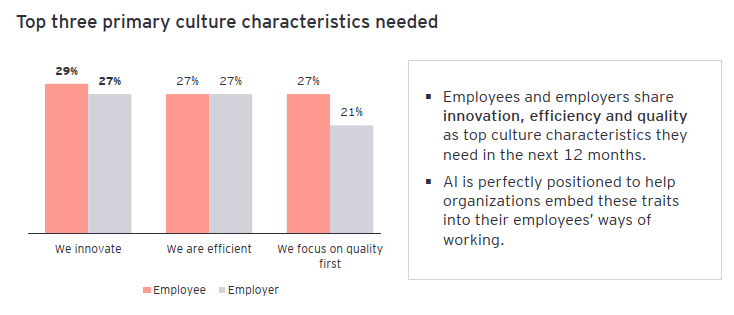
Malaysia’s organizational culture is evolving positively, as two out of three employees feel trusted and empowered by management, and 81% feel connected to their team. Whereas 73% believe their organization’s culture has improved, and innovation, efficiency, and quality are the top cultural characteristics needed in the next 12 months. But without urgent action to close the AI skills gap, encourage experimentation and accelerate cultural adoption, companies risk losing momentum and missing the chance to lead in shaping Malaysia’s future-ready workforce.
For more information on the EY 2025 Work Reimagined Survey, visit https://bit.ly/Take5WRS.
-ENDS-
About EY
EY is building a better working world by creating new value for clients, people, society and the planet, while building trust in capital markets.
Enabled by data, AI and advanced technology, EY teams help clients shape the future with confidence and develop answers for the most pressing issues of today and tomorrow.
EY teams work across a full spectrum of services in assurance, consulting, tax, strategy and transactions. Fueled by sector insights, a globally connected, multidisciplinary network and diverse ecosystem partners, EY teams can provide services in more than 150 countries and territories.
All in to shape the future with confidence.
EY refers to the global organization, and may refer to one or more, of the member firms of Ernst & Young Global Limited, each of which is a separate legal entity. Ernst & Young Global Limited, a UK company limited by guarantee, does not provide services to clients. Information about how EY collects and uses personal data and a description of the rights individuals have under data protection legislation are available via ey.com/privacy. EY member firms do not practice law where prohibited by local laws. For more information about our organization, please visit ey.com.
This news release has been issued by Ernst & Young Consulting Sdn. Bhd., a member of the global EY organization.