




Royal Swinkels

Unlocking potential: Enhancing sanctions compliance with AI


How can financial service organizations leverage (Gen)AI to enhance their sanctions frameworks?


In brief:

  • Financial institutions face mounting pressure from rapidly evolving and conflicting global sanctions regimes.
  • AI and GenAI offer strategic solutions—automating screening, enhancing data analysis and enabling proactive compliance.
  • With tailored frameworks and global expertise, organizations can turn compliance into competitive advantage and shape the future with confidence.

From Russia to China, from tech restrictions to geopolitical volatility—the sanctions landscape is shifting fast. Financial institutions are under pressure. Not just from their own regulators, but from global regimes that often contradict each other. The question is no longer if you’ll be affected, but when.

In today's rapidly evolving geopolitical landscape, sanctions have become a pivotal tool for nations and organizations to exert influence and enforce international norms. As global focus shifts, the global sanctions environment is undergoing significant transformations, impacting financial institutions worldwide. The dynamic nature of sanctions regimes means that financial institutions must constantly adapt to new regulations and compliance requirements. Organizations strive to balance the need for stringent oversight with the demands and expectations of the financial industry. Severe penalties for non-compliance and the risk of reputational damage are key points of attention for every financial institution. 

Sanctions developments

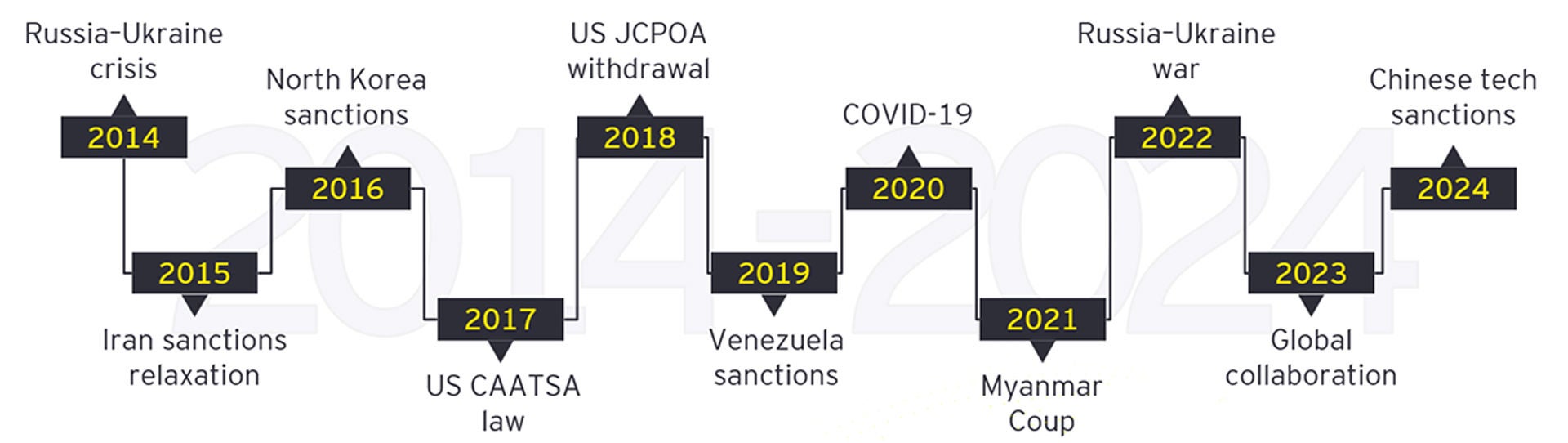
Over the past decade, sanctions regimes have evolved significantly in response to geopolitical tensions, human rights violations, and security threats. The below timeline highlights key milestone events which have given rise to our current sanctions landscape.

[Image 1]

Timeline: key milestone events which have given rise to our current sanctions landscape

Financial institutions have faced several key challenges when it comes to sanctions compliance.

These challenges stem from the complexity and ever-changing nature of sanctions regimes, as well as the need to balance compliance with operational efficiency. Furthermore, sanctions carry strict liability, meaning that financial institutions (including individual employees) can be held accountable for violations, regardless of intent or negligence. We identify five key global challenges:

  • constantly changing sanctions lists and regulations
  • conflicting demands from multiple jurisdictions
  • reputational risks and steep penalties for non-compliance
  • operational strain from manual screening and fragmented data
  • indirect exposure to sanctioned entities through third-party relationships
If you don’t act now, you lose your head. The sanctions regulator is the new guillotine.

The sanctions landscape is evolving rapidly, making staying compliant an increasingly difficult demand. Artificial Intelligence (AI) can play a crucial role in enhancing your ability to stay in control of your compliance obligations. AI must be viewed as a comprehensive methodology for conducting work, not just a tooling consideration.

An effective AI-driven sanctions strategy is founded on specific organizational goals, which when achieved tackle the challenges faced by the organization, and in addition create optimization once these challenges are addressed. Goal setting must always begin with a comprehensive and well-considered data strategy.

Creating a centralized sanctions knowledge base that consolidates information from diverse sources, such as web scraping, documents, and databases, is essential. Once the data is organized, it enhances operational capabilities, allowing the focus to shift toward effectively leveraging this power.

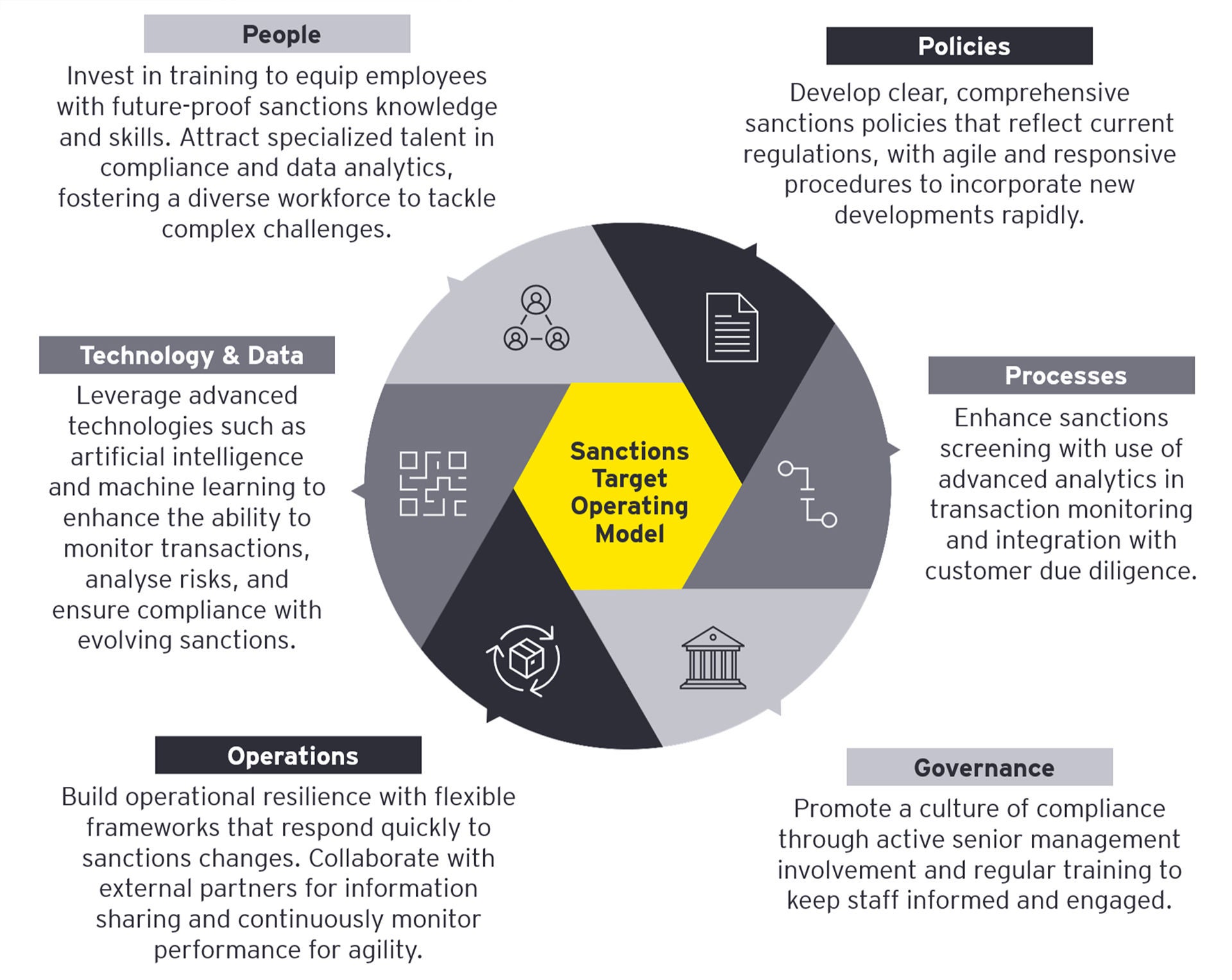
[Image 2: Sanctions Target Operating Model]

Sanctions Target Operating Model

Real-world impact: AI in action at global banks

EY works with major international banks to build AI-powered sanctions frameworks that go beyond compliance. These solutions include:

  • real-time screening of OFAC and other global lists
  • detection of sanctioned individuals in customer data
  • risk scoring based on transaction behavior and network analysis
  • secondary screening to reduce false positives• GenAI-powered interpretation of complex regulatory texts

These are not plug-and-play tools. EY tailors each solution to the client’s systems, risk profile and operational needs. EY teams utilize various forms of AI to achieve client goals. Agentic AI has proven to be invaluable, facilitating communication with knowledge bases and simplifying complex legal terminology. AI has also been used in conducting mapping internal policies, risks and controls to current and future regulations, helping organizations stay safe and secure in the present, while being proactive and prepared for the future.

On an operational level, monitoring transactions for potential sanctions violations is critical. This involves analyzing transaction behaviors and utilizing AI to identify patterns that distinguish potentially suspicious activities from legitimate ones.

Data under pressure

The efficacy of sanctions compliance is fundamentally predicated on the integrity and accessibility of pertinent data, yet this domain is fraught with substantial technological challenges: The inherent complexity of navigating the intricate landscape of sanctions regulations, propagated by diverse jurisdictions, presents a formidable operational burden. To effectively mitigate sanctions risks, institutions must establish robust risk management frameworks and remain acutely aware of indirect sanctions risks. The imperative to manage these operational and compliance burdens demands a strategic and meticulous approach, ensuring that all facets of sanctions compliance are addressed with precision and diligence.

The regulatory gauntlet

Financial institutions are now navigating a landscape of heightened regulatory scrutiny, where sanctions compliance is no longer a peripheral concern but a central pillar of operational integrity. Adapting to the shifting expectations of sanctions compliance is mandatory:

  • Regulators are intensifying their focus, demonstrating a willingness to impose substantial financial penalties for even minor infractions, underscoring the gravity of non-compliance.
  • The regulatory expectations surrounding sanctions are in a state of perpetual evolution, demanding that institutions maintain a proactive stance to anticipate and adapt to emerging standards.

This dynamic environment necessitates a continuous cycle of learning and adaptation, ensuring that compliance practices remain aligned with the latest regulatory announcements. The complexity is further compounded by the potential for conflicting regulatory requirements across multiple jurisdictions, presenting financial institutions with intricate compliance dilemmas. These conflicting mandates necessitate a nuanced understanding of each regulatory framework and the ability to reconcile potentially disparate obligations, requiring a strategic and adaptable approach to maintain compliance across diverse operational landscapes.

AI-powered sanctions frameworks are not plug-and-play—they must be tailored to each institution’s systems, risk profile and operational reality to turn compliance into strategic strength.

The financial world is a complex ecosystem, constantly grappling with evolving regulations and geopolitical shifts. Among the most pressing challenges faced by financial institutions is navigating the intricate and dynamic landscape of international sanctions. From fluctuating lists to conflicting jurisdictional rules, the pressure to maintain robust compliance is immense. But amidst these challenges, a beacon of hope emerges: Artificial Intelligence (AI) and, more specifically, Generative AI (GenAI).

AI and GenAI are not merely tools; they are strategic assets that empower financial institutions to move from reactive to proactive compliance. By automating repetitive tasks, enhancing data analysis, and providing real-time insights, these technologies can significantly reduce risk and improve efficiency.

The journey towards robust sanctions compliance is an ongoing process. By embracing the transformative power of AI and GenAI, financial institutions can navigate the shifting sands of global regulations with greater confidence and agility, ensuring a safer and more secure financial future.

The solution: a sanctions operating model powered by AI

EY’s sanctions operating model is a blueprint for modern compliance. It combines:

  • Real-time vigilance and predictive insight:

    AI-powered systems can continuously monitor global news, regulatory updates, and sanction lists, providing instant alerts of critical changes. GenAI's ability to process and understand natural language allows it to extract key information from unstructured data sources, such as news articles and regulatory documents. Predictive analytics, fueled by AI, can anticipate potential future sanctions changes, enabling proactive adaptation and risk mitigation.

  • Data mastery and enhanced screening:

    AI algorithms excel at data cleansing and enrichment, resolving inconsistencies and improving the accuracy of screening processes. Advanced screening techniques, powered by AI, can detect subtle patterns of evasion that traditional systems might miss. GenAI can synthesize data from disparate sources, normalizing it, to improve screening quality. Anomaly detection capabilities can identify unusual transaction patterns indicative of potential violations.

  • Streamlined operations and reduced burden:

    AI automates due diligence processes, reducing manual effort and freeing up valuable resources. Risk scoring algorithms prioritize high-risk cases, enabling focused attention and efficient resource allocation. GenAI can automate report generation and create virtual assistants that answer compliance questions. Network analysis tools can uncover hidden relationships and identify potential indirect sanctions risks. Furthermore, AI can help merge valuable information from various areas within the Bank, such as KYC, Due Diligence, Transaction, Monitoring, to enhance screening effectiveness.

  • Navigating the regulatory maze:

    AI-powered systems can track regulatory changes and provide timely alerts, ensuring continuous compliance. Automated compliance auditing identifies potential gaps and areas for improvement. GenAI can assist in the interpretation of complex regulatory documents, providing clear and concise summaries. Scenario planning tools, driven by AI, can simulate various regulatory scenarios to assess potential impacts and develop contingency plans.
     

From compliance to competitive advantage

Sanctions have become a strategic priority. With AI as a trusted ally, financial institutions can not only meet regulatory demands but also strengthen their operational resilience. EY brings the expertise, technology and global experience to make that transformation a reality.


Sanctions compliance is no longer just about avoiding risk—it’s about building resilience and gaining strategic advantage. With AI as your ally, you can transform complexity into clarity and stay ahead of global regulatory shifts.

Want to dive deeper into how EY helps financial institutions strengthen their sanctions frameworks with AI and shape the future with confidence?

Download our comprehensive PDF report, featuring real-world use cases, global perspectives from EY teams in the US, Baltics, Asia and the Netherlands, and a blueprint for building a future-ready compliance strategy.

Get practical insights, proven methodologies and a clear roadmap to make your organization sanctions-proof. Or contact EY to explore how we can tailor AI-driven compliance solutions to your needs.


Summary

AI and GenAI help financial institutions improve sanctions compliance. EY offers tailored solutions that automate screening, reduce risk, and turn compliance into strategic advantage.


About this article

Related articles

How Wolters Kluwer uses GenAI for smarter decision making in financial processes

Discover how financial professionals can leverage AI tools for data analysis and reporting.

Inside the process: how EY navigated its own AI-driven transformation

The global EY organization (EY) embraced self-disruption, driving ambitions for responsible AI advancement. Read more.

How can tax and finance leaders build agile functions that thrive?

Tax and finance functions need to create agility and facilitate continuous transformation to deal with constant disruption and leverage AI.