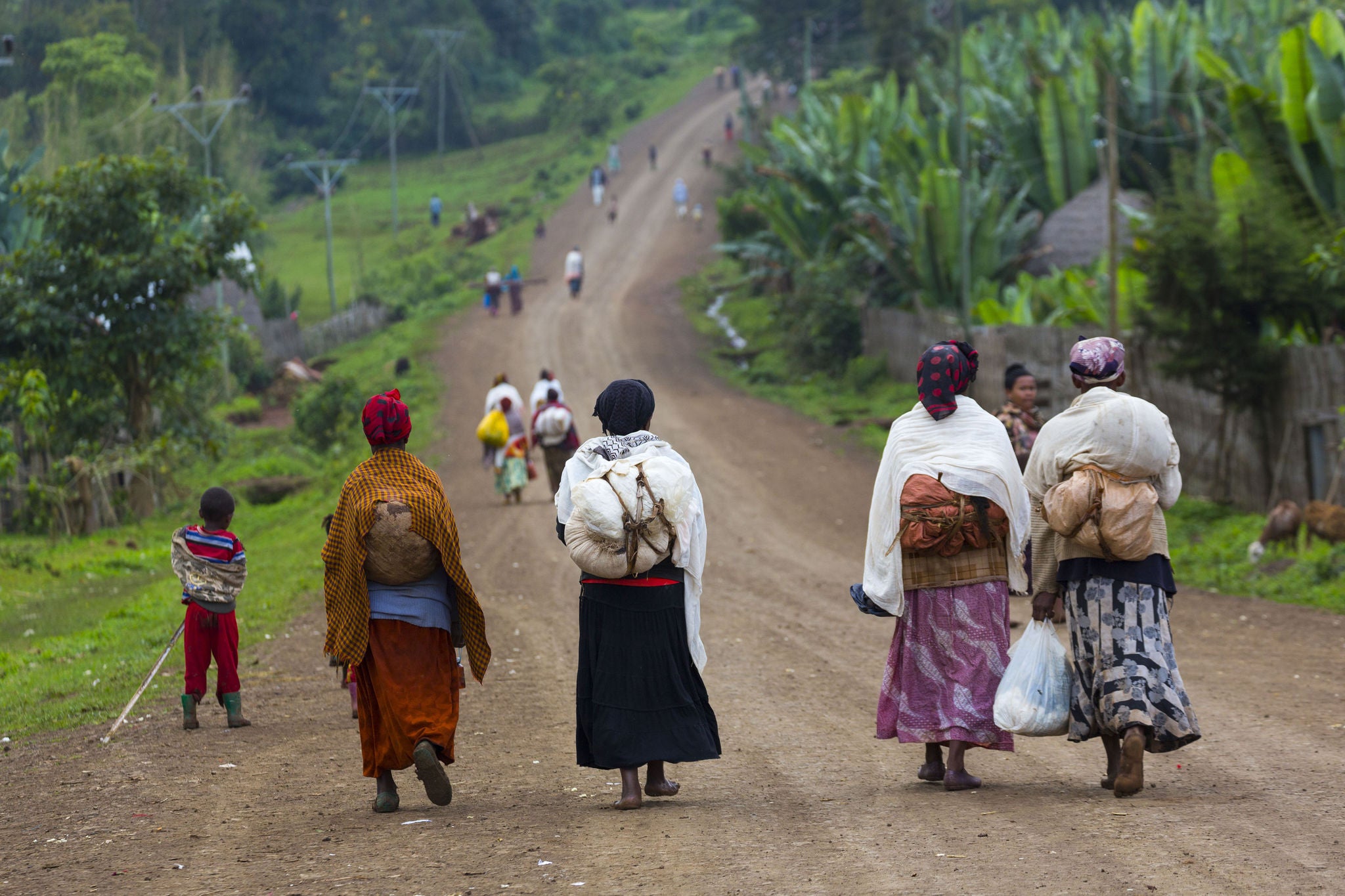




People walking along a rural road in Ethiopia, surrounded by green hills and vegetation

How Nedamco and MUFG see Ethiopia as the tipping point for carbon markets


Ethiopia could unlock a scalable, transparent carbon market, driven by Nedamco, MUFG and a new global ecosystem.


Carbon credits can play a crucial role in achieving the goals of the Paris Climate Agreement (COP21). The challenge: the market is not yet mature. That needs to change, and it can, as becomes clear in a conversation with Jan de Jong (Nedamco Capital), Philippa Raal (MUFG Bank (Europe) N.V.) and Remco Bleijs (EY). A discussion about a promising transition, with Ethiopia, exchange operator ICE and the Gates Foundation in leading roles.

The story is well known: carbon dioxide emissions must be reduced to keep our planet healthy and livable. For years, economists have argued that pricing emissions is the most effective approach. That is precisely why climate agreements rely on carbon credits. But how do they actually work?

Bleijs: “Carbon credits enable companies, alongside reducing emissions, to offset their remaining footprint and meet climate targets. A party that reduces, avoids or stores CO₂ can issue credits that are purchased by another party on the carbon market. This stimulates innovation and green technologies. In that sense, capital can be a powerful driver of the transition to a sustainable world. But it requires a mature market, and that doesn’t exist yet.”

Where there is hunger, planting trees is not a priority.

What’s missing?


Raal: “Supply and demand still struggle to connect. As a result, many promising initiatives remain small-scale and ad hoc. The compliance market is more advanced, but the voluntary carbon market is fragmented, opaque and varies widely in quality and standards. We need standardized frameworks and regulation. Only then will larger players step in and create real momentum.”


De Jong: “The good news is that we are approaching a tipping point. An alliance of stakeholders is now forming to build that momentum. At Nedamco, we’ve been working on this for seven years, and I believe all signals are now turning green.”


Where does that confidence come from?


De Jong: “Three developments are converging. First, the aviation industry has a growing need for carbon credits due to the global CORSIA framework. Second, ICE – the exchange operator behind, among others, the New York Stock Exchange, is starting to offer CORSIA-related instruments, with listing and clearing in places like Abu Dhabi and London. This improves liquidity and price discovery, attracting institutional investors who prefer familiar instruments such as futures, ETFs and bonds. Third, we are seeing major advances in what we call digital MRV – Measurement, Reporting and Verification. In the past, you might measure tree growth with a ruler. Today, sensors, satellite data, AI and blockchain allow continuous and precise monitoring of emission reductions. That brings transparency, lower costs and less room for manipulation.”


Bleijs: “Digital technology is advancing rapidly. We are only beginning to understand AI’s potential. These breakthroughs could be key to building a better carbon market.”


Raal: “They increase transparency and reliability, critical for market participants moving toward well-regulated, low-risk trading environments.”


What about greenwashing?


Bleijs: “It becomes far more manageable, especially when combined with verification by assurance providers. A key concept is ITMO – Internationally Transferred Mitigation Outcomes. This governs international carbon credit transfers and ensures credits are counted only once. When a country sells emission reductions, it must account for that sale domestically, preventing double counting.”

Does this benefit local communities?

Nedamco has spent years developing an ecosystem with partners such as the World Bank, the Gates Foundation, the Dutch government, UNFCCC and Microsoft. Why Ethiopia?

De Jong: “Ethiopia has scale—around 150 million people, and through the Green Legacy Initiative it has planted over 40 billion trees across an area roughly one and a half times the size of Italy. This is meaningful impact. Forest coverage has grown from 5% to 23%, with a target of 30% by 2030.

The fundamentals are also strong: 100% renewable electricity from hydropower (with exports to five countries), no petro-state dynamics, and since 2024 a ban on importing combustion engine cars. On top of that, COP32 will take place in Ethiopia in 2027. The country has a real opportunity to become the world’s largest exporter of CORSIA carbon credits.”

Does this benefit local communities?

De Jong: “That’s essential. Where there is hunger, planting trees is not a priority. That’s why three-quarters of net revenues flow directly, via a World Bank trust account, to local communities. This helps them triple food production using AI-for-farming technologies, supported in part by the Gates Foundation, without degrading water, forests or biodiversity. Our ambition goes beyond nature: food and water security reduce the risk of humanitarian crises and irregular migration to Europe, while stabilizing trade flows. That makes this as much a geopolitical story as an ecological one. Over the next ten years, this could represent USD 10 billion for Ethiopia.”

A blueprint for other sectors?

Bleijs: “CORSIA is the first global compliance system mature enough to build liquidity, but other sectors are following. Think maritime, or EU regulation allowing 5% of emissions to be offset with carbon credits by 2030. Governments will also play a role. The exact path is uncertain, but we are now seeing a strong blueprint emerge.”
 

This article is from the Eye on Finance magazine. Download the PDF (Dutch) here for more insights on Transition Finance.


Summary

Ethiopia is emerging as a pivotal test case for the global carbon credit market. Industry leaders from Nedamco, MUFG and EY highlight how aviation demand, exchange infrastructure and digital MRV technologies are converging to create a scalable, transparent ecosystem. With strong local fundamentals and international backing, Ethiopia could become a major exporter of high-quality carbon credits while delivering economic and social benefits.


About this article