
EY refers to the global organization, and may refer to one or more, of the member firms of Ernst & Young Global Limited, each of which is a separate legal entity. Ernst & Young Global Limited, a UK company limited by guarantee, does not provide services to clients.
How FrieslandCampina’s Data Platform paves the way for AI innovation
FrieslandCampina adapts to digital transformation by placing data at the heart of the entire chain — from grass to glass.
In the previous century, growth was driven by oil; today, it's powered by data. FrieslandCampina is embracing that shift. The dairy company—a bastion of complex production processes where milk is broken down into various components that are turned into valuable products for consumers, food manufacturers, producers of premium infant nutrition, and pharmaceutical companies worldwide—is undergoing a fundamental digital transformation. And no, this isn’t just an IT upgrade, but a profound transformation in which data becomes not only accessible but also usable across all departments: from Finance and Commerce to Procurement and Operations.
From data silos to data hub
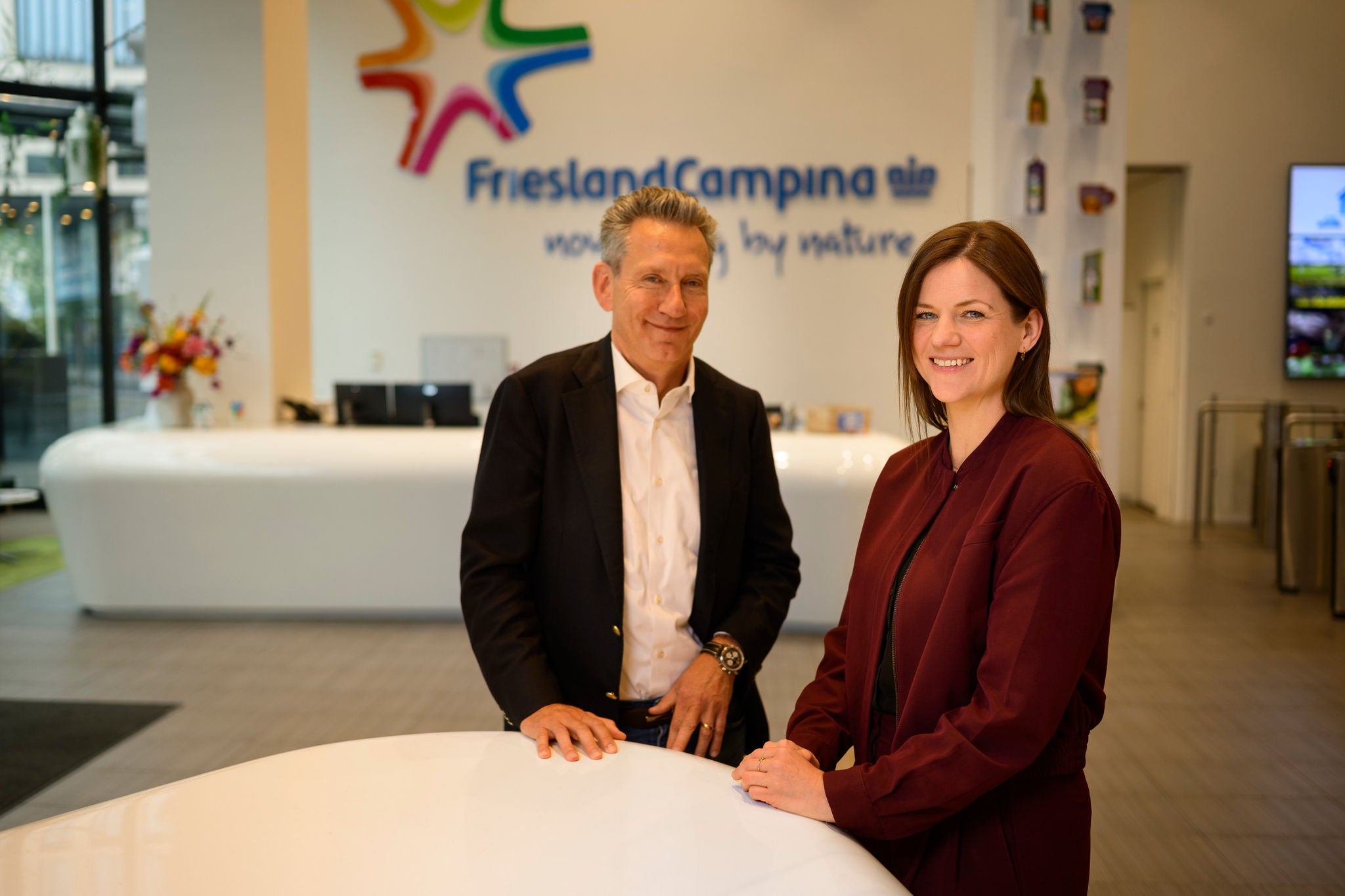
“Three years ago, we realized our systems no longer matched our ambitions in terms of speed, scalability, and innovation,” says Joëlle van der Bijl, Chief Data & Analytics Officer at FrieslandCampina. In practice, this meant that data was often trapped within individual domains. Information from Finance was difficult to link with data from, for example, Commerce or Procurement. Because AI and data systems operated in separate environments, data scientists spent more time collecting and cleaning data than analyzing it.
We deliberately chose not to do a lift-and-shift. It wasn’t the right choice for us
The solution?
No quick fixes or cosmetic upgrades, but a fundamental restructuring. “We deliberately chose not to do a lift-and-shift. It might have been possible, but it wasn’t the right choice for us,” Van der Bijl explains. That approach was both bold and radical.
In collaboration with EY, FrieslandCampina developed a modular and scalable data platform based on Databricks and Microsoft Azure. “It didn’t become a bulky monolith, but rather a flexible architecture that all business units can connect to,” says Simon van Ulden, Partner and AI Tech Lead at EY. “This allows teams to generate cross-domain insights — think dashboards that combine Commerce and Supply Chain, build smart AI applications, or create APIs that link applications to the data in the D&A platform and enable AI-driven automation.”
The combination of Power BI and Databricks ensures that everyone — from analyst to engineer — works from a single platform to make better decisions.
Power BI makes dashboards accessible to non-technical users, while Databricks provides space for advanced data analysis and AI development. “The combination of both ensures that everyone — from analyst to engineer — works from a single platform to make better decisions,” Van Ulden adds.
Not centralizing, but connecting
The organizational structure evolved alongside the technology. FrieslandCampina now operates with a hub-and-spoke model: a central core for standardization and expertise, and decentralized teams (the “spokes”) with their own responsibilities and agility. Roles such as Capability Lead Platform and Front-End Capability Lead are essential for safeguarding design principles. This approach accelerates decision-making and fosters engagement at the local level.
Behavior over technology
“But technology is only half the story,” says Joëlle van der Bijl. The real transformation lies in organizational behavior. Data only becomes valuable when employees can work with it effectively. That’s why FrieslandCampina also invests in citizen engineers, leadership programs, and data literacy. AI literacy is no longer optional — it’s essential. Van Ulden emphasizes: “It’s crucial that organizations clearly define responsibilities around data. Who is accountable for data quality when it’s used across multiple applications? That requires a culture where experimentation and continuous learning are second nature.”
Think of it like solar panels. AI is the panel — it promises savings and sustainability. But without infrastructure, it delivers nothing. That infrastructure — the data platform — is the essential wiring. Without well-organized data, there’s no quality AI. Without governance, there’s no trust. Without behavioral change, there’s no adoption.
From chatbot to dairy optimization
The applications? They’re already in development — and far from vague. Think of the Inventory Service Control Tower, a SKU Recommender, Cost to Serve, a Sustainability Chatbot, and even Predictive Maintenance. The benefits are clear: lower costs, improved sustainability, and higher customer satisfaction. More importantly, the organization is learning faster than it’s growing.
With the implementation of the Inventory Service Control Tower, FrieslandCampina has made significant strides in the efficiency and effectiveness of its supply chain. Through smart data analysis and predictive models, inventory management has been optimized. This has led to improved stock levels across countries and freed up working capital.
Thanks to AI in the Inventory Service Control Tower, sales teams can now respond more quickly to customer needs. They gain valuable insights from data analysis, enabling them to react more effectively to market changes. In a constantly evolving world, agility is crucial for FrieslandCampina — and (near) real-time insights are a major asset. AI also supports RFC’s sustainability goals. For example, smarter truck loading and route optimization help reduce CO₂ emissions contributing to the sustainability goals set out in the company’s Climate Plans.
Best practices without buzzwords
For organizations looking to adopt a data-centric approach, FrieslandCampina has learned several lessons that can support others in their transformation:
- Choose courage over convenience: It’s important to tackle the full transformation at once, rather than working incrementally with legacy systems. This prevents getting stuck in outdated infrastructure and incurring ongoing costs.
- Start from a value perspective: Understand the pain points in the organization upfront and ensure the technology aligns with business needs.
- Prioritize accessibility: Ensure everyone has access to data and that ownership is shared across the organization. This fosters a culture where data is widely available and effectively used.
From grass to glass
The power of data transformation lies in connecting the entire value chain — from grass to glass. From the farm to the store, data offers opportunities for optimization at every step. “Exploring AI is exciting, but also uncertain. There’s no clear roadmap, and the pace of technological development is overwhelming,” says Joëlle van der Bijl. But FrieslandCampina seems to have found its course — not chasing trends, but standing firmly with both feet on the ground, confidently shaping the future.
Subscribe to EY AI Talks
A newsletter fully designed to support you on your AI journey. No fixed schedule; only sent when there's a relevant update.
How EY can help
-
Learn how your organization can enhance data with AI, driving innovation, creating long-term value and enabling fact-based decision intelligence.
Read more -
Prepare your organization for AI with EY's Data Platform Readiness assessment. Optimize data infrastructure for impactful AI outcomes.
Read more -
Identificeer en benut AI om ervoor te zorgen dat investeringen exponentiële groei en waarde genereren. Meer informatie.
Read more