





EY refers to the global organization, and may refer to one or more, of the member firms of Ernst & Young Global Limited, each of which is a separate legal entity. Ernst & Young Global Limited, a UK company limited by guarantee, does not provide services to clients.
Recent Searches

China ODI maintained growth in 2025, while overseas M&A rebounded with surge in large-scale deals.
In brief
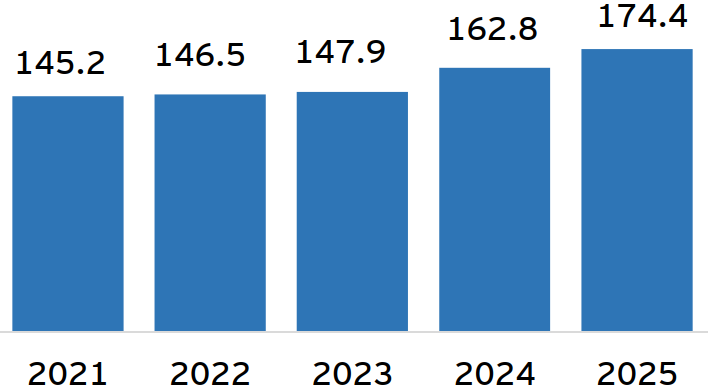
- China’s overall ODI reached US$174.4 billion, up 7.1% year-on-year (YoY). Non-financial ODI amounted to US$145.7 billion, up 1.3% YoY, of which non-financial ODI in B&R partner countries grew 17.6% YoY, significantly outpacing the overall growth rate.
- Chinese enterprises announced a total of US$43.6 billion in overseas M&As, an increase of nearly 40% YoY. The number of large deals valued over US$1 billion rose from seven to 13 compared with the same period last year, while the total number of deals was 429, down 1% YoY.
- In 2025, both the value of newly signed contracts and the completed turnover for Chinese overseas engineering, procurement and construction (EPC) projects grew steadily, reaching new highs.
In 2025, China’s economy advanced under pressure, demonstrating notable resilience and successfully concluding the 14th Five-Year Plan1 period. It achieved steady growth with GDP up by 5% YoY, despite facing structural challenges such as declining population, weak consumption and deflationary pressures, while the economic scale exceeded RMB140 trillion for the first time2. The world experienced profound turbulence and transformation in 2025. Geopolitical conflicts persisted, unilateral tariff measures shook the global trade order, artificial intelligence (AI) technology accelerated iteration and began reshaping the global industrial landscape, while technological competition and strategic resource rivalry between regions intensified. Nevertheless, Chinese enterprises performed impressively in going global: Overall ODI increased 7.1% YoY3, while overseas M&A achieved notable growth, up nearly 40% YoY, with an increase in large transactions. Export value grew by 6.1% YoY, hitting a new historical high. Exports of high-tech products, electric vehicles and lithium batteries maintained rapid growth4.
2026 marks the beginning of China’s 15th Five-Year Plan5 period. China’s economy will adhere to expanding domestic demand as the strategic priority, with efforts focused on boosting consumption, promoting reasonable growth in investment and continuously optimizing its structure. China will advance high-level self-reliance and strength in science and technology, and build a modern industrial system with advanced manufacturing as the backbone and continue to expand opening-up. This includes fostering innovative trade development, expanding two-way investment cooperation and advancing high-quality B&R cooperation.
Looking ahead to 2026, Chinese enterprises are expected to further pursue high-quality outbound development. As a global anchor of certainty, China will open up a new chapter of diversified strategic cooperation, injecting confidence and momentum into the global economy.
ODI maintained growth in 2025, with B&R partner countries witnessing a robust growth
In 2025, China overall ODI reached US$174.4 billion, up 7.1% YoY. Non-financial ODI amounted to US$145.7 billion, up 1.3% YoY. Non-financial ODI in B&R partner countries reached US$39.7 billion, up 17.6% YoY, accounting for 27% of the total, up four percentage points YoY.
Figure 1: China’s overall ODI (US$ billion)
Sources: Monthly Statistics in Brief, China MOFCOM
Overseas M&As saw a significant rebound, with a notable increase in large-scale deals
In 2025, China overseas M&A transactions rebounded notably. Chinese enterprises announced a total overseas M&A value of US$43.6 billion, up nearly 40% YoY. The number of deals reached 429, down 1% YoY. Large-scale deals valued over US$1 billion continued to be a growth highlight, increasing from seven to 13 compared with the same period last year. Chinese enterprises placed greater emphasis on core assets and strategic value in overseas M&A, with investment decisions becoming more prudent and mature.
It is worth noting that the recovery in China overseas M&As in 2025 moved in tandem with the overall upward trend in global cross-border transactions – global cross‑border M&A activity experienced the strongest performance in four years in 2025. M&A value increased by 40% YoY to US$1.4 trillion, with TMT, financial services and energy & power emerging as the most active sectors of transaction activity6.
Figure 2: Value and volume of announced China overseas M&As
Sources: LSEG, Mergermarket, including deals that have been announced but not yet completed, data was downloaded on 5 January 2026; EY analysis
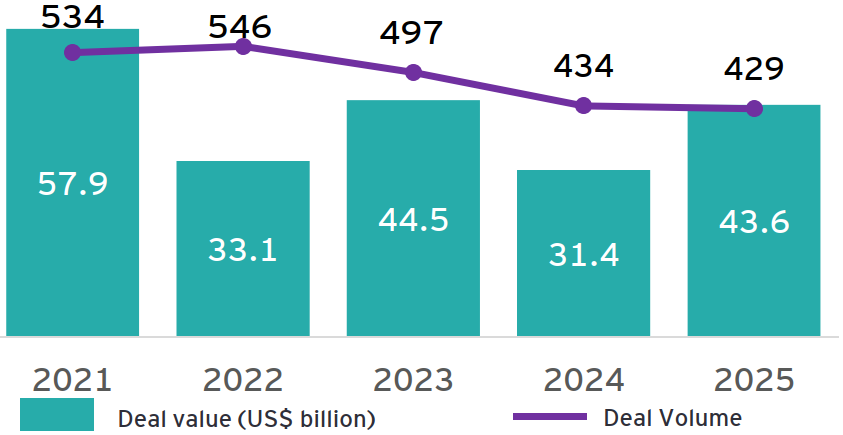
Figure 3: 2025 hot sectors for announced overseas M&A by Chinese enterprises
*AM&M refers to advanced manufacturing & mobility; HCLS refers to health care & life sciences; RHC refers to real estate, hospitality & construction; M&M refers to mining & metals; P&U refers to power & utilities; CP refers to consumer products; FS refers to financial services; O&G refers to oil and gas.
Sources: LSEG, Mergermarket, including deals that have been announced but not yet completed, data was downloaded on 5 January 2026; EY analysis
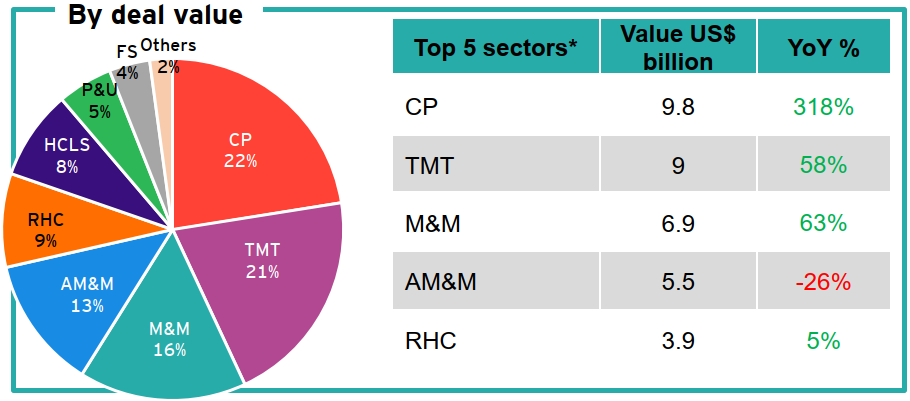
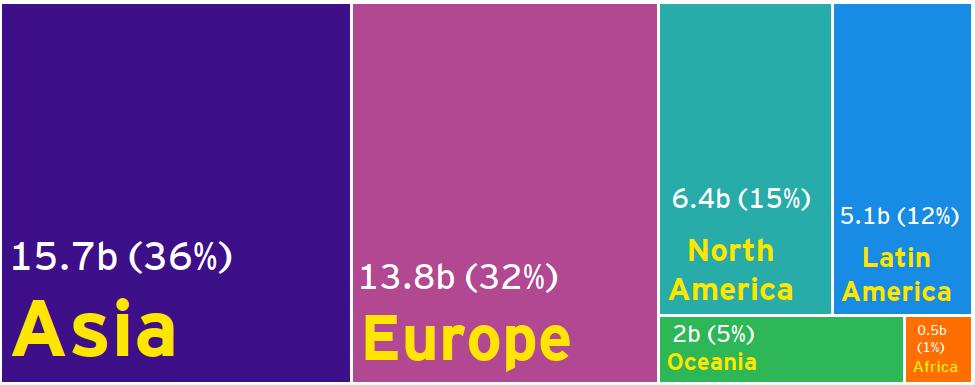
Figure 4: 2025 China overseas M&A distribution by continent (By deal value & % share)
Sources: LSEG, Mergermarket, including deals that have been announced but not yet completed, data was downloaded on 5 January 2026; EY analysis
Value of newly signed contracts and completed turnover of EPC projects maintained steady growth, hitting new highs
In 2025, the value of newly signed overseas EPC contracts by Chinese enterprises reached US$289.2 billion, up 8.2% YoY. The B&R newly signed contract value was US$258 billion, up 10.8% YoY, comprising 89% of the total, up two percentage points YoY. The completed turnover of overseas EPC projects reached US$178.8 billion, up 7.7% YoY. The B&R completed turnover reached US$152.6 billion, up 9.3% YoY, accounting for 85% of the total, up one percentage point YoY7.
2026 outlook: challenges and opportunities in global resilient growth
EY-Parthenon forecasts global economic growth of 3.1%8 in 2026. Developed economies face a convergence of structural and cyclical headwinds, such as aging populations, chronic underinvestment, and rising protectionism, and are expected to sustain low single-digit growth over the next two years. Emerging markets display uneven but generally firmer momentum, supported by resilient domestic demand in India and targeted policy support in parts of Asia. Governments worldwide are expected to exert greater influence over economic activity, with the AI value chain and key scarce resources becoming focus areas of global strategic competition.
In terms of hot regions for Chinese enterprises going global, amid improving geopolitical relations, Europe remains an important destination for Chinese overseas investment, though a prudent approach is still warranted. Latin America continues to attract investment due to its abundant resources and demand release, but geopolitical risks require careful navigation. ASEAN is becoming a growth market leveraging demographic and regional integration advantages. The Middle East and North Africa show investment potential driven by ample capital and economic policies. From a sector perspective, new energy equipment, automotive supply chains, critical minerals, AI applications, cloud infrastructure and robotics are likely to become investment hotspots. The consumer and health industries are diversifying how they expand overseas. The financial services sector continues to provide customized and integrated financial solutions to support enterprises’ globalization.
Recommendations for Chinese enterprises doing outbound investment:
- Stratify the markets by accelerating localization and brand development. Enhance value-added products in developed markets while expanding into emerging markets to actively capture the opportunities arising from resilient growth and demographic dividends.
- Address the restructuring of global supply chains by deploying regionalized production footprints to mitigate trade barriers and geopolitical risks.
- Align with the AI-driven capital cycle, leveraging AI and automation to upgrade industrial chains, mitigate labor shortage risks and build competitive barriers.
- Prioritize the assessment of local resource security capabilities in site selection to strengthen resource security and compliance safeguards.
Summary
According to the report, China’s outbound investment demonstrated strong resilience within a global environment of profound geopolitical and economic shifts. China’s overall ODI reached US$174.4 billion, up 7.1% YoY. Chinese enterprises announced a total of US$43.6 billion in overseas M&A, up nearly 40% YoY. The value of newly signed contracts reached US$289.2 billion, up 8.2% YoY.
Related articles
Overview of China outbound investment of the first three quarters of 2025
China’s outbound investment rebounded in Q1–Q3 2025, with outbound direct investment (ODI) growth and overseas mergers and acquisitions (M&A) recovery driven by large deals.
Hong Kong’s role in the Belt and Road: from super-connector to value-adding partner
EY unveils a special edition of its Navigator report for the Belt and Road Summit 2025 in Hong Kong — Hong Kong’s role in the Belt and Road: from super-connector to value-adding partner.
Empowering high-quality development of the Belt and Road
These reports, viewed through the lenses of sustainability and digitalization, summarize the progress, achievements and trends in jointly building the Belt and Road (B&R) since 2013. They also showcase cases and experiences of some Chinese enterprises participating in B&R construction, offering valuable insights to encourage more Chinese and multinational companies to participate in the high-quality development of the BRI.