




EY refers to the global organization, and may refer to one or more, of the member firms of Ernst & Young Global Limited, each of which is a separate legal entity. Ernst & Young Global Limited, a UK company limited by guarantee, does not provide services to clients.
Recent Searches
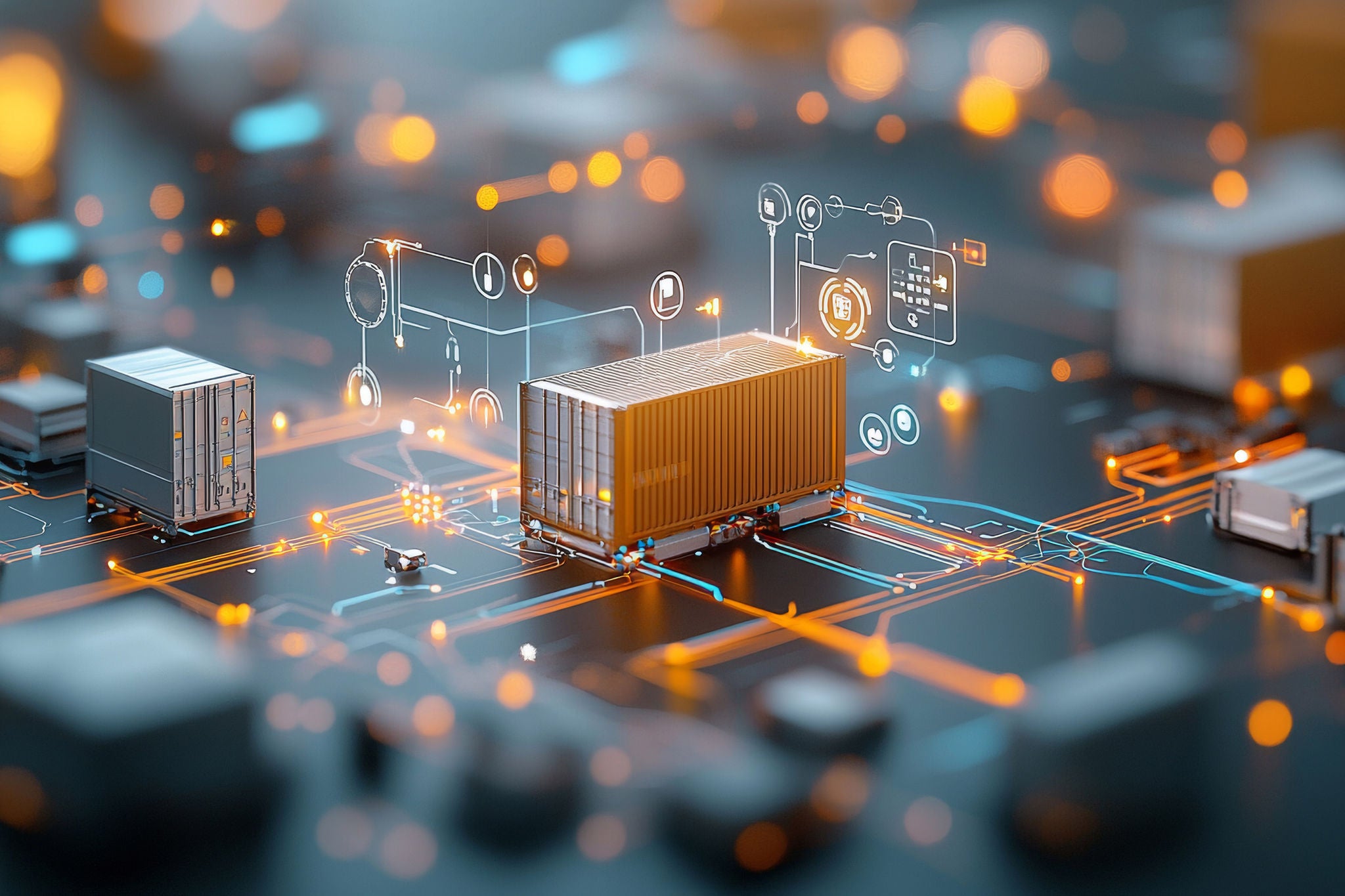
AI agents are transforming supply chains by helping organizations lower costs and improve both agility and customer satisfaction.
In brief
- AI agents are essential for transforming supply chains, driving cost reduction and operational efficiency.
- AI agents accelerate decision-making and support personalized customer experiences.
- Organizations must establish centralized systems that adapt workflows, use relevant data and tie initiatives to measurable outcomes.
Supply chains account for nearly 70% of operating costs for many organizations, making cost reduction a top boardroom priority. However, the challenge lies in not just reducing costs, but achieving it while maintaining agility, resilience and a strong customer experience. In an era of persistent global disruption, geopolitical uncertainty and margin pressure, AI agents are emerging as a game-changer. They enable companies to move beyond incremental improvements toward intelligent, automated and adaptive supply chains that deliver sustainable cost savings and operational excellence.
Why cost reduction is a strategic imperative
EY research shows that 95% of supply chain executives say their CEO recognizes the supply chain’s impact on profitability. Despite this, many C-suites still view supply chains primarily as cost centers. This disconnect often leads to short-term cost reduction rather than strategic investment. Meanwhile, volatility is now structural — tariffs, trade barriers, climate risks and cybersecurity threats are reshaping global networks. Companies that invest boldly in technology during uncertainty often emerge stronger, gaining market share and resilience.
The role of AI agents in supply chain transformation
AI agents act as intelligent orchestrators across the supply chain ecosystem, enabling cost reduction and efficiency in five critical areas:
1. Demand forecasting and planning synchronization:
- AI algorithms analyze historical data, market trends and external signals to predict demand accurately.
- Generative AI enhances scenario planning, allowing planners to test multiple outcomes using natural language interfaces.
- Impact: reduced overproduction, improved inventory and lower carrying costs.
2. Supplier management and procurement:
- AI-driven spend analytics identify savings opportunities and suggest negotiation strategies.
- Intelligent agents automate supplier performance evaluations and streamline sourcing events.
- Impact: lower procurement costs without compromising supplier relationships.
3. Network and footprint strategy:
- Digital twins powered by AI simulate manufacturing and logistics scenarios, helping companies consolidate facilities and enhance routes.
- AI agents monitor global trade shifts, triggering contingency plans when tariffs or restrictions change.
- Impact: reduced transportation costs and improved delivery speed.
4. Automation of manual processes:
- Robotic process automation (RPA) combined with AI agents digitizes repetitive tasks, from order processing to invoice matching.
- Generative AI simplifies collaboration and knowledge retrieval, turning complex supply chain data into actionable insights.
- Impact: increased operational efficiency and reduced labor costs.
5. Inventory visibility and control:
- AI-enabled control towers provide real-time visibility across the supply chain, preventing stockouts and excess inventory.
- Predictive analytics anticipate maintenance needs, reducing downtime and associated costs.
- Impact: improved working capital and reduced waste.
Beyond pilots: scaling AI for real impact
Many organizations remain stuck in AI pilot mode, struggling with data readiness and change management. Successful companies move beyond dashboards to build centralized “nervous systems” that continuously sense, simulate and respond across planning, procurement and logistics. Key lessons include:
- Start with processes, not just models: AI adoption fails when workflows remain unchanged.
- Use relevant data, not perfect data: Speed to impact comes from iterative feedback loops.
- Distribute ownership: Centers of excellence should enable experimentation at the edges.
- Anchor AI in KPIs: Tie AI initiatives to measurable outcomes like inventory turns, lead-time reduction and cost avoidance.
Balancing cost and agility
Cost reduction cannot come at the expense of agility. AI agents accelerate decision-making through real-time analytics. They support personalized customer experiences without inflating costs. Additionally, they also enable flexible operating models, such as shared services and outsourcing, guided by data-driven insights.
In addition to cost efficiency, AI agents provide several strategic benefits:
- Margin protection: AI-driven efficiencies help manage margin pressure without sacrificing quality or speed.
- Resilience: Digital twins and predictive analytics strengthen supply chain resilience against disruptions.
- Customer satisfaction: Faster, more reliable delivery and improved service levels enhance loyalty.
AI agents play a pivotal role in balancing cost and agility. By using them, organizations can not only reduce costs but also build robust supply chains, driving long-term success and competitiveness.
Summary
Supply chain cost reduction is no longer a tactical exercise — it’s a strategic imperative. AI agents provide the intelligence and automation needed to transform supply chains from cost centers into value creators. By integrating AI into planning, procurement and operations, organizations can achieve sustainable cost savings, operational agility and long-term resilience — even amid global uncertainty.

How EY can help
-
Explore our global insights that look at how you can build confidence in AI, drive exponential value throughout your organization and deliver positive human impact. Learn more.
Read more
Related articles
How can responsible AI bridge the gap between investment and impact?
Explore the ways in which responsible AI converts investment into meaningful impact.
Discover how to confidently navigate complex transformations and emerge stronger, more agile and positioned for future growth with Enterprise Reimagined – our Transformation framework
Simply explained: Five key takeaways about AI agents and their impact
Discover five key things to know about AI agents, their rapid growth, business implications and how they enhance collaboration with humans.