EY helps clients create long-term value for all stakeholders. Enabled by data and technology, our services and solutions provide trust through assurance and help clients transform, grow and operate.
At EY, our purpose is building a better working world. The insights and services we provide help to create long-term value for clients, people and society, and to build trust in the capital markets.
Taxation and foreign investment: Attracting global capital
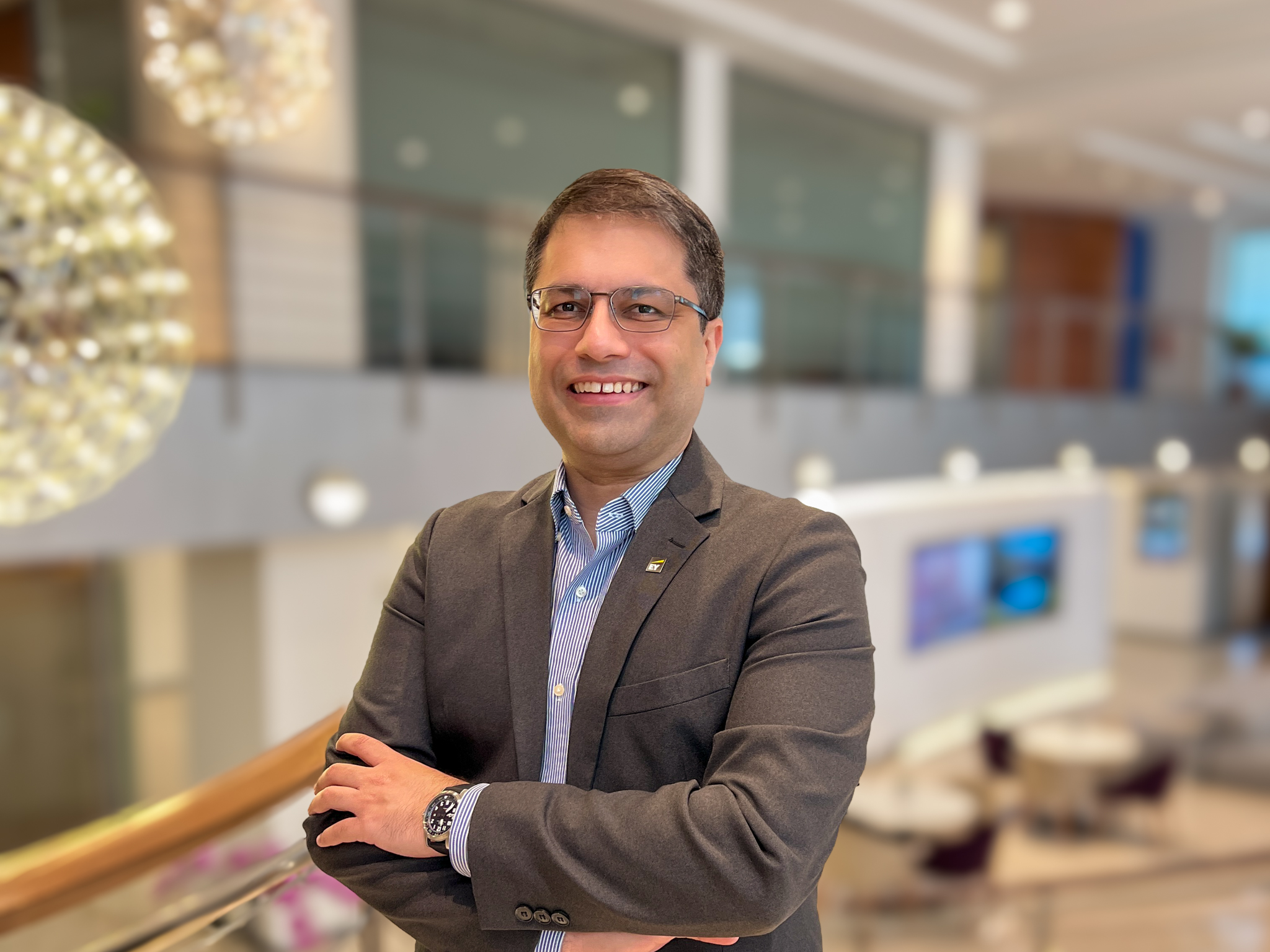
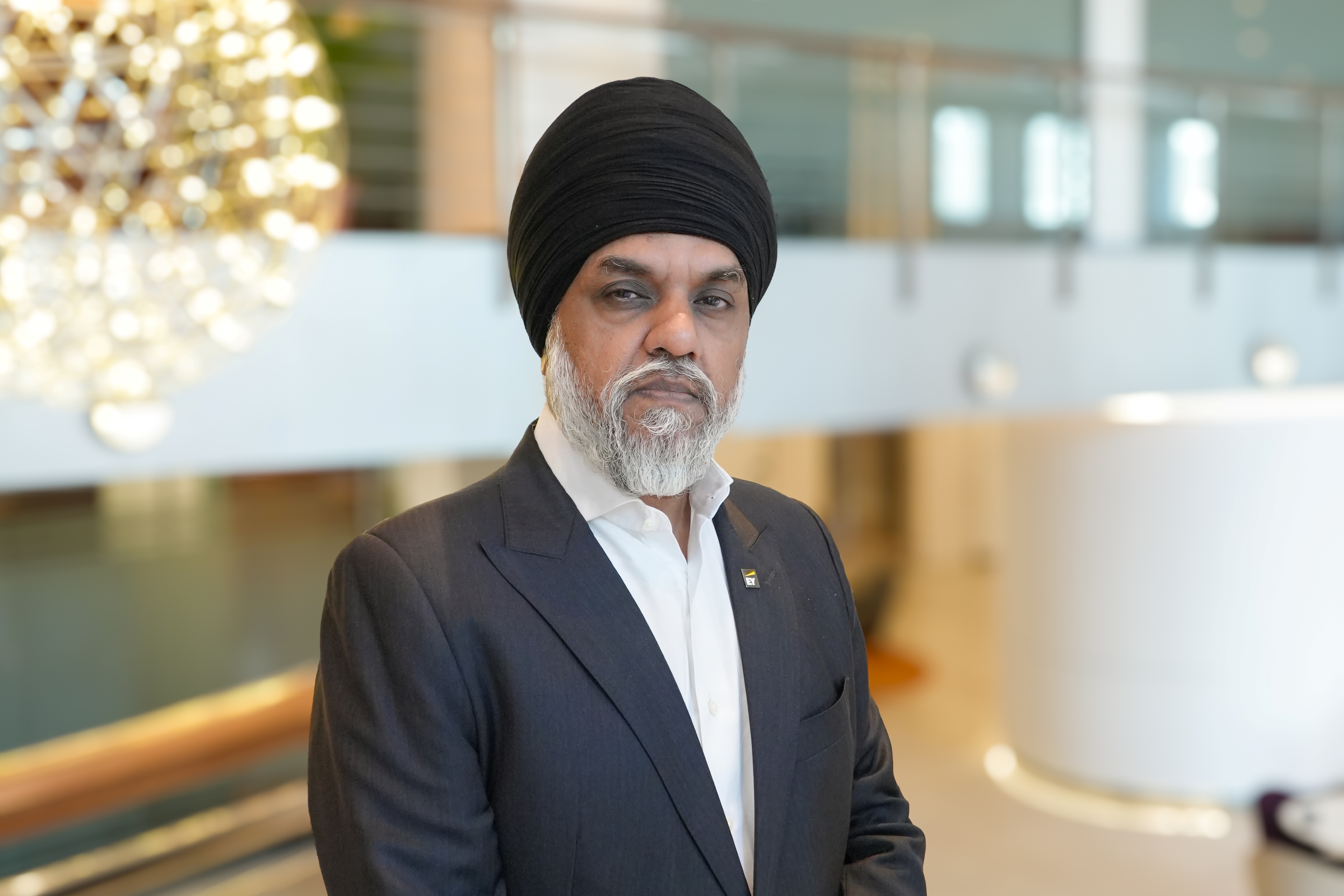
Insights Malaysia host Anil Kumar Puri speaks with EY ASEAN Tax Leader Amarjeet Singh on the role of taxation and tax incentives in attracting foreign investments.
Anil Kumar Puri and Amarjeet Singh look into the role of taxation in attracting foreign investments. They also explore how Malaysia can continue to position itself as a competitive player in the international markets.
This episode is part of our podcast series on the Budget 2026.
Key takeaways:
Malaysia successfully attracted nearly RM380 billion in foreign investments last year, generating over 200,000 jobs and emphasizing the significance of foreign direct investment.
Malaysia’s geopolitical role, including its leadership role in ASEAN and affiliation with BRICS provide unique opportunities for attracting investments.
Implementing targeted tax incentives for efficiency-seeking investors is crucial for effective investment attraction.
The Johor-Singapore Special Economic Zone (JS-SEZ) presents a valuable opportunity for collaboration, enabling Malaysia to capitalize on Singapore’s strengths while offering competitive advantages in cost and resources.
Enhancing productivity through a better business environment and investment in research and development is vital for Malaysia‘s economic growth.
Malaysia attracted almost RM380 billion in foreign investments last year, which generated over 200,000 jobs. What role does taxation and tax incentives play in this success story? If you are an investor, a business leader, or just someone who is interested in understanding how Malaysia is drawing foreign investment to our shores, this episode is one you need to listen to.
Welcome to a new episode of our Insights Malaysia podcast series on the Budget 2026. I’m Anil Kumar Puri and I have with me here today, Amarjeet Singh, as a guest who will be sharing his insights. Today we’ll look at how the tax measures in Budget 2026 can continue to build on the success we’ve had and attract foreign investments to Malaysia and also align to the goals of the 13th Malaysia Plan, which commences in 2026.
As global investors seek new opportunities and as they have more and more choices in where they set up their investments, how can Malaysia continue to position itself as a competitive player in the international markets?
So, Amarjeet, there is a lot happening in the world right now and we have a very unique opportunity I think, this year as a country to capitalize on some of the opportunities out there and to take advantage of the unique position we have at this particular point in time. So right now, Malaysia has the chairmanship of ASEAN and that’s only going to be for another three-and-a-half months. Malaysia has been admitted as a member or an affiliate of BRICS since late last year.
In addition to our neighbors Indonesia and Thailand, we’ve got a new incentive regime, which is going to be announced. We’ve got the Johor-Singapore Special Economic Zone that has come up. So really, a lot of things out there right now, which will enable us to perhaps grow as a nation if we take the right steps in the next few months.
So, perhaps the first question for you Amarjeet, you know taking a step back completely. Why are countries competing so hard for foreign investment? And why is foreign direct investment (FDI) important?
Amarjeet Singh
You know, just having a quick look at the stats, MIDA (Malaysian Investment Development Authority) announced RM190 billion of approved FDI for the first half of this year. Last year, we were close to RM380 billion. So, at worst we are probably on par as last year, which was the highest FDI ever in the history of Malaysia. So this year we are going to be either on par or it is going to be better. So we’re doing well.
And then when we look at where the FDIs are coming from, right? It’s the US, it’s Germany, it’s the Republic of China, it’s Hong Kong and Singapore. My takeaway is, you know, maybe in Malaysia as with the other ASEAN countries, is benefiting from the US and China geopolitical situation. I think if you look at what FDIs do and we’ve seen that for Malaysia, it’s really about creating good, high-value jobs. It’s about bringing in the right knowledge. But also technology transfer I would say. There’s a whole myriad of things that that our country benefits.
And, you know Anil we did a small little study by ourselves. We picked, you know, amongst the clients that we had that had set up a Principal Hub as you know there was an incentive for them some years ago. And it has taken some permutations but it’s still there. And we look at three of our clients. And what we did was we averaged out the kind of jobs that they created, the taxes that they paid us. You know, Principal Hub is not just purely a 0%, it can go up to 10%.
And what we did was we then extrapolated the average from the three to say, okay, what if we had 100 Principal Hubs of this kind of size? What would that mean for Malaysia? And it was interesting to see 100 Principal Hubs of these kinds of sizes would easily give us RM22.6 billion in direct tax contribution because we are saying this is not 0%, it’s 10%. It will give another RM8 billion in indirect taxes because, you know, they’re going to be doing a lot of stuff in Malaysia. It will generate close to 16,000 jobs, high-value jobs. And it generates about RM1.9 trillion in export revenue. If I look at the RM30 billion in taxes that’s close to, that’s more than 10% of our annual tax budget.
So, contrary to popular belief that we give out incentives that there’s a lot of tax foregone. To me, it creates the right kind of jobs. It helps to spur economic activity. And believe it or not, it also helps to generate tax revenue.
Now if I take that one step further, let’s assume we don’t have these Principal Hubs or set-ups or investments in Malaysia that create these high-value jobs. What’s the risk? What’s the loss? The risk, then is these guys, they need to set up somewhere. And what if they go down south? Or they go up north?
And what will happen to the Malaysians that are coming out from the Malaysian universities? They don’t get the same opportunity and that will contribute to that one million people crossing the Causeway every day and actually contributing to our neighbor’s economy.
Anil
That makes a lot of sense. And I guess that is a key issue right now brain drain. And if you don’t have the right companies here, you wouldn’t have the right jobs here. We wouldn’t be able to offer the right experiences both to Malaysians and the foreigners we are trying to attract to study in Malaysia, to build up our education infrastructure.
So it really is a, you know, a ripple effect if you don’t have the investments coming in.
And Amarjeet, those figures you mentioned in terms of the tax revenue you mentioned in terms of the tax revenue were those over a period of time? For the Principal Hub?
Amarjeet
Over a period of 10 years.
Anil
So that’s still perhaps around RM3 billion a year, which is a significant amount.
Amarjeet
Which would not be there if we were not successful in bringing them here. Absolutely.
Anil
There are all these benefits of FDIs and one of the key tools that every country uses to bring in FDI is tax incentives. And there is a perception out there among some that perhaps countries including Malaysia are becoming a bit too generous with tax incentives.
And at the global stage the terms that are being thrown around are things like “Race to the bottom” and the OECD (Organisation for Economic Co-operation and Development) and the G20 have actively put in place measures to perhaps curb a little bit the giving of tax incentives by countries, which has perhaps thrown off the plans that a lot of countries had in terms of how they’re going to structure the incentives.
Do you think that we are being too generous in terms of how we’re giving our tax incentives or are our tax incentives too broad?
Amarjeet
So there’s a very interesting study done by the World Bank on investors coming into Malaysia or investors in general. I really like the findings that came out from the report. They kind of dissected investors into four investor categories.
First was resource seeking, market seeking, efficiency seeking and strategic asset seeking. And their study showed that the investors that are market seeking and resource seeking are not going to be swayed by incentives. I mean, it makes sense, right? If you have a player that wants to just sell products to consumers in Malaysia, with or without incentives, that player needs to be physically in Malaysia. And if someone wants to take benefit of the rich resources that we have you need to somehow set up some presence in this country, too.
So incentives are not going to influence that decision. But when you look at investors that are efficiency seeking, 24% of your profit, that percentage can make a difference. And in fact, at least with the investors that I deal with, it will make a difference whether it’s going to be Malaysia or it is going to be any of the countries across ASEAN.
Of course, there are other parts to it is not just incentives. But it is a factor that will influence the decision. Going back to the question of Pillar Two (there are) two points. One is, as much as they want to avoid the “race to the bottom”, which I think is good. I’m not an advocate for a 0% tax incentive. I think a 24% to a 10% makes a lot of difference. And I think that is in most cases sufficient to influence the decision for Malaysia.
You know, many of the other countries have been pretty quick and fast in terms of coming up with alternative options. You’re looking at the QRTCs (Qualified Refundable Tax Credits). Malaysia announced it as well. Singapore has announced it. And many of the other countries have done it. So we need to pick up some pace there.
The other argument I would like to put forward is the traditional way of the emerging markets especially in ASEAN, has traditionally been in giving out incentives. Now we need to remember that incentives only take effect when the companies generate profits.
Developed countries, they tend to give out incentives in the form of grants. To me, that’s a more expensive way of trying to attract investors. So if you’re looking at creating a level playing field and getting rid of incentives the alternative answer is going to be a more expensive answer for an emerging market like Malaysia.
In summary, I will say maybe we shouldn’t be too broad. We need to be a bit more targeted, which is what the outcome-based incentive that was announced last year. We’re waiting for the details. I think that’s what it aims to do. It will be very targeted to the efficiency-seeking and the strategic asset-seeking type of investors. At the same time, I think the other bit is also about us being quicker, faster, agile in coming up with the incentives and implementing them.
Anil
Absolutely. And Amarjeet in terms of these efficiency-seeking investors I guess those would be the people who are just saying, okay, I need to set up a plant somewhere. The market is the world. And now I need to find a place where I’m going to set up my either my plant or my hub for a trading or my hub to place my senior management; and I’ve got the whole world where I can put these people and that would be an efficiency-seeking investor. And those are the ones where incentives still make a difference.
The other thing, Amarjeet that the government is trying to do in relation to incentives you mentioned the new incentive framework that’s coming out and that is going to be outcome-based, more targeted, the more you give to the country, the more you get. And that is fantastic.
I think on the flip side, what they’re also trying to do is to put in place incentives which are time-bound and not unlimited, especially the incentives that are provided under the law. And I think that’s a good move certainly. But there also needs to be a balance between things that are true incentives and things which are features of the tax system.
So an example is, you know, we now tax foreign dividend income. Or in fact all foreign-sourced income. And we have a five-year exemption for foreign-sourced dividend income subject to conditions being met. And that five years is coming up at 2026.
We’ve also got this Labuan regime which has been there for a while. And some of the incentives around that in terms of distributions for Labuan entities be it by way of dividends, partnership distribution interest is also kept in terms of the tax exemption up to 2027.
And I think that perhaps there needs to be a bit more leeway. Things which are features of a tax system vis-à-vis through incentives need to be given perhaps a longer runway, because it’s very difficult for an investor to decide to use Malaysia as a holding jurisdiction or use Labuan to set up a fund if they know the tax exemptions on the distributions are only going to be there for five years.
And you know, a holding platform is there for 10, 20, 30 years. A fund may have a five- or 10-year lifespan. And so perhaps there needs to be that balance between what is an incentive and what is a feature of the tax system, which they’re going to use to perpetually draw certain types of activities to the country?
Amarjeet
I agree 100% with you, Anil. With the investors that I’ve dealt with you know, these guys are planning 10 years in advance. And when they make a decision, I mean, just imagine I’m not talking about the fund guys. I’m talking about, you know, just a basic manufacturing plant. It’s probably taking them two years to find a location and then it takes them another two to three years to set up the plant.
So these guys need to look at these 10 years to see where the demand is coming from. How are they going to meet that demand and where to meet the demand. And if your tax framework doesn’t have or doesn’t give them the comfort of what’s going to come in for the next 10 years, in some of these cases it is going to be an automatic cross rather than a tick.
Anil
Pivoting a little bit, and this is still partly tax related as the government really has to do various things to remain responsible and keep the country on a strong fiscal footing. They’ve had to make some very tough decisions this year.
So we’ve had the SST (Sales Tax and Service Tax) expansion and the government has had a lot of consultation around that. They’ve tried to make sure that the impact to essential goods and services is mitigated. There has been subsidy rationalization. Again, the thinking is we try and protect the lower-income group, the groups who really need it but don’t have a wide base subsidy.
But despite these mitigating factors, there is going to be an increase in cost and that is inevitable. And these changes are unavoidable, really based on where we are now as a country and to protect the country, really, for future generations.
So if cost is going to go up, we need probably something to counterbalance that, to continue to bring in the investors. And the question is what is that counterbalance? is that something else do you think we should be looking at as a country, to continue to be attractive?
Amarjeet
We, as a firm, did some years ago, we sort of laid out 10 different criteria as in what’s important to you? Can you please rank them in terms of in terms of, when you make an investment decision to retain that investment in a particular country what would that be?
The item number one that came up ranked one, by a majority ranked the cost and ease of doing business being the number one criteria. Very closely following, a close second was the regulatory ecosystem and incentives came in third. So, you know, I’m fully in line with subsidy rationalization.
I’m not an economist, but the little I’ve read it’s never a good idea to subsidize OpEx (operating expense). We should use the revenue for more development expenditure rather than day-to-day OpEx. We need to be mindful of the impact of this cost to the businesses and the competitiveness of Malaysia vis-à-vis our neighbors, I think it’s really about being competitive.
And there’s a word that keeps on coming back to me is how can we increase our productivity? So it’s not about being the cheapest. For every hour that a person spends in a plant or in an organization, how much more can that one hour of work generate? Which basically means productivity.
There’s enough data through the World Bank, through the OECD that says the higher the productivity of a country is, the higher the per capita income of a country is. And I think if our end ambition and end aspiration as a country is to be a high-income nation then I think maybe it’s time for us how do we then increase productivity in all aspects of our economy?
Anil
And I think that’s a really good point, because if cost was the be all and end all of it, then our neighbor down south would really not be as successful as they are. And you know, they’re an expensive place to do business. They’ve got a very strong currency. And yet investors go there. So it must be that additional thing that they can offer. And productivity may be one of the things that they offer.
Amarjeet
if you look at our neighbor down south, they’ve gone and sort of entered into long-term agreements to source green energy at competitive rates. We don’t need to do that. We are a nation with abundance of resources.
But surely we need to look at models. What’s the answer of subsidy rationalization in terms of energy is the right answer. But surely we also need to look at how can we improve the cost. Learning from countries like (South) Korea and Taiwan where the governments came in together to generate or create R&D institutions that can benefit the industry as a whole. Every company having its own R&D especially the local ones, is just too expensive.
Having a center of R&D where the wider industry can benefit will help. Getting the private sector, working with the government or the education sector to upskill the labor force is another area. There’s a whole spectrum of things that I think we can do and we can focus on to increase the productivity of the nation.
Anil
In Malaysia I guess it’s easier to set up a company. We’ve got very strong investment promotion agencies and over the course of the years we are trying to combine these and have them come under one umbrella to give a consistent message to investors.
We’ve got a really good banking system a stable legal system. And those are all strong. And we need to continue to build on those and make it easier for people to perhaps get business licenses ease the immigration process continue to help the investment promotion agencies get the right training and information so they can be holistic in speaking to investors and giving them the right solutions. And I think if you do that in combination with the increased productivity, then, you know, we will do very well as a country.
Amarjeet
It is essentially every aspect of the economy, right? If it takes six months to process an application, then we need to see how we can bring it down to two, bring it down to one. All of these things add up and they have an impact on investor experience.
Anil
We talk a lot about competition for investment. But really, we are also in a world where we need a bit more collaboration.
And, obviously we’ve got ASEAN which is many different countries with very diverse cultures and profiles. We’ve got BRICS and naturally we are an affiliate but we’ve got two very large members of BRICS, which will obviously continue to be the dominant members.
But we’ve got this very unique thing which not many countries have, which is the special economic zone with a country which I guess is very familiar to us, which is very similar culturally, where, you know, Malaysians go to work every day. And is there something there you think we can capitalize on since it’s something that perhaps not many countries can offer?
Amarjeet
We’ve been dealing with investors and promotion agencies almost our whole life in EY and trying to get investments into Johor is not new. But I must say, ever since the government, and it’s interesting that you’re getting two governments to come together and trying to promote an economic zone. I’ve never seen so much interest.
And that got me thinking, Singapore has its attraction, has its strengths. But there are a couple of things where I think the Johor-Singapore (Special) Economic Zone can complement. We’ve got the space, in terms of cost, we are probably more competitive. There are already MNCs operating today in Johor. So they have presence in Johor. There’s the manufacturer (of) component ABC in Johor. And then there is a component D that is being manufactured in Singapore and then shipped out of Singapore.
And I was just thinking about it it’s a win-win, actually, for the MNC. You’ve got the largest base in Johor. You’re benefiting from more competitive labor workforce.
But at the same time, Singapore is the only country within ASEAN that has an FTA (free trade agreement) with the US. And then when you look at the new tariffs, so, within ASEAN, most of the ASEAN markets sit at a 19%. And then with the exception of one, I think, Vietnam, that sits at 20%. Singapore sits at 10%. Of course you need to do this with substance. It’s not about white-labeling it.
But there are a number of examples, real-life and these things have been happening. They produce ABC components in Malaysia. They have it transported to Johor. There’s a component that was done in Singapore. All put together and out it goes to the world, not just to the US. I think that’s something that is worthwhile for a lot of MNCs to explore.
And I think the two key differences I think, from the past versus this current initiative is the upcoming RTS (Link Project). I think that’s going to be a big game-changer. Some of our colleagues actually went up to Hong Kong and I think there’s a Hong Kong-Shenzhen (high speed rail) — and they’ve experienced that.
If the RTS can do that that’s almost a seamless travel between Johor and Singapore. So that’s one. Number two, I think the immigration where you have a QR code and out you go. And I think the third one they’re working on is, the transportation of goods and sort of faster clearance of customs. I think we put all of this together. This can be the answer for not only just the ASEAN region. It could be the answer for Asia-Pacific.
Anil
And I think the other interesting thing about this zone is that we are not afraid to try things that you know, historically, we haven’t done in Malaysia. So, a lot of focus on financial services around family offices and again, you know, family offices in APAC people traditionally think of Hong Kong, Singapore now they have a viable alternative, with a very robust tax framework which gives them a long holiday.
But just as importantly, it has the infrastructure, it has the people. And, you know, it’s close to Hong Kong and Singapore in terms of global banking zones.
It was a very interesting and insightful discussion. So we’ve talked about how this is a very unique time for Malaysia. We have a lot of things going for us now, and we need to capitalize before someone else does. We’ve got a very strong framework ready to draw investors into the country. And there’s no doubt that investors give more than they take.
We need to make sure that we increase productivity. We give businesses the opportunity to thrive. We give Malaysians the right opportunities to get the right training and the right jobs once they come out of university. And if you do all that, then really the nation will really grow further towards a high-income nation and it’ll be a more prosperous nation for everybody, which is really the goal, for everything that we do on a day-to-day basis.
This episode has been one of our Budget 2026 podcast series episodes. For more insights into tax in Malaysia and the Malaysian business environment, or if you have any topics that you think we should cover in future podcast, you know, burning topics which you would like to hear more about, please reach out to us at our website or follow us on LinkedIn.
Thank you for joining us today. We hope you found this insightful and we look forward to seeing you at our future podcast.
podcastsPodcast
Taxation and foreign investment: Attracting global capital
timerDuration
26m 43s
podcastsPodcast
Taxation and foreign investment: Attracting global capital