EY helps clients create long-term value for all stakeholders. Enabled by data and technology, our services and solutions provide trust through assurance and help clients transform, grow and operate.
At EY, our purpose is building a better working world. The insights and services we provide help to create long-term value for clients, people and society, and to build trust in the capital markets.
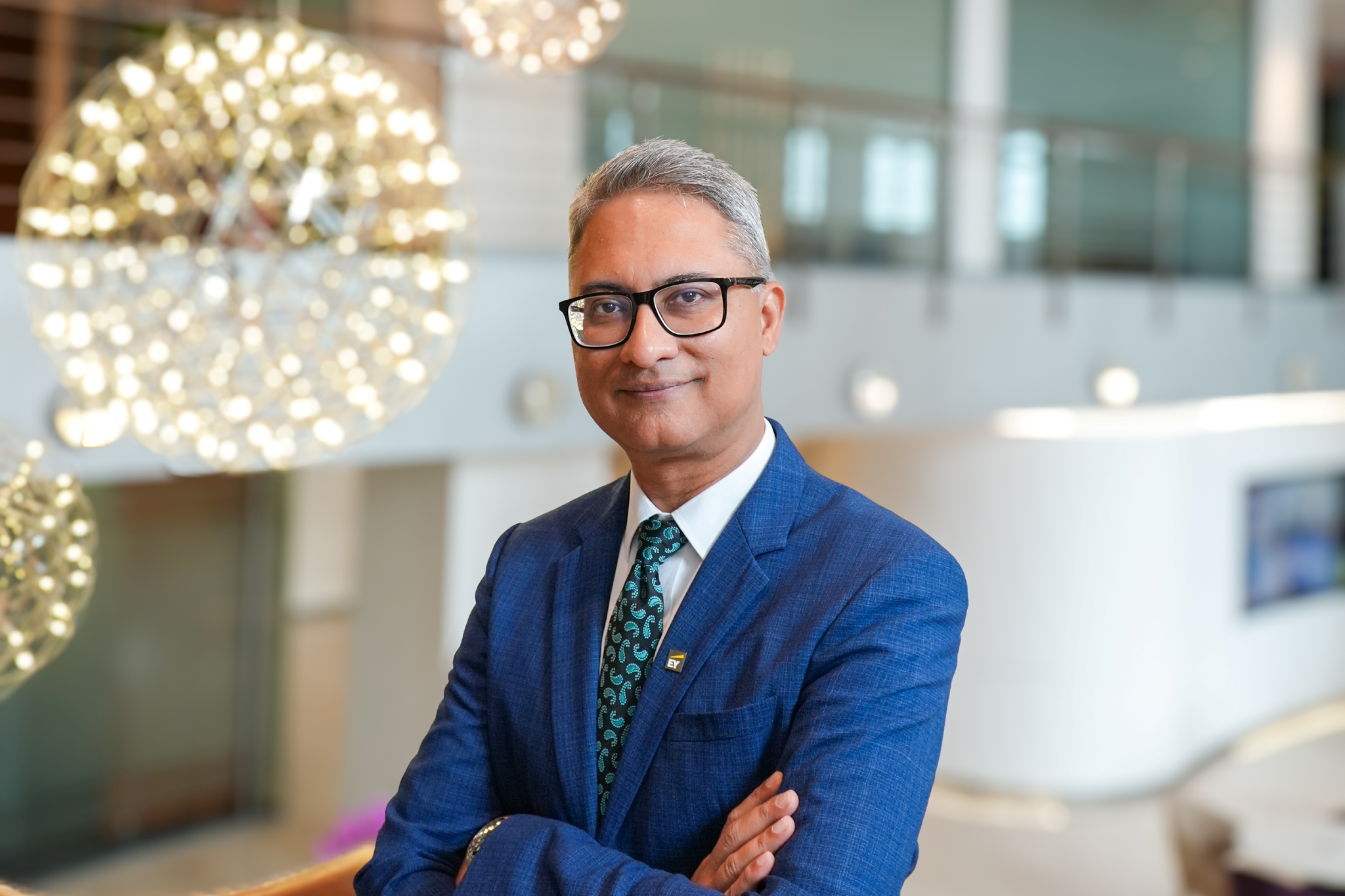
Rafiza Ghazali shares with Ravi Kittane about her journey in building KAF Digital Bank, its launch strategy and how she sees the future landscape of digital banking.
Key takeaways:
Rafiza reflects on the unique challenges and triumphs of a digital bank without a pre-existing playbook, emphasizing a step-by-step approach and clear purpose leading up to the launch.
While many digital banks offer similar products, the primary source of differentiation for KAF Digital Bank is its streamlined operational infrastructure and advanced digital capabilities, which facilitate greater agility.
Rafiza discusses the importance of leveraging partnerships with Malaysian tech startups to create an ecosystem that supports embedded finance.
The launch strategy focuses on gradual growth and fostering customer loyalty, so that the bank’s offerings deliver genuine value.
The future landscape of digital banking is envisioned as a hybrid model that combines elements of fintech and traditional banking, while addressing the needs of underserved populations and fostering innovation within the financial services sector.
Welcome to a new episode of our podcast series, Pulse of Malaysia. We have a very special guest here today. She’ll be sharing with us her story of KAF and the industry. So, I’m really looking forward to a very exciting discussion today. Welcome, Rafiza.
Rafiza Ghazali
Hi, thanks Ravi.
Ravi
So maybe, you know, we’ll start with the basics, right? You built a bank from the ground up. And I know how excited you were and also unsure, to be honest, when we started this process. And I’ve had the privilege of working with you.
So, if you reflect on this two- to three-year journey that you’ve been on — what are some of the triumphs? What are some of the tribulations? What gave you the ultimate satisfaction of building a bank ground up?
Rafiza
I think, well I still remember the time on my first day, on this job you know, we worked with EY. EY supported us with the project management office. I think at that time, one of our biggest maybe I’d say, question mark is how are we going to do this? It’s just the fact that how many people have said that they have built a bank?
And it’s not just a bank, it’s a digital bank from scratch, right? So, there’s no playbook or anything. Tried to talk to various people in the industry, but you can never imagine the journey, how it’s going to be.
But I think the good thing about it is that, you know, we have a small team, at the beginning. And though do we know where we’re going to reach ultimately. But I keep on telling the team, let’s work step by step. Don’t think too far ahead. Let’s just concentrate on getting what we have in front of us right.
And I think one of the biggest satisfaction is the fact that we were able to get everyone together with one main purpose. And I still remember the day, and when we got the letter from Bank Negara to say that, yes, we can go (for a) public launch. I mean like, the feeling it was just like, I can’t really describe it. It’s just like a combination of, well, nervousness because you’re going to the public. You know, that’s one. And number two is the fact that, oh, wow. Finally, you know, we have a bank that we are ready to launch.
Ravi
I remember that call. You did make a call to me and started to say, “Hey, this is something that we’ve gotten to.” And congratulations.
I would say like, you know, what were some of the differentiators that you wanted to have in this bank? I know there were other banks that were getting launched at the same time. So, what are some of the things that you were really focused on that were different?
Rafiza
Well, like again, you know, when we first embarked on this journey, a lot of people, you know, the first thing they say, the fact that we are digital bank. Oh, how innovative are you going to be?
But Ravi, you and I know at the end of the day, a bank is a bank. And because of the operational readiness and we didn’t want to take a lot of time doing the operationalization part. So, we go out to the market with the most basic product, which is savings account. I think all our peers did the same thing, because we just wanted to go to the market.
And again, a savings account is another savings account. But I think the differentiator between — I can’t really say much differentiator between us and our peers in digital banks because at the beginning we all probably look — to the eyes of the public — we still look the same. It’s just through an app, right? And this is what I’ve been sort of (doing), creating awareness to a lot of people.
I think the differentiator between a digital bank and an incumbent bank, you can’t really see at the front because a lot of the other more established banks, they also have an app. So, you can’t really see the difference. But it’s what’s at the bank. You know, the operational, the infrastructure, the model.
To me, that is the big differentiator because the fact that we’re able to run a bank with less than 150 people, right. So, everything’s digital. Which you can’t really do in a current bank with legacy systems, with legacy processes. It’s not something that the people in the streets can see. So, it’s what’s behind the infrastructure which to me that’s a bit of a I wouldn’t call it a game-changer. But, you know, that’s where the innovation is.
Ravi
That’s so true, you know, you build a foundation on which presumably you can go faster, than what an incumbent can do and also experiment more in the market. But if I look at all the five digital banks, I think there is a unique differentiator where, you know, before this, what embedded banking actually came into place.
You’re already thinking of embedded banking and your own personal journey through Cradle, working with ecosystems of startups. Think what you have with your partners. Think what you have with your partners. You know, whether it’s Ringgit Players, whether it’s StoreHub or whether it is Carsome. I think it’s quite unique.
So, how are you planning to leverage that? How are you planning to kind of build on that embedded system? What’s the value of the partners? What do they bring to the table? What should we expect as the public?
Rafiza
Maybe if you compare us with the other four of our peers, right? And this is another thing. A lot of people ask me — we are the only one with our own existing ecosystem. You know, like Grab has got its own ecosystem. AEON has got a huge network, etc. We’re the only one that it’s a consortium led by an investment bank with four Malaysian technology startups.
So, in that sense, we are unique because our partners are what we call it — less established organizations compared to the other consortium members. And that’s the reason why we did that. It’s a strategic model that we deliberately did. Look, if we can partner with this, what’s stopping us immediately partnering with the other similar outfits?
And you talk about embedded financing. I mean, you’re spot on. That’s the whole idea. For example, one of the new products that we can be rolling out soon with one of the consortium members is because they already have an existing product that they’re serving. And we’re just like, you know, plugging in, you know, the financial aspects of it. And so, for us, we know that one of the limitations is that we don’t have our ecosystem. So, to us, the oyster is our ecosystem.
Ravi
That’s amazing. There are some research that suggest that embedded banking or embedded finance is going to be a US$305 billion market just in Asia Pacific. So, it is a massive market.
Having been a banker myself, I think one thing that I realized is people do need financial services, but they don’t need banks. You are going through your day-to-day life journey whether it is buying a house, buying a car, you know, getting investments done.
As you rightly pointed out, if you can put all of this in the background and actually have a digital capability in the front-end that allows you to go through your life in an easier way and seamlessly. I mean, that’s the name of the game. I think you’re onto something I do believe in and, you know, rightly pointed out that the fact that you have the infrastructure in play to do this but at the same time also the partnerships like that, the relationships in the market and the fact that you’re focused on Malaysian startups, I think it’s quite commendable.
If I can just switch topics, on launch strategy. I think everybody did it differently. Some people did it with a hook strategy. Some did it with a rates play. As you know, just go with the teaser rate. Had to pull it back. Had some kind of concerns in the market. Some went with a kind of an AI (artificial intelligence) play. How did you think about your launch strategy? You know, mid-term, long-term. Think that it will be good to understand from your standpoint.
Rafiza
So, we are taking a slightly different approach, as you can see. When we launched KAF Digital Bank, it was a very low-key event because to us —
Ravi
Thankfully you invited me!
Rafiza
It was a very low-key event. It was not a big bang thing. No VIPs, well, except for you. No fireworks, everything. Because to us, the launch is just to open the door. It’s just to start at the starting line. Our, I wouldn’t call it “end game” for us, it’s once we start to have other products. I think that’s the difference. So, a launch is just for us — it’s just the fact that we can onboard public post-beta phase.
And again, this is something that I’ve, whenever I talk to people, a digital bank is a medium-term and long-term gain. You can’t really see the differentiator at the beginning because everyone comes up with a savings account, how different can it be? Okay, maybe some have better UI/UX, fancy apps. But at the end of the day, it is somewhere you want to put your money in, right? So, we deliberately didn’t want to be aggressive at the beginning, because for us because we’ve seen it. And it’s not just in Malaysia, we’ve seen it overseas as well.
The first few months, everyone’s like I want to open up a bank account. And then the minute someone raises the rates by 50 basis points the deposits move. For us, it’s more about how do we how do we instill loyalty? No point spending a lot of money bringing people in and then they leave and they just put in RM10, RM15. So, for us the strategy is to build the deposits slowly but make it sticky. That’s why we didn’t really believe in spending a huge amount of money because we are on SaaS (software-as-a-service). So, for every account we have to pay a subscription. So unlike incumbent banks where you pay upfront, you pay a CAPEX so it doesn’t matter.
The more customers you have the less cost per customer it’ll be because you’ve already invested upfront. So ours, we don’t really invest a lot upfront but we pay per user because you’re on SaaS basis, right? So for us, the number of customers doesn’t mean a lot if the ROI per each customer, you know doesn’t —
So, we deliberately didn’t want to be aggressive because if we have all the deposit, what would you do with it? What are we going to do with the money? Rather than spend a lot of our resources and attention you know, being a digital bank, being a startup, you don’t really want to have huge resources upfront because you really need to manage your costs at the beginning.
And you only scale it once you have all the products that — when someone makes sense to open a bank account for us. After being launched for a month and talking to people what is the real incentive for a customer who has already had two savings account? Why would you want to open up another bank account? And it’s cumbersome. You’ve got to do all your selfies. You’ve got to declare all your documents. People are not going to do that. Look, unless there’s something else.
For example, I want to buy a car and I need financing. Did a study and I need financing. That’s reason for people to bank with you. Or a small business who didn’t want to spend a lot of time going to branches. Then it makes a good, compelling reason for you to open a bank account.
Ravi
You’re spot on. Disciplined execution is what I hear… and focus.
Rafiza
You can’t really hear all the noises because, you know, especially with the media all hyped up how many numbers of customers in the first X months? But what does it mean? Because at the end of the day, I have my costs and my profitability to the shareholders, right?
Ravi
So, you never forget your CFO roots. That’s what it looks like.
Rafiza
Of course. At the end of the day, you’re there to make money. We’re not here for charity.
Ravi
I think that’s all very well said. Having seen digital banks across the world and they have matured over the years and what stands out whether it is a Wise focusing on a product set or even a Revolut looking to be a mass bank or Starling Bank trying to be that day-to-day banking account for SMEs (small and medium enterprises). Like they all have a specific niche and they are executing to excellence. If you are trying to be all things to all people. Yeah, I think it’s going to be a tough road ahead.
Rafiza
It’s focus. A lot of the times among ourselves, the senior management, don’t really look at what others are doing. You know what you’re good at and just focus on that.
Ravi
I’ve known you for a while now. I know how passionate a leader you are. We’ve talked about this offline so I’m going to put this online now. So how did your journey, through your education at LSE (London School of Economics), followed by your stints at RHB (Bank), your stints at Bank Negara and your previous stint at Cradle – all very differing kind of career options.
How did that prepare you for this role? And specifically, it’s quite interesting that most of the CEOs of our digital banks are women. So, I think there’s a lot of things that you are doing as a role model. How did this prepare you and what would be your message to all the women who are looking at this, or men for that matter?
Rafiza
Ten, 15 years ago if you go for a job interview, they always ask, “Oh how many years have you been doing this?” They call it “relevant experience”. But, as you know, as with all the technology, something which is relevant now may not be relevant like in the next month. And this is what I learnt.
After having worked for 30 years, the key skill that you need to have is problem-solving. Because everywhere you go there will always be problems. And this is what I keep on telling the young people. Don’t expect to have a career and it’s problem-free. You will face problems and you and I, you see it almost every day. We are managing crisis. We are solving problems. So, problem-solving skills to me is very important. Regardless of where you work or which industry you come from — solving problem is one key. That’s number one.
And number two is grit. A lot of the times when you face problems people give up. But you and I — we’ve come through so many challenges. We got EY to engage us for 18 months, at least? Every day, you know, every time there’s always things (that) spring up. And we spend a lot of (time) bouncing ideas. How do you do this? There’s a lot of side calls, which I’m so glad that you didn’t charge me for. Oh sorry. Sorry finance team, but yeah, it’s a lot of — “Eh, how do we do so” ... and to me that is great.
Because it’s like a marathon. It’s like a marathon. You just have to chug along. So that sense of “do not give up” or do not lose hope and motivate that around your team as well. Because a lot of the time, you think you’ve found something and then it doesn’t work. And then I say, you know what, don’t worry, move on. Take that as a lesson learnt. What do we learn from it? So, a lot of the times, there must be some, some benefit to it, you know?
Ravi
I think the great point is kind of going back to that disciplined execution I think they are so very well-connected because it’s not about doing it one day, but doing it over and over again. And also, you know, as leaders, I’m sure, for yourself as well it’s quite lonely at the top, right? So how do you kind of, let out that how do you build a trusted network around yourself?
Rafiza
It’s lonely, it’s — what do you call it? You know, unappreciative because you get all, you know, you get all the problems the celebration you share it with other people. Or you give it to other people. The credit you give it to other people. Because that’s what a leader (does), you know.
Ravi
It’s so funny, somebody told me a long time ago that as you go up you have to carry your own oxygen tank. Yeah, because oxygen is not available there. So, I think you exemplify that, to be honest. And I think, you know, it has not been an easy ride. You’ve gone through a lot and —
Rafiza
And that’s why we have all the CEOs of digital banks we have our own group support system. Okay, we don’t share, you know, confidential things. But I think all of us, we’re on the same boat so we know how it feels. So, we meet up once in a while. We give each other encouragement and it’s got to — It’s a great community. You need to have a support system.
Ravi
Amazing. So, as we conclude I want to think about the future of banking and specifically digital banks. The digital banks have been around now almost a decade, or a little bit longer. We are seeing some patterns of success and also some patterns of failure. So, as you look at a world where and you mentioned a little bit about technology. You mentioned a little bit about the ways of working, so on and so forth. How do you see digital banks play out in the market as compared to the traditional banking system?
Rafiza
I see a digital bank as a hybrid between a fintech and a bank. Because at the end of the day the best thing about fintech is that they’re not —
Well, some of them are semi-regulated but they’re not as regulated, as rigorously as, you know, a bank. Whereas an incumbent bank, they still have a lot of their legacy system, processes, which make it very tough for them to move as fast as fintech. And if you see, around the world, the trend is that like what you say — you don’t need a bank, but you need banking services.
Ravi
Yeah, people need access to financial services but not necessarily to banks.
Rafiza
And you’re seeing that, you know, the trends (are) especially prominent in the more developed economy where there’s a gray area between a fintech and a bank. And I think Malaysia’s moving that forward. I know you guys are working with the regulators looking at the financial landscape and Malaysia really pushing the digital agenda. And this is where more and more fintechs come into play into the financial services. For example, one of our consortium members, MoneyMatch, is really in the middle of the financial services. So, that’s what I see.
Ravi
And honestly at some level, this goes back to the original purpose of having these digital banks is to serve the underserved because by all accounts the traditional financial services institutions are doing a great job, but they’re not reaching everybody. They’re not reaching everybody adequately. I do feel that digital banks, with that innovation, with that kind of a framework, can reach people who otherwise may not have access to high quality financial services.
Rafiza
So that’s why we fill the gaps.
Ravi
Yeah, you fill the gap and you expand the market and I do believe —
Rafiza
And put pressure on the incumbent banks.
Ravi
There you go. Yeah. Exactly. So, in conclusion, I think it’s been an amazing chat to be honest. And I learnt a lot. I’ve known you for a long time, but still I learnt a lot. You know, about you as a person. What gets you going? What’s your view of the market? Any final thoughts?
Rafiza
We just need to build our bank to get new customers and hope for the best.
Ravi
It’s been a really interesting discussion today. Thanks, Rafiza for being here. If you have any suggestions on which topics you would like to explore next, please reach out to us either through our website or follow us on LinkedIn. Thanks so much for joining.
podcastsPodcast
Pulse of Malaysia podcast series Season 1, Episode 2
timerDuration
21m 55s
podcastsPodcast
Pulse of Malaysia podcast series Season 1, Episode 2