EY helps clients create long-term value for all stakeholders. Enabled by data and technology, our services and solutions provide trust through assurance and help clients transform, grow and operate.
At EY, our purpose is building a better working world. The insights and services we provide help to create long-term value for clients, people and society, and to build trust in the capital markets.
The Malaysia Cross-Border Insolvency Bill 2025: Restructuring without borders
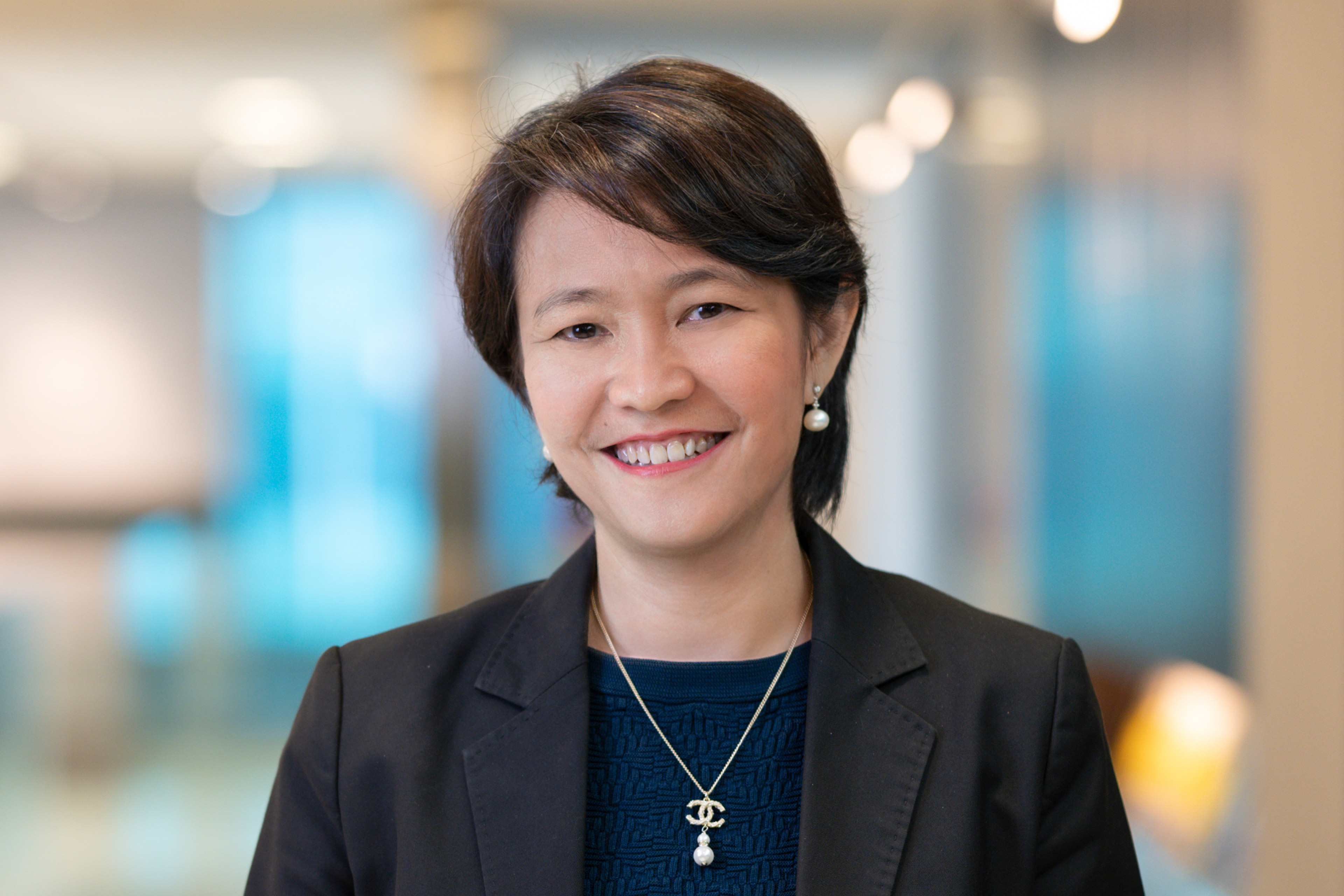
In this episode of the Pulse of Malaysia podcast series, host Andrew Hoh speaks with Angela Ee, EY-Parthenon Asean and Singapore Turnaround and Restructuring Strategy Leader, Ernst & Young Solutions LLP on cross-border insolvency in Malaysia.
In this episode of the Pulse of Malaysia podcast series, Andrew Hoh, EY-Parthenon Senior Executive Director, Strategy and Transactions, Ernst & Young PLT speaks with Angela Ee, EY-Parthenon Asean and Singapore Turnaround and Restructuring Strategy Leader, Ernst & Young Solutions LLP.
They explore the key features of the Malaysia Cross-Border Insolvency Bill; how the Bill facilitates foreign investment into Malaysia, the differences between Model Law and Common Law; and how stakeholders in Malaysia can prepare in anticipation of its implementation.
Key takeaways:
With companies operating across multiple jurisdictions, restructuring and insolvency is increasingly a global issue – underscoring the need for a coherent legal framework that promotes communication, cooperation and coordination to facilitate cross border workouts and arrangements.
A key driver behind the Malaysia Cross-Border Insolvency Bill 2025 is the ambition to enhance Malaysia’s attractiveness to foreign investors, in line with its growing economic landscape.
The Model Law provides a more structured legislative framework compared to the Common Law system, providing greater certainty in the recognition of foreign proceedings.
Identifying the “nerve center” of a business in restructuring is important and suggests that foreign main proceedings should be anchored where the company’s principal operations and assets are located, rather than solely in the country of incorporation.
For your convenience, full text transcript of this podcast is also available.
Welcome to our brand new podcast series. I’m Andrew Hoh and joining me today is Angela Ee. Today we will explore the Malaysia Cross-Border Insolvency Bill 2025: Restructuring without borders.
So, Angela, businesses and group structures are becoming increasingly global. Speaking from a real-life case that is public, so we can discuss it. It’s a Bermuda registered company listed on the SGX in Singapore, but it’s headquartered in Malaysia. Board meetings are mainly held out of Malaysia. Assets and operations are also mainly based in Malaysia.
However, due to an industry downturn the group is now in need of a restructuring. And you know this, traditionally the country of incorporation would be where you undertake the restructuring. But is it still correct? Is that still appropriate? Where is the nerve center of this group?
So, I think we’re starting to see that insolvency is no longer a local matter. We have a global domino effect. Companies are increasingly doing business in other jurisdictions. And if we don’t have a structured process and a structured legal framework, we start to see these dominos falling in the wrong direction.
Angela Ee
Yeah, I totally agree, Andrew. And given the connectivity between Singapore and Malaysia, where a lot of companies actually have assets in both countries, I think there will be a lot of restructuring which will benefit from the new Model Law in Asia.
Hoh
And that hits the nail on the head. You know, based on conversations that I’ve had with the people in the working group, the Malaysian motivation for adopting the Bill is slightly different to Singapore’s motivation. As we understand it, Singapore was trying to be the global restructuring hub in 2017.
But the Bill, which was passed in Malaysia in the Dewan Rakyat on the 29th of July, should come into effect before the end of the year. I think the motivation for Malaysia adopting this Bill is because we are a growing economy. We have more than 5,000 foreign-registered entities in Malaysia. There are also many companies and overseas companies listed on the Australian stock exchange or the Singaporean stock exchange or even in Hong Kong that are looking for secondary listings in Bursa Malaysia.
And as you rightfully mentioned, various special economic zones, the latest one down in Johor, this Forest City and so on. With the need to attract foreign investment, I think it’s important then for us to be able to have that legal framework in order to handle a downside scenario whereby you need cross-border insolvency and restructuring to ensure that it’s a smooth process. It’s a more coordinated process. And I think that’s what the Model Law will bring.
So, some of the key features of the Bill which I think we should cover today. So, individuals, personal bankruptcies, regulated entities, what is in our list called Schedule One those are excluded from the Bill. So that includes stay of legal proceedings and execution appointment of foreign representatives or Malaysian insolvency practitioners. To kind of continue operations in Malaysia to preserve value and data, even have the right to actually examine, books and records in Malaysia.
So, what is important to highlight is the Bill also includes safeguards. So, the court needs to be adequately satisfied that the local creditors are no worse off before they will allow for any property to be transferred out of Malaysia. And also, if there is anything that goes against public policy then the court has the discretion not to grant the relief and the recognition order. I would imagine these are similar to Singapore, Angela.
Ee
One of the first cases in Singapore after we adopted the Model Law was a case where we were involved in. This was a company that wanted to do a scheme in Singapore, but they had creditors who had started arbitration proceedings in London, in UK.
And what happened was the court there, due to after we sought recognition in the UK, the court granted it and put a stay on granted the stay on all the proceedings there. And as such, what happened was the creditor who had taken out that action, participated in the Singapore scheme.
So, it actually shows how powerful it is. Because if not, you know, every creditor will just go their own way. And that would make other schemes a lot more difficult or restructurings a lot more difficult.
Hoh
Yeah. And it’s great, Angela. And I mean, you know, just jumping on how Malaysia is trying to attract foreign investment. So, if things are going to go more global you have maybe a small creditor in Malaysia who actually supplies to a bigger firm in London or in the US. So, having this legal framework to ensure that everything’s coordinated whilst also having the courts, you know, oversee and provide safeguards will actually help to speed up any restructuring and insolvency proceedings. And to ensure that you don't run a set of proceedings here. We think it’s going well. But then when you when you start going overseas you find a whole new set of problems that you then have to tackle again.
So having these coordinated processes, I think something that’s really good for Malaysia. What we’re curious to find out as well is with this introduction of Model Law, we’re currently a Common Law country, right, similar to Singapore as well. How different is the Model Law actually to Common Law?
Ee
So, under the Common Law, it's all very case law basis. It depends on interpretation of the facts. And then the judges will build on the precedence of the cases that have been in place. Whereas for Model Law, it's a legislative framework which is very clear cut, we just follow it. So, I think that’s one of the key differences between the two. The other would be recognition of foreign proceedings. Model Law gives certainty that the likelihood of recognition is a lot higher. Whereas under Common Law, there will be a lot more discretion. And the moment you have discretion in place; there is less predictability. And of course, then that does not facilitate restructuring as much as something which gives it a lot more.
Hoh
And the speed as well, I can imagine. Yeah. Yeah.
Ee
So, there are a few things. Right. It’s speed, certainty, effectiveness, efficiency of the Model Law which actually takes away a lot of the uncertainty and gives it a lot more predictability. This then encourages investors from looking at this and knowing that their rights are protected. They also feel more comfortable in coming in.
Hoh
And also just to build up on that a little bit. The cooperation between courts. I know in Singapore there is a network where courts can actually dial each other in via video conferencing and they can talk to each other. And that's not something found in Common Law, right?
Ee
So, I think they found a workaround. And tried to bring in the concepts of Model Law, where the cooperation was already built into that. But because it wasn’t available in Common Law, they found a workaround around it and they actually set up this own network. The Judicial Insolvency Network (JIN). Yeah.
Hoh
And that’s been used?
Ee
Yes. I believe it has been used quite effectively.
Hoh
What are some of the key points for Malaysia to think about when they adopt this Bill? How can we prepare so that we can hit the ground running when this Bill comes into effect?
Ee
So, lenders currently already have their existing set of loan documentation. Perhaps with these changes, we should get someone to review to see what the impact is that Model Law actually has on the existing documents. And then for debtors, if they feel that they need a restructuring, they should also consider where the COMI (Center of Main Interest) is. And with that then they would be able to form a better idea as to how to undertake the restructuring.
And I think lastly, perhaps just on the capacity-building perspective, insolvency practitioners, lawyers and perhaps even the courts can consider looking at what’s required to deal with potentially the new type of business.
Hoh
Just speaking from a debtor perspective, the reason for why that restructuring should be now undertaken at the nerve center rather than the country of incorporation is probably because a lot happens in that country. The headquarters of decision-making is where the assets are. That’s where operations are. So naturally, that would be the place where the main proceedings should take place. And then you try and get relief and recognition in other jurisdictions where they may be pockets of assets and operations to protect value. So, I think that that concept is, becoming quite important. So that’s a very interesting concept. It’s not something that is set in stone like previously.
Thank you for all of that. I think just to wrap up for Malaysia, these are very exciting times. You know, having a working group push this Bill through and in such a short period of time with Malaysia being the ASEAN chair. So, we’re excited to see this come into effect. I truly believe that this will facilitate foreign investment. Maybe we’ll see more than 5,000 foreign-registered entities. It will start to attract money from overseas into Malaysia which we really need as a growing economy.
So, I think there are lots of benefits, but of course, there are also some things that we need to be cautious about. And we need to think about the safeguards that are in place. Great, I think, exciting times. And we look forward to the Bill coming into effect.
So just as a closing, I think I would encourage everyone to connect with EY, especially if you are navigating a complex restructuring scenario or maybe even if you are looking to restructure to facilitate growth. Right. Not only in a downside scenario. Just pick up the phone or drop us an email and we’re ready to answer any of these questions.
Thanks for joining us today. To learn more, visit our website or follow us on LinkedIn for the latest on the Malaysian pulse of the business landscape.
podcastsPodcast
Pulse of Malaysia podcast series Season 1, Episode 1
timerDuration
12m 38s
podcastsPodcast
Pulse of Malaysia podcast series Season 1, Episode 1