EY helps clients create long-term value for all stakeholders. Enabled by data and technology, our services and solutions provide trust through assurance and help clients transform, grow and operate.
At EY, our purpose is building a better working world. The insights and services we provide help to create long-term value for clients, people and society, and to build trust in the capital markets.
Beyond solar: How Malaysia’s clean energy redefines business strategy
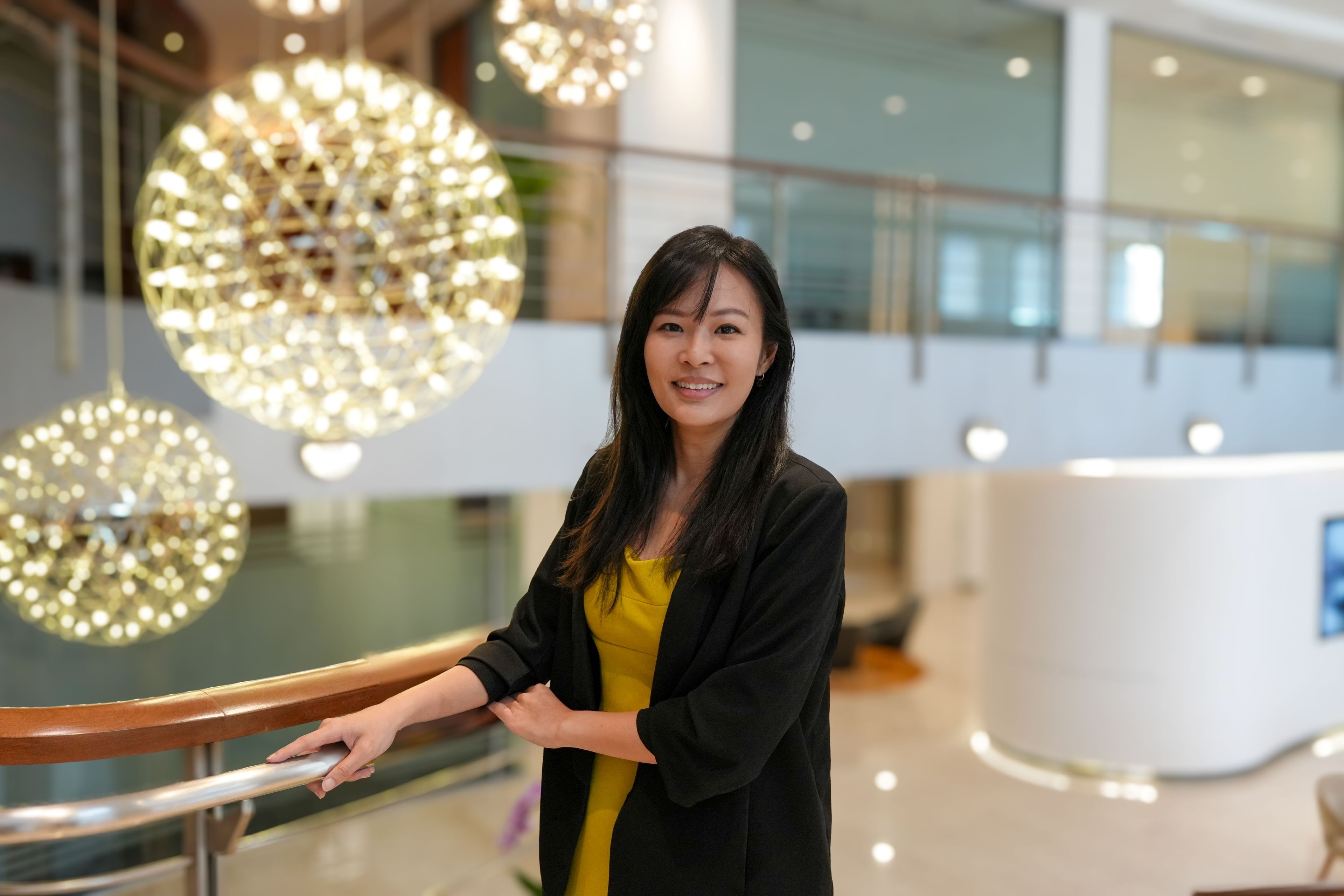
Episode host Sarah Yeoh speaks to Dato’ Davis Chong, CEO of Solarvest Holdings Berhad, to explore Malaysia’s solar future and why innovation beyond generation is key.
In this episode, host Sarah Yeoh speaks to Dato’ Davis Chong, CEO of Solarvest Holdings Berhad, on Malaysia’s solar transition — highlighting grid challenges, battery storage and why future growth lies in integrated, behind-the-meter energy solutions.
Key takeaways:
Dato’ Davis Chong highlights a clear shift from building megawatts to delivering integrated, behind-the-meter energy solutions.
As solar capacity scales, grid infrastructure and access emerge as the biggest constraint to further adoption.
Falling battery storage costs are set to unlock solar-plus-storage and improve overall competitiveness.
Strong collaboration between industry and policymakers continues to accelerate Malaysia’s clean energy programs.
Ultimately, success depends on delivering reliable, affordable green energy at scale to businesses and consumers.
For new solar players or potentially coming into the market, what would be some of your advice to them?
Dato’ Davis Chong
Don’t focus on generation anymore. But focus on innovation behind the meter and after the generation.
Sarah
Today, we are exploring Malaysia’s clean energy transition with a spotlight on solar. With rising electricity costs affecting households and businesses, the nation needs more affordable and reliable solutions.
How can energy companies support Malaysia’s energy goals, as well as the National Energy Transition Roadmap (NETR) towards a cleaner and more sustainable future?
Joining me today to share his insights is Dato’ Davis Chong, Executive Director and Group CEO of Solarvest Holdings Berhad. He was also a Top Nominee of the EY Entrepreneur Of The Year 2025 (Malaysia) program.
So I think Dato’, maybe as a start, what do you see in Malaysia’s solar landscape over the next three to five years?
Dato’ Davis
We started off more than 10 years ago. We developed ourselves in the energy transition topic, from building more megawatts into now, from behind-the-meter FiT, NEM to LSS, CGPP and also CRESS now. So, it is good advancement from building small-scale PPA or projects into big scale of up to 500-megawatt AC projects in LSS5+ now. So, we are already advancing the market. The revolution has gone from building more megawatts to having a grid system infrastructure.
Sarah
I first want to ask, what is one structural barrier that if we remove tomorrow, what do you think will unlock the most adoption and why?
Dato’ Davis
I will say it’s probably the grid infrastructure or grid access,
including a few factors of how much of capital allocation to building, grid or, infrastructure for energy transition. Then how open is the policy? And how efficient is that? We move one electron, from generation to the consumer, whether it’s B2B or B2C.
Sarah
Would you say grid capacity is one of the key areas?
Dato’ Davis
Yeah. The energy transition topic is moving from how we can put more clean electrons into the grid to how we can stabilize electrification, provide stable electricity to the energy demand growth now.
Sarah
With all the solar companies in Malaysia, engagement with ministries, with some of the other players, how would you describe the ecosystem?
Dato’ Davis
I need to give some credit to Malaysia’s policymakers. In terms of collaboration between TNB, the biggest utility player in Malaysia, and the industry, I think, in the past,
I was the president of MPIA, now it’s MPSEA, which is regarding sustainable energy as well. And then, of course, with the Energy Commission and also, the ministry, which is PETRA now.
So, all the stakeholders, policymakers, are collaborating very well in driving new programs into Malaysia’s energy transition topic, especially from NEM to ATAP, LSS to CGPP to CRESS, which is the third-party access now. If you compare this policymaking in the past three to five years for an ASEAN country, there’s no one matching our speed in deploying more different programs to cater for more different market needs, from consumer, small industry player to utility and also large corporate, like a data center consumer.
With the data center growth now, then we see a timely rollout of the CRESS program. We have the policy and program.
Sarah
Do you think that’s because there are a lot of frequent conversations between solar companies, energy companies, as well as with the regulators?
Dato’ Davis
I do think this is one of the factors. Example, MPSEA is the only association in ASEAN that covers sustainable energy or solar energy, which we have more than 200 members, which is the biggest in ASEAN, to have dialogs with the ministry.
And how frequent do these dialogs happen? It used to be once a quarter at least, and that helps shape some of the policies that we see.
Sarah
So, I think maybe just to kind of understand a bit more about this battery storage. And in Malaysia, how do you see that, maybe, this ramping up of battery storage and the technology, how do you see the complications that might potentially arise from this?
Dato’ Davis
The battery storage integration with solar, the technology has been proven. It’s just the cost hasn’t been proven because the cost of the battery storage or solar panel, that build up the leverage cost of energy is still high.
It was never the technology. It was the economics of the price. So, with the price degradation of battery storage from over US$200 per watt, it goes to like maybe less than US$80 to US$90 or even it’ll be forecasted to go to the US$60 level that it will make the LCOE of solar plus storage more visible, to give the LCOE that can beat the grid price or even the gas power price. So that’s the expectation for us to integrate more solar plus battery into the grid.
Sarah
We know that Solarvest was founded back in 2012 and looking back, what was the turning point that also made you realize that, hey, Solarvest actually scale into a regional clean energy player and some of the economics right now has definitely helped Solarvest.
Dato’ Davis
So I think the topic will be like, we start to know the energy business better when we transform ourselves from SME onwards. We used to think like, we just want to build more projects, just want to make some living or money, for the company and of course, the small community that we have, about 20, 50 people.
But after when we access the capital market, we think about, okay, this seems like a real business. We need to access the capital market. Then we have an IPO plan in 2015.
Then we start to really seriously look into an IPO into 2017 when we appointed a merchant bank to do it. That time was an eye-opener that how big this company and this industry could go.
And with the encouraging policy from Malaysian policymakers, the ministry in the past. So, that dynamic thinking of ourselves to look at the industry from small business into business that we can IPO in Malaysia.
Then after the IPO in Malaysia, we have the capacity and the capability to look into overseas markets. After exploring the overseas market in ASEAN, we have the confidence and knowledge that, wow, seems like we are quite competitive in the region as well.
And we do have the capital access in the region as well. Example, how we have access to work with one of the international funds, Brookfield, to deploy RM5 billion of CapEx deployment in green assets in Malaysia in the next five years. So, this is the level that you are really building an international profile for Solarvest or even for Malaysia. And we’re looking forward to deploying, maybe equivalent amount or bigger amount in overseas energy transition, as well as in the region.
So, we are targeting to become the ASEAN energy transition, clean energy player to help Southeast Asia in the energy transition topic, not just Malaysia. Because we used to think like Malaysia-only. So, that transition gives us the trajectory of how we can imagine this business growing.
Sarah
How do you foresee your business model to be able to expand and grow in different regions?
Dato’ Davis
No longer focusing on megawatt capacity generation business. Focus on after the generation, behind-the-meter solutions, how to build a competitive energy market.
Sarah
For new solar players or potentially coming into the market, what would be some of your advice to them?
Dato’ Davis
Don’t focus on generation anymore. But focus on innovation behind the meter and after the generation. That will build more creative solutions and also more competitiveness in terms of integrated solutions and energy distribution as well.
Sarah
A lot of data right now suggest that 2026 is a defining year where capacity growth meets intensifying competition. If an organization were to move beyond pure installation models and offer more integrated solutions, where do you see, some of the biggest changes in the market will be happening for solar organizations today?
Dato’ Davis
I would say this is still the anchor or bread-and-butter business in energy transition. Yes. But only focusing on the margins, the competition will continue to grow. So, it will make you struggle more and more or less competitive if you just do this part.
So, to build your value chain into the distribution network, behind-the-meter solutions, energy platform, it will actually build you into a more competitive player as an integrated solutions provider, to provide clean electrons to the industry, especially focusing on corporate and industry consumers.
We already started to look into the growth of artificial intelligence platforms and to digitize. We have been trying to provide more digital solutions into the business solutions as well. But now we try to “AI” a lot of operations and business solutions to the client as well. But this AI exploration and transformation is not an easy topic for Malaysia because Malaysia is a bit lagging behind in adoption. Whether we are trying to use a lot of machine learning in any digital operations or we are starting to develop our agentic AI to serve the customer as well.
We have a few case studies and POC done, and I think this will be the game-changer of the companies or industry as well.
Sarah
What are some specific use cases for this agentic AI that you are looking into?
Dato’ Davis
We are focusing more on the lower hanging fruit to showcase how we can get AI technology to make us more competitive and more efficient in our operation.
Sarah
I think what really matters is, how much you actually also invest in some of these technologies.
Dato’ Davis
The budget allocation to put into this development is always the question. Yeah, it’s always a dilemma within a company,
how we can balance ourselves in terms of future building and also to preserve the business cash flow, the profitability and not to over-invest as well. Well, we think that we are still balancing this quite healthily to make sure that we put enough focus into future development building and then to make sure that our financial performance, profitability, cash flow are still healthy.
Sarah
Do you think there’s enough financing?
Dato’ Davis
Maybe I split this into two parts. For green energy transition financing, I don’t see a problem. It’s really, really good. Malaysia is at a very healthy position in terms of capital allocation. I think Malaysia is one of the best markets when it comes to green financing. But if you’re talking about AI adoption into green projects or anything, or just purely AI. Yeah, I think we need a bit more, do more in this part because we don’t see a lot of grants, a lot of loans that do that for the SMEs or even large companies.
So, we should be deploying more financing instruments into the sector to accelerate all the small and big companies to adopt more AI into this area.
Sarah
Considering Malaysia’s 2050 clean energy targets, what do you think success will look like for Malaysia’s clean energy transition?
Dato’ Davis
I always believe we can provide more cost-effective, more stable, clean electrons to the industry. End of the day, we want to see clean energy transition or green electrons as a commodity. You will not want to pay premium prices for green electrons. And how do we make it happen? We need to make sure that the CapEx deployment is efficient enough
to give us the cheapest green electrons and all these capital allocation, project deployment, technology integration, systems, health, very good business models all play a part to provide the community, from consumers to SMEs, to corporate users, the cheapest green electrons. We need to go along the line and see how we can manage the uncertainties. Example, the energy crisis now is also one of the uncertainties.
Sarah
Since you’ve mentioned it, some of the geopolitical tensions, as we know, come up more often than not. How do you think that will also affect the power energy sector because of what’s happening?
Dato’ Davis
I think every time a geopolitical issue happens it creates energy crisis concerns. And this will trigger again whether this will become a regional energy crisis or just Malaysia.
I think it’s quite uncertain to say that and it comes up as an alarm again for us to speed up the energy transition, to have less dependency on, for Malaysia, on oil and gas or petrol.
So that will shift us to consume more clean energy, more energy independent.
And then yet we are the net exporter of oil and gas, so we can gain benefits from well, it’s not right, gain benefits from the energy crisis, yet we can hedge ourselves by being less dependent, less affected by the energy crisis. I think this is a healthier position that we should think about.
Sarah
But I think what fell short in the recent call was there was no clear decarbonization targets for the move away from oil and gas. What’s your take on it?
Dato’ Davis
I do think that the recent call due to the US position changed a little bit. The green narrative, expectations are a bit slower now. So, from project developers and project investors or even industry players are now focusing on building pragmatic projects. How to de-risk and give healthy returns to the projects rather than focusing on the ESG narrative to make the projects happen. So, it’ll be more realistic and pragmatic now rather than playing the green narrative now.
Sarah
Some of these collaborations are maturing, investors also notice it, it signals the system that it’s also expanding.
There’s growth, there’s project. We also see that there are a lot of approvals right now for new large-scale projects. The recent one being the two-gigawatt large-scale project in 2025. I think that’s one of Malaysia’s largest floating solar projects.
Dato’ Davis
We are always encouraged to try out different business models, different project models to optimize the CapEx deployment. So, not only like building floating solar, integrating different technology into the system, which will give you better resources, better CapEx, then it translates into lower LCOE of clean energy that will absolutely give a competitive advantage for any developer.
We surely hope like every player in the industry try their best to get the best resources, land, floating, water body, to build the best projects for any green asset.
Sarah
What are some of the cornerstone projects that Solarvest has done recently or going to do?
Dato’ Davis
One of the very proud things for us to say this year is we are building two biggest solar farms in Malaysia. One is, of course, owned by TNB, it’s near 500-megawatt AC and we also share ownership with Malakoff on deploying the 460-megawatt AC. Both are equivalent, near to 700-megawatt DC project. It’s for sure one of the biggest in Southeast Asia that the only two biggest solar farms in Malaysia will be built by Solarvest. That’s challenging and a big milestone for us.
Sarah
What are some of potential talent issues that you have faced?
Dato’ Davis
Talent is always the bottleneck, especially when it comes to top management talent. Now we are no longer looking into Malaysian talent only, we are looking into regional talent.
We are no longer looking into solar talent only. We are looking for talent in other industries, then to make them to go into the renewable energy or energy transition path. So that’s how we need to continue to build a company or industry that attracts different talent from anywhere, to add value to the industry, to accelerate the transition.
Sarah
What’s one of the most important roles that green energy companies can actually play to help the nation get to some of the clean energy targets?
Dato’ Davis
We are always involved in mega projects and the influence of policymakers as well to have a healthy policy in every country because energy transition is a policy-driven industry. So, this part we have been doing for the past three to five years. Strongly to continue to add value to policymaking. The other thing that Solarvest is transforming is to be involved in technology, building technology integration, like energy platforms, moving into integrated solutions for energy efficiency, BESS and also solar energy itself.
How do we demonstrate that the integrated solutions to add value to corporate and industrial consumers? Corporate and industrial consumers are one of our bigger focus now rather than utility because we believe that demand is coming from corporate and industrial. Then we are looking into it now and to design and craft the solutions with different technology to capture their demand. Example, the acquisitions that we have done on EE players and also different technology that’s proven that we want to advance our EPCC business model or developer business model to become a company that we built integrated technologies into serving the corporate and industrial consumers.
Sarah
So, I think from the way you are describing some of these things, clean energy is definitely a core for a lot of organizations. It must be part of their business strategy and not just a transition, not just a compliance issue, because we know there are a lot of regulation happening for organizations to report on their sustainability initiatives. So people just fall back to compliance.
Dato’ Davis
I do not want to play the compliance and green narrative angle anymore. I think in the past we have been playing this and we found that, that would not be a competitive edge anymore. The competitive edge is supposed to be the business model, adding value to customers.
Secondary, it will become ESG premium or green narrative that we can also put into the picture. We surely want to build more stable returns, how to de-risk the projects, more than playing a green narrative or due to compliance, you need to have green projects. We have transitioned our strategy into a more realistic way now.
Sarah
I think sustainability or ESG should definitely be like a tip of the spear, one of the key areas for organizations to move forward. Some of the organizations still have perspective where the cost is a short-term business model and not withstanding that some of these clean energy, cost is definitely an issue. The business model has to change. A lot of people view these changes as very hard to catch up on. Malaysia also has to figure out how they can incentivize and to move this transition in a very just manner.
Dato’ Davis
You need to make sure that capacity building is there for the nation to understand how they can incorporate some of these energy efficient and clean energy technology into their business.
Sarah
I also want to talk about your perspective. Malaysia also has the Energy Efficiency Act. Do we see that there will be other potential policy coming into place that will push forward some of these changes in the industry?
Dato’ Davis
So, finally coming to action that every company should react to this Energy Efficiency Act. So that’s why I think, let the company start an energy efficient model in all the aspect that they can due to compliance now and then also to look into, to my very basic way, looking at energy transition is always energy saving, energy efficient and energy transition. Change your power source. So these are the ways. Even when you try to save energy, try to be energy efficient. If these three things combined together, it’s actually added value to the consumer to have lower cost of energy. That will be sustainable growth of energy transition.
Sarah
Thank you, Dato’ for such insightful sharing. This has been a very fascinating conversation.
Dato’ Davis
Thank you, Sarah.
Sarah
This is EY Executive Exchange. Share this episode and follow us on LinkedIn for more conversations such as this.
podcastsPodcast
Pulse of Malaysia podcast series Season 1, Episode 3