EY helps clients create long-term value for all stakeholders. Enabled by data and technology, our services and solutions provide trust through assurance and help clients transform, grow and operate.
At EY, our purpose is building a better working world. The insights and services we provide help to create long-term value for clients, people and society, and to build trust in the capital markets.
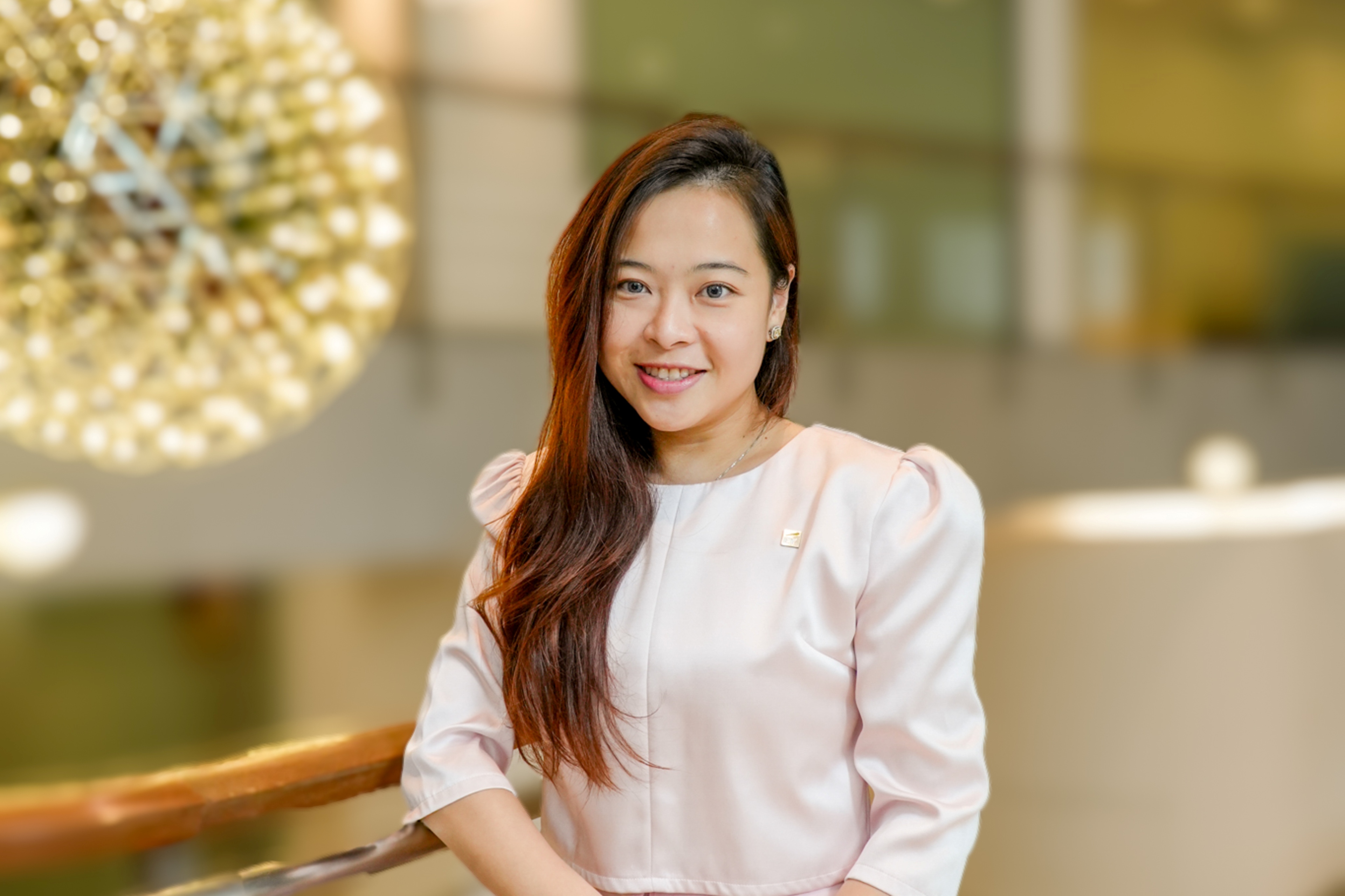
In this episode, host Arina Kok speaks to Vinesh Sinha, Founder and CEO of FatHopes Energy, about transforming waste into opportunity, exploring circular economy innovation, sustainable fuels and Malaysia’s energy future.
Key takeaways:
Waste can become a valuable economic and energy resource when supported by innovation, infrastructure and market demand.
Circular economy initiatives create greater impact when they improve livelihoods and encourage participation across communities.
Building sustainable fuel supply chains depends on feedstock availability, traceability and ecosystem partnerships.
Energy transition strategies are most effective when tailored to local resources rather than relying on a single solution.
Sustainability creates greater value when embedded into business strategy rather than treated as a compliance exercise.
Building transformative businesses requires ambition, resilience and confidence to pursue opportunities others may overlook.
Podcast chapters
03:17 | From waste to resource
08:17 | Creating social impact through circular economy
10:38 | Building sustainable fuel supply chains
18:37 | Why local context matters in the energy transition
22:26 | Moving beyond sustainability compliance
24:27 | Lessons on entrepreneurship and transformation
Consumers, I believe, are entitled to know where their energy comes from and what it has been made from. And as geopolitics problems further escalate, you tend to see people wanting to know where the energy comes from.
Arina Kok
Hi, everyone. Welcome to the EY Executive Exchange. Now, today’s guest is someone I’ve had the privilege to know for some time. Vinesh Sinha, the founder and CEO of FatHopes Energy. Now, many people know FatHopes Energy through its work in cooking oil collection, but the story is far bigger than that. Under Vinesh’s leadership, the company now recycles more than 150,000 tons of used cooking oil annually and operates across Southeast Asia in a highly traceable supply chain that enables platforms in collection networks as well. FatHopes Energy is also entering an exciting new chapter with plans to develop a large-scale sustainable aviation fuel (SAF) refinery in Port Klang capable of producing up to 300,000 tons of SAF per year.
It’s a remarkable journey, from waste collection to helping shape the future of clean energy, and I’m looking forward to hearing more about the lessons, challenges and opportunities Vinesh has encountered along the way. What was the defining moment that made you realize waste and sustainability would become one of your critical life’s work? And it begins with a vision where others may have not seen the opportunity.
Vinesh
First of all, thank you very much for having me on the show. It did not start with a grandiose vision, right? I was young when I embarked on this journey and seeing how there was a nuisance. Growing up in Penang from a foodie culture, food shops everywhere and the abundant availability of this waste material that was doing no good but just harm. It was polluting waterways. If you walk down the alleys, you would you would see a pest infestation, all driven primarily from the improper disposal of this waste material. So that was very visually apparent. And coupled with the fact that I was given a diesel car as my first car.
The first dots or the first two dots that connected was this waste material being able or having the potential of powering this diesel vehicle, which I learnt through a series, which instigated my inquisitiveness and I had to try it. So, once I tried it and it was easy enough to get or to discard this material in a functional way, that was the first click for me, right? How I could be subsidizing my fuel bill while utilizing something that had a cost implication for disposal. And once that connection was formed, it was very organic for the second and the third step to naturally unfold.
It was not this, “Oh I’m the leader of this startup, and we’re going to form this billion-dollar company.” It was just two or three things coming together and the fulfillment of seeing me achieve something with these two bare hands and pure grit and effort.
Arina
So in short, you saw the abundance of what was actually a societal problem and environmental problem, where there are already waste in our ecosystem, but the waste is now being circumvented to a recyclable resource. So looking back, what were some of the toughest moments in building FatHopes Energy? How did you convince many to believe in an opportunity that many people overlooked?
Vinesh
The main driver for us to convince individuals, companies to come behind this idea is proving a few things. One, is obviously maximization of a financial return from a resource that they never, ever understood or realized could be monetized. But I think more than that is understanding their environmental footprint. And over the past 16 years, the first half of that journey, there was no impetus for them to want to take responsibility for that, right? In the second half of the journey so far, one key driver is the self-awareness on what’s their footprint.
And when you have the combination of a potential of generating additional income while mitigating a footprint, you see a very powerful value proposition come forward to especially B2B customers or business-related customers, more than B2C. And that’s been the primary driver, right? I call it the multi-bottom-line business model, where it’s not just economic sustainability, and I believe that’s important and that should be the first priority, but it’s social and environmental, as a bonus. If you look at any other environmental solution, you usually need to compromise one of the three, if not two of the three, to positively impact the environment.
This is a solution where or a value proposition where if you are economically viable, if there’s high economic return, you have a bonus of social and environmental sustainability as well. That formula has proven, has stood the test of time. And it’s bullet proof thus far. And I think that’s the biggest underlying factor that makes it easy for counterparties to want to engage with us.
Arina
That’s one of the areas that I’ve seen that, you know, FatHopes Energy has also started to look and innovate, on top of various other tracking mechanisms and processing end-to-end. When it comes to sustainability, it’s often described as a technical challenge. For you, was it ever an emotional one? Can you share an experience where community interaction or a moment in the field that has changed what you think about waste, inequality or environmental sustainability?
Vinesh
Yeah, so I think it’s great that you brought up the innovation that we have deployed into these fast-food chains. We believe that everyone partaking in that supply chain is a stakeholder of ours. And that was the primary reason or the driver for us to want to know what happens prior to the oil, prior to the molecule touching our vehicle. What happens in the back end, from the point they put in new oil till it’s ready to be disposed, who gets in touch with it and what happens to it? And that was the that was the primary driver for us to want to develop this iTank technology and deploy it.
Now the byproduct of that was that we realized that, number one, the handlers today with this technology limit themselves from exposure of hot oil and totally eliminates the possibility of them getting burnt, right? Number two, there’s no more heavy handling and carrying. Number three was the economic and the environmental benefits of them minimizing the number of fryers and having a much higher level of accountability of the waste. Now, if you look at that, 90% of that is not related to FatHopes Energy. 90% of that is related to the users of the system. And we believe very early on that if stakeholders don’t like using the system or don’t find a benefit using the system, the second part of it becomes non-sticky, right?
And that then showed us that the people within our ecosystem are actually our stakeholders, irrespective whether they are our contractual counterparties or not. And that is where the emotional element comes from, right? I was young when I started this. And that means many of these people are going to mature throughout this period, and I will have a certain level of responsibility to them, right? On the back of that, the (COVID-19) pandemic hit. And then at that point, we realized that our responsibility needs to go a little bit further, which is offering people an opportunity to join this supply chain as an entrepreneurial opportunity. And that’s where we created PUSH or Program Usahawan Hijau, a green entrepreneurship program.
From a service offering or from a business offering perspective, to be able to lower the barrier for entry so that more people will be able to partake to the lowest denominator.
Arina
How is FatHopes Energy working with these communities today? Where are the interesting stories that you’ve seen that have stayed with you over the years?
Vinesh
So, how we work with communities today is we interact or we engage with all of them through the various different apps that we have. So the public, whether it’s a consumer or whether it’s a business, today, can come on board with us, totally digital. The stories that have stuck with me is really more in the rural (areas). We’ve done a lot of work in Sabah and Sarawak, and there used to be this town that we used to take a six-hour boat (ride) up, right. There was one individual, who was a canteen operator in a school, who said to me, “Can we can help you collect this oil from this particular store so that we can convert it to biodiesel and use it in a generator for the school, right?”
And that for me, it was the same journey that I walked, but 10 years later. In a location or in a geography that needed it a lot more than I did. And seeing how it has impacted not just his life but the students' lives was amazing, right? So I think, technology for me, managed for them to identify us, for them to understand what we are doing with it here and then for them to be inquisitive enough to ask us, can we do it in the school? Right?
It would have never happened if we had not established this infrastructure. Another one is from one of our PUSH entrepreneurs, right. That person who worked with us for three years, dropped out of school, family couldn’t afford his education. He worked with us for three years, saved enough money to go and do his law degree in the UK, right? He’s just graduating this year and I’m very proud of him. And hopefully when he comes back, he comes back to work for us. But long shot I guess, right?
Arina
Well, for some who think that FatHopes Energy is a used cooking oil collection company, it’s quite a misconception because where we see you have driven the business thus far is there are already enhanced technology, sensors, metering, infrastructure, ecosystem that you’ve built behind the services. On top of that, there is also a growing demand for sustainable aviation fuel that is coming our way. So maybe we can hear from you, where do you think this business will pivot from a technology perspective?
Vinesh
Thinking long-term, it was about putting in the infrastructure that was required to be able to last throughout the supply chain, right. And even if you don’t go the full six yards, creating that base for others to capitalize on was still a very unique and lucrative opportunity for us to exploit. And that’s why we started on that in 2015, 2016, establishing a digital platform, developing this app system well ahead of the market acceptance. The denominator was the volume of oil that we collect. So, we needed to solve that problem.
And the only way to solve that problem was to have visibility over how much oil was in the store before we set out in the morning and decouple from this thinking of, we will have a periodic collection once a week. That doesn’t exist anymore, right? Today we arrive in the store and the store has got more than 80% fill level of a particular tank because we have visibility. So that decoupling enables us to serve three times more number of stores with the same amount of fleet. So we found ourselves in a very robust, reliable supply chain where we had certainty of feedstock supply. And then the question internally was asked, “Why shouldn’t we do this on our own, right?”
Because we realized the single biggest kingpin for a decision to be made for refinery is first feedstock, right. Because demand is very structured, is mandated. Geography, you can build a plant anywhere in the world. It’s really about feedstock. Property is about location, location, location. Biofuels is about feedstock, feedstock, feedstock.
Arina
When it comes to a circular economy, one phrase we often hear in circular economy is how it can feel very abstract. Can you walk us through how cooking oil goes from household or restaurant waste stream into becoming feedstock for a sustainable fuel? Or what does it take to make it into a model that is commercially viable at scale?
Vinesh
It’s impossible to have an infinitely growing economic system within a finite ecosystem. And that means circularity is inevitable and that’s what I hold true as a fundamental. It’s not an option. I think the second or the next era for us is about repurposing, not just reusing, but repurposing the byproducts. We take in things, we consume a portion of it and we discard the balance. Whether it is directly from your behavior or indirectly from what you’ve bought. Now today, because of globalization, those byproducts are not costed into what we pay for our goods. The day it gets costed in, which I truly believe is coming, that results in circularity becoming almost automatic. And used cooking oil is exactly that.
Twenty-five years ago, if you asked a fast-food chain, “Would you see the single biggest revenue contributor from one customer? Would you see it as a waste material?” They would say, “You’re mad.” Today, that’s a reality.
Arina
So now with SAF and energy transition, FatHopes Energy is now developing a major SAF refinery project in Port Klang. For those new to the topic, why has SAF (sustainable aviation fuel) become such an important part of the aviation industry’s decarbonization journey and why do you believe it represents one of the most promising use of waste-derived feedstock?
Vinesh
So we’ve gone through three cycles again, right? The first phase for us was waste oil or organic lipids, organic-based oils being used for biodiesel, which was a diesel replacement. Phase two was for the maritime industry, a material called bulk bunker grade biofuels. And we are now experiencing the third phase. And what I’ve recognized through those transitions is that biofuels tend to find their way into more and more challenging industry for decarbonization, right. And why I believe that sustainable aviation fuel is here to stay in the aviation sector. Before I tell you why the aviation sector needs it is because the aviation sector has almost no alternative, because the aviation sector fights gravity. Maritime doesn’t and liquid fuels or road-going traffic vehicles don’t.
That’s number one. And that means that for any technology that makes the aircraft heavier to transition, it’s just not going to work. Because the heavier you are, the more energy you need. That’s number one. Number two is aircraft has got the longest asset reinvestment cycle compared to the maritime industry and traffic fuels. The (Airbus) A380 is 25 years old, we still think it’s new. Maritime or vessels have a maximum 20-year lifespan, right? So as people think of asset reinvestment, they kick the can down the road on what are the alternative propulsion mechanisms. And that means that the fuel supply chain needs to innovate, not the technology.
I remember back in 2014 there was an alternative molecule to Jet A-1 fuel that was biobased. But it was not acceptable because it needed to go through a myriad of different certification processes and that was very challenging because it was a totally different molecule. The breakthrough was that scientists managed to find a way to frack a vegetable oil molecule and create a molecule identical to Jet A-1 in what I would call biomimicry, right? And due to that, regulators had no choice but to accept it because on a scientific, at a molecular level, it’s the same. And it’s got at least 70% less emissions, right? So one, not many alternatives. Two, this is a perfect alternative because at molecular level it’s identical.
And I think the third is that air travel is blowing up right, in terms of volume. As standard of living improves, a lot more people are flying and the growth of emissions for the aviation sector is at its inflection point today. That’s not the case for maritime and for traffic fuels. It’s probably plateauing in those two industries.
Arina
So SAF often grabs the headline, but the global economy still depends heavily on shipping. Do you think biofuels for ships and tankers could become just as important in the decarbonization story, and where do you see the biggest opportunities for Malaysia?
Vinesh
Right. Now, if we look at emissions per kilometer per person or if you look at emissions per kilometer per ton of goods carried, right. Maritime on the dirtiest fuel is still far superior in terms of efficiency, right. Because they carry so much and they consume so little. So for me, I’ve always thought about things from the perspective of intensity. We should address the highest intensity sector first and then go towards the least, because I doubt that in our lifetime or our kids’ lifetime, we will have carbon neutrality. I’m not saying aviation is that. There are other sectors that pollute a lot more per cubic meter, per ton per kilometer, but it’s not maritime, right? The second is what I said earlier.
Do they have other alternatives or is this the easy way out? Right. And to be fair, especially for the maritime industry, given their mass and their size, they have many alternatives, right? And so, the second comes to optionality, right. You should give the industry that has less optionalities preference right after the intensity. So, if you look at it from that hierarchy of decision-making, it’ll be hard to go wrong.
Arina
So, we’ve come a long way from seeing waste as simply something to dispose of. Today, we’re talking about converting waste into energy, fuel and other valuable products. From your perspective, what are the biggest untapped opportunities for Malaysia in turning waste into economic value and what will it take to unlock them at scale?
Vinesh
So, I think in the grand scheme of things, there’s still a majority of these waste materials that are underutilized. And I think the key element there is in our continued work in raising awareness that waste is not a liability, but more of a resource, a national treasure, a natural resource for that matter. So, I think there are a lot of work in and around our continued raising of awareness in that regard. Having said that, the country has been very advanced and very engaged and totally involved in the liquid biofuels industry. So, the biodiesel industry in Malaysia is 20, 21 years old now. There’s a fair level of competency and knowledge in and around that.
I believe that the energy mix of the future is going to be extremely diversified. The era of a silver bullet solution is over, whether that’s oil or whether that’s gas, it’s over. I’m fairly certain we will find that equilibrium without a lot of innovation, without any much more new discoveries. And we are blessed because of our environment in terms of our weather. We are on the equator. We’ve got a lot of biomass. Our population produces a disproportionately higher level of used cooking oil because of our foodie culture. So, we’d be surprised with what we have that’s not currently utilized.
Arina
You’ve spoken about the importance of feedstock traceability and collection infrastructure. So, what are the biggest challenges in building an ecosystem that can scale sustainably, and why are partnerships and digital traceability so critical?
Vinesh
So why traceability is important is so that consumers will be able to make an informed decision. That’s the main purpose. Consumers, I believe, are entitled to know where their energy comes from and what it has been made from. I don’t think we have enough of that today. And as geopolitical problems further escalate, you tend to see people wanting to know where the energy comes from. But the byproduct or the bonus of that is you have got total control over your carbon calculation and accounting because your visibility of the supply chain, which then increases again, the level of data that end consumers, more business consumers have in that decision-making process, right.
Beyond that, the thinking for us has been, how do we instead of the conventional method of us going and looking for the material and discovering and collecting this material, how do we turn that on its head? It’s crowdsourced, right. And I think that that’s the best way to scale innovation. Not just scale operations, but scale innovation. An example I will give you. A few years ago, three, four years ago, a big, very famous coffee chain reached out to us and said, "Hey, we found out that in our spent coffee grounds, after we made a coffee for you, there’s 11% oil in it.” The only reason they could do that is because they knew we were going crazy looking for waste oil, right?
And we would do what it takes to extract that oil. If you left me to my own devices, I would not have found that out. Right? So, pushing on this ideology of crowdsourcing what’s available, it’s long, it’s difficult because not everybody will jump on the bandwagon, but it’s slowly taking shape. And I think that’s a very critical component for everyone to partake in this revolution.
Arina
Many companies have sustainability targets. But implementation is often where things become very difficult. Now, has the conversation around sustainability in Malaysia evolved from what do we need to comply with to how can it help us grow and create value? Or are we still early in that journey, in your view?
Vinesh
I think we’re still early. I think that as of today, majority of action is due to the fact that they have to comply. And there are quite a few, especially companies, dealing with the open world. There are few thresholds of compliance, but I also see a fair level of opportunistic growth. Right. So, when it makes total sense, then it’s happening. Right. But going out of their way to take a bet on, even if it’s 50/50, you don’t see much of that. I mean, a clear example is how much of our rooftops have got solar, right? It’s still a very small percentage because people are still uncertain over the long-term return. Right.
And I would look at it as over the long-term certainty of a policy. So, what I’m trying to really get at is if you were to look at it holistically, I think we have the solution in our hands. But today, there’s too much concern over being unpopular and too much concern over a backlash, potentially, like as if the effects of climate change and global warming are optional. They’re not. It’s going to happen. And I always say this, this endeavor is not about saving the planet. This endeavor is about saving society. It’s about saving humanity. Because think about it, the planet is not going to explode into a billion pieces.
What will happen, like the dinosaurs, is humanity will drive itself to extinction if we do not change our trajectory.
Arina
So, Malaysia has strong ambitions around sustainability and energy transition. Now where do you think the country can realistically lead when it comes to the next decade? And if you’re advising the next generation of Malaysian entrepreneurs, what opportunities would you encourage them to pursue?
Vinesh
I think Malaysia has got a great potential to really take the lead in this area. Given our position, given the amount of resources we have, but we need to be extremely strategic. We need to be able to delay gratification a little bit. And that gets a little bit complicated when you have short-term five-year policies or five-year ambitions. Because delayed gratification can only go as far as the political term. We need to push beyond that because there’s a lot that we don’t need to do that we’re doing today. That’s a view that I have. So, I think that’s one aspect for the nation. For entrepreneurs, I see it as Malaysians and Malaysia. So, Malaysians have got a very low level of self-confidence, right?
There are many businesses here that I believe have got the potential to not just go, but go regional or global, right. And what’s stopping them from doing that is fear and ambition of the entrepreneur. Now let that go. Right. And the reason why I speak into that is that’s the best thing I can decouple. I’m very aware that I don’t know, I don’t— there’s a lot I don’t know. So, it’ll be hard for me to be able to speak to all entrepreneurs that have got their unique focus areas but be more ambitious. Failure is not as painful as you think it to be. On top of that, failure is part of the process. I’ve failed more than I’ve succeeded, right?
If there’s no darkness, there is no light. And if there’s no despair, there’s no happiness. So, look for the challenges. Fail many times and fail fast. But know one thing that as long as you’ve got the energy to get up again and try again, you’re fine. So yeah, it’s not that bad. And I mean, for me personally, I feel like I’m running on empty. I’ve bet the house I’ve got. I’m all in all the time. And it’s been 16 years and it has worked, right? So don’t be hesitant. Don’t be too cautious. Yes, a lot of people say you got to be calculated. But listen to your gut, right? Many people can be very pragmatic.
That’s pretty you will not differentiate yourself doing math. The only way you will differentiate yourself is taking an asymmetric bet that no one thought would pan out. And if people thought it would, they will be doing it already, not you. So yeah, be bold and take the first step.
Arina
Thank you, Vinesh and for taking your time to actually join us for the EY Executive Exchange podcast. You are probably one of the youngest EY Entrepreneur Of The Year™ Malaysia Top Nominee in the Master category that we have. I know we’ve heard a lot of your stories starting from the past 15 years or more. The success that you’ve gotten and the amount of drive that you’re still driving in terms of building up, you know, after going through three phases, you are going to the fourth phase and fifth phase, and you’re planning even further for the next two to three decades, as I can see.
So with that, I would like to send my warmest congratulations on your plan, as well as appreciation for making your time for this webcast.
Vinesh
No, thank you very much.
Arina
For more episodes of the EY Executive Exchange, follow EY on LinkedIn or visit our website.
podcastsPodcast
Pulse of Malaysia podcast series Season 1, Episode 4