
Sector-specific transition pathway initiatives are multiplying, as the financial industry attempts to turn climate ambition into climate action.
In brief
- Identifying evolving trends can help financial institutions better prepare to support each industry in new ways.
- There are plenty of challenges to financing various sector initiatives, but solutions are emerging.
- As the financial services industry sets its sights on COP27, now is the time to explore new financing opportunities.
The COP26 summit of November 2021 saw over 450 financial institutions commit to aligning more than $130t of capital with Paris Agreement targets by 2050. That will require $32t of investment across a range of sectors and geographies by 2030 – above and beyond the cost of ''business as usual'' funding for transitioning businesses. It’s clear that no one organization or industry can solve the problem alone: climate change is everybody’s business, and financial institutions will need to work closely with a range of industries to accelerate action.
A detailed understanding of sector-specific transition pathways will be critical to the financial industry’s ability to turn climate ambition into climate action that protects and creates value for society, the planet and business. Understanding these transition pathways helps to identify customers’ current and future transition activities, and the associated financing requirements and risks to be managed. With this understanding, financial firms will be equipped to support companies and projects in a way that solves their most pressing decarbonization needs.
In the run-up to COP26 the EY team published a paper examining potential transition pathways for three key economic sectors – shipping, renewables and electric vehicles – together with some of the associated factors that will enable financial institutions to fulfil their needs. Over halfway to COP27, we’re exploring transition pathways for three more crucial economic sectors: agriculture, consumer goods and technology.
Chapter 1
Agriculture
An industry that recognizes the need for change, but faces steep challenges to implementation.
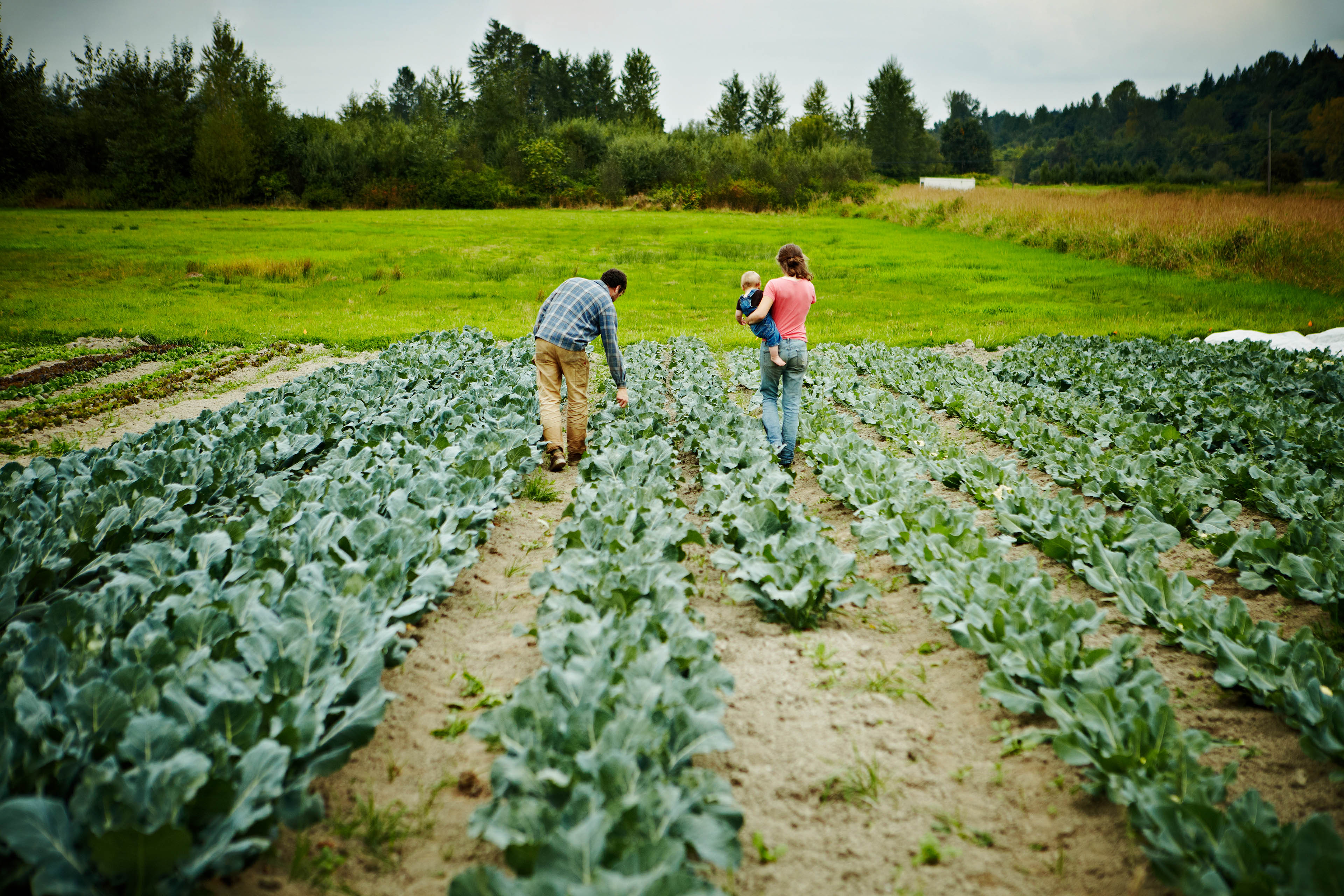
The immutable relationship between agriculture and nature makes this industry keenly aware of the need to transition. However, agriculture is a highly varied and fragmented industry, with an exceptional degree of owner-management often extending to several generations. This, together with reliance on local geography and resources, means that transition initiatives are varied, complex and unique – as are its financing requirements.
Context
Some of the agriculture industry’s most notable features are:
- Fragmented, relatively small-scale activities with wide variations in land use – arable, fruit, livestock, biofuels, renewable energy, etc.
- High degree of government involvement through policy initiatives, subsidies and tariffs
- Geopolitical disruption ranging from Brexit to the COVID-19 pandemic and the war in Ukraine
- Limited control over input prices (due to global factors) and output prices (due to power of wholesalers and supermarkets)
Current trends
The sector is experiencing several key trends as it seeks to address climate change and other environmental risks, including:
- Increasing engagement between governments and industry bodies, as farmers and politicians identify strategies to increase food security while safeguarding the environment
- Growing regulation of farming techniques and inputs, such as chemical fertilizers
- Increasing pressure from supermarkets and others in the supply chain to develop greener products, backed up with increased due diligence
- Growing desire of farmers to speak with one voice on environmental issues, coordinate more effectively and share sustainability insights and innovations
- Accelerating changes to consumer diets, due to choices such as veganism and the desire for smaller carbon footprints
Transition initiatives
To reduce their emissions and limit other environmental risks, farms typically need to pursue multiple initiatives. Some of the most common are:
- Reducing the environmental footprint of inputs such as animal feed and chemical fertilizers
- Combining the cultivation of arable crops with trees and/or other plants. Such a combination creates an ecosystem that enhances the sustainability of the farming system
- Improving soil conservation through better techniques. This ultimately increases crop yields and allows to use less fertilizers, both avoiding/reducing carbon emissions
- Selling carbon credits to third parties to offset their emissions. They are most often created through agricultural or forestry practices, although a credit can be made by nearly any project that reduces, avoids, destroys or captures emissions
- Upgrading equipment by investing in electric vehicles or more efficient machinery
- Using smart technologies such as automation or the Internet of Things (IoT) to increase productivity and efficiency — for example, through enhanced soil sampling or real-time weather data
- Decarbonizing onward delivery in partnership with customers
- Improving customer reporting — for example, by using new online tools to capture, allocate and report emissions data
Financing challenges and solutions
Agriculture’s fragmented range of transition initiatives creates a wide scope of financing requirements, challenges and solutions.
Two obvious areas of need are asset finance for new vehicles and machinery, and project finance for investments such as renewable energy generation. However, many farms operate at a smaller scale than the large corporates that financial institutions are used to working with. Nor are conventional small- and medium-enterprise (SME) financial offerings usually suited to agriculture. Other complications can include making covenants sustainable, acquiring reliable underwriting data, and valuing land and other collateral.
Although some financial firms have agricultural expertise, there is a clear opportunity for more firms to develop agriculture-focused products and services. This could include scope for institutions with relationships across the supply chain to use their position as a platform for unifying standards, making finance more efficient and affordable, and improving standards of “farm to fork” reporting. Farmers – especially smallholder farmers – can also be trained on farming aspects to increase crop yields and also reach adequate sustainability practices.
Chapter 2
Consumer Goods
An industry laboring to change under the watchful eye of a discerning new breed of customers.
The sector is dominated by multinational firms and global products, but smaller players and local variations are important, too. Branding is key, with firms under pressure from consumers to cut emissions and pollution. Transition goals range from upgrading factories and distribution fleets to more complex challenges, such as developing innovative new green forms of flexible packaging.
Context
Some of the consumer goods industry’s most notable features are:
- Vulnerability to consumer sentiment, given high levels of substitutability and the strong link between personal opinions and purchasing decisions
- A mix of standardized, globally available products and others tailored to local demand and preferences
- Thin profit margins, which mean that achieving scale is crucial to supply, manufacturing and distribution
- Vital importance of branding, with packaging a crucial element alongside the products themselves their pricing and availability
Current trends
The sector is experiencing several trends as it seeks to address climate change and other environmental risks, including:
- Consumers around the world are increasingly willing to alter their purchasing decisions over environmental concerns and other sustainability issues. However, this varies hugely between different generations, geographic regions and local markets
- Growing public expectations for consumer goods companies (and large retailers) to take the lead in admitting to, and proactively addressing, historic environmental failings
- Increasing consumer concern over plastic pollution, which will soon make non-recyclable or non-biodegradable packaging unacceptable. The biggest challenge is flexible plastic, which is harder to recycle than other categories owing to its multiple layers, pliability and high levels of contamination
- Growing vulnerability to accusations of greenwashing, with its attendant reputational and branding risks
- Increasing readiness of governments and public bodies to regulate consumer goods packaging through bans, taxes and other incentives
Transition initiatives
Some of the most common initiatives being pursued by consumer goods companies to reduce environmental risks are:
- Enhancing carbon footprint of inputs in partnership with suppliers, including animal and plant products, chemicals and synthetic materials
- Improving the efficiency and environmental profile of manufacturing processes
- Reducing carbon footprint of onward delivery to retailers in partnership with distributors
- Making commitments to reduce the use of plastic, to increase reuse and recycling, and to innovate packaging — for example, by making more use of biodegradable materials
Financing challenges and solutions
Some of the industry’s financing requirements are relatively straightforward, such as the need to finance the construction or leasing of new, cleaner and more efficient manufacturing facilities.
Other financing needs are more complex, but offer potential for financial institutions to leverage existing relationships across the value chain – by financing and insuring greener transportation solutions in partnership with suppliers, distributors and retailers, for example.
A third area – financing the transition of packaging onto a more sustainable footing – is much more challenging. In part this is due to the expensive, unproven nature of new technologies such as chemical recycling and bio-derived packaging. This, together with the need to meet local regulatory requirements, makes it hard to pick an area for investment at scale.
Financing innovative packaging is also made challenging by the need to develop closed-loop recycling systems, and the importance of consumers’ willingness to take responsibility for waste disposal. Solving these financing challenges is likely to require complex, innovative partnerships involving non-profits, governments, universities, consumers, regulators and competitors.
Chapter 3
Technology
With deep pockets and a penchant for risk, bold moves are the hallmark of this industry.
While there are significant challenges to surmount in the technology industry, particularly around how technology assets are cooled, there are envisaged solutions to these problems (e.g., in terms of use like advances in data storage to require less power and with it less cooling, or innovation in cooling approaches using natural methods) and the technology industry is relatively well-placed to execute such plans. Most sub-sectors feature a handful of leading companies with deep pockets and a strong culture of innovation. Some goals – such as greener manufacturing – are familiar to other industries. However, tech firms are also pursuing cutting-edge schemes to reduce emissions, pollution and energy requirements.
Context
Some of the most notable features of the global technology industry are:
- A concentrated landscape in which each subsector (online retail, social media, search, cloud, device manufacture) is dominated by a small number of global hyper-scalers
- Highly liquid companies, funded by strong margins and positive cash flow, with deep pockets for investment
- High levels of R&D investment together with a strong culture of innovation
- A crucial role as the enabler of innovation and change in other industries, including facilitating the global transition
Current trends
The sector is experiencing several key trends as it seeks to address climate change and other environmental risks, including:
- A growing need to balance continual and rapid innovation with greater sustainability and lower environmental risks – for example, when growing 5G networks and building 6G
- Increasing pressure from consumers and other stakeholders to reduce the carbon footprint of cloud servers and other energy-intensive activities
- Greater levels of government intervention in a wide range of areas, including network coverage, data privacy, pollution, antitrust and fake news
Transition initiatives
Technology firms are pursuing environmental initiatives in a number of key areas. Some are very similar to those of other industries, but some are more unique and forward looking:
- Improving the environmental profile and efficiency of manufacturing plants and day-to-day operations
- Establishing that key manufacturing inputs such as rare earths are sourced ethically, while minimizing greenhouse gas emissions and environmental pollution
- Working to improve recycling rates for old or unwanted devices
- Exploring innovative approaches to reducing the energy consumption and carbon emissions of server hubs – such as situating them deep in the ocean to harness natural cooling
- Using cutting-edge advances in chemistry to reduce the environmental impact of device manufacturing
Financing challenges and solutions
Some of technology firms’ financing requirements – like funding investments in new production lines and other operational infrastructure – are relatively conventional.
Other requirements, such as funding cutting-edge R&D, have more niche characteristics – for example, it is typically hard to finance research with debt. Totally new innovations can also pose challenges of understanding for financial institutions, making it harder to identify and arrange appropriate financing. Set against that, many technology companies choose to finance these activities internally.
Another factor for financial institutions to monitor is the possibility that elements of the technology industry could be vulnerable to swings in sentiment and reputational damage if they are perceived as failing consumers – as seen in the recent collapse of some cryptocurrency businesses.
Conclusion
These analyses are simplified snapshots. The reality is far more complex, and transition pathways will evolve continuously in response to changing conditions and stakeholder views. For example, the latest EY Future Consumer Index shows “planet first” consumers gaining ground, even if rising food and energy prices mean that affordability remains the leading consumer priority in markets such as Scandinavia, Australia and the US. The Index also reveals significant gaps between consumers’ intentions and actions on sustainability.
Our new transition planning framework aims to capture nuances like these, providing financial institutions with a dynamic source of insight, and helping them to develop new and more sophisticated approaches to client engagement and decarbonization. In our next article in this series, we’ll share how the framework:
- Reflects how transition pathways are influenced by consumer preferences, governments actions and the evolution of technology
- Explores the current transition status and future initiatives of specific sectors
- Considers how investors, credit providers and risk carriers should react to, and enable, the transition to net zero
Given increasing concern about biodiversity loss, habitat destruction and plastic pollution, our new framework will also aim to address a growing set of environmental goals while avoiding social harm and protecting value for the planet.
It’s becoming essential for financial institutions aiming to meet their net zero commitments to be curious about environmental science, to understand the circumstances and challenges of different sectors, and to apply this knowledge and insight to their strategy and operations. We look forward to revealing more about our new framework for financing the transition during the months leading up to COP27 in Sharm el-Sheik.
Summary
Understanding transition pathways is critical to decarbonizing financial services and achieving net zero, as it allows financial institutions to identify customers’ current and future transition activities along with the related financing requirements. Now that we’re months away from COP27, and we’ve explored transition pathways for the agriculture, consumer goods and technology sectors, financial institutions should be able to develop new and more sophisticated approaches to client engagement and decarbonization.

Related articles

The Board Imperative: Partner with CSOs to drive value-led sustainability
Find out how boards can collaborate with Chief Sustainability Officers (CSOs) to help organizations realize the benefits of ESG and mitigate the risks.

Four steps financial institutions can take on the path to net zero
Innovative decarbonization strategies linked to clients’ transition pathways are becoming vital to success. Learn more.
How financial services can mobilize capital to deliver net zero
Learn how financial services firms can mobilize the capital flows needed to deliver net zero.
How EY can help
-
EY sustainable finance teams helps financial services companies define sustainability goals that create value and make a measurable difference. Learn more.
Read more