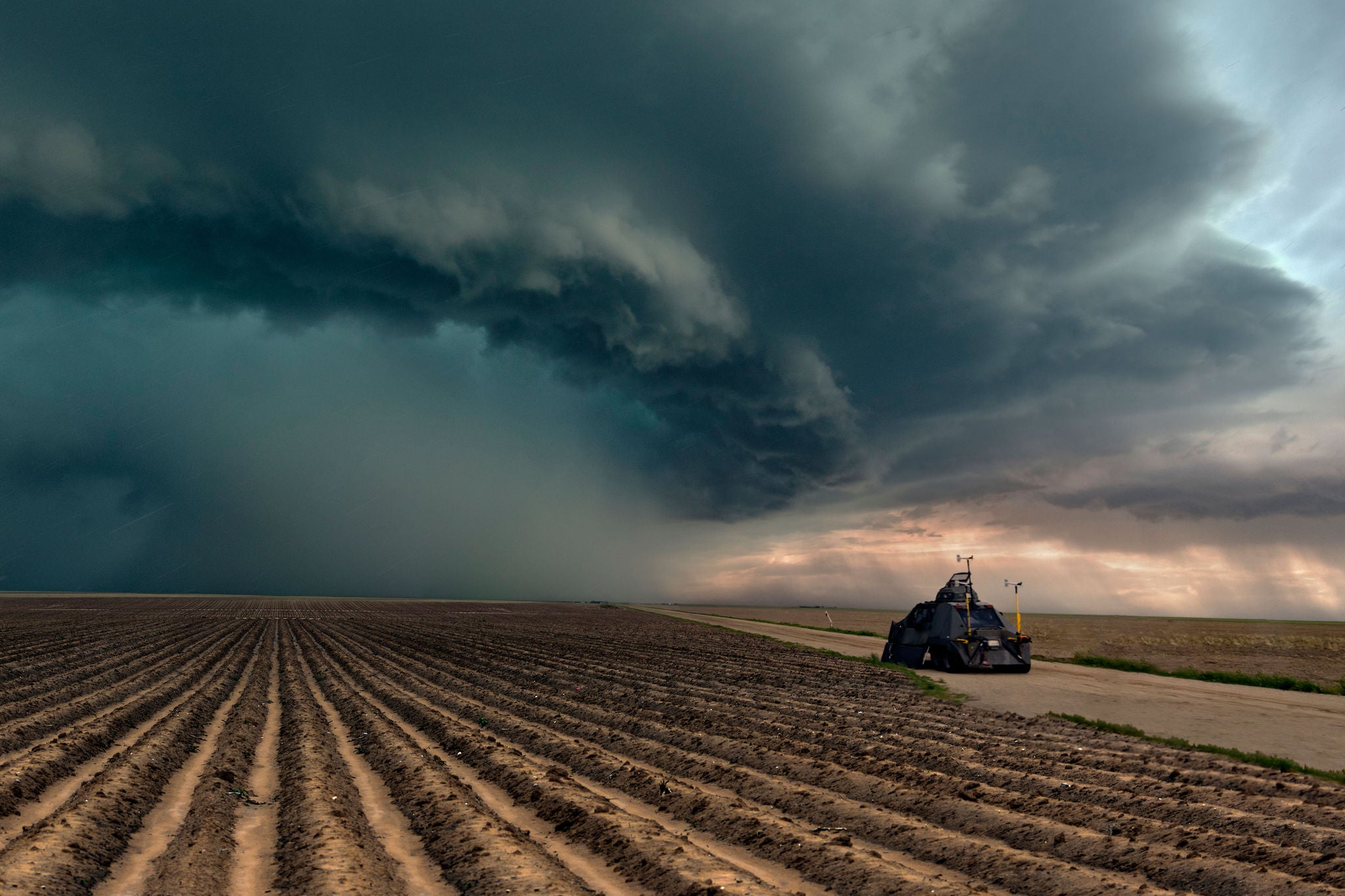




Agricultural vehicle beside farmland under dark storm clouds

What a record El Niño could potentially mean for European businesses


Nathan D. Griffiths, EY Netherlands Senior Manager Risk Consulting, contributed to this article.


A strong El Niño could amplify existing vulnerabilities in Europe. Scenario analysis shows where early action is needed.


In brief

  • A strong El Niño could further expose existing vulnerabilities in Europe’s food, energy and logistics systems.
  • Indirect effects through commodities, LNG markets and shared hubs could amplify both operational and financial risks.
  • Combining data with scenario analysis helps leaders spot risk concentrations earlier and act in a more targeted way.

A major El Niño event is taking shape in the Pacific. Its effects may begin with changes in weather thousands of kilometres from Europe, but could ultimately reach European businesses through commodities, energy markets, supply chains and financial conditions.

The emerging signal is unusually strong. Current forecasts indicate a greater than 90% chance of a very strong El Niño during winter 2026/27. However, intensity does not translate mechanically into regional impacts, and no two El Niño events transmit through the global economy in precisely the same way.

The strategic question is not whether a forecast will materialise as anticipated, but whether organisations can identify emerging concentrations of risk and act before they become operational or economic disruption. For Boards, the practical implication is that the direct weather question is only a small part of the picture. The potentially greater exposure lies in the indirect disruption through globally connected markets and systems.

For European business, the principal transmission channels might include:

  • Agricultural supply: disruption to major producing regions affecting the availability and cost of food commodities and manufacturing inputs.
  • Logistics: water stress and extreme weather affecting strategic shipping routes, increasing freight costs and extending lead times into Europe.
  • Energy and industrial inputs: reduced hydropower in Latin America and increased cooling demand raising fuel imports in these regions, intensifying competition for LNG and other energy supplies.
  • Critical minerals: flooding, drought or water constraints disrupting mining and processing operations, with downstream consequences for manufacturing costs and availability.

Why Europe’s starting position matters

These potential pressures would not arrive in isolation. Europe enters the period with reduced resilience across parts of its food and energy systems, following disrupted harvests, reduced energy buffers and continuing geopolitical uncertainty. A major El Niño would therefore be less likely to create an entirely new shock than to amplify vulnerabilities already present. That is the compounding risk: additional pressure transmitted through systems with less capacity to absorb it.

Here we consider how business leaders can use resilience strategies to prepare for the impact of a weather event thousands of kilometres away. Utilising a systematic resilience framework developed by cross-sector experts, and powered by risk intelligence from our collaboration partner, Earthian we can develop informed scenario analyses to help better prepare for the future.

Forecasting the unpredictable is often a fool’s errand. Preparing for it is not.

A familiar climate event in a very different global economy

The 1997/98 El Niño, the strongest of the past 40 years, contributed to flooding, drought, heatwaves and wildfires across multiple regions, with global economic losses estimated at more than US$30 billion. But an event of comparable intensity today would propagate through a markedly different global economy.

Since then, trade volumes and supply-chain interdependencies have grown substantially, while production, logistics and critical infrastructure have become increasingly concentrated. Greater reliance on just-in-time operating models means that disruption in one region can now transmit more rapidly through commodity markets, supply networks and financial systems.

The initial shock may be physical. The consequences could become operational, financial and strategic.

From Event Signal to Business Consequence

Risk monitoring often focuses on the event itself. Resilient organisations look further ahead to understand the consequences. The event is only the starting point. The leadership challenge is to understand how its effects could propagate across the enterprise, where existing vulnerabilities could amplify them, and which assumptions underpinning strategy, investment and operating models might no longer hold.


Combining resilience strategy with risk intelligence

EY has teamed up with Earthian to augment our resilience approach with real time asset level risk intelligence. The collaboration combines EY’s ability to translate disruption into strategic, operational and financial consequences with Earthian’s analysis of where emerging stresses are developing across assets, regions, commodities and supply chains.


Together, these perspectives help organisations move from monitoring external events to understanding how their consequences could propagate across the enterprise, testing plausible scenarios and identifying where earlier action may be required.


For the developing El Niño, this means going beyond the historical question of where previous events caused disruption. By overlaying the impact footprints of earlier strong El Niño events with current asset-level conditions, the analysis can identify where an expected impact zone coincides with an already-stressed baseline.


The question therefore shifts from:  “Where has El Niño previously caused damage?”


To:  “Where does our exposure sit today within the areas most likely to experience disruption?”

Where current stress and potential El Niño impacts converge

Applying that overlay to the 2026-27 event, the locations where prior El Niño impact footprints coincide with an already-stressed current baseline rank, signals appear of particular relevance for European businesses include:

  • Rhine corridor: exceptionally low water levels are already constraining a critical route for chemicals, energy and agricultural products into European industrial centres.
  • Panama Canal: further drought conditions feed into already-reduced draft limits, threatening shipping capacity and potentially increasing the cost and complexity of Asia–Europe trade.
  • West African cocoa: weaker production prospects in Côte d’Ivoire and Ghana could intensify price and supply pressures for European food manufacturers.
  • Rotterdam and the ARA complex: the intersection of constrained Rhine transport with food, energy and chemical imports creates a potential concentration point for multiple disruptions.

These are not isolated risks. Their significance lies in how they might interact, amplifying existing stresses in commodity markets, logistics, energy, financial markets arising from geopolitical tensions and extreme climate events. The following scenarios explore how these combined pressures could affect European businesses.

Scenario 1: Commodity Inflation accelerates

Europe enters the forecast El Niño period with reduced agricultural buffers following significant heat- and drought-related harvest losses. At the same time, Earthian’s analysis points to emerging pressure across several globally important producing regions, including West African cocoa, Southeast Asian palm oil and Indian sugar and rice.

A strong El Niño could amplify these pressures through lower yields, export restrictions and disruption to critical import routes. Rather than affecting individual commodities in isolation, simultaneous pressures could increase input costs and reduce availability across European food and manufacturing supply chains.

The consequences could extend beyond commodity markets:

  • Food and consumer businesses: higher input costs, margin pressure and difficult pricing decisions.
  • Banks: weaker household purchasing power and increased pressure on borrowers.
  • Asset managers and pension funds: changing earnings expectations and hidden concentrations across commodities, regions and consumer-facing sectors.
  • Insurers: correlated exposure across agriculture, trade credit, marine and business-interruption cover.

Question for business leaders: Where could simultaneous commodity disruptions create financial exposures that are not visible when risks are assessed in isolation?

Scenario 2: LNG market disruption tightens the energy squeeze

Europe enters winter with relatively limited energy buffers. If El Niño-linked drought reduces hydropower generation across Latin America, and separately disrupts LNG production capacity or shipping transit in Asia, competition for available LNG cargoes could intensify at a time when European storage levels are already light — pushing up European energy prices independently of any pressure building elsewhere.

Potential transmission pathway:

  • Drought conditions curb hydropower output across Latin America, lifting regional demand for LNG imports.
  • Disruption to Asian LNG production capacity or transit routes tightens global cargo availability.
  • European buyers compete for a smaller pool of spot cargoes while storage is still being rebuilt, facing higher prices and tighter terms.
  • Energy-intensive industry and households absorb higher costs directly, with second-round effects on competitiveness and margins.

Potential business implications:

  • Margin pressure for energy-intensive manufacturers and industrials.
  • Higher operating costs for retail, services and logistics.
  • Reduced household purchasing power through energy bills specifically.
  • Reassessment of utility and energy-linked credit and valuations.

Questions for business leaders: how exposed is business model to further energy price spikes? Which parts of our portfolio are most vulnerable?

Scenario 3: Hidden concentrations amplify disruption

Many organisations assume that a geographically diverse supplier, customer or investment portfolio is inherently resilient. But seemingly separate exposures may still depend on the same ports, waterways, transport corridors, energy infrastructure or commodity-producing regions.

The Earthian analysis illustrates this potential concentration around the Rotterdam and ARA port complex, where food, energy and chemical imports converge with an already-constrained Rhine corridor. Disruption across one or more of these shared nodes could affect multiple operations and counterparties simultaneously.

Potential business implications may include:

  • Supplier interruption, inventory shortages and production delays
  • Higher freight and alternative sourcing costs
  • Lost revenue and pressure on working capital
  • Business-interruption losses extending beyond directly affected locations

Questions for business leaders: Which parts of our supply chain are most exposed?

Where the scenarios combine

What if more than one scenario occurs? Taken together, they illustrate why disruption today rarely stays contained to a single channel: agricultural, energy and infrastructure pressures can build simultaneously and reinforce one another in ways that are difficult to see when risks are assessed individually.

The clearest example is Scenarios 1 and 2 combining: not either commodity or energy pressure alone, but a self-reinforcing inflationary spiral at a moment when bond yields are already rising. Simultaneous food and energy cost pressure could keep headline inflation elevated for longer, narrowing the room central banks have to ease — or forcing further tightening — just as financing conditions are already tightening for governments, companies and households.

Scenario 3 adds a further layer to this picture: the same shared nodes and dependencies that concentrate physical disruption can just as easily concentrate its financial consequences, turning a contained shock into a correlated one across counterparties, sectors and portfolios. Food, energy and transport costs rise simultaneously. Persistent inflation puts further pressure on longer-term yields and causes a rise in central bank interest rates.

Potential economic implications from different combinations of these scenarios:

  • Increased financing costs
  • Pressure on margins, investment plans and working capital
  • Reduced household purchasing power and demand
  • Greater credit stress among consumers and smaller businesses
  • A need to reassess asset valuations and portfolio assumptions

This is the defining feature of a nonlinear, accelerated, volatile and interconnected operating environment — disruption rarely arrives through a single channel, and its combined effects are typically larger, faster and harder to unwind than any one pathway suggests.

Turning scenarios into decisions

These scenarios are not forecasts. Their value lies in helping leadership teams identify where external disruption could expose hidden dependencies, challenge business assumptions and create financial consequences.

Combining EY’s resilience approach with Earthian’s risk intelligence enables organisations to identify the signals that matter, test how they could transmit across the enterprise and determine where earlier action may be required.

The objective is not to predict one outcome. It is to be better prepared across a range of plausible outcomes.

Three questions leadership teams should be asking now

  1. Which assumptions in our strategy depend on stable commodity prices, declining inflation or lower financing costs?
  2. Where do seemingly diversified operations, supply chains or investments depend on the same regions, infrastructures, commodities?
  3. If disruption occurs, where would the impact have the initial economic impact? Through revenues, margins, or the balance sheet?

Answering these questions before disruption becomes visible gives organisations more time to monitor emerging signals, test their preparedness and act where exposure is greatest.

Building resilience before disruption materialises

A major El Niño may not affect every region or business as anticipated. But waiting for certainty risks leaving too little time to respond once disruption begins to propagate through supply chains, markets and financial systems.

The priority for leadership teams is to identify where emerging signals intersect with existing vulnerabilities, understand how the consequences could reach the enterprise and test whether current strategies and operating models remain resilient.

By combining EY’s scenario-led resilience approach with Earthian’s risk intelligence, organisations can move beyond monitoring events to anticipating their potential business consequences and acting while options remain open.


Summary

The 2026/27 El Niño could amplify existing vulnerabilities in commodities, energy and logistics. Organisations that combine scenarios and make shared dependencies visible can act sooner and better protect their strategy, business model and financial position.


Related articles

How can CEOs turn AI productivity gains into lasting value?

Learn why CEOs are investing in AI, talent and portfolio transformation to convert productivity gains into growth and long-term value.

Why resilience matters more than ever for organizations

Discover why resilience helps organizations prepare for uncertainty, respond faster and turn change into opportunity.

Geostrategic Analysis: April 2026 edition

Read the April 2026 Geostrategic Analysis for our take on geopolitical developments and the impact of these political risks on international business.