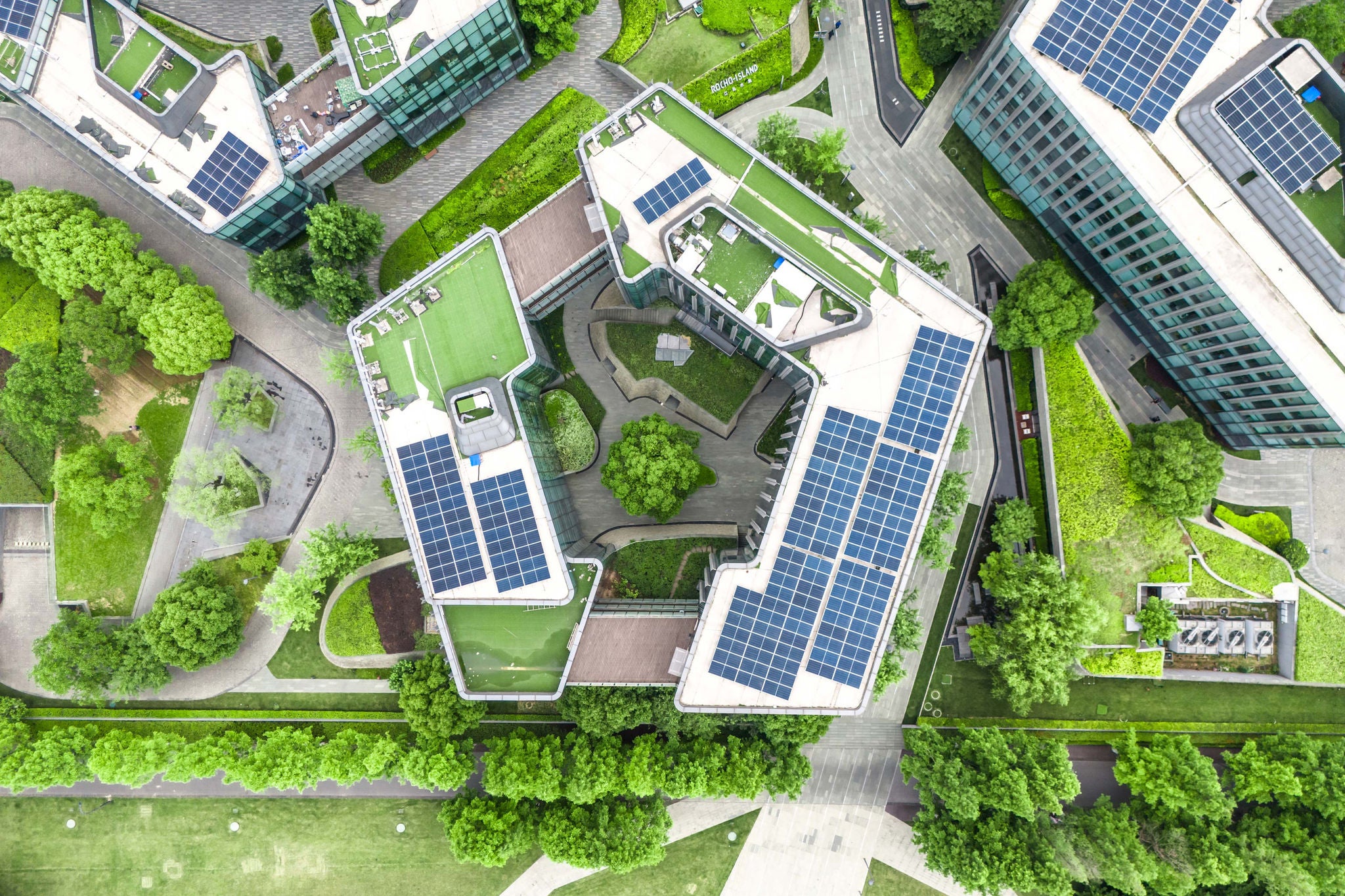
What if you could track housing projects without ever setting foot on-site? No phone calls, no inspections, no guesswork. EY has developed an AI-tool that analyzes satellite imagery, revolutionizing how we monitor real estate development.
The Netherlands faces one of the biggest housing challenges in decades. To address the growing shortage of affordable homes, the government has set ambitious goals: around 900,000 new homes must be built by 2030. At the same time, demand for data-driven solutions is rising. That’s why it’s crucial for governments and commercial parties to embrace innovative technologies. EY has taken a major step forward with the development of an AI-tool that uses satellite data to monitor the progress of real estate projects. This technology opens new possibilities for efficiently managing housing developments and improving decision-making processes. The tool uses ultra-high resolution satellite data (up to 30 cm) via NSO, supplemented with European data at 10-meter resolution.
Satellite data for housing development monitoring
The housing challenge demands speed and insight. But how do you monitor progress when projects are scattered and traditional methods are slow? An AI-tool that analyzes satellite imagery offers a solution: automatically detecting where construction is happening and tracking project progress as a serious answer to a structural problem. The technology, already successfully applied worldwide, was given a new purpose in a project for the Ministry of Housing and Spatial Planning (VRO): an efficiency-driven approach that evolved into a proof of concept with potential for scaling and a source of accountability data. The combination of freely available satellite data and smart algorithms presents a unique opportunity to monitor housing projects from above—no physical inspections, no guesswork.
Smart algorithms turn satellite data into actionable insights. In this proof of concept, the tool enabled the Ministry of VRO to identify flexible housing projects, monitor their progress, and visualize policy effects without physical site visits.
The strength of the tool lies in the combination of AI and open data. In the Netherlands, satellite imagery is freely available—a unique situation globally. The collaboration between EY Netherlands and a former NASA expert within EY brought in international expertise and accelerated model development. The model achieved an accuracy of around 70% in identifying housing structures. That’s significant, especially given the limited dataset. For comparison: international benchmarks for building recognition typically range between 60% and 80%, depending on resolution and model type. While the technology isn’t perfect yet, it offers promising potential to simplify processes and support policy decisions.
The current version of the AI-tool is a major step forward, but there’s much more room for development. We’re currently working on integrating zoning plan information into the tool. This is a promising future application that could further enhance the model’s functionality. It would not only improve analysis accuracy but also provide valuable insights for policymakers and developers. Questions like: where are the best locations for housing projects, or which existing buildings are suitable for redevelopment or vertical expansion, can be answered more easily and effectively. By combining and linking data smartly, a system emerges that not only monitors but also predicts and advises. That’s where the future lies.
International applications
The technology already used globally was successfully deployed in Australia to classify building damage after bushfires. EY was engaged to assess the effectiveness of satellite technology and artificial intelligence in monitoring building recovery efforts after the 2019/2020 bushfire season. In the Middle East, EY monitored the progress of pipeline construction. These cases show the broad applicability of the technology—from disaster response to infrastructure development.