
EY refers to the global organization, and may refer to one or more, of the member firms of Ernst & Young Global Limited, each of which is a separate legal entity. Ernst & Young Global Limited, a UK company limited by guarantee, does not provide services to clients.
EY Global Trade Analytics
Enhance trade flows, strengthen compliance and stay ahead of geopolitical change.
EY Global Trade Analytics helps businesses navigate complexity with confidence, streamlining trade flows, helping enhance compliance and understanding the impact of geopolitical change on global supply chains.
Visibility of global trade flows
Make trade flows transparent, understand tariff exposures, identify duty-saving opportunities, and simulate supply chain scenarios.
Cost-saving opportunities
Reduce duty spend through the combination of operational efficiency and strategic foresight.
Scenario modeling
Model the impact of trade policies and reconfigure global supply chains.
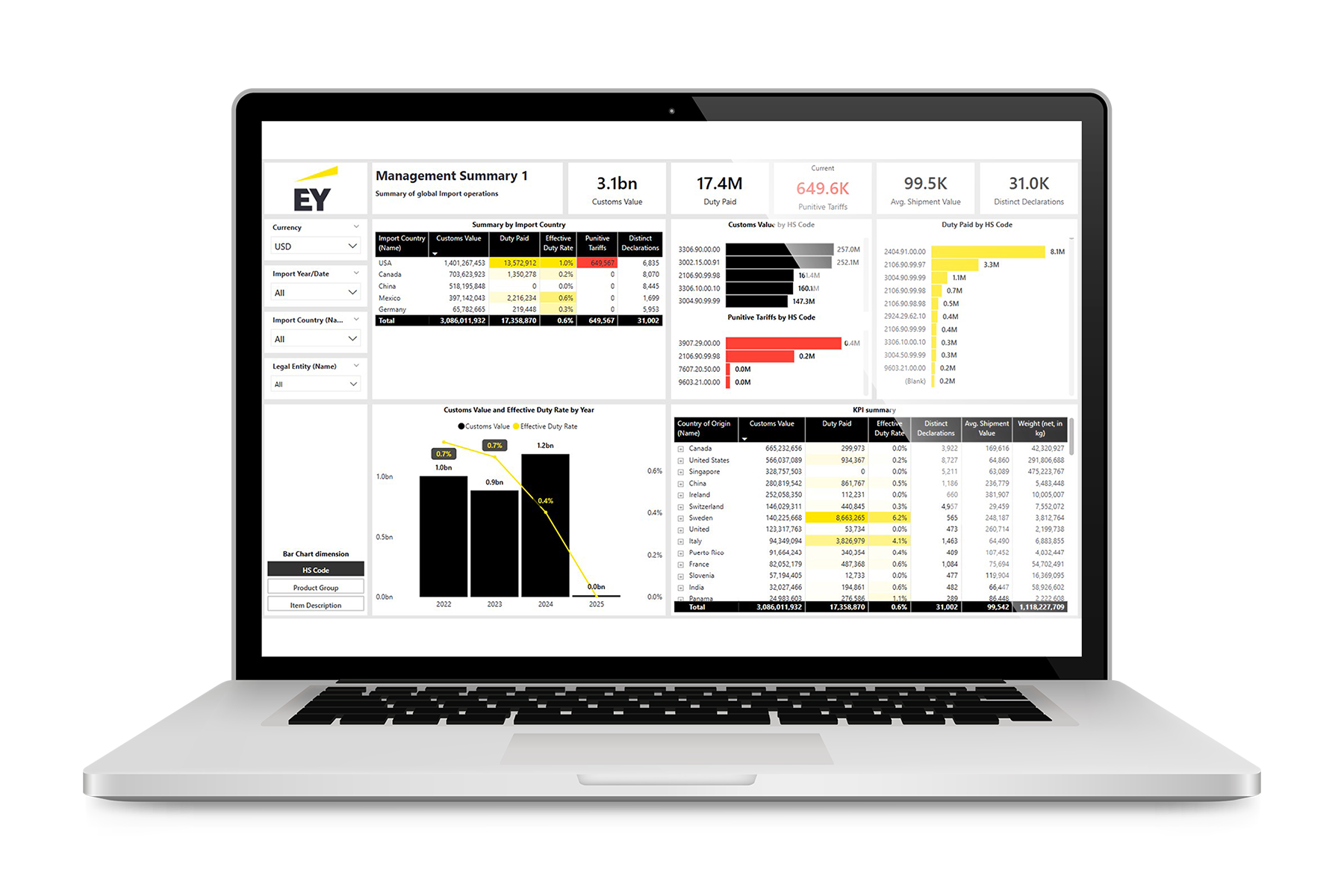
Current state analysis
Provide a clear understanding of your international trade flows across a range of parameters and key performance indicators.
- Rapidly assess current state for management reporting purposes.
- Utilize dynamic and interactive dashboards as your one-stop shop for effective global trade management.
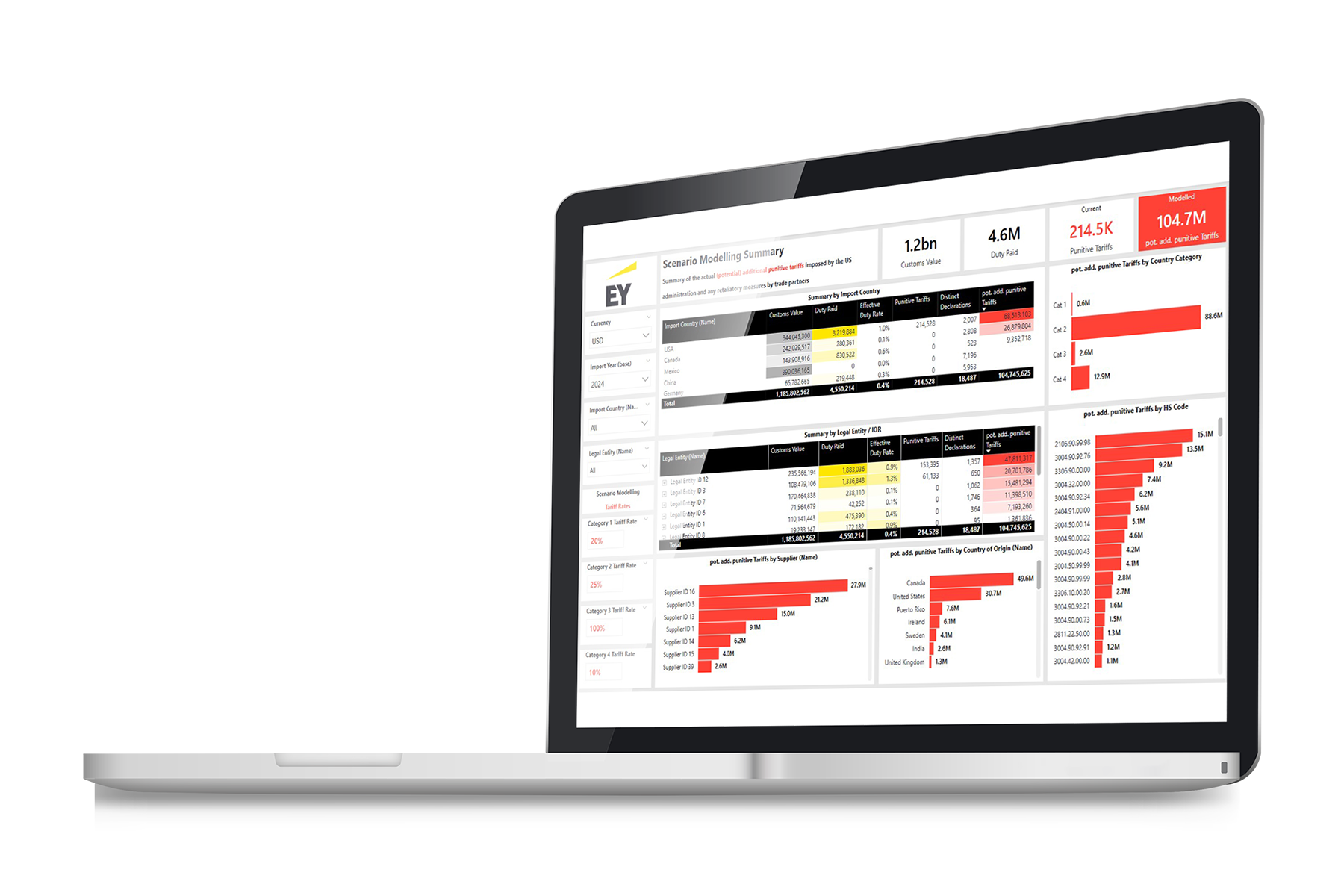
Scenario modeling
Model the impact of trade policy changes on your goods and trade flows.
- Understand the impact of duty rate changes on your supply chain across various dimensions. Evaluate risk responses for fast and informed decision-making.
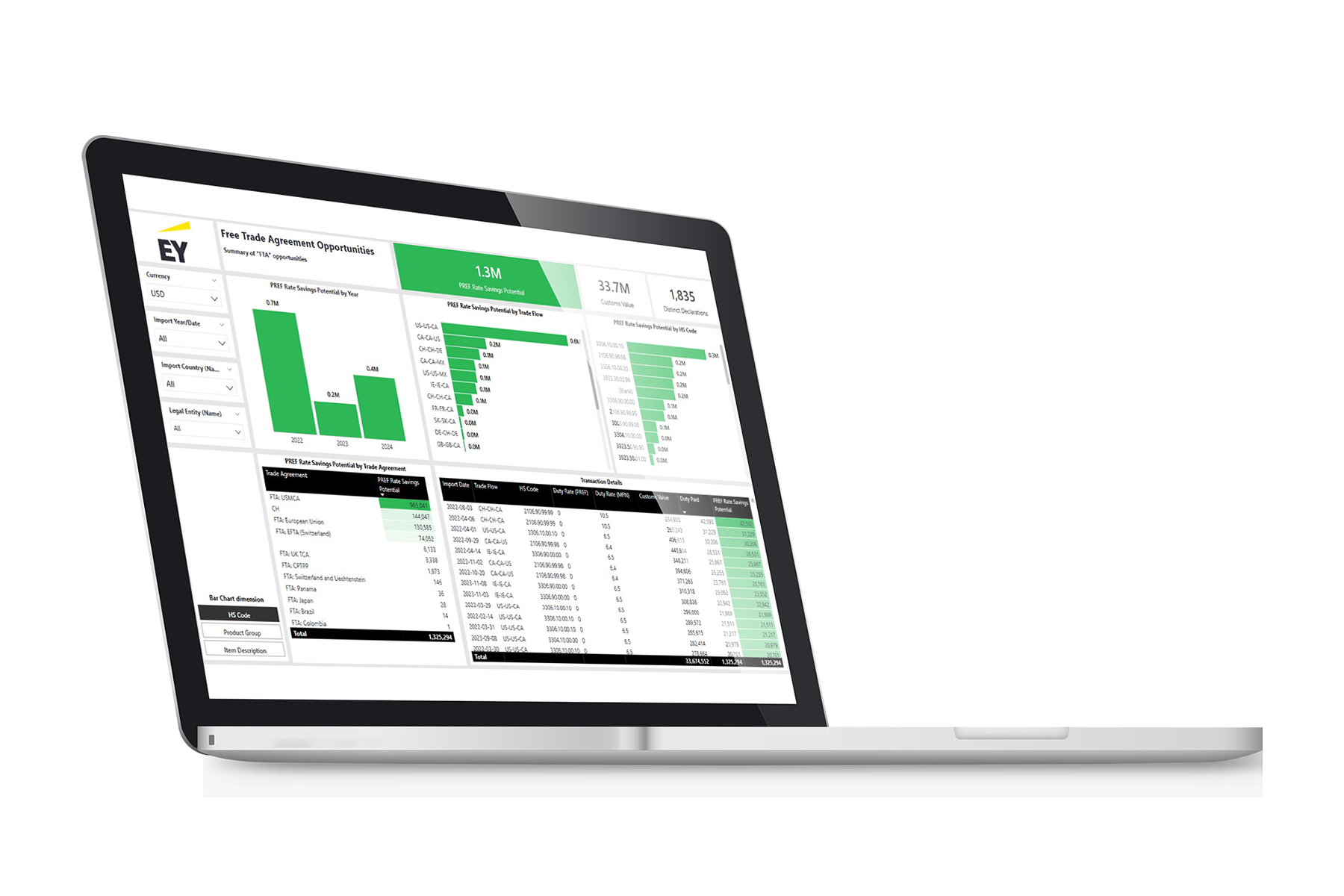
Duty cost optimization
Assess your trade flows to identify cost-saving opportunities from an operational (e.g. Free Trade Agreements) or strategic (e.g. Duty Drawback) point of view.
- Identify opportunities across a spectrum of automatic checks.
- Evaluate customs’ special procedures and build cases for investment.