

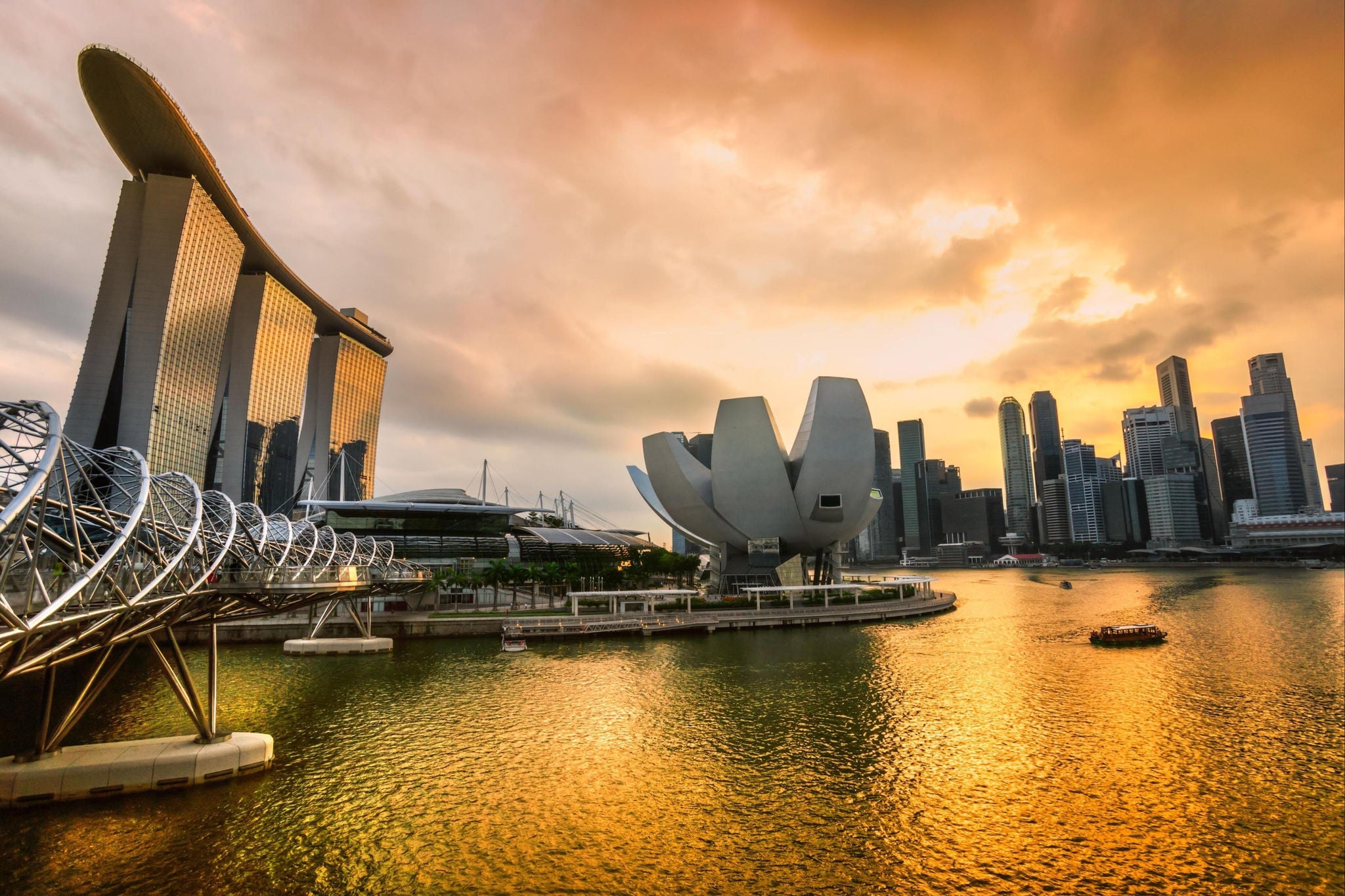



Singapore city skyline at sunset

How Singapore can secure success for its next chapter 

Singapore must sharpen its distinctiveness to stay competitive and anchor as a key node in global value chains.


In brief

  • Singapore must strategically adapt to rising geopolitical and macroeconomic uncertainties by further distinguishing itself.
  • This requires investing in deep tech, having agile policies and regulations and becoming a hub that goes beyond connectivity.
  • By strengthening its focus in these areas, the nation can position itself for continued success.

For some time, Singapore has conscientiously positioned itself as a location for regional headquarters, riding on its strategic location, robust and stable infrastructure, business-friendly environment and skilled workforce. 

There has been considerable success. Foreign direct investment into Singapore reached S$192 billion in 2024, an increase of 5.6% year-on-year.1 Notably, global multinational corporations have been using Singapore as a hub for R&D and regional HQs, while deploying operations across neighboring Southeast Asian countries.

Yet, amid the NAVI (nonlinear, accelerated, volatile and interconnected) state of affairs today, this proven approach could be challenged for its long-term relevance. 

The shifting equilibrium in global geopolitics, uncertainty in trade and tariffs, and the rapid rise of emerging technologies and climate risks are bringing swift impacts at all levels — from the country’s economy to business ecosystems and right down to individuals. The intersection of these trends, such as the weaponization of trade and technology, creates further far-reaching complexities. 

How can Singapore refresh what has worked or reimagine the possibilities as comfort zones narrow, competition widens and socioeconomic pressures intensify?

As Prime Minister Lawrence Wong pointed out in his National Day Rally speech, a new economic blueprint “to secure Singapore’s future in a very different world” is needed. The recently unveiled Economic Strategy Review, with new committees to address global competitiveness, technology and innovation, entrepreneurship, human capital, and the impact of restructuring, is expected to help chart the path forward.

Competitiveness today is no longer just about efficiency or cost. It is about value creation. To continue to shine and secure its position as a key node in global value chains, Singapore must double down on its strategic capabilities.

Three key aspects have distinguished Singapore and must be honed to make it even more distinctive.

Investment in deep tech


First, in the digital-led and artificial intelligence (AI)-powered future, it pays to lead in developing deep tech infrastructure. If deep tech is to be the engine of the new value chains, Singapore must vie to be one of the high-performance hubs.


Investments in deep tech infrastructure are fundamental to supporting and catalyzing the economic opportunities in AI, biotechnology and advanced manufacturing. Singapore is currently home to global R&D centers and a vibrant semiconductor ecosystem and has been actively growing capabilities in AI and quantum technology.


To entrench the nation’s position in deep tech, it is crucial to scale up the national compute capacity, effectiveness and governance. Core to this is nurturing the talent pool and pipeline in this fast-evolving field.


The potential lag in talent development is a real and present risk. Past experience in implementing Industry Transformation Maps (ITMs), which provides clear frameworks for local enterprises embarking on digitalization, green transition and upskilling, shows that moving enterprises and the workforce up the curve can take time and significant change management.


These ITMs will now need to evolve for next-generation capabilities in AI and sustainability to enable every firm — big and small — to not just digitalize but also transform at its core sustainably and with AI.


Equally important is to invest in nurturing bold, homegrown deep-tech ventures. Public-private capital must go further upstream to fund these ventures before they turn bankable.


Nurturing the talent pool and pipeline in deep tech is integral to helping Singapore secure its position in this fast-evolving field.


Agile policies and regulations 

Singapore is known for its transparent, stable regulatory environment, but what sets it apart is the ability to regulate responsively and anticipatively. Today, rules cannot just keep up; they must lean in. Keeping regulatory and intellectual property (IP) frameworks robust and agile will be important enablers.


Public-private test beds and regulatory sandboxes in FinTech, health tech and AI have allowed innovation to be tested safely in Singapore. This latitude for innovation must continue for technology diffusion to happen faster across business ecosystems. Regulatory frameworks must enable innovation, manage risks early and evolve quickly.


In addition, the country’s Data Protection Trustmark, cross-border data agreements and IP protection regime are already among the strongest globally. In the age of AI, Singapore can aspire to be the place where digital trust frameworks are tested and regional data governance models are pioneered. In other words, it could be the trusted hub where innovations of the future are safely prototyped, funded and scaled across borders.

A hub going beyond connectivity


The hub concept should transcend the flow of goods and capital. To truly create value, Singapore must be the node that connects goods, capital, data, people and ideas and amplifies the power and upsides of doing so.


The nation’s strong connectivity — both physical and digital — with the world is an enduring attribute. Its world-class ports and airports as well as well-established institutional and digital connectivity enabled by free trade arrangements and digital economy agreements underpin this advantage. It continues to be highly relevant for Singapore to expand more digital corridors beyond Southeast Asia to India, Japan, the Middle East and Africa. 


At the same time, Singapore should press on with its dual-pronged strategy of attracting multinational companies, hyperscalers and startups to anchor their regional and high-value activities locally, while serving as a springboard for them to internationalize and tap into regional neighbors for cost advantages.


Beyond that, can Singapore be the hub that forges future-ready talent and champions the diffusion of knowledge and skills across the region to help uplift extended business ecosystems? The inimitable value lies in combining in-demand technical expertise with qualities like critical thinking, ethics, acumen and entrepreneurial courage.


With a sharpened focus in these areas, Singapore can set itself up to confidently punch above its weight and secure success in its next chapter of growth. This pursuit will arguably be no less challenging than the first 60 years of nation building. But if Singapore and its people can commit to a “we-first” and inclusive growth mindset, then success will be sweeter when shared.


This article was first published in The Business Times on 21 August 2025.

Summary

Amid shifting global geopolitics and macroeconomics, a new economic blueprint to secure Singapore’s future for its next chapter of growth is needed. By focusing on investment in deep tech, agile policies and regulations, and becoming a hub that goes beyond connectivity, Singapore can position itself for further success.

Related articles

Top 10 risks for the government and public sector in 2025

The risk landscape for governments is complex and interconnected. Discover the top 10 risks and how mitigating them will build trust and prove value.

Top 10 geopolitical developments for 2025

Geopolitical risk will remain elevated due to economic sovereignty and global rivalries. Learn how to manage the uncertainty to grow your business.

The five habits of successful Geostrategists

All companies are shifting strategies to adapt to geopolitical risk. Here is how to invest more efficiently and strategically than your competitors. Read more.

    About this article