



EY refers to the global organization, and may refer to one or more, of the member firms of Ernst & Young Global Limited, each of which is a separate legal entity. Ernst & Young Global Limited, a UK company limited by guarantee, does not provide services to clients.
Recent Searches
Nagasaki Stadium City reimagines urban revitalization
Japanet and EY Japan leveraged knowledge of the sports business and regional cooperation to execute a private sector-led megaproject.
Client
1
The better the question
How can businesses harness the power of sport for regional revitalization?
A sports and business-led driver of local revitalization is stimulating regional growth across Japan.
While Japanet Holdings is best known in Japan for its Japanet Takata teleshopping business, in 2019, it launched a sports and regional revitalization business as a new pillar within the group. It has expanded sports and entertainment opportunities in the region since 2017 through its management of hometown professional soccer club V-VAREN NAGASAKI. In 2020, it established Nagasaki’s first professional basketball club, Nagasaki Velca, which now competes in Japan’s B.LEAGUE, the country’s professional men’s basketball league launched in 2016 to unify and grow the sport nationwide.
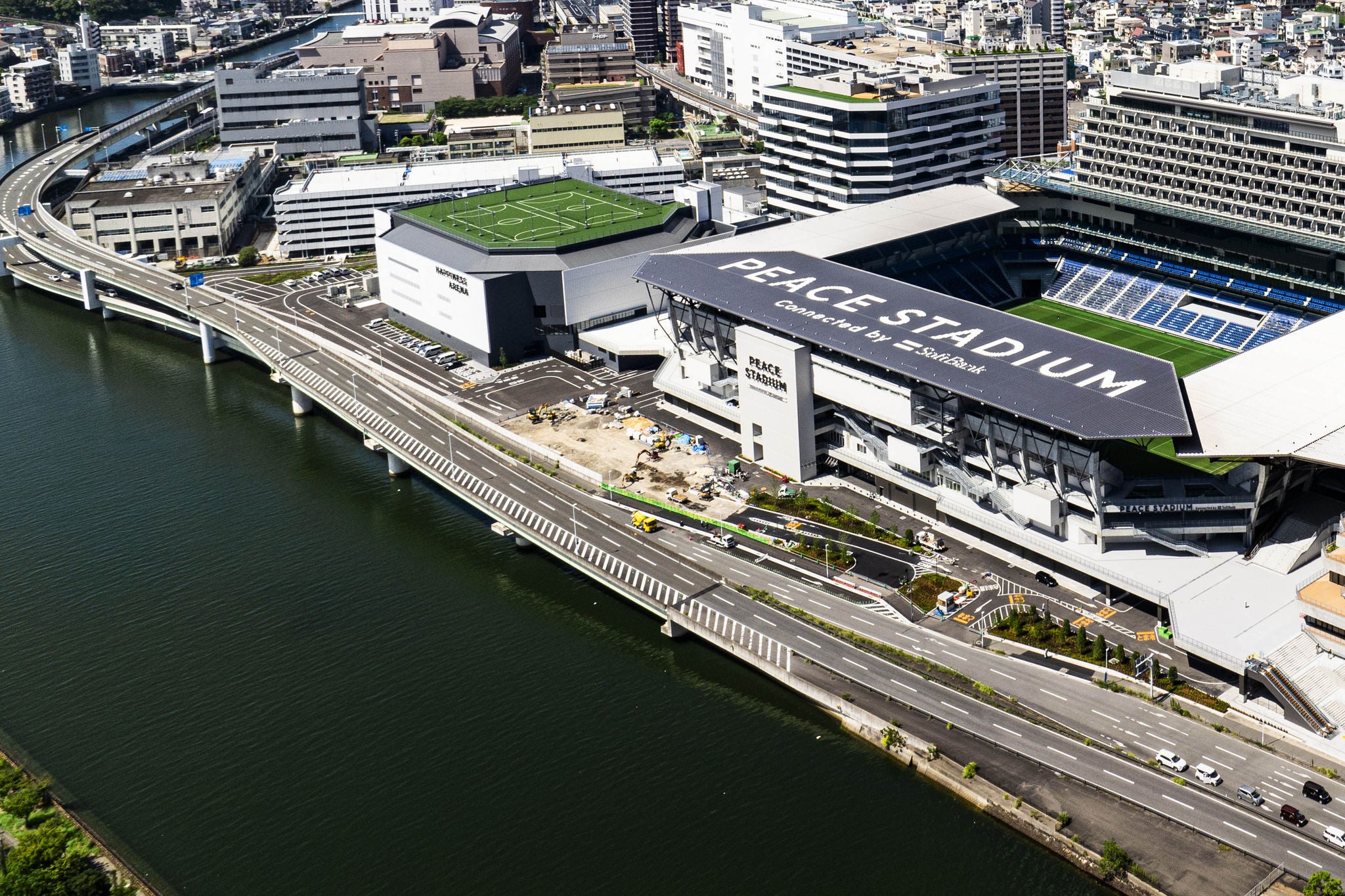
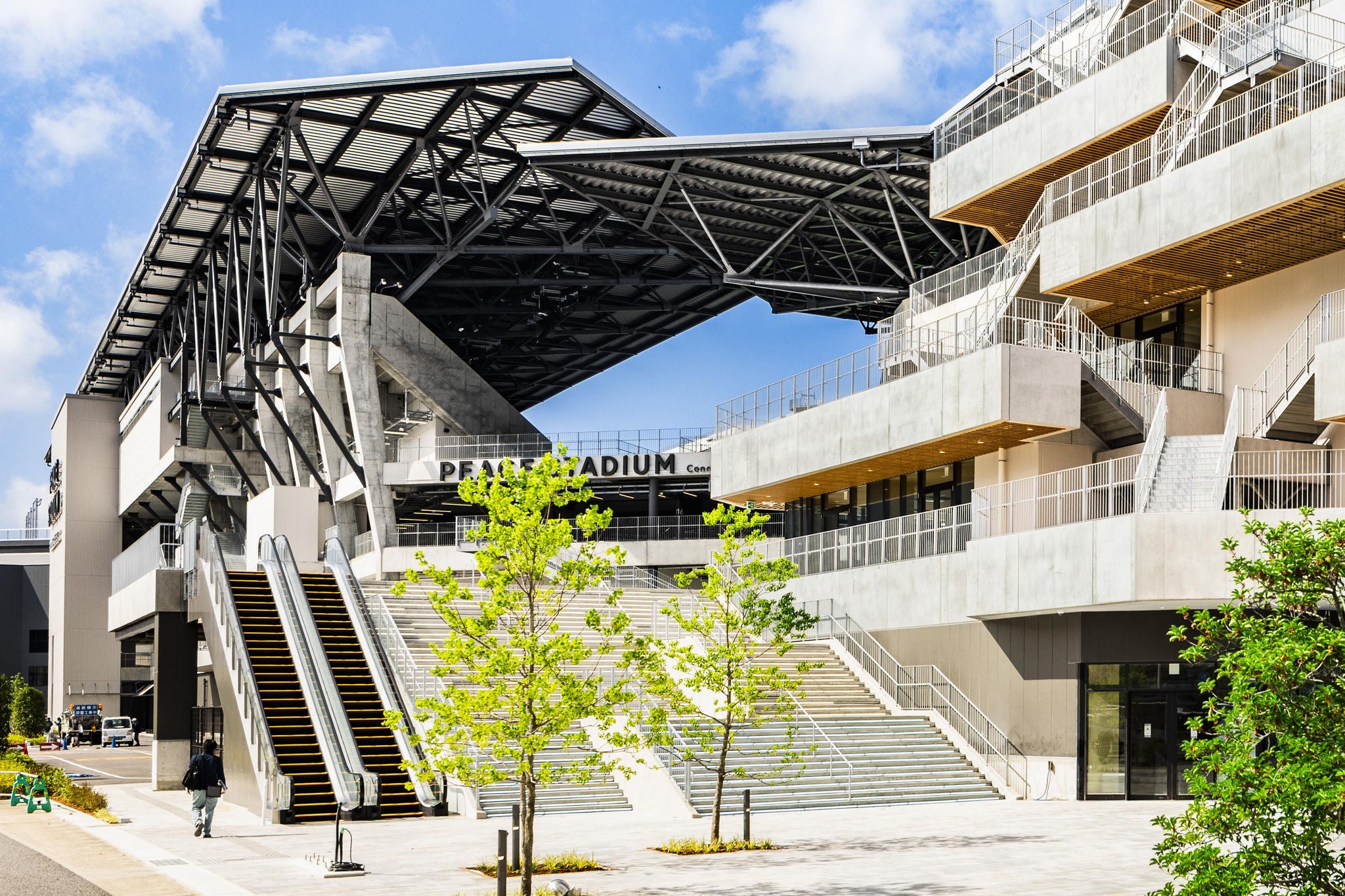
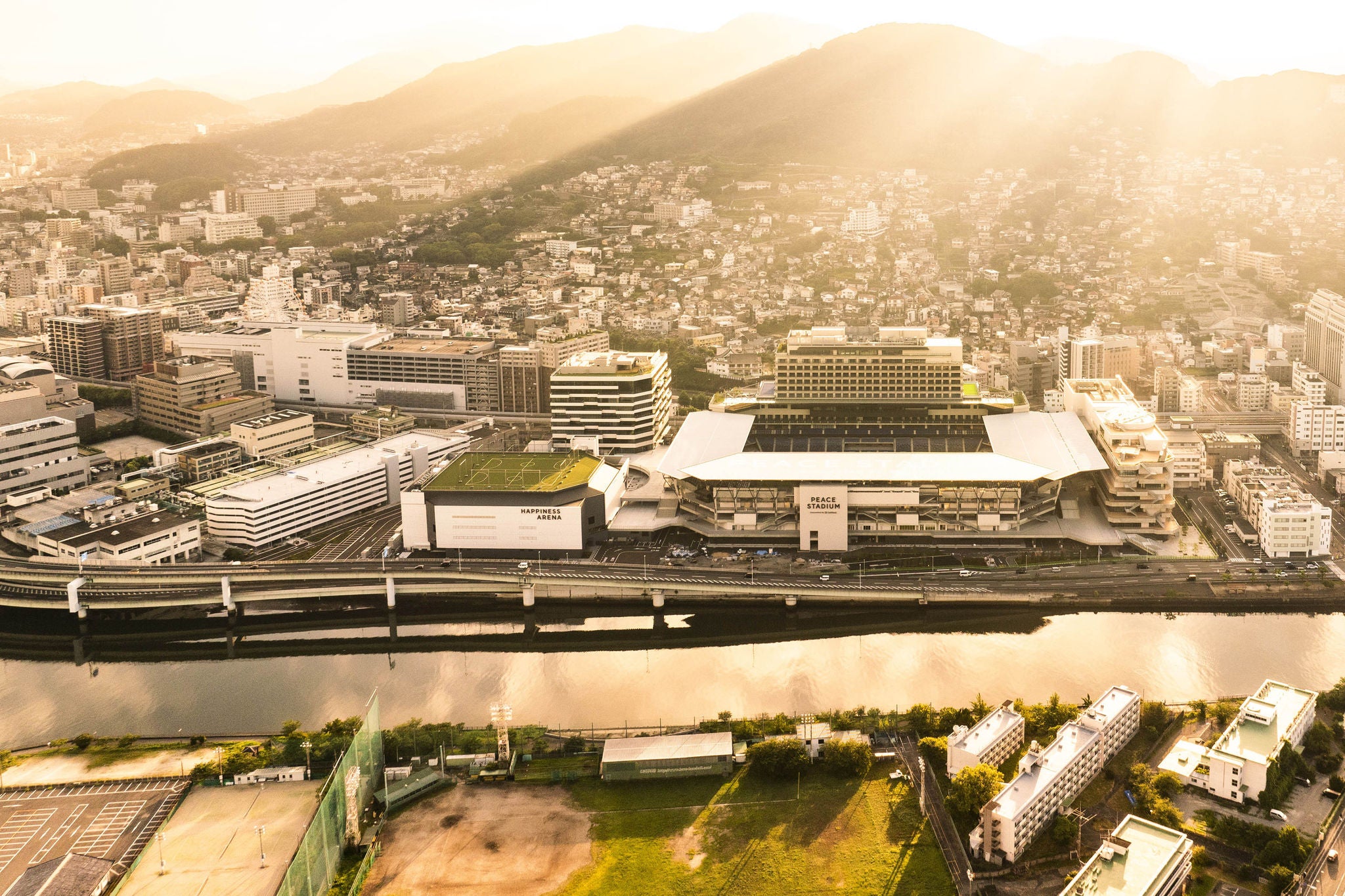
The next major step was building the ambitious Nagasaki Stadium City. A unique urbanization project, Nagasaki Stadium City was conceived as a “city” that would serve as the core for regional revitalization. At its heart is a soccer stadium with a capacity of approximately 20,000 people, an arena with about 6,000 seats, as well as a hotel, commercial facilities, offices and other services. Nagasaki Stadium City now has about 80 stores.
The Nagasaki Stadium City project, representing an investment of approximately JPY 100 billion, is intended to revitalize the region but also be sustainable. As a consequence, it was essential to design digital services that can be updated over the long term and to utilize information and communication technology (ICT) to achieve greater efficiency in the delivery of complex services.
Regional Creation Nagasaki Co., Ltd., a group company set up to serve as the core of the sports and regional revitalization business, spearheaded the project to build Nagasaki Stadium City, which opened in October of 2024. The project has attracted attention as a private sector-led, hybrid business focused on sports and entertainment. Discussing the background to the launch of the project, Yutaka Orime, the company’s Executive Officer, explained how it all began in 2017, when Japanet acquired V-VAREN NAGASAKI, which was struggling at the time, and made it a group company. This marked the start of Japanet’s sports business. It just so happened that in the same year, there was talk of repurposing the site of the former Nagasaki Shipyard & Machinery Works Saiwaimachi Plant, owned by Mitsubishi Heavy Industries. This site would eventually become Nagasaki Stadium City. Japanet’s President and CEO, Akito Takata was keen to take charge of this project. He believed that creating a “one-of-a-kind city never previously seen in Japan,” with a soccer stadium at its core, would energize V-VAREN NAGASAKI and ultimately the people of the city. And Nagasaki would have a brighter future.
This large-scale project was led by the leadership of Japanet Holdings. Yutaka Orime, who was assigned to manage the project on site in Nagasaki, was passionate about the project alongside Takata.
However, Orime recalls that he often heard negative comments at the start of the project about this ambitious initiative from people around him.
“For a while, I heard from many quarters that there was no way this model could succeed in Nagasaki. Let’s call these people ‘dream killers,’ happy to make statements that shatter dreams and ideas. As a company, we adopted ‘beat the dream killers’ in our internal messaging for the year and, partly to prove that something like this could succeed in Nagasaki, we maintained our belief in the power of sports and did everything we could to bring the project to fruition,” he said.
A project of this scale involves a wide range of stakeholders at every step, from initial development to ongoing maintenance and operation. The numerous digital services provided throughout Nagasaki Stadium City required a holistic design, from touchpoints to improve the customer experience to the infrastructure, such as a high-speed network, that supports the services. As management of the facility is expected to become more complex in the future, great emphasis was placed on efficiency and delivering labor savings.
The global EY organization, which is also active in regional development through professional sports and working to create sustainable long-term value, joined the project in 2021 as a project management office (PMO) tasked with the overall management of ICT.
EY Japan already had a strong track record of supporting regional revitalization through sports. For example, EY Japan has supported initiatives by professional sports teams to improve their operations and undergo digital transformation (DX), and contributed to urban development projects centered on arenas and stadiums. EY Japan teams also possess know-how for end-to-end management of numerous complex issues, in fields such as facilities, urban development and coordination with government and public sector entities.
2
The better the answer
Digital integration enhances both user experience and business value
Experts in sports, DX and PPP came together to fully manage ICT across the entire regional development project.
Akira Okada, EY Strategy and Consulting Partner, is experienced in sports DX and regional revitalization. He was in charge of this unique, private sector-led project and shared his insights during a discussion with Yutaka Orime, Executive Officer of Regional Creation Nagasaki Co., Ltd.
“Prior to this project, it was incredibly rare in Japan for private companies to lead the development and construction of stadiums,” Okada said. “The priority was always the public interest element of the stadium and its sports facilities. There was rarely a focus on sports and entertainment as pure attractions, nor consideration of the overall profitability of the stadium and other businesses in the surrounding area. However, with this project, we have attempted to leverage the full benefits of the private sector approach.”
Orime remarked that he believes Nagasaki Stadium City will, in future, be seen as something unique in Japan — a destination people will want to visit for themselves. “A hotel attached to a soccer stadium is also a first in Japan,” he noted. “As soccer games will only be played there about 20 days a year, I think our model of surrounding the stadium with facilities such as hotels, which allow you to generate stable profits relatively easily, to make the city as a whole profitable, is an idea that only the private sector could come up with.”
On the ICT side, Orime added that they wanted to incorporate cutting-edge field tests and case studies — something that may have been difficult for the government to do. “In my opinion, ICT can offer a sports business approach that is unique to the private sector,” he said.
Okada explained that from the outset, when thinking about how to deliver convenience and comfort in Nagasaki Stadium City, they had a vision and goals for the kind of experience the facility would need to offer. “To achieve those goals, we employed the latest ICT to design services from scratch,” he said. “I think the decision to invest in ICT delivered great value for the project, and that’s something unique to the private sector.”
To build the system, Orime felt it was vital to agree on an initial vision and goals for what they wanted to accomplish using ICT and what type of worldview they wanted to present to customers. “I had the opportunity to discuss some ideas with EY Japan teams, which also involved looking at case studies,” he recalled. “They came up with ideas that we hadn’t considered, so I feel that working together to determine the vision and goals provided huge momentum as the project progressed.”
Orime went on to explain that one notable outcome of the project is that a single app provides access to every aspect of the visitor experience. “There were already 350,000 registered users of the Nagasaki Stadium City app, more than one month before the opening,” he said. “From the beginning, we worked with EY on how to make use of this big data to sort information based on preferences, use it for analysis and to make improvements.”
To achieve workforce efficiencies, Orime added, they had high hopes for employing ICT to optimize operations and reduce labor by visualizing shift management during events, when in-person staffing is most necessary, and at normal times when fewer people are needed. “We expected the use of ICT at Nagasaki Stadium City to have a large economic impact by improving the operational efficiency of the facility and creating opportunities for consumer spending,” he said.
Orime also pointed out that when negotiating larger orders, working with EY people as a single team paid dividends. “Large-scale projects entail placing orders worth several hundred million yen or more,” he explained. “EY led from the front by dealing with potential vendors and engaging in complex negotiations. When there’s a tough discussion between us as the client and a contracted vendor, it is the business relationship which often suffers. We’re immensely grateful to EY for stepping in as a neutral party and helping us to build stable relationships with our vendors.”
3
The better the world works
Stadium City builds community ties and social value through sports
Japanet launched Stadium City to revitalize Japan locally and create long-term, sustainable value as a model for other regions.
Orime believes that the project also benefitted significantly from the involvement of the EY global organization, which operates internationally and brings information on current sports trends from around the world to Nagasaki. “Worldwide, investments in sports businesses and venues seem to be getting larger,” he said. “I believe this is because of the power of sports and because of the involvement of the community in urban development projects, which enhances corporate value and creates the conditions for successful businesses. I am confident we will see greater adoption of these practices in Japan.”
Okada added that, during their consulting sessions, they often discussed enhancing value by integrating the management of venues such as the stadium and the arena with sports entertainment, ticketing, food and beverage services, etc. “We also consider expanding the range of revenue sources by operating an entertainment business that monetizes created content across various media, such as streaming,” he explained. “I think Nagasaki Stadium City has shown that this can be done. I hope that Nagasaki will be the starting point for enabling new sports and entertainment businesses in Japan to move to the next level.”
Now that the facility has been completed, Orime noted, tickets for the first concert have been selling well, and the doubts surrounding the project have mostly disappeared. “Almost all of the so-called dream killers have disappeared,” he said. “While we only had a few staff initially, we now stand at 300 people.”
Orime emphasized that the opening was only the beginning. “Ensuring the long-term viability of the facility will be the key challenge,” he explained. “It will attract a lot of attention in its first year, but we want to keep delivering what customers want and continue to grow over the next 10 to 20 years.”
Okada expressed his hope that more people in the public sector would embrace the co-creation model and work alongside private companies like Japanet Holdings to achieve similarly impressive results. “If we get to see more examples of the public sector entrusting projects to a private sector providing superb services, I think both the public and private sectors will become more aware of the potential in these projects,” he said.
Orime agreed. “I also don’t think private sector-led projects are necessarily the only answer. I believe that increasing the number of examples like this — where the project involves cooperation with public institutions and where the regional and local context is reflected in the plan — can energize the whole country.”
Orime hopes that this new approach to regional revitalization, which straddles the line between public and private sectors, will spread from Nagasaki to the rest of Japan. “Nagasaki City, which is a testbed for our vision, represents a market of about 400,000 people,” he said. “It is not that large by national standards, but if we can make a large investment and guide an exciting project to success there, it is an example that can be repeated in any city. With many Japanese regions on the decline, I would be happy if we can become a pioneer in reinvigorating cities through the power of sports, establishing a ‘Nagasaki model.’”
It has been four years since Japanet Holdings and EY Japan overcame corporate boundaries to unite forces in a team and co-create this project. And, Nagasaki Stadium City has finally opened.
There is already considerable interest in the Nagasaki Stadium City. Now, with the emergence of a private sector model with the potential to energize various parts of Japan through the power of sports, people across the country, not solely in Nagasaki Prefecture, are paying close attention to see what happens at Nagasaki Stadium City.