































EY refers to the global organization, and may refer to one or more, of the member firms of Ernst & Young Global Limited, each of which is a separate legal entity. Ernst & Young Global Limited, a UK company limited by guarantee, does not provide services to clients.
Recent Searches
Select your location
Local sites
Forensic & Integrity services
Our forensic consultants provide you with the benefit of our broad sector experience, deep subject-matter knowledge and the latest insights from our work worldwide.
How EY can help
-
EY Crisis Management & Incident Response enables business leaders to recognize, prepare for, respond to and recover from crisis threats. Learn more.
Read more -
As regulatory enforcement and public intolerance of corporate misconduct increase, EY professionals help you strengthen your integrity and global compliance frameworks. And, should violations occur or allegations of fraud or corruption arise, the EY Forensics teams help you respond quickly to safeguard your business.
Read more -
Our team works to give you the benefit of our broad sector experience, our deep subject-matter knowledge and the latest insights from our work worldwide.
Read more -
EY offers legal managed services across the eDiscovery life cycle, from pre-litigation information management to post-matter data disposition.
Read more -
Whether facing acts of fraud, governmental or regulatory inquiries, breach-of-contract claims or litigations, organizations rely on EY Forensic Data Analytics (FDA) teams for assistance.
Read more -
Our Transaction Forensics team can help your business mitigate financial, operational and reputational risks inherent to mergers and acquisition transactions. Learn more.
Read more -
EY Government Contract Services provides government contracting consulting, government contract accounting and pharmaceutical government pricing support.
Read more -
EY Insurance & Federal Claims Services teams help clients with disaster assistance through federal disaster recovery grants and insurance claims services.
Read more
Read more about EY Third-party risk management services
Read more about Pharmaceutical Revenue Management Services
- Our latest thinking
- EY Forensics webcasts
Our latest thinking on Forensic & Integrity Services
How to stay ahead of the prevailing wage curve
Navigate the impact of the IIJA, CHIPS and IRA on prevailing wage requirements. Learn compliance strategies to avoid penalties.
29 Feb 2024
Sajeev Malaveetil
DOJ guidance: establishing governance over third-party messaging apps
Learn steps to take now, next and beyond to effectively address DOJ guidance.
10 Jan 2024
Jennifer Joyce
DOJ’s new safe harbor policy encourages self-disclosure in M&A
A new DOJ safe harbor policy encourages companies to voluntarily self-disclose criminal conduct discovered at an entity acquired through M&A. Learn more.
13 Nov 2023
Katie Kyle
CFPB issues first formal policy statement on abusiveness
The CFPB policy statement outlines a framework for analyzing abusive conduct. Learn more.
08 Nov 2023
Shawn McGrath
How state broadband leaders can protect distributed capital from the IIJA
The distributed capital is allocated across several programs and has components of formula and discretionary grants.
03 Nov 2023
Justin Fishman
10 important tips for developing an effective cost estimate
It is critical that federal grant recipients establish and document cost reasonableness. Read to learn more.
26 Oct 2023
Bradley (BJ) Nichols
EY Forensics Webcasts
What audit committees need to know to prepare for 2024
What audit committees need to know to prepare for 2024
19 Dec 2023 | 20:00 your local time
In this webcast, panelists will provide an introduction to open-source intelligence and how entities are using this data to monitor for risks and threats.
15 Jun 2023 | 15:00 your local time
How to improve readiness to deal with crises and external threats
In this webcast, panelists discuss how organizations can manage the impacts of a crisis on their businesses. Learn more.
29 Mar 2023 | 13:00 your local time
How to prioritize governance in your organization’s ESG strategy
In this webcast, panelists discuss how organizations can prioritize governance in their ESG strategy. Learn more.
29 Jun 2023 | 15:00 your local time
EY Integrity Agenda
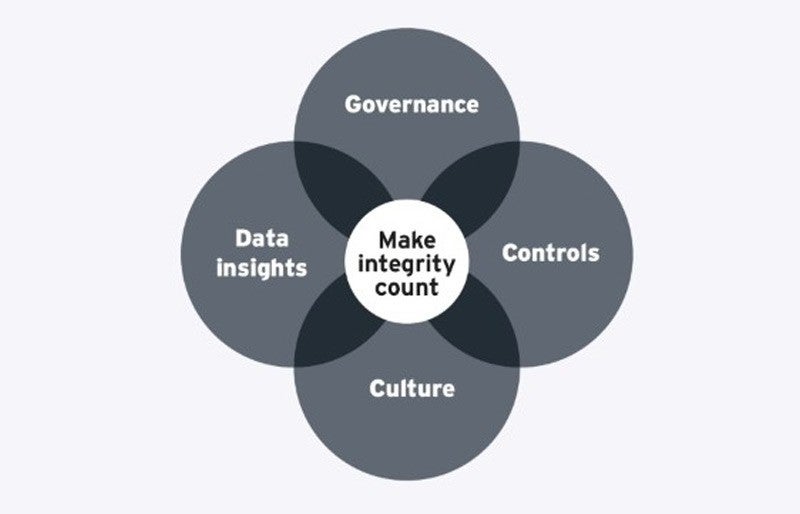
Learn about EY Integrity Culture Index
The Forensic & Integrity Services team
Liban Jama
EY Americas Forensic & Integrity Services Leader; EY Global Client Service Partner
Passionate about building teams. Trusted C-Suite advisor. Devoted to family.
Washington, DC, USA
Kris Curry
EY Americas Forensic & Integrity Services Deputy Managing Partner
Enjoys helping clients address legal and regulatory challenges. A leader in utilizing technology and innovative approaches.
Iselin, USA
Chris Sercy
EY Americas Forensic & Integrity Services Markets Leader, Principal, Ernst & Young LLP
Client focused. Driven by innovation and imagination. Committed to building diverse and inclusive teams. Avid golfer. Devoted to family.
Charlotte, USA
Miles Ripley
Principal, Forensic & Integrity Services, Ernst & Young LLP; EY Americas Investigations & Compliance Leader
Passionate about long-term, value-driven exceptional client service. Committed to building diverse and inclusive teams focused on investigations and compliance innovation. Devoted to family.
Amanda Massucci
EY Americas Forensic & Integrity Services, Transaction Forensics Leader and West Region Leader
Experienced leader in forensic practices. Passionate about serving clients and developing people. Dedicated to building EY into the best global professional services firm.
Chicago, USA
Bradley (BJ) Nichols
EY Americas Insurance & Federal Claims Services Leader
Helping clients recover financially after disasters through commercial insurance claims and federal disaster grants as a partner in the Insurance & Federal Claims Services practice.
Allen Melton
EY Americas Forensic & Integrity Services Government & Public Sector Leader
Helping clients recover financially after disasters. Extensive experience with commercial insurance claims and federal disaster grants.
Dallas, USA
Sajeev Malaveetil
EY Americas Government Contract Services Leader
Enabling businesses and communities to serve our government and the people they represent — ethically, honestly and with integrity.
Washington, DC, USA
Jeffrey Sallet
Partner, Investigations & Compliance, Forensic & Integrity Services, Ernst & Young LLP
Former federal investigator. C-suite leader. CPA. Boston native. 5x Boston Marathon finisher. Devoted to family.
Boston, USA
Bjorn Malmlund
EY Americas Forensics Disputes Leader, Ernst & Young LLP
Passionate about serving clients and developing people. Committed to building diverse and inclusive teams. Loves to travel and spend time with family and friends.
Los Angeles, USA
N. Scott Jarrell
Ernst & Young LLP US Financial Services Forensic Technology Principal
Technology enthusiast. Strong advocate of diversity and inclusivity.
Charlotte, USA
Scott Clary
Principal, Forensic & Integrity Services, Ernst & Young LLP
Promoter of diversity and inclusion. Published author. Tech-savvy. Passionate community member. Strong focus on family.
Houston, USA
Walid Raad
EY Americas Forensic & Integrity Services Financial Services Leader
Dedicated to finding innovative solutions to complex problems by cultivating our diverse team of professionals. Foodie. Loves travel. Husband. Father. Mentor.
New York, USA
Tom Gregory
EY Americas Forensic & Integrity Services, Health, Sciences & Wellness Leader
Helps leading companies avoid and resolve business disputes. Sports and travel enthusiast. Father of four.
Atlanta, USA
Jon Feig
EY Americas Forensic & Integrity Services Central Region Leader
Promotes an inclusive culture. Active engagement and coaching with junior professionals.
Chicago, USA
Richard Thomas
EY Americas Forensic & Integrity Services Law Firm Alliance Leader
Innovative, insightful and energetic forensics leader. Proud father and husband. Enthusiastic golfer. Building a better working world.
New York, USA
Todd Marlin
EY Global Forensic & Integrity Services Technology & Innovation Leader
Global leader in technology & Innovation, with significant experience serving the financial services industry.
New York, USA
Scott Nemeroff
EY Americas Forensic & Integrity US Federal Government Leader
Collaborative leader. Committed to finding people-driven solutions with the right blend of innovation. Family first. Do the right thing.
Tysons, USA
Arpi Lal
Partner and New York Office Leader, Forensic & Integrity Services, Ernst & Young LLP
Help my clients achieve what they cannot on their own. Boy mom. Green thumb. Coffee enthusiast. Video game addict. Avid skier. Volunteer.
New York, USA
Direct to your inbox
Stay up to date with our Editor's picks newsletter.