



EY refers to the global organization, and may refer to one or more, of the member firms of Ernst & Young Global Limited, each of which is a separate legal entity. Ernst & Young Global Limited, a UK company limited by guarantee, does not provide services to clients.
Recent Searches
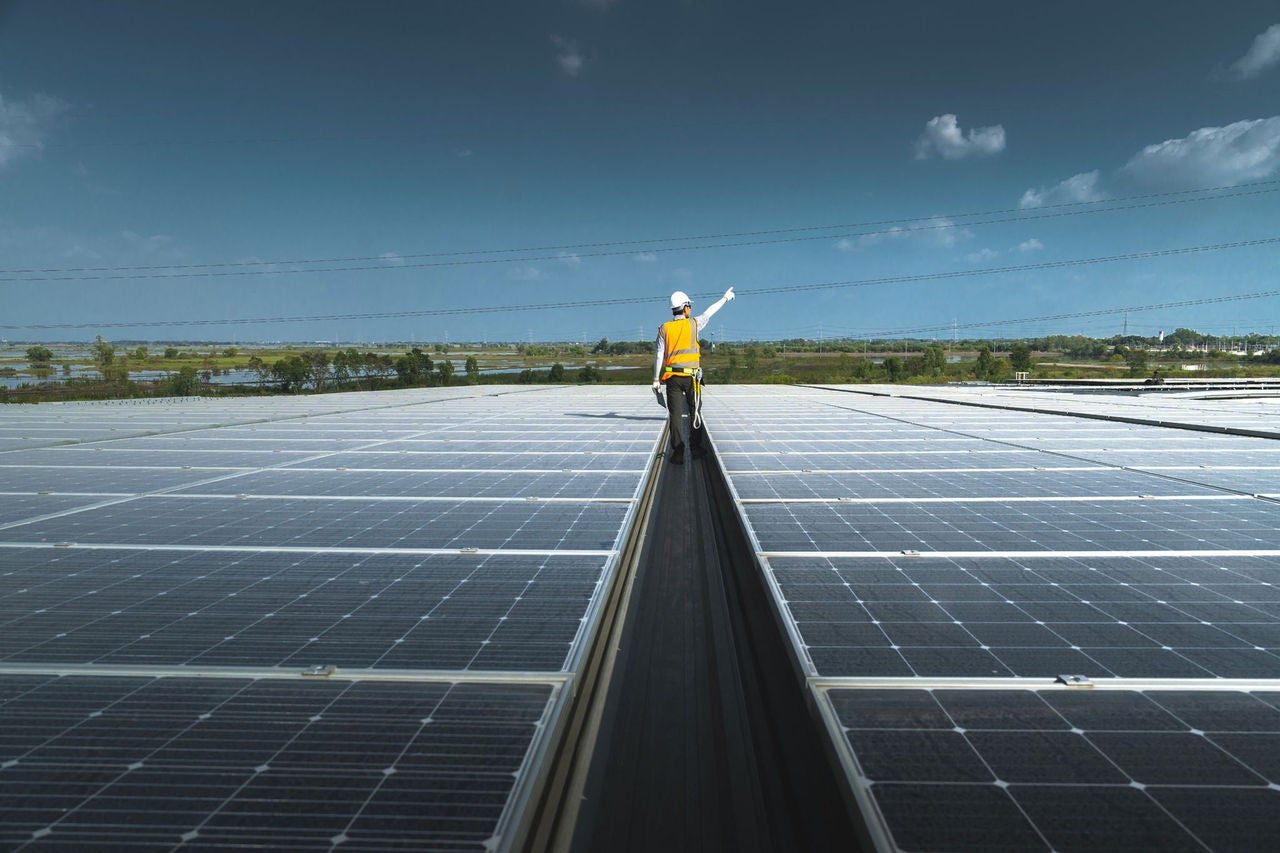
Brazil's New Nationally Determined Contribution (NDC) brings challenges and opportunities to the private sector
By Dr. Thelma Krug, Chair of the Global Climate Observing System (GCOS) and Ione Anderson, Associate Partner, EY Sustainability.
The private sector has a strategic and urgent role in addressing the climate crisis. As the window of opportunity to limit global warming to 1.5°C narrows, the latest data reinforces the need for coordinated action among governments, businesses and society. The Emissions Gap Report 2024 is categorical in stating: current efforts are still insufficient to achieve this goal.
In this context, Brazil's new Nationally Determined Contribution (NDC) emerges as an important national commitment to close this gap. The implications of the new Brazilian target for 2035 are profound, especially for the private sector.
The next five years constitute a critical window of preparation, which will require rapid adaptation to a changing political landscape, alignment with national climate plans and complex global geopolitics. At the same time, this new scenario represents an opportunity for leadership, with room to lead and innovate toward a low-carbon economy.
According to the Central Bank of Brazil (2021), there is no single solution to the climate crisis. The viable future of humanity will depend on a myriad of actions and the performance of various actors — among them, the private sector, which has the capacity, resources and agility to promote large-scale changes.
One thing is certain: whoever anticipates will have a competitive advantage in the coming decades, when the world seeks to reach the net zero carbon milestone. But this advantage will only be consolidated if there is a collective effort. At a historic moment, in which COP30 will be guided not by the construction of a new agreement, but by the effective implementation of climate commitments, the Brazilian private sector has the chance to assume a transformative role: making climate action an irreversible path.
This document explores the expectations and implications of Brazil's new NDC, with an analysis anchored in three key reports: the Emissions Gap Report 2024, the Biennial Transparency Report, and the Climate Convention's Global Stocktake (GST Report). The set of these studies offers valuable data for constructive reflection, with the objective of informing, engaging and identifying concrete opportunities for the private sector in Brazil and Latin America.
Download PDF
Summary
The document explores the expectations and implications of Brazil's new NDC for the private sector, identifying concrete challenges and opportunities for achieving the country's 2025 and 2030 environmental goals.