









EY refers to the global organization, and may refer to one or more, of the member firms of Ernst & Young Global Limited, each of which is a separate legal entity. Ernst & Young Global Limited, a UK company limited by guarantee, does not provide services to clients.
Recent Searches
Press release
09 Feb 2026
|
Hong Kong SAR
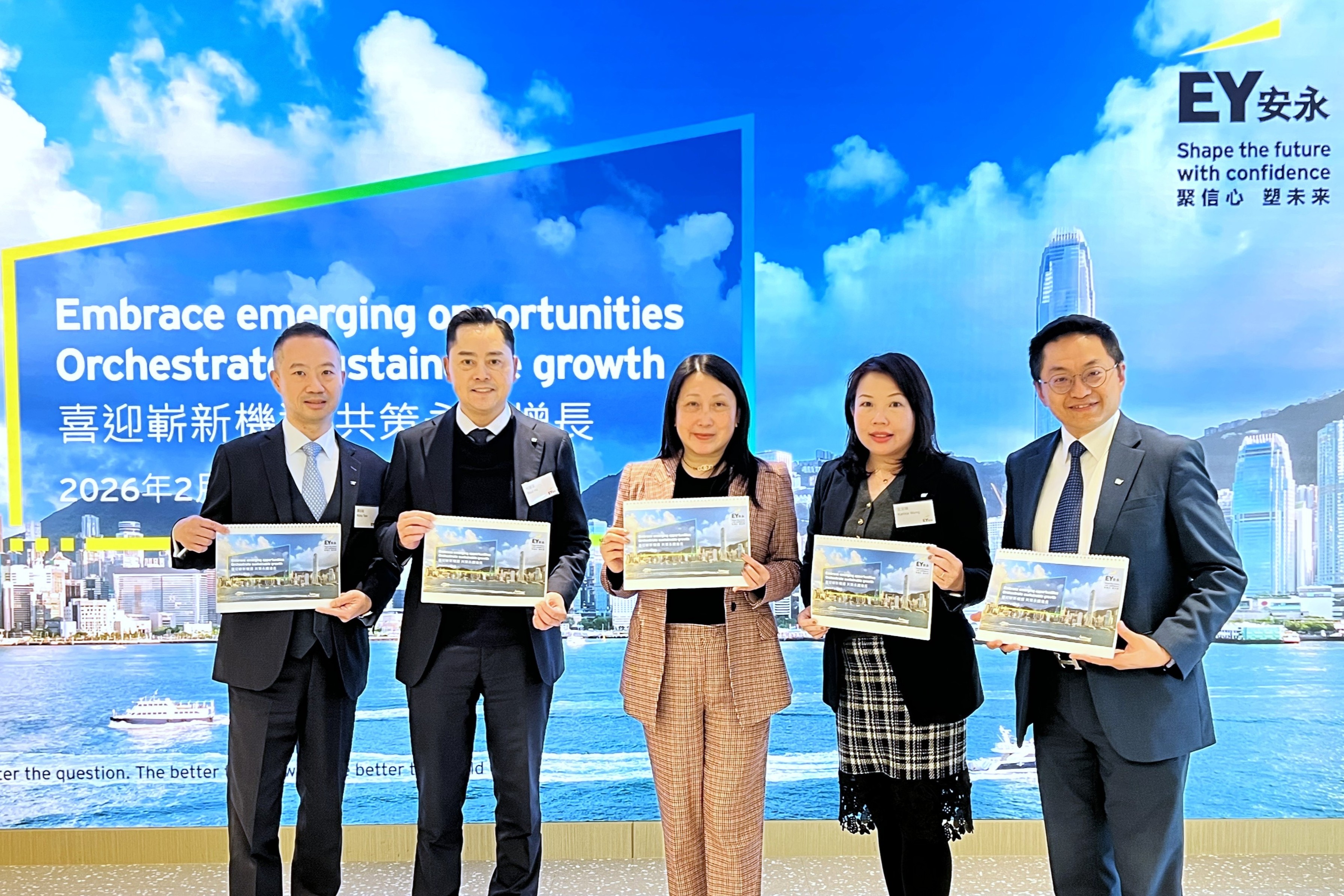
Embrace emerging opportunities, orchestrate sustainable growth; EY recommendations for 2026-27 Hong Kong Budget
- EY recommends that the Government drive innovation on a solid fiscal foundation and work together to expand new horizons for Hong Kong’s high-quality development.
- Hong Kong should press ahead with targeted capital investments in new areas including technology-driven initiatives and the development of the Northern Metropolis, guided by the National 15th Five-Year Plan.
- Estimated fiscal deficit of HK$0.5 billion with a fiscal reserve of HK$653.8 billion in the financial year 2025-26.
Ernst & Young Tax Services Limited (EY) estimates that the Hong Kong SAR Government (the Government) will record a fiscal deficit of HK$0.5 billion in the financial year 2025-26, a significant improvement compared with the HK$67 billion deficit originally forecasted in the Government’s Budget announced in February 2025.
As a result of the estimated deficit for the fiscal year 2025-26, Hong Kong’s fiscal reserves will slightly decrease from HK$654.3 billion to HK$653.8 billion as of 31 March 2026.
Jasmine Lee, EY Hong Kong and Macau Managing Partner, says: “Guided by the National 15th Five-Year Plan, Hong Kong should press ahead with targeted capital investments in new areas essential to our long-term growth, especially technology-driven initiatives and the development of the Northern Metropolis. Strategic investment today is the cornerstone of sustainable progress tomorrow.”
Land premium is expected to continue to be lower than the original estimate of HK$21 billion as was the case in the prior year. On the other hand, the stock market remains robust and stamp duty revenue is expected to almost double, exceeding the original estimated HK$67.6 billion. Tax revenue, benefiting from the economic recovery, is expected to pick up this year as well.
Lee further says: “While there are signs of economic growth, we must still maintain a careful balance, pursing development while safeguarding fiscal sustainability. Financing long-term initiatives through debt issuance should be viewed as a tool for enabling sustainable growth, not as a source of concern. In parallel, we can also explore alternative models such as public-private partnerships to mobilize additional resources and expertise.”
Powering progress: innovative polices, stronger platform to strengthen globalization
Wilson Cheng, EY1 Hong Kong and Macau Tax Leader, says: “Hong Kong is well positioned to develop into an innovation-driven hub for IP and technology commercialization, particularly after the introduction of the Patent Box tax concession in 2024. To keep up the momentum, we should consider extending the current enhanced tax deduction for R&D expenditure to cover collaborative projects within the Greater Bay Area and allow a full tax deduction for R&D services conducted by overseas related-party service providers.”
Under the current tax legislation, expenses incurred for R&D services provided by overseas associates are not deductible, even if the transactions are supported by genuine commercial rationale. EY recommends that the Government revisit this policy, given that similar reforms have already been successfully implemented in other neighboring jurisdictions.
Ricky Tam, EY1 Tax Services Partner, adds: “By refining tax and regulatory arrangements, Hong Kong can attract more multinational and Chinese mainland enterprises to establish their strategic, financial and operational bases in Hong Kong. Building on Hong Kong’s sound financial infrastructure, we believe Hong Kong is the most preferred platform for enterprises looking to go global.”
Karina Wong, EY1 Greater China Private Tax Co-leader and EY Greater China Family Enterprise Leader, says: “The single family office tax concession has already achieved notable success. The Government should ride on this momentum to further strengthen Hong Kong’s standing as Asia’s leading cross-border private wealth management center. Expanding the scope of qualifying investments to cover collectibles and artifacts would align with global family office investment trends and reinforce Hong Kong’s status as a premier international art trading hub.
In addition, the Government may also consider extending the scope of the existing tax concession beyond single family offices to cover eligible multi-family offices and fund managers, so Hong Kong can better capture the growing demand for sophisticated wealth and asset management solutions and develop a more comprehensive family office service ecosystem.”
Future forward: building Hong Kong’s next chapter
As a leading international investment holding hub, Hong Kong should keep itself competitive by modernizing its tax regime in line with global commercial practice and the international tax landscape.
Paul Ho, EY1 Financial Services Tax Leader for Hong Kong, says: “With the implementation of the global minimum tax on the horizon, Hong Kong is entering a new phase in international tax cooperation. It is essential for the Government to preserve Hong Kong’s compliance under the global minimum tax framework while continuing to attract investment and support sustainable economic development. A full review of our current tax legislation should be conducted to ensure the competitiveness of our tax concessions.”
The Northern Metropolis, as Hong Kong’s next engine of growth, should also be backed by a focused and competitive policy framework. This includes the integration of flexible land supply mechanisms with specific tax benefits targeting key sectors.
EY believes that the proposed fiscal measures will balance short-term economic support with long-term sustainability, thus positioning Hong Kong for a more inclusive and structurally robust recovery.
Lee emphasizes: “Through targeted and conditional supportive and relief measures for key industries and communities, citizens at large can benefit while the long-term economic development is taken into account. A sustainable fiscal approach must be adopted with precise deployment of public resources based on long-term growth objectives that preserves ample fiscal room for future generations. Only by balancing prudent financial management with social welfare can we embrace emerging opportunities and ensure every citizen feels the tangible rewards of long-term, sustainable prosperity.”
- Ernst & Young Tax Services Limited
-Ends-
EY | Building a better working world
EY is building a better working world by creating new value for clients, people, society and the planet, while building trust in capital markets.
Enabled by data, AI and advanced technology, EY teams help clients shape the future with confidence and develop answers for the most pressing issues of today and tomorrow.
EY teams work across a full spectrum of services in assurance, consulting, tax, strategy and transactions. Fueled by sector insights, a globally connected, multi-disciplinary network and diverse ecosystem partners, EY teams can provide services in more than 150 countries and territories.
All in to shape the future with confidence.
EY refers to the global organization, and may refer to one or more, of the member firms of Ernst & Young Global Limited, each of which is a separate legal entity. Ernst & Young Global Limited, a UK company limited by guarantee, does not provide services to clients, nor does it own or control any member firm or act as the headquarters of any member firm. Information about how EY collects and uses personal data and a description of the rights individuals have under data protection legislation are available via ey.com/privacy. EY member firms do not practice law where prohibited by local laws. For more information about our organization, please visit ey.com.
Related news
HONG KONG, 9 FEBRUARY 2026 — Ernst & Young Tax Services Limited estimates that the Hong Kong SAR Government will record a fiscal deficit of HK$0.5 billion in the financial year 2025-26, a significant improvement compared with the HK$67 billion deficit originally forecasted in the Government’s Budget announced in February 2025.
HONG KONG, 23 APRIL 2024 — EY supports Invest Hong Kong (InvestHK), a department of the Government of the Hong Kong Special Administrative Region (“HKSAR government”) to prepare the Setting up a family office in Hong Kong guidebook (the “Guidebook”) and offers professional consulting services. This Guidebook has been curated to provide insight into the opportunities available for family offices in Hong Kong and its supportive ecosystem.
HONG KONG, 12 MARCH 2024 — Hong Kong University of Science and Technology (HKUST) Roger King Center for Asian Family Business and Family Office ("the Center") and EY Family Enterprise team (“EY”) today announced the publication of the Landscape of Family Offices in Greater China Report 2024 (the "Report"). Combining academic research and industry expertise, the report provides a comprehensive and insightful analysis of the family office landscape in Greater China. Findings in the report suggest that Chinese mainland families are the primary driving force behind the development of family offices in Hong Kong and that attracting Chinese mainland families is to be focalized.
HONG KONG, 28 FEBRUARY 2024 — The Hong Kong SAR Government (the Government) announced the Hong Kong Budget 2024-25 (the budget) today, in which a revised deficit of HK$101.6 billion will be recorded for the financial year 2023-24, which is almost double of their original forecast of HK$54.4 billion. Amid uncertainties in the global economic outlook, the Financial Secretary (FS) adopted a balanced approach in the budget to relieve people's hardship while simultaneously revitalizing the economy.
EY comments on Hong Kong Budget 2023-24 — Hong Kong’s fiscal position and relief measures
HONG KONG, 22 FEBRUARY 2023 — EY comments on Hong Kong Budget 2023-24, covering Hong Kong’s financial positioning and relief measures.
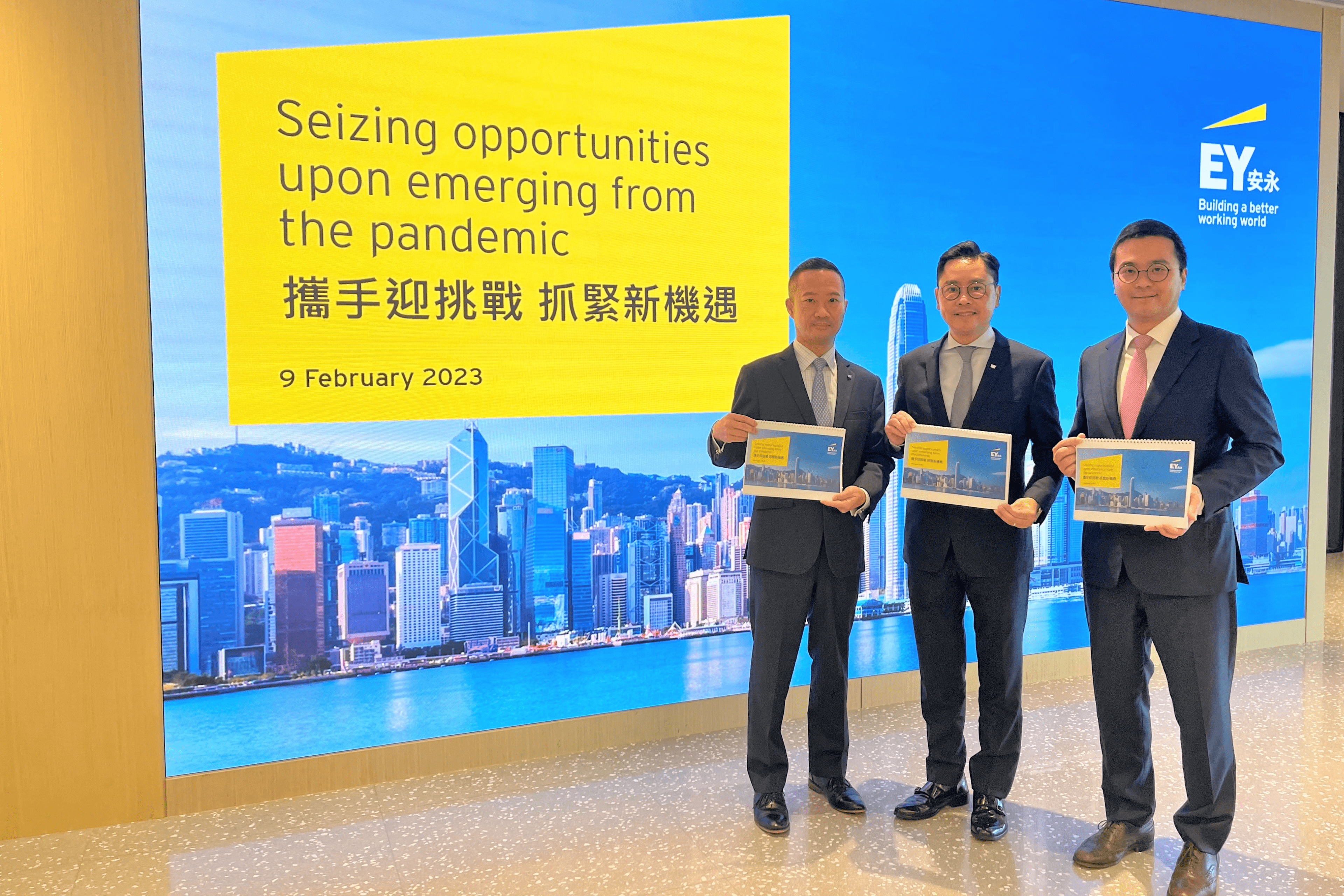
HONG KONG, 9 FEBRUARY 2023 — Ernst & Young Tax Services Limited (EY) estimates that the HKSAR Government (the Government) will record a fiscal deficit in the financial year 2022-23 of HK$135 billion, which will be significantly higher than the amount of HK$56.3 billion originally forecasted in the Government’s budget announced in February 2022.
EY comments on Hong Kong Budget 2022-23 — Hong Kong’s financial positioning and relief measures
HONG KONG, 23 FEBRUARY 2022 — EY comments on Hong Kong Budget 2022-23, covering Hong Kong’s financial positioning and relief measures.
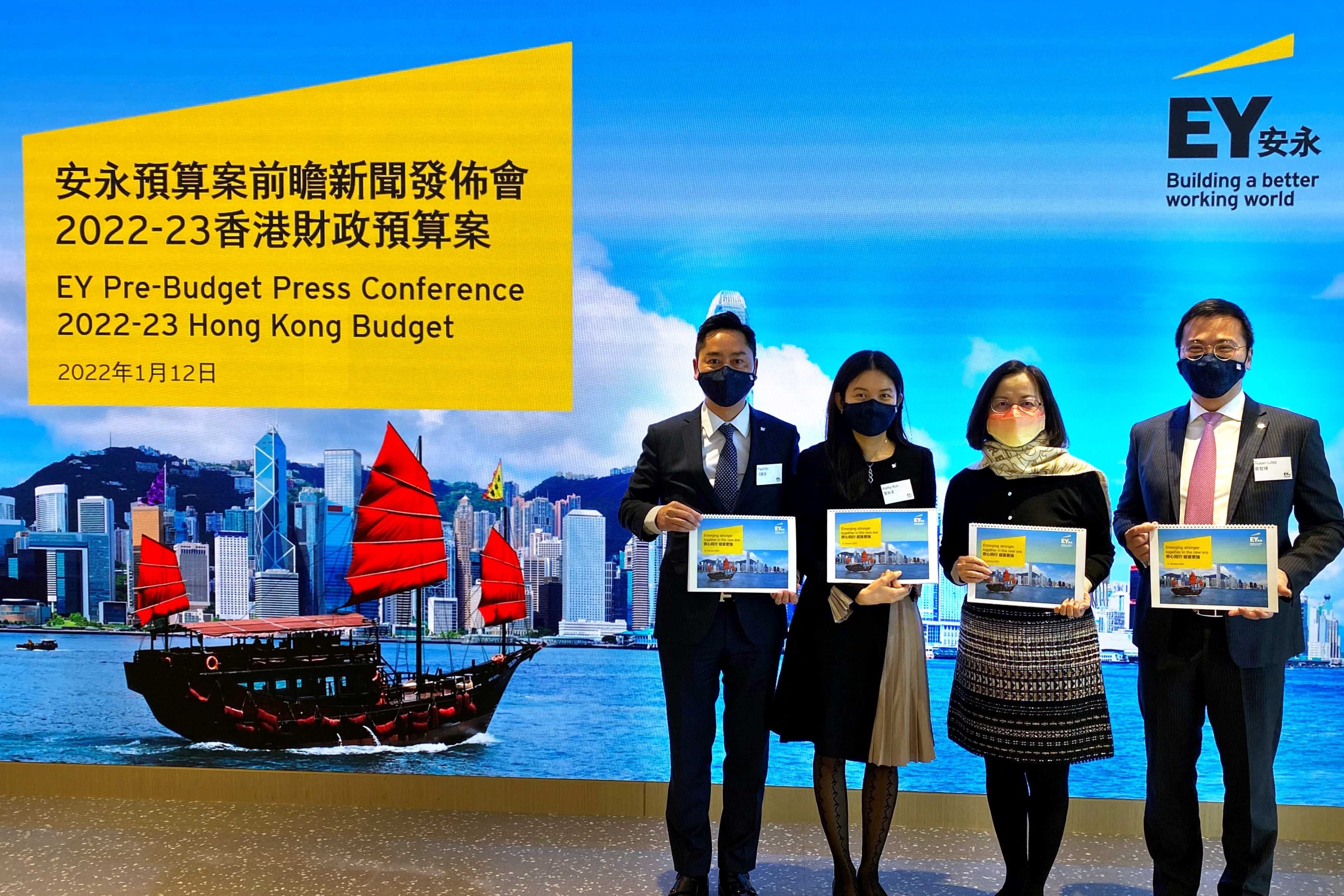
HONG KONG, 12 JANUARY 2022 — Ernst & Young Tax Services Limited (EY) estimates that the HKSAR Government (the Government) will record a fiscal deficit in the financial year 2021-22 of HK$18 billion, which will be considerably lower than that originally forecasted in the Government’s budget announced in February 2021.
EY comments on Hong Kong Budget 2021-22 - Hong Kong’s financial positioning and relief measures
HONG KONG, 24 FEBRUARY 2021 — Agnes Chan, EY Managing Partner, Hong Kong and Macau, says, “Based on the revised estimate announced in the Hong Kong Budget, the HKSAR Government (the Government) will record an unprecedented deficit of HK$258 billion for the financial year 2020-21, the highest deficit recorded to date.”
EY comments on Hong Kong Budget 2020-21
HONG KONG SAR, 28 FEBRUARY 2020 — Based on the revised estimate announced in today’s budget, the HKSAR Government will record the first budget deficit in 15 years, says Agnes Chan, EY Managing Partner, Hong Kong and Macau.
EY estimates a fiscal deficit of HK$70 billion for 2019-20
HONG KONG SAR, 16 JANUARY 2020 - EY estimates that the HKSAR Government (the Government) will record a deficit of HK$70 billion for the financial year 2019-20, the first budget deficit in 15 years.
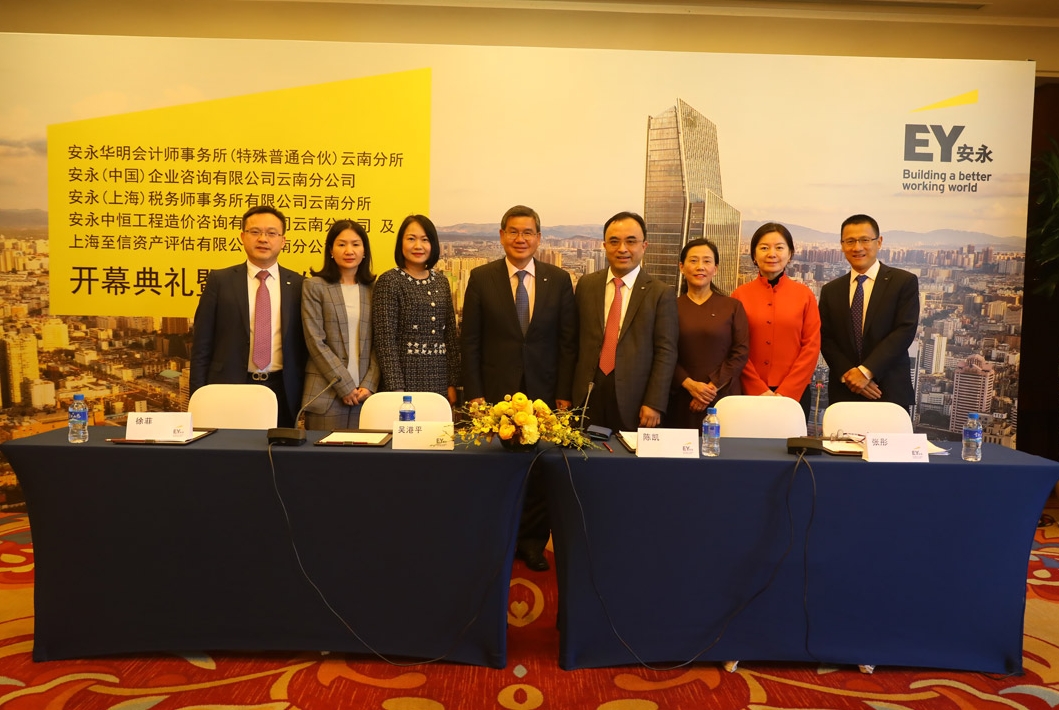
EY Greater China region opens the 29th office in Kunming
KUNMING, 7 JANUARY 2020 — As the 29th office of EY Greater China region, we will provide a full range of professional services to institutions and enterprises in Yunnan, helping Yunnan to become a gateway to Southeast and South Asia.