





EY refers to the global organization, and may refer to one or more, of the member firms of Ernst & Young Global Limited, each of which is a separate legal entity. Ernst & Young Global Limited, a UK company limited by guarantee, does not provide services to clients.
Recent Searches

Luxembourg is a leading hub for alternative investments, with private debt driving growth and US managers leveraging it as a gateway to global investors.
As of late 2024, net assets from US promoters domiciled in Luxembourg exceeded €176 billion¹. This figure excludes unregulated vehicles given the lack of publicly available information and so underestimates the even larger exposure US managers have to this segment. This reflects a clear strategic intent: to combine Luxembourg’s regulatory flexibility with global distribution capabilities. Within this, the Luxembourg private debt market shows strong momentum, from semi-regulated structures such as many SCSp AIFs prominently used, to more regulated forms of AIFs under the RAIF, SIF and Part II UCI regimes that can offer wider distribution channels. This versatility reflects managers’ preference for flexibility and bespoke solutions, reinforcing Luxembourg’s position as a jurisdiction that presents a wide array of products of varying regulatory advantages and distribution capabilities.
The Rise of Private Debt in Luxembourg
Private debt has evolved from a niche allocation to a mainstream strategy for institutional investors. According to the Alternative Credit Council (ACC), Financing the Economy 2024 which EY Luxembourg sponsored, the global private credit market reached US $3 trillion in 2024 and is projected to grow to US $3.5 trillion by 2028², driven by structural shifts in financing and investor appetite for yield and diversification. Europe now represents approximately 30% of this global market, growing nearly twice as fast as the US segment, with assets approaching US $500 billion.
Luxembourg continues to consolidate its position as the leading EU jurisdiction for private debt fund launches, supported by a robust regulatory framework, flexible structuring options, and a mature financial ecosystem. The market has shown strong growth in recent years, with increasing investor appetite and expanding fund structures.
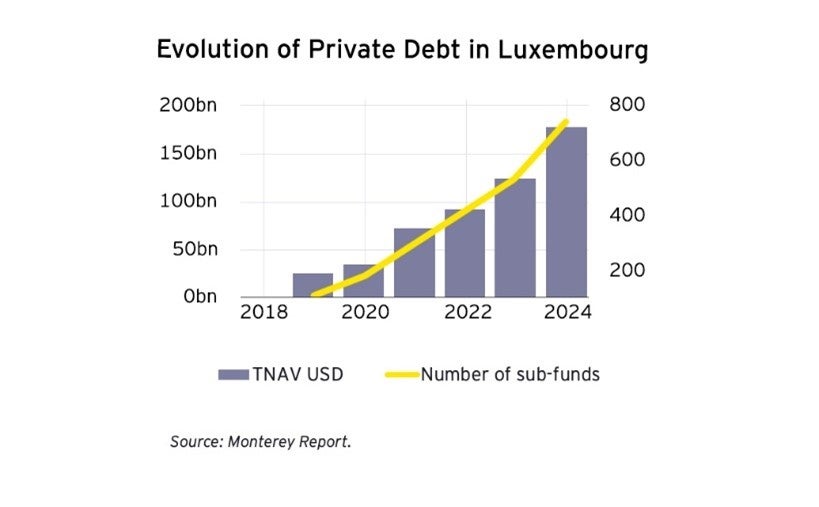
Beyond the broader growth in private credit, there are also certain trends within the market:
- Direct lending dominates: In Luxembourg, 64% of private debt funds follow direct lending strategies. The remaining 10% consists of more specialized strategies such as special situations, real estate debt, and structured credit, while mezzanine accounts for 13% and distressed debt for another 13%, making these secondary segments but still growing³. Shift toward open-ended funds:Open-ended structures doubled to 26% of the market in 2024, reflecting growing investor demand for liquidity and managers’ search for wider distribution opportunities. This trend highlights a shift toward more flexible vehicles that can accommodate diverse investor profiles and broaden access across jurisdictions.
Geographic diversification: North America remains the largest and most mature private credit market, currently about twice the size of Europe. However, Europe is growing at a faster pace, driven by structural changes in financing as banks reduce lending and investors seek alternative sources of yield. Together, Europe and the US account for nearly 90% of the global private credit market, highlighting a strong European growth trend.
Key Drivers of Growth
- Regulatory clarity
Almost a decade before the application of AIFMD II, which provides for harmonized rules on loan origination funds, including leverage caps and risk retention, Luxembourg’s competent authority had already provided clarification through the FAQ on AIFM Law. This guidance officially stated that loan origination, participation, and acquisition should be considered as permissible activities for AIFs. This has created a solid foundation with legal clarity for Luxembourg’s rise as a private debt hub.
- ELTIF hub
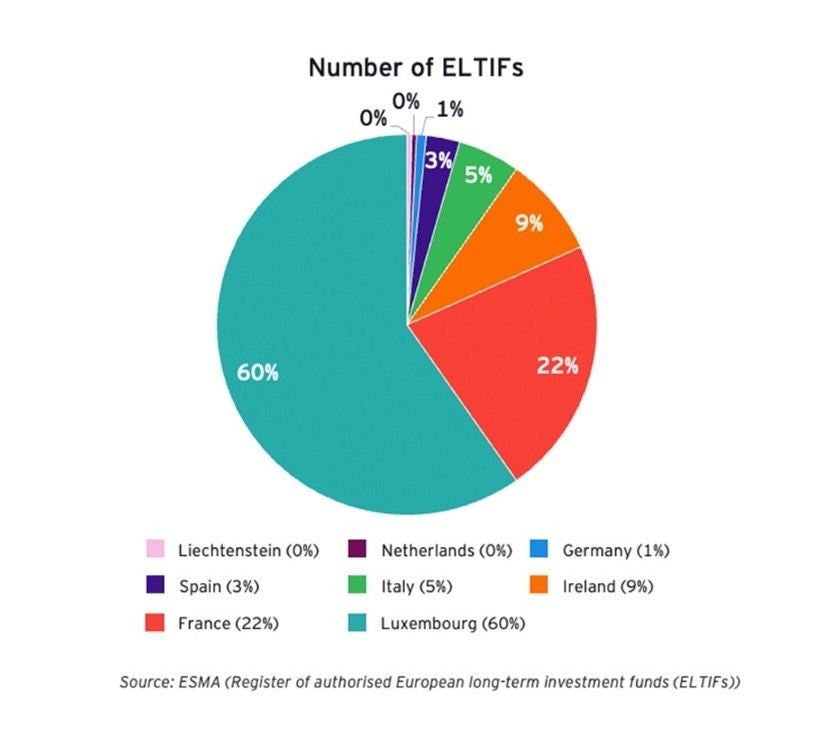
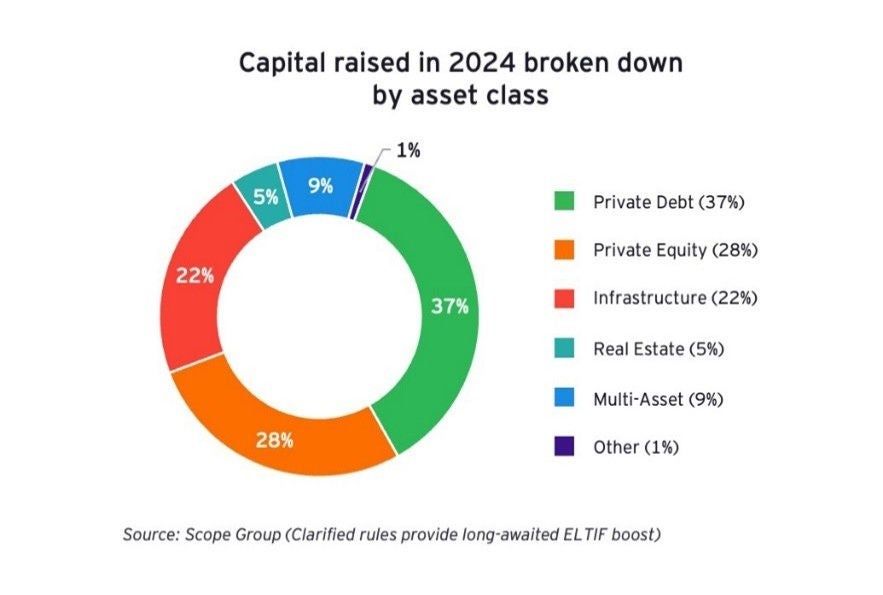
The most popular investment strategies under the ELTIF label involve private debt. ELTIF is great label for asset managers that want to benefit from a marketing passport which allows distribution for not only professional investors, but for retail investors as well. Luxembourg is already the primary European environment for ELTIFs, being the domicile of almost 60% of the existing ELTIFs and providing an attractive tax regime with several exemptions for such funds.
- Retailization
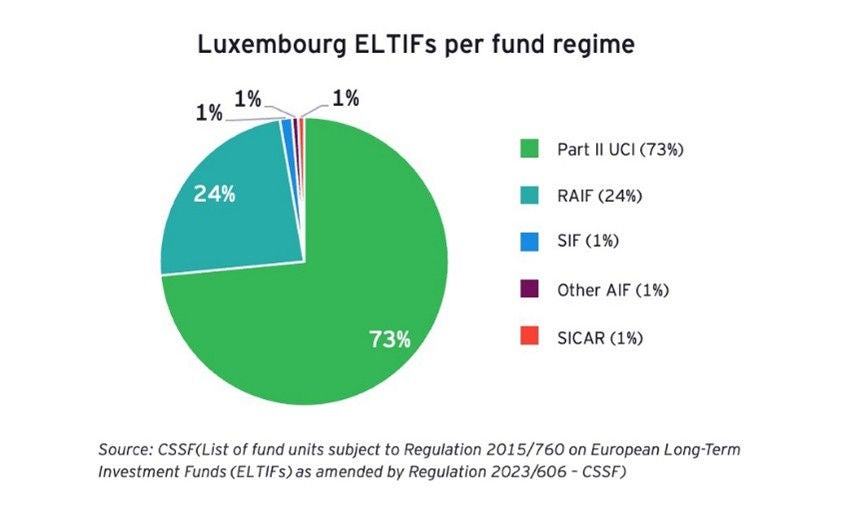
Among the myriads of fund regimes, Luxembourg has a dedicated regime tailored to retail investors wanting to invest in alternatives. Part II undertakings for collective investment (UCIs) do not require a minimum investment and can be set in different forms (such as public limited company⁴, private limited company⁵, special limited partnership⁶ ). Moreover, they have flexibility in the level of management: they can be managed internally or externally managed (by a management company or an AIFM – registered or authorized, subject to AIFMD threshold). This flexibility makes Part II UCIs the preferred form for Luxembourg ELTIFs, representing 73% of the ELTIF market.
- Flexible Fund Structures
Luxembourg offers a wide range of vehicles tailored to private debt strategies:- Unregulated funds: this type of vehicle, often times set as an SCSp, does not require prior authorization from the CSSF, and benefits from higher flexibility. Unregulated funds set as SCSp mirror the US Delaware LP, offering contractual freedom, no minimum capital, and tax transparency. It is unregulated at the fund level but may fall under AIFMD via the appointed AIFM and its other service providers under the purview of the Luxembourg regulator.
- RAIFs (Reserved Alternative Investment Funds): RAIFs combine speed-to-market with an initial setup in about 4–6 weeks (generally becoming operational with all service providers in place in 3-4 months), since they do not require prior authorization from the CSSF. They also benefit from AIFMD compliance due to the mandatory appointment of an authorized AIFM, which allows them to be marketed in every Member State to professional investors. It is an ideal product for managers under time pressure to deploy capital. RAIFs can also be structured as umbrella funds with multiple compartments.
- Example: A US credit manager launching a European direct lending strategy opts for a RAIF structured as an SCSp, managed by a Luxembourg AIFM, to combine operational familiarity with EU passport. This structure could then launch additional compartments, each having different investors investing into varied investment portfolios, all within the same umbrella fund structure.
- Example: A US credit manager launching a European direct lending strategy opts for a RAIF structured as an SCSp, managed by a Luxembourg AIFM, to combine operational familiarity with EU passport. This structure could then launch additional compartments, each having different investors investing into varied investment portfolios, all within the same umbrella fund structure.
- SIFs (Specialized Investment Funds): Subject to CSSF prior approval, SIFs can be set in different forms, including contractual forms such as FCP, and benefit from management flexibility which permits them to be internally managed or externally managed (either by a management company or an AIFM – registered or authorized subject to AIFMD threshold). A SIF is a regulated option for investors, mainly institutional, seeking additional oversight.
- Example: A US manager launching a European direct lending strategy could opt for a SIF structured as an SCSp, balancing additional investor protection with operational efficiency.
- Example: A US manager launching a European direct lending strategy could opt for a SIF structured as an SCSp, balancing additional investor protection with operational efficiency.
- Part II UCIs: Also subject to CSSF prior approval and benefiting from management flexibility, Part II UCIs differ from the previous regime for being a product made to retail investors meaning that no minimum entry ticket is required.
- Example: A US credit manager launching a European direct lending strategy opts for a Part II UCI structure that parallels their US Business Development Company (“BDC”) launch and allows for retail distribution with no minimum entry ticket in Luxembourg and, if used in conjunction with ELTIF, across all EU/EEA countries
- Example: A US credit manager launching a European direct lending strategy opts for a Part II UCI structure that parallels their US Business Development Company (“BDC”) launch and allows for retail distribution with no minimum entry ticket in Luxembourg and, if used in conjunction with ELTIF, across all EU/EEA countries
- Unregulated funds: this type of vehicle, often times set as an SCSp, does not require prior authorization from the CSSF, and benefits from higher flexibility. Unregulated funds set as SCSp mirror the US Delaware LP, offering contractual freedom, no minimum capital, and tax transparency. It is unregulated at the fund level but may fall under AIFMD via the appointed AIFM and its other service providers under the purview of the Luxembourg regulator.
- Tax benefits
Luxembourg UCIs, SIFs and RAIFs have several tax benefits such as exemption from income tax, net wealth tax and WHT. Moreover, Luxembourg has more than 80 double tax treatments and is currently reforming its carried interest regime to increase the scope of eligible persons and provide for different tax regimes (depending on whether it is a contractual or participation arrangement).
- No boundaries via EU Passport
Luxembourg offers full access to EU professional investors through the AIFMD marketing passport, which allows funds managed by an EU-authorized AIFM to be marketed across all EEA/EU countries without the need for multiple local authorizations. ELTIF Regulation also offers a passport allowing distribution in all EEA/EU countries not only to professional but also to retail investors.- Example: A US manager launching a Luxembourg RAIF (Reserved Alternative Investment Fund) managed by an authorized AIFM can market seamlessly to institutional and professional investors across the EU/EEA under one regulatory framework.
- Impact: This eliminates the complexity of navigating 27 different national regimes and accelerates fundraising timelines.
- A Mature Ecosystem of Service Providers
Luxembourg hosts a dense network of (third-party) AIFMs, administrators, depositaries, legal advisors and auditors ensuring robust governance and compliance. Most global sponsors now centralize not only back-office, but also middle-office functions in Luxembourg, leveraging the country’s expertise in alternative strategies.
This operational ecosystem provides, among other benefits:
- Regulatory oversight (including risk management, compliance, reporting)
- Operational scalability for managers without a local presence
- Specialized expertise in alternative lending strategies, including distressed debt and mezzanine financing
Insight: Over 90% of the top 30 global debt fund managers already operate in Luxembourg, leveraging this infrastructure for pan-European distribution. A key advantage lies in leveraging strong relationships with US service providers and connecting them to local Luxembourg partners. This existing familiarity enables a streamlined playbook, reducing complexity and service delivery friction compared to other jurisdictions, and accelerating time-to-market for US managers.
Pitfalls When Setting Up a Private Debt Investment Fund in Luxembourg – and How to Avoid Them
Looking ahead
Despite macroeconomic headwinds, private credit remains resilient. Deployment volumes grew from $203 billion in 2022 to $333 billion in 2023⁷, and we have seen continued growth through 2024 underscoring the sector’s structural strength. With Europe representing 30% of the global market and Luxembourg at its core, US managers who navigate these nuances will continue to capture the significant opportunities existing in the market.
Luxembourg is no longer just a fund domicile; it is a strategic enabler for global private debt platforms. For US managers, success hinges on three pillars:
- Investor alignment (structuring products that meet liquidity and reporting expectations).
- Regulatory foresight (anticipating AIFMD II and ESG requirements),
- Operational excellence (leveraging Luxembourg’s ecosystem without losing control), and
Those who master these dynamics will not only avoid common pitfalls but also position themselves at the forefront of Europe’s fastest-growing alternative asset class.
Summary
Luxembourg has become a key hub for alternative investments, particularly in private debt, which is driving significant growth. By late 2024, net assets from US promoters in Luxembourg exceeded €176 billion, showcasing the strategic alignment with its regulatory environment and global distribution capabilities. The private debt market features a variety of structures, from semi-regulated to fully regulated options, reflecting managers' demand for flexibility and tailored solutions.
Related articles
The rise of private debt: navigating valuation challenges
As the private credit landscape continues to evolve, the importance of robust valuation practices and heightened regulatory oversight becomes increasingly critical, especially in the context of economic fluctuations and changing financial conditions.
Falling interest rates: The good and bad news for private credit
Recent actions by the Fed and the European Central Bank to decrease interest rates have brought some relief and hope to the markets. While private credit has good reasons to rejoice, concerns are also rising about the future performance of this asset class.
Private debt – an expected but uncertain “golden moment”?
Since 2008, private credit has not stopped expanding. Yet, banks have reduced their exposure to lending because of regulatory changes, and are not able to satisfy the strong demand from the economy.