




EY refers to the global organization, and may refer to one or more, of the member firms of Ernst & Young Global Limited, each of which is a separate legal entity. Ernst & Young Global Limited, a UK company limited by guarantee, does not provide services to clients.
Recent Searches

Switzerland has always been a prestigious center for wealth management and financial services, offering investors a stable and well-regulated environment. This landlocked country is a leading financial center and manages about a quarter of total global cross-border assets.1 Asset management is a key pillar of the Swiss financial center next to its traditional strengths in the banking and insurance business.
After facing challenges in 2022, Swiss asset managers returned to growth in 2023, with total assets under management (AuM) reaching CHF 3.1 trillion (or approximately EUR 3.34 trillion), an 8.3% year-on-year increase. Approximately one-third of these services are provided to international clients, making asset management a key export industry for Switzerland. The sector contributed about 1.0% to Switzerland's GDP in 2023, underscoring its importance in diversifying and strengthening the Swiss financial center.2
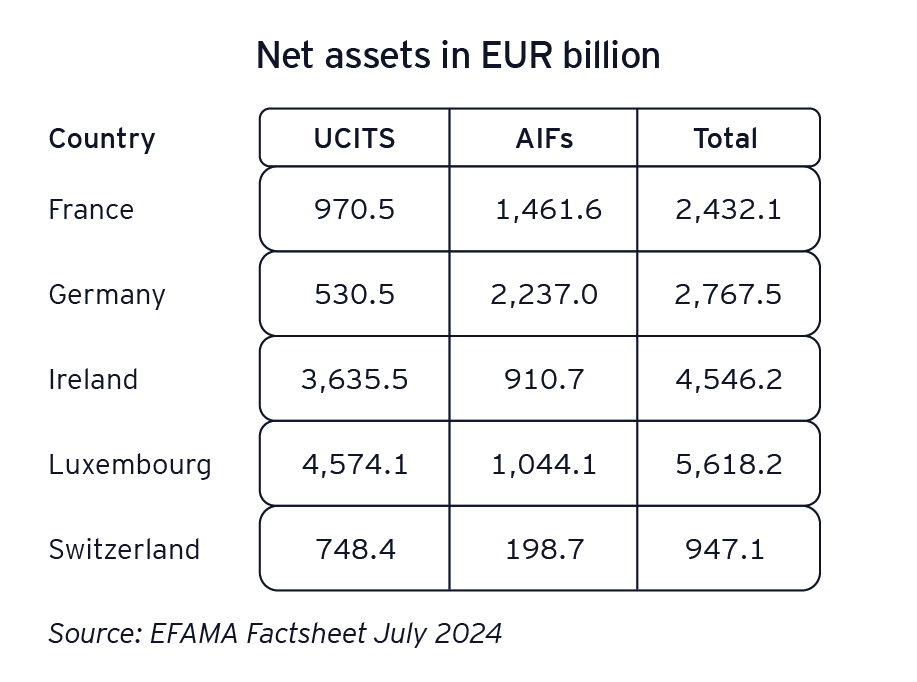
Looking at net assets per country, Switzerland falls within the top five within Europe.
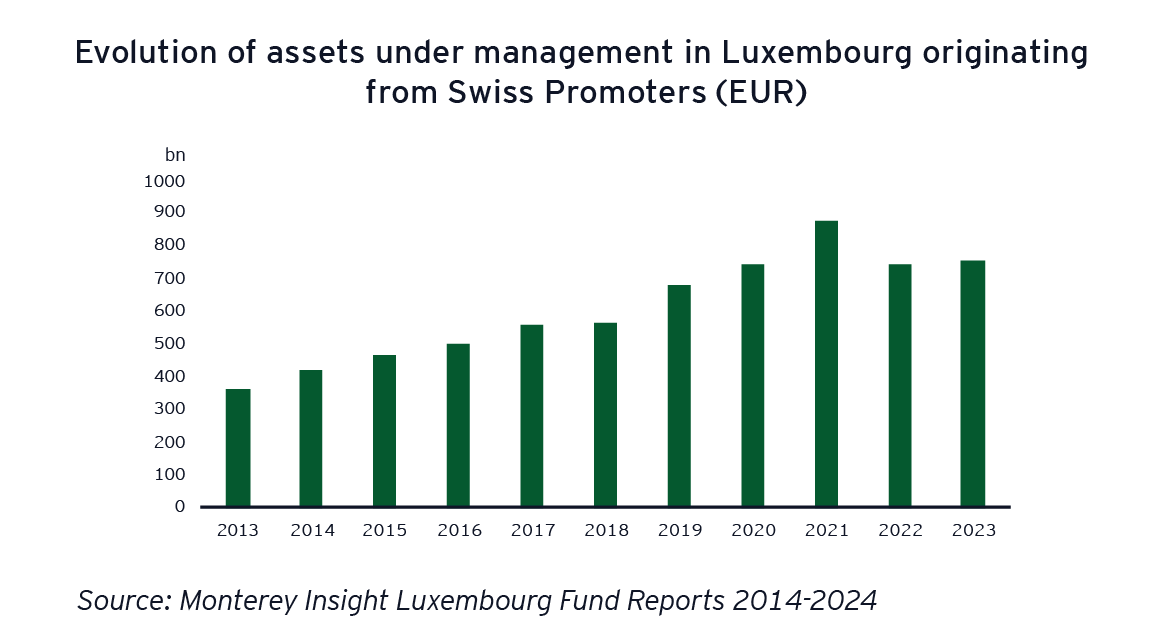
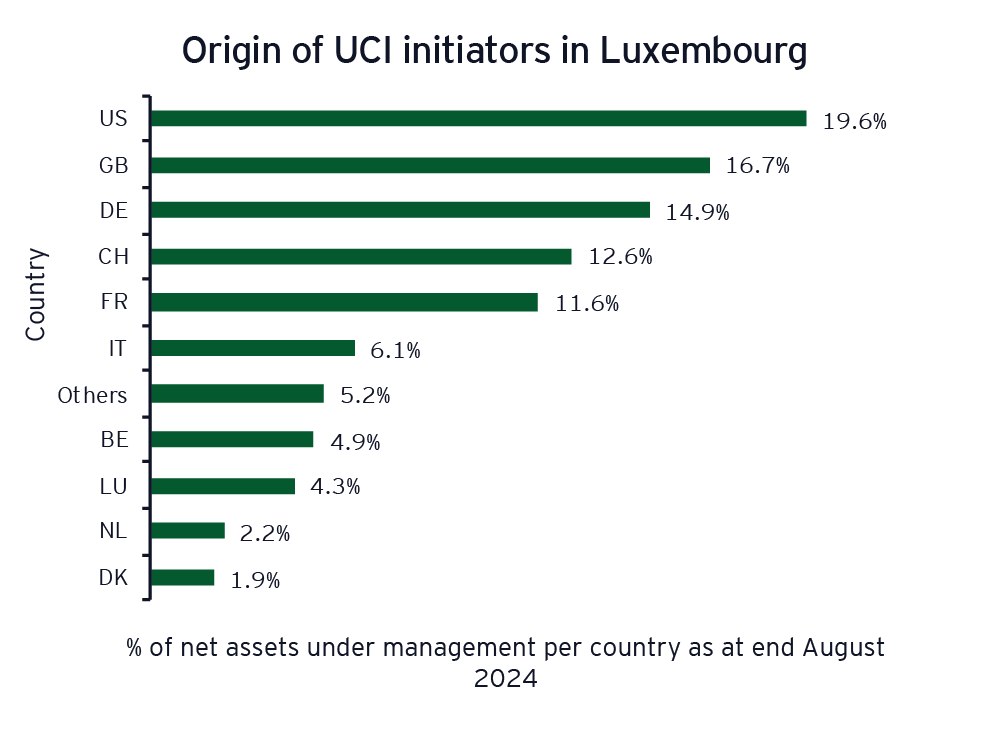
Reaching ~EUR 750 billion in total net asset value as of December 2023, Switzerland has the fourth highest net assets under management in Luxembourg, almost doubling in growth over the past 10 years. As of August 2024, 12.6% of total net assets of UCIs in Luxembourg were represented by the Swiss Confederation.3
Swiss Asset Managers’ Gateway to International Markets
Swiss-based asset management firms manage some CHF 3,000 billion for domestic and foreign investors.4 While Swiss-domiciled funds benefit from advantages such as a well-established financial ecosystem and a reputation for reliability, transparency, and sound governance, regulatory hurdles and operational complexities create additional challenges for Swiss asset managers aiming to market their funds internationally.
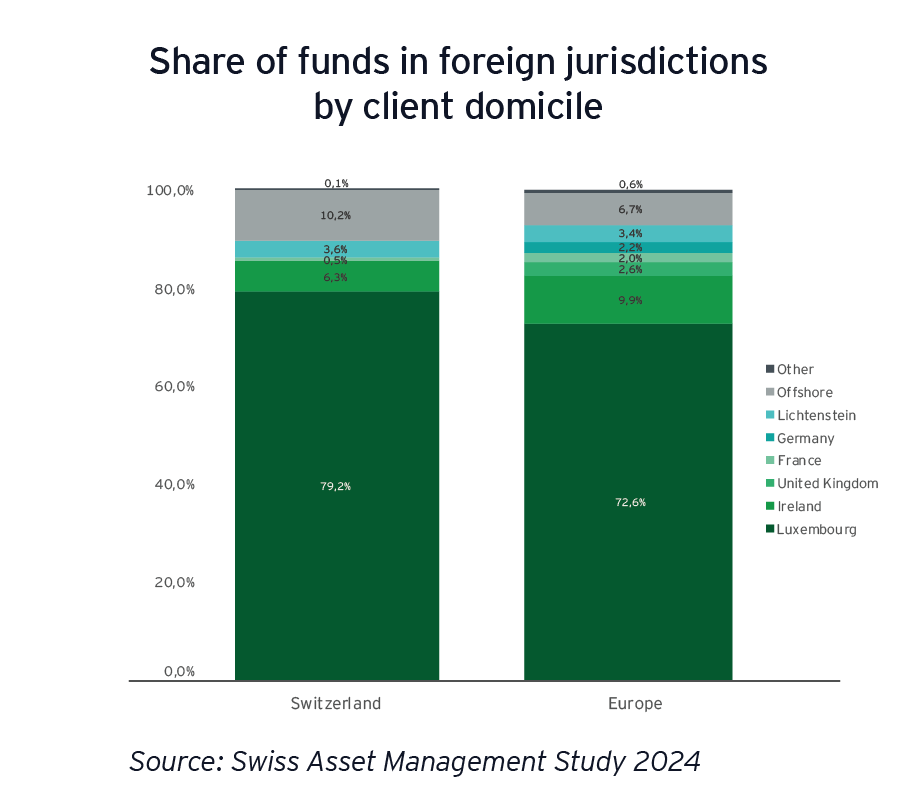
According to the Swiss Asset Management Study 2024 (refer to graph below),5 Swiss and European clients demonstrate a strong preference for Luxembourg funds. Indeed, Luxembourg stands out as the leading fund jurisdiction for Swiss clients, comprising 79.2% of the fund mix.
Furthermore, Luxembourg serves as the gateway to the broader European market for Swiss asset managers, primarily because Luxembourg fund management companies are permitted to delegate asset management activities to Swiss asset managers.
What are the key strengths of Luxembourg's Financial Center for Asset Managers?
Luxembourg, a leading global hub for investment funds, wealth management and cross-border financial services, is strengthened by its flexible fund structures and well-developed network of top-tier service providers.
1. Luxembourg’s Umbrella Fund Structures Offer Easier Scalability
One of Luxembourg’s most powerful and flexible tools for asset managers and institutional investors looking to expand their investment strategies and reach a global investor base is the umbrella fund structure.
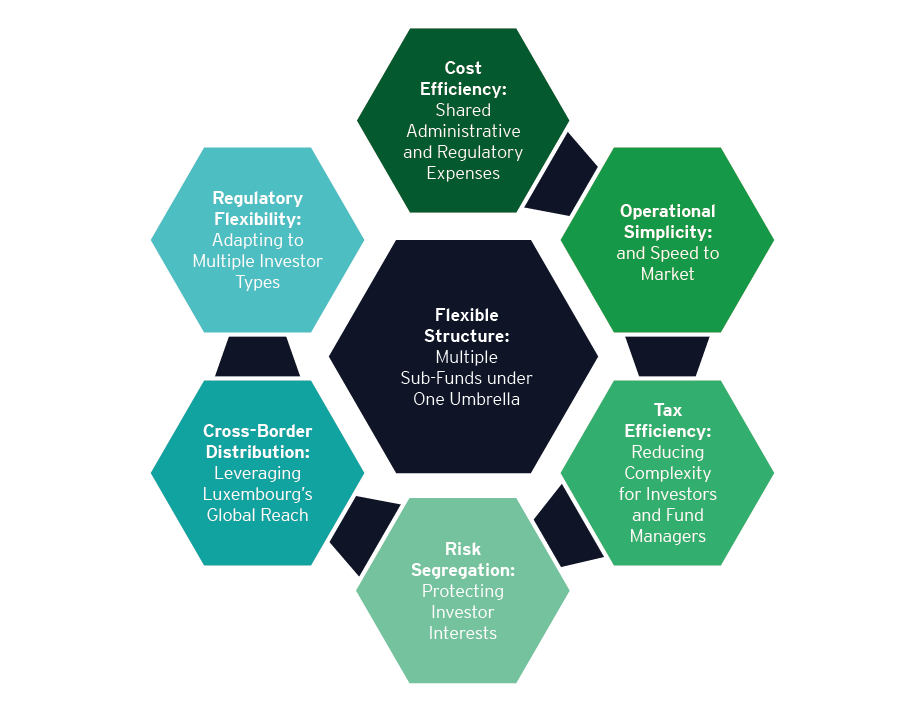
Flexible Structure: One of the defining features of an umbrella fund is its ability to house multiple sub-funds under a single legal entity, but each sub-fund operates independently with its own distinct investment strategy, assets class, geographic focus, and liabilities. Luxembourg's fund regulations, particularly under UCITS and AIFMD, facilitate this multi-compartment setup. This flexible structure allows fund managers to launch new sub-funds without needing to create entirely new legal entities for each, making it easier to adapt to changing market conditions, client demands, or shifts in investor preferences while maintaining overall governance and compliance within the existing framework.
Cross-Border Distribution: Luxembourg’s status as a global financial hub makes it an ideal jurisdiction for funds that seek to tap into international markets. UCITS funds, in particular, benefit from the UCITS passport, which allows them to be distributed across all European Union Member States. Similarly, Luxembourg-domiciled alternative investment funds (AIFs) enjoy broad appeal, especially among institutional investors worldwide. An umbrella fund structure enhances cross-border distribution capabilities by simplifying the process of registering sub-funds in various jurisdictions.
Regulatory Flexibility: Luxembourg’s regulatory framework allows umbrella funds to cater to a wide range of investor types, from retail investors under UCITS to professional and institutional investors under AIFMD. Within a single umbrella structure, fund managers can create sub-funds with distinct regulatory statuses, thereby targeting different investor segments more effectively.
Cost Efficiency: A significant advantage of umbrella fund structures in Luxembourg is the ability to achieve economies of scale by sharing administrative and regulatory costs across all sub-funds. While each sub-fund operates as a distinct investment pool, the costs associated with fund administration, auditing, legal services, and compliance are centralized under the umbrella entity. This cost efficiency is particularly beneficial for asset managers launching multiple strategies or serving different investor groups, as they avoid duplicating expenses associated with managing separate funds.
Operational Simplicity and Speed to Market: Launching new sub-funds within an umbrella structure in Luxembourg is significantly faster and simpler than setting up entirely new standalone funds. The approval and setup process for sub-funds is more streamlined, as the overarching legal entity has already been established and meets regulatory requirements. Whether it's launching a new sub-fund focused on emerging markets or a thematic fund targeting sustainable investments, Luxembourg’s umbrella structures allow fund managers to get new products to market with minimal delay, providing a competitive edge in attracting investors.
Tax Efficiency: Taxation is a critical consideration in fund structuring, and Luxembourg's umbrella funds offer distinct tax advantages. While Luxembourg imposes no withholding taxes on dividends, interest, or capital gains for most funds, the umbrella structure also allows each sub-fund to be treated independently for tax purposes. This compartmentalization means that tax liabilities incurred by one sub-fund do not affect others under the same umbrella, ensuring that tax obligations are isolated and clearly defined. Additionally, Luxembourg’s extensive network of double taxation treaties provides further tax efficiency for international investors.
Risk Segregation: In an umbrella fund, the assets and liabilities of each sub-fund are segregated, meaning that the performance or financial obligations of one sub-fund do not impact others within the same structure. This is a crucial safeguard for investors, ensuring that their investments in one sub-fund are protected from risks associated with other sub-funds. This feature not only provides peace of mind for investors but also offers fund managers the ability to launch riskier or more innovative strategies within specific sub-funds without jeopardizing the stability of their broader fund portfolio.
2. Luxembourg’s Extensive Network of Service Providers
Service providers, encompassing custodians, legal experts, auditors and advisors, play an essential role in making Luxembourg a highly attractive location for global investors, particularly those looking for a secure, well-regulated environment to domicile their funds.
Custodian banks in Luxembourg are subject to stringent regulatory oversight, as required under both national law and European Union directives like the UCITS and AIFMD frameworks. This ensures a high level of investor protection and regulatory compliance.
Luxembourg’s legal framework is one of the most sophisticated in Europe, particularly in areas related to investment funds, tax structures, and cross-border financial services. The country’s legal service providers are instrumental in helping clients navigate this complex environment, providing critical advice on fund structuring, regulatory compliance, and the constantly evolving European legal landscape.
Luxembourg's audit industry plays a critical role in maintaining the integrity of the financial services sector by ensuring transparency, compliance, and reliability in financial reporting. In addition to traditional audit services, Luxembourg’s auditors increasingly provide advisory services related to risk management, regulatory compliance, and the integration of digital technologies. This advisory role is growing in importance as financial institutions face increasing scrutiny from regulators and investors, especially in areas such as ESG (Environmental, Social, and Governance) reporting and sustainable finance.
One of the key strengths of Luxembourg’s service provider network is its high level of specialization tailored to the needs of the financial sector. This specialization and close collaboration between service providers creates a seamless, efficient ecosystem that enables smooth operations for financial institutions and investment funds.
Luxembourg’s International Appeal: A Magnet for Investors
Thanks to its wide range of solutions and robust service providers network, Luxembourg continues to attract international investment managers, private equity firms, and multinational corporations looking for a reliable, efficient, and compliant jurisdiction to domicile their funds.
Moreover, Luxembourg’s status as a leading domicile for UCITS and AIFs is underpinned by its service providers' ability to meet the highest regulatory and operational standards. This has made Luxembourg the largest investment fund center in Europe and the second largest in the world. Swiss asset managers looking to scale operations and reach a global investor base can therefore gain significant advantages by domiciling their funds in the Grand Duchy.
Summary
Switzerland has always been a prestigious center for wealth management and financial services, offering investors a stable and well-regulated environment. This landlocked country is a leading financial center and manages about a quarter of total global cross-border assets. Asset management is a key pillar of the Swiss financial center next to its traditional strengths in the banking and insurance business.

Related articles
Sustainable Finance: what has changed in 2024 and what to expect in 2025
While the SFDR RTS review has been put on hold, discussions regarding the review of level 1 regulation have advanced and important legislative pieces have been published, such as CSDD. In this article, we will provide you with a recap of the main regulatory developments of the year, and some insights about what to expect in 2025.
CSSF position regarding investment compliance rules in the context of the US shift to T+1 settlement
The new US rule establishing the T+1 settlement has been in force since 29 May 2024.