





EY refers to the global organization, and may refer to one or more, of the member firms of Ernst & Young Global Limited, each of which is a separate legal entity. Ernst & Young Global Limited, a UK company limited by guarantee, does not provide services to clients.
Recent Searches
Press release
22 Sep 2025
|
London, United Kingdom
European financial services firms increase sustainability-focused board appointments amid ongoing ESG policy debate
- ESG skills in demand: A third (33%) of board members appointed to European financial services firms in the past year brought sustainability expertise, raising the percentage of banks, insurers and asset managers with this skill set at board level to 93%, up from 82% twelve months prior.
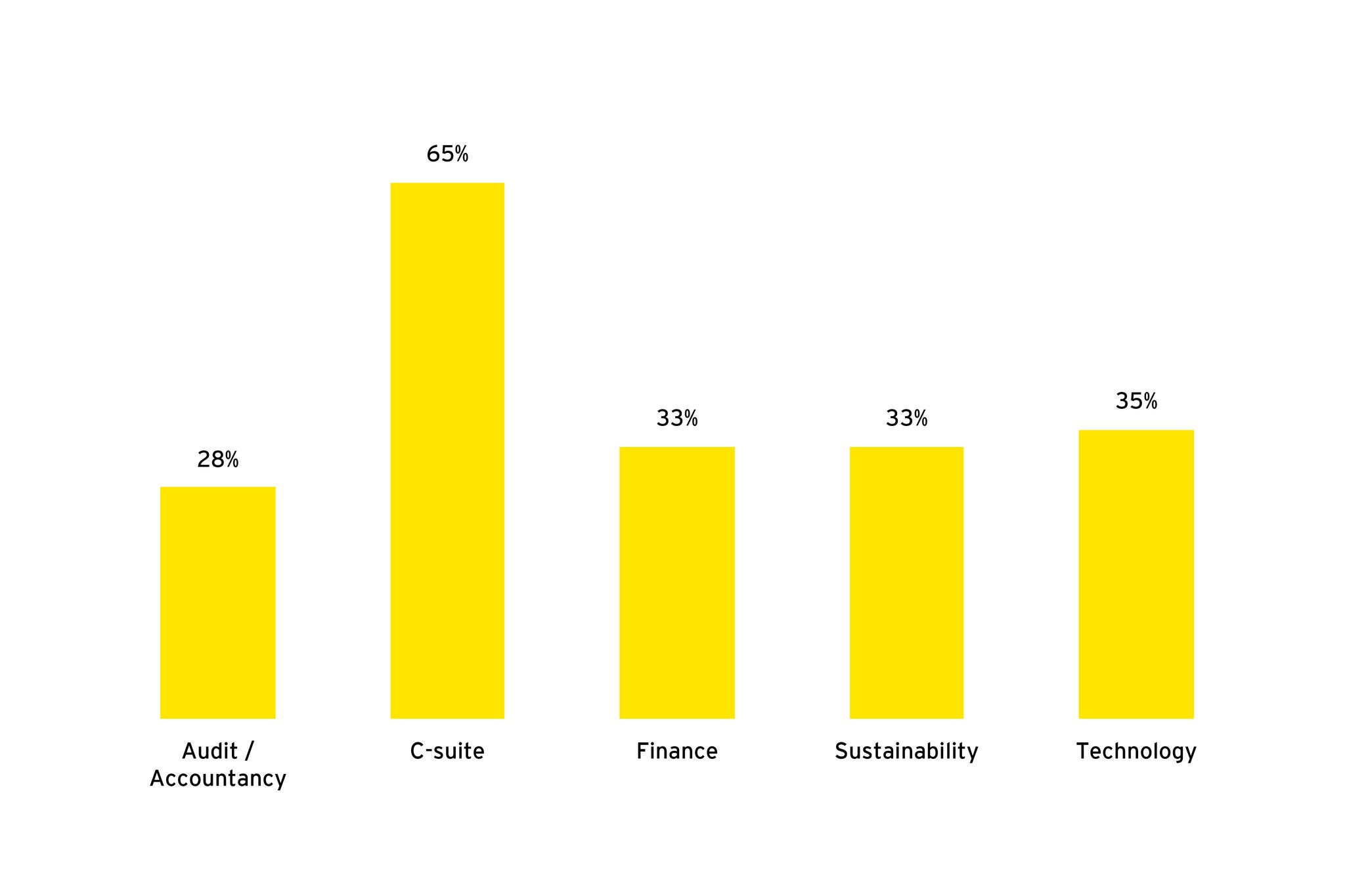
- But C-suite still most coveted attribute: 65% of European financial services board appointees over the past year brought prior C-suite experience.
- Country focus: Italian financial firms appointed the most board members with sustainability experience in the past twelve months, further bolstering this skill on their boards, followed by firms in France and the UK.
A Luxembourg perspective
How close is Europe to having balanced representation in the boardroom?
Over the past year, as per the EY European Financial Services Boardroom Monitor, European financial services firms have significantly ramped up the appointment of board members with sustainability expertise, with 33% of new appointees bringing such skills (up from 23% the previous year). This shift has led to 93% of boards now including at least one director with sustainability experience, and 58% having two or more - a move in a positive direction. While C-suite experience remains the most sought-after attribute (65% of appointees), sustainability expertise is rapidly gaining prominence, reflecting the sector’s response to evolving ESG expectations and regulatory pressures. Looking at gender across the EU, looking at new appointees with sustainability experience, 56% were women, while of new appointees with C-suite and technology experience respectively, 34% and 45% were women.
If we focus only on leadership Luxembourg (looking at the demographics of management and c-suite overall and not just sustainability or technology), only 22% of managers are women and unfortunately this figure has barely changed over the past decade despite a doubling in absolute numbers. Encouragingly, Luxembourg has made progress on public executive boards, where female representation rose from 27% in 2015 to nearly 39% in 2023. EU-wide directives now require companies to reach 40% representation of the underrepresented sex among non-executive directors by 2026, signaling a push toward more inclusive governance.
Never miss a Luxembourg perspective with our monthly newsletter, summarizing short expert commentaries with a local flavor, covering a range of sector-spanning themes. Subscribe now.
Omar Ali, EY Global Financial Services Leader, speaks to Gill Lofts, EY Global Sustainable Finance Leader, on the key findings and next steps for financial services firms.
The vast majority (93%) of European financial services boards now include at least one director with sustainability expertise — up from 82% in June 2024 — and 58% of financial services boards include two or more directors with this skill set.
The latest EY European Financial Services Boardroom Monitor – which charts the profile, experience and skill sets of board directors across the MSCI Europe Financials Index – finds that 33% of board appointments in the year to June 2025 brought some form of sustainability expertise, compared to 23% in the twelve-month period prior. This has resulted in a two-percentage-point increase in the overall number of directors with sustainability experience, from 17% to 19% of the total population of financial services board directors over the last year.
Although C-suite experience continues to be the most in-demand attribute for new financial services board directors — 65% of appointees in the last year have C-suite experience —sustainability expertise is now one of the most in-demand skill sets.
A third (33%) of appointees over the last year (June 2024 to June 2025) brought finance experience, such as a CFO or financial controller role, while 28% have backgrounds in audit or accountancy. Thirty-five percent of newly appointed board members in the same time period brought technology expertise, raising the overall director population with these skills to 25% (from 23% the year prior) — perhaps as financial services firms look to get to grips with generative artificial intelligence and ongoing tech transformation.
Skill sets and experience of new board appointees – from June 2024 to June 2025
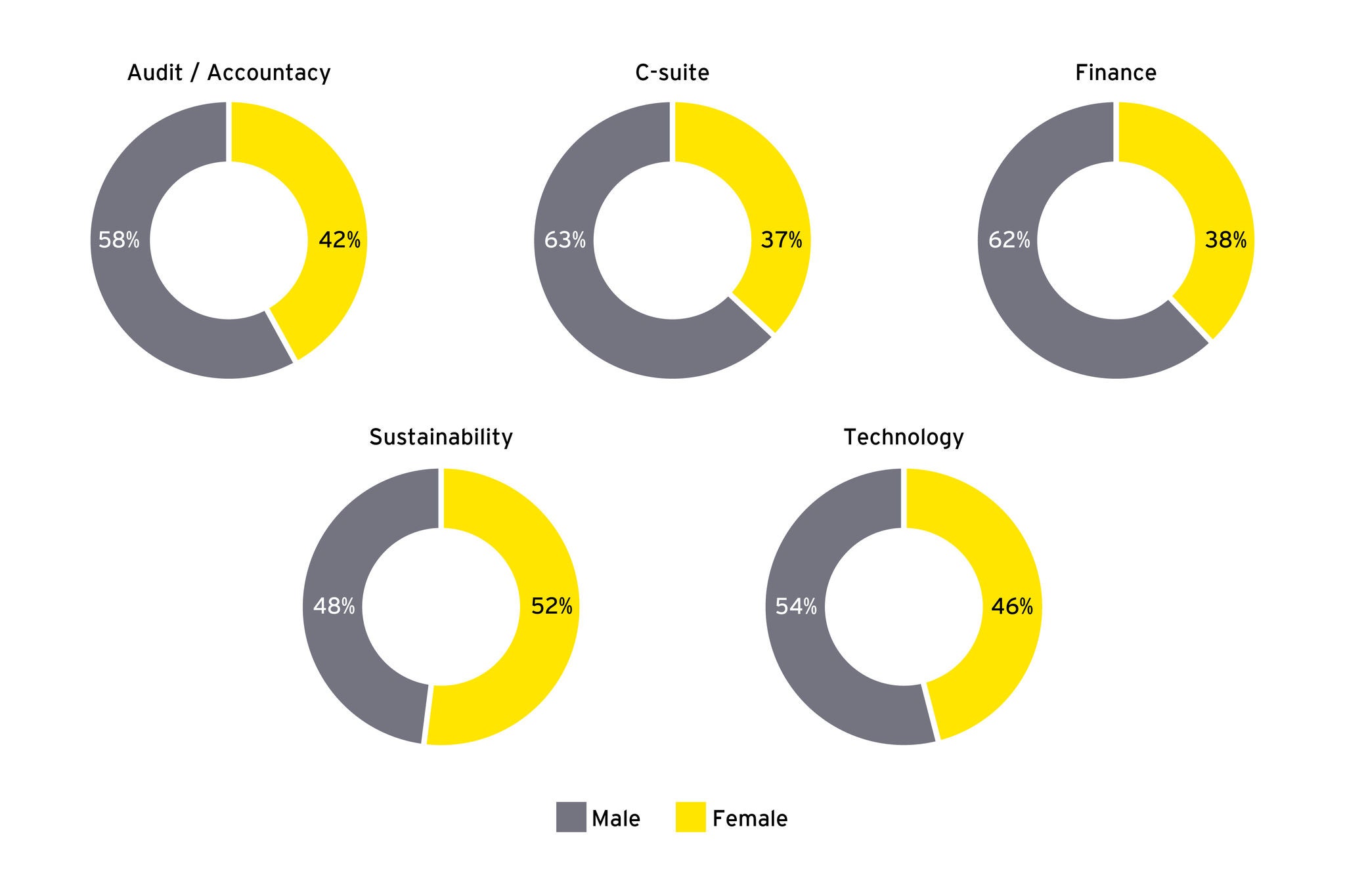
Looking through a gender lens, of the new appointees in the year to June 2025 with sustainability experience, 56% were women and 44% were men, resulting in a gender balance of the total director population now with sustainability experience of 52% female, 48% male. For new appointees in the year to June 2025 with C-suite experience, 34% were women and 66% were men, resulting in a one-percentage-point decline in the overall proportion of women with C-suite experience over the last year (now sitting at 63% female to 37% male). Of the new appointees in the year to June 2025 with tech experience, 45% were women and 55% men, resulting in an overall gender split now of the total director population with sustainability experience of 46% female, 54% male.
Gender balance of board directors by skill set – as of June 2025
Omar Ali, EY Global Financial Services Leader, comments: “Despite political debate globally, varying regulations between markets, emerging de-regulation and reports of corporates deprioritizing ESG, climate change remains a critical systemic risk across the world.
“European financial firms are proactively safeguarding their operations by appointing directors with sustainability expertise to navigate this growing challenge —and opportunity. Mitigating climate risk and investing in the transition is now both a fiduciary duty and a business imperative, which requires educating staff, developing new products to support clients, and alignment and accountability across all members of the board and management.”
Banks and insurers have strongest appetite for ESG board expertise
Sustainability expertise has become increasingly represented across all types of financial services boards. The latest EY Boardroom Monitor data finds that 89% (79% this time a year ago) of wealth and asset management boards have at least one director with sustainability experience, rising to 93% (86% this time a year ago) for banking boards and 96% (76% this time a year ago) for insurance boards.
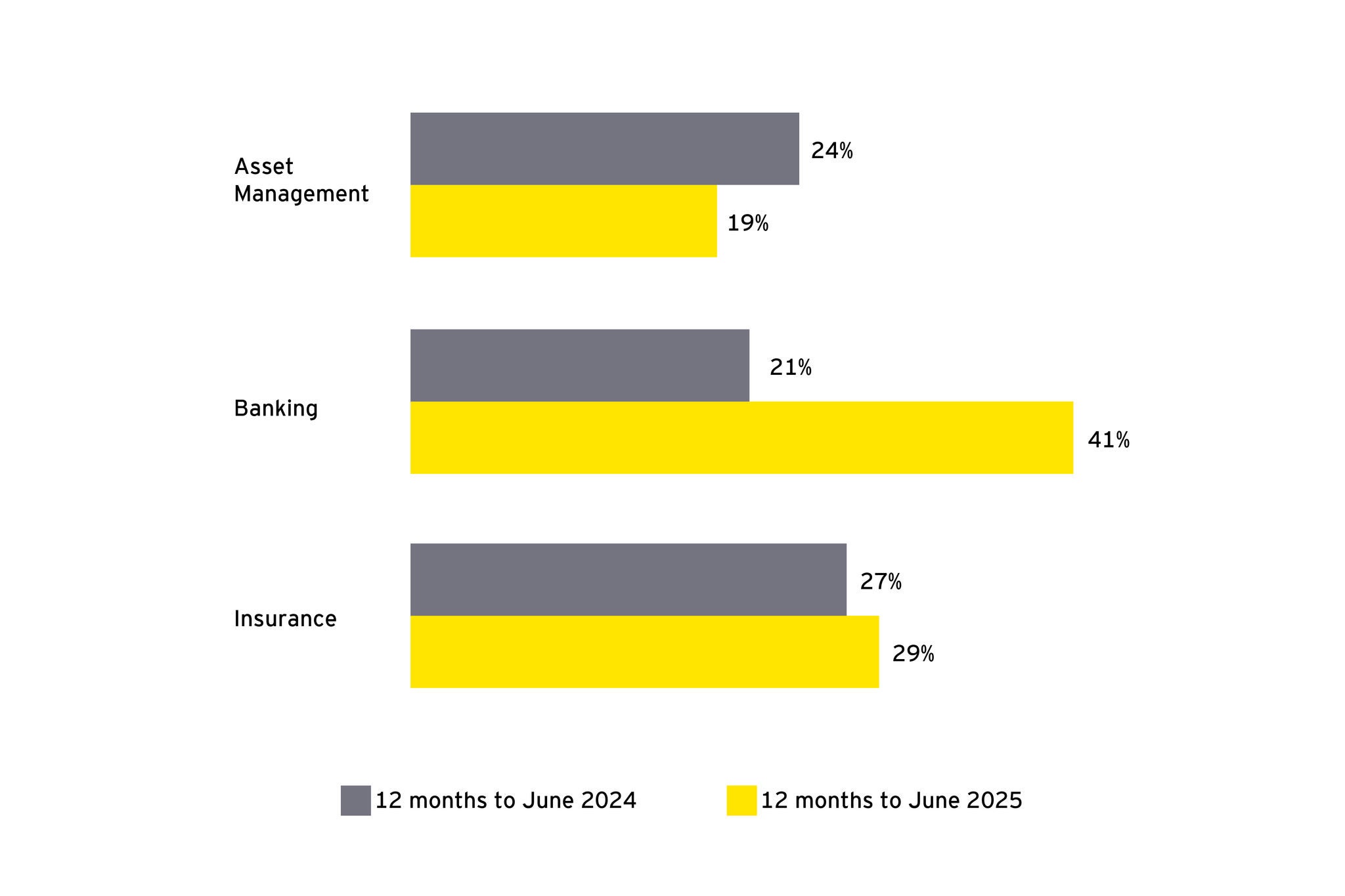
In terms of new appointments between June 2024 and June 2025, European banks have added sustainability expertise to their boards at a faster rate than insurance and asset management peers in the last year. Forty-one per cent of all new board directors to European banks brought sustainability experience in the year to June 2025 (21% this time a year ago), compared to 29% (27% this time a year ago) at insurance firms and 19% (24% this time a year ago) at wealth and asset management companies.
Sustainability experience of new appointees to European banking, insurance and asset management boards
Sustainability skills grew particularly in Italian, French and UK boards
Italy, France and the UK led Europe in sustainability appointments over the past year, accounting for 27%, 13% and 13% of new directors with this experience, respectively. The UK led the continent for new appointments with C-suite experience, accounting for 20% of appointments in the year to June 2025, followed by France (13%) and Italy (11%). The UK also led on new appointees with technology experience, accounting for 24% of all technology appointments in the period, followed by France and Italy, each with 13%, respectively.
Gill Lofts, EY Global Sustainable Finance Leader, comments: “Financial services firms are experiencing growing pressure from investors, customers and employees to become more sustainable. But it’s not just about responding to pressure; there is commercial benefit to be found from strategically integrating sustainability into business operations and across the value chain. Research shows that when sustainability is built in, the outlook for business confidence improves, innovation rises, and financial performance outpaces expectations.
“As the climate crisis deepens — challenging long-term profitable growth — it is important that sustainability isn't siloed to a single member but championed by the entire board in every discussion and decision. The recent pace of appointing board members with sustainable credentials shows that Europe’s financial firms are acting decisively to broaden expertise and accountability at the top.”
Quick data overview as of 30 June 2025
- Total number of firms tracked across Europe: 89
- Total number of European board directors monitored: 1,093
- Total number of female board directors monitored: 464
- Total number of male board directors monitored: 629
- Total number of European board director exits in 2025: 124
- Total number of new European board directors in 2025: 159
Notes to editors:
- This is the seventh launch of the EY European Financial Services Boardroom Monitor, and data is current to 30 June 2025, representing data up to the end of H1 2025.
- Sustainability experience is defined as professional experience in a business or charity focused on having a positive impact on environmental or social factors as outlined in the United Nations Sustainable Development Goals, or a sustainability-focused role within a company.
- Technology experience covers professional experience across emerging tech (including AI), IT, cyber security, FinTech and BigTech.
About the EY Boardroom Monitor
- The EY Financial Services European Boardroom Monitor tracks the experience, background, and skill sets of board members across a defined universe of financial services firms to create a broad picture of the gaps in expertise and possible pressure points within the listed European financial services markets.
- The EY Financial Services European Boardroom Monitor tracks and analyses data across a wide range of factors, including gender and age, as well as professional experience and skills. It does not track the race and ethnicity of board members, as there is no standardized format for directors to disclose against
- The EY Financial Services European Boardroom Monitor is comprised of disclosable, publicly available data on board appointments at listed banks, wealth and asset managers, FinTechs and insurers across the UK, Austria, Belgium, Denmark, Finland, France, Germany, Italy, Netherlands, Norway, Spain, Sweden and Switzerland, using the MSCI European Financials Index as the core universe.
Related news