


EY refers to the global organization, and may refer to one or more, of the member firms of Ernst & Young Global Limited, each of which is a separate legal entity. Ernst & Young Global Limited, a UK company limited by guarantee, does not provide services to clients.
Recent Searches
Luxembourg’s fund industry is evolving. EY’s “Fund Bible” is back.
5 minute read
EY Luxembourg publishes the 2026 edition of its Investment Funds in Luxembourg (IFL) guide.
From resilience to reinvention: the new IFL edition explores the regulatory, technological and market forces redefining asset management. EY Luxembourg has published on this 1st October evening the 2026 edition of its flagship Investment Funds in Luxembourg guide, providing fund professionals with a comprehensive overview of the regulatory framework, market developments and emerging trends shaping Luxembourg’s investment fund industry.
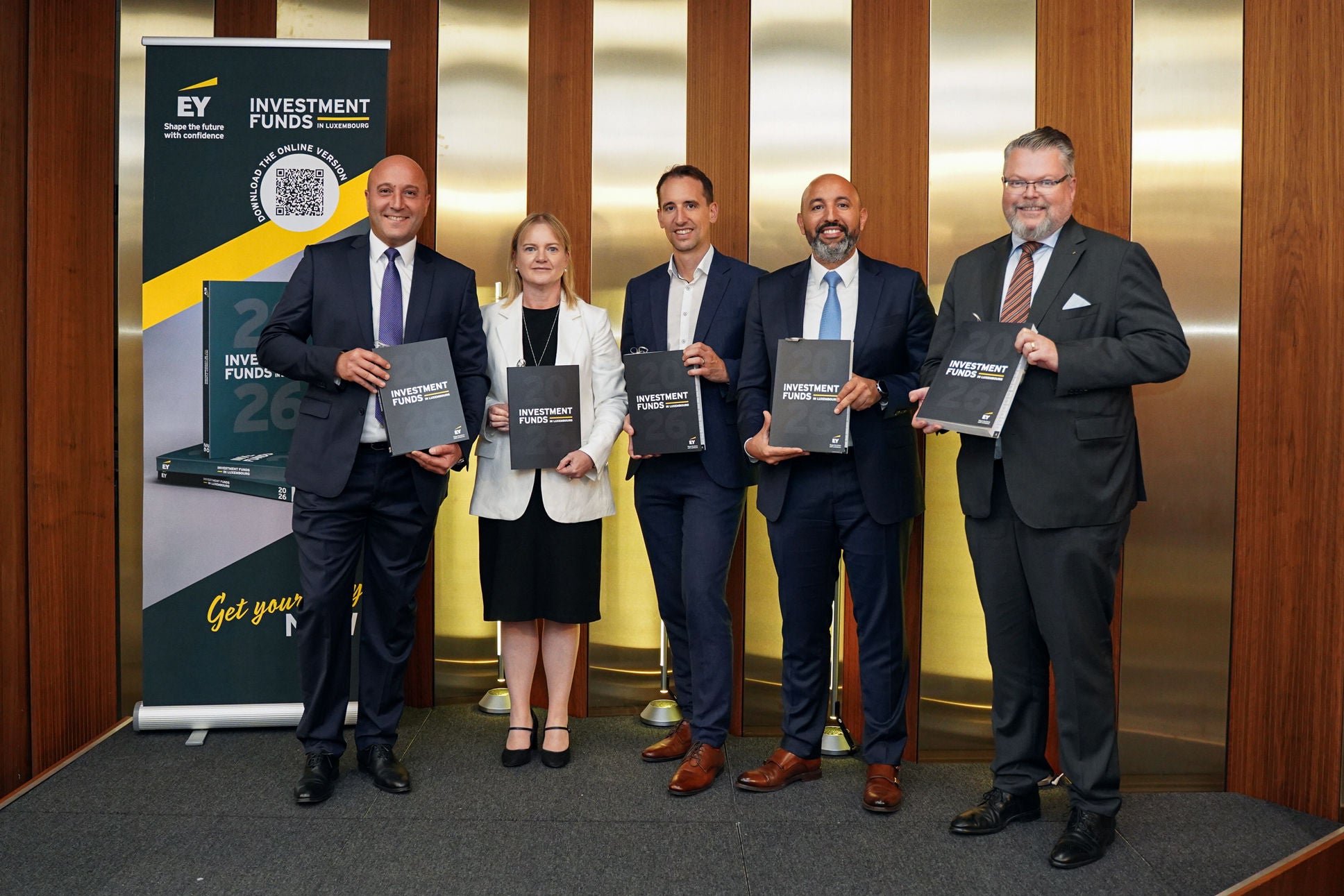
This year, EY Luxembourg reimagined the guide’s annual launch, bringing together industry perspectives, practical insights and open dialogue. At the heart of the event, an engaging panel discussion between Abdelhay Toudma, EY Governance, Risk and Compliance Leader and Jean-Pierre Faber, Director at Commission de Surveillance du Secteur Financier (CSSF), moderated by Jens Schmidt, EY Luxembourg Consulting Wealth & Asset Management Leader. They explored how regulation, technology, shifting investor expectations and new investment models are transforming the fund landscape and what these changes mean in practice for market participants.
Madjid Boukhelifa, EY Luxembourg Wealth & Asset Management Leader, introduced the new edition: “The annual launch has become an important moment for Luxembourg’s fund community. It is an opportunity not only to explore the latest regulatory and market developments, but also to connect with peers, challenge established thinking and open new conversations about the future of the industry.”
Long story short
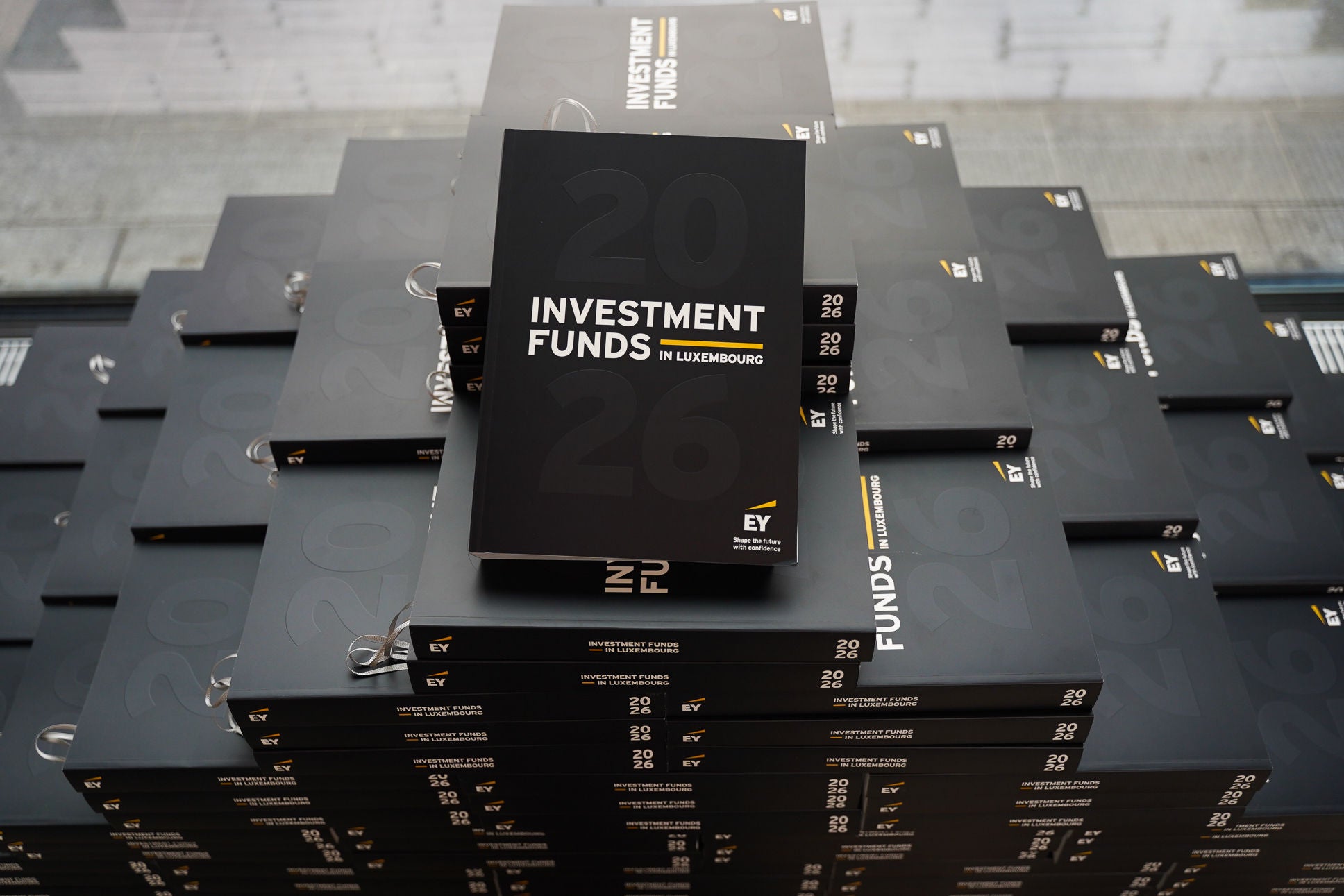
For more than 30 years, Investment Funds in Luxembourg, widely known within the industry as the “IFL” or EY’s “Fund Bible”, has supported fund professionals in navigating Luxembourg’s evolving investment fund landscape. Updated annually, the approximately 600-page guide brings together the essential information needed to understand Luxembourg fund vehicles, their operating models, the regulatory environment in which they operate and the legislative developments shaping the industry in Luxembourg and across Europe.
The 2026 edition arrives at a defining moment for the sector. A significant regulatory reset, a more fragmented geopolitical environment, the transition from artificial intelligence experimentation to governed implementation, and preparations for shorter settlement cycles are reshaping operating models across the fund ecosystem. The guide also examines the growing momentum behind active exchange-traded funds, tokenized fund structures and digitally enabled fund issuance.
Luxembourg’s fund industry in figures
Regulation is actively reshaping business models. Luxembourg has entered a new phase of regulatory implementation, marked in particular by the transposition of AIFMD II and UCITS VI through the Law of 3 March 2026. The introduction of enhanced liquidity management requirements, effective since April 2026, signals a broader shift: from compliance to operational readiness. In parallel, the transition to a T+1 settlement cycle in key markets is accelerating the need for more efficient post-trade processes, tighter operational coordination and enhanced liquidity planning across fund structures.
“Luxembourg’s success has never been built on standing still,” said Madjid Boukhelifa. “The industry has shown remarkable resilience, but resilience alone is no longer enough. Asset managers must now convert regulatory, technological and market disruption into greater efficiency, stronger investor outcomes and long-term relevance. Luxembourg has the expertise, infrastructure and international reach to help the industry move from resilience to reinvention.”
Key regulatory and supervisory updates:
Fund strategies, products and investment rules
- Investment strategy terminology aligned with the CSSF compilation of terms
- Further clarifications regarding ETFs
- Additional guidance on ELTIFs and the UK CCI
- European Commission FAQ on the Money Market Fund Regulation (liquidity aspects)
- CSSF Circular 25/901
AIFMD II and UCITS VI
- Services provided to third parties
- Liquidity management requirements
- Updated regulatory reporting requirements
- CSSF clarification on cross-border (de-)notifications for UCITS management companies and authorized AIFMs
Sustainable finance
- SFDR 2.0
- ESG Simplification Omnibus
Tax and structuring developments
- Draft Law No. 8761 on securitization
- FASTER
- Carried interest reform
AML, digital finance, market conduct and others
- AMLA developments
- Updated market abuse rules
- Updates to CSSF Circular 22/811
- CSSF supervisory expectations on the valuation of less liquid and illiquid assets by IFMs
- Market Integration and Supervision Package
- Further clarification on crypto-assets and virtual assets
- AI Act developments
Structural changes:
- Revamped sustainable finance chapter
- New dedicated chapters on AML and digital finance
- Reintroduction of the withholding tax appendix
To conclude the event, Kerry Nichol, Assurance Wealth & Asset Management Partner, presented the key updates featured in the latest edition of the Investment Funds in Luxembourg guide. Looking ahead, she unveiled plans for the publication's next chapter, including the launch of a compact German-language edition in February 2027 and further enhancements across all language versions. These developments will help extend the guide's reach and continue supporting professionals navigating Luxembourg's ever-evolving investment fund ecosystem.
To download the digital version of the guide, please visit EY Luxembourg’s Investment Funds page.
Summary
From resilience to reinvention: the new IFL edition explores the regulatory, technological and market forces redefining asset management. EY Luxembourg has published on this 1st October evening the 2026 edition of its flagship Investment Funds in Luxembourg guide, providing fund professionals with a comprehensive overview of the regulatory framework, market developments and emerging trends shaping Luxembourg’s investment fund industry.