
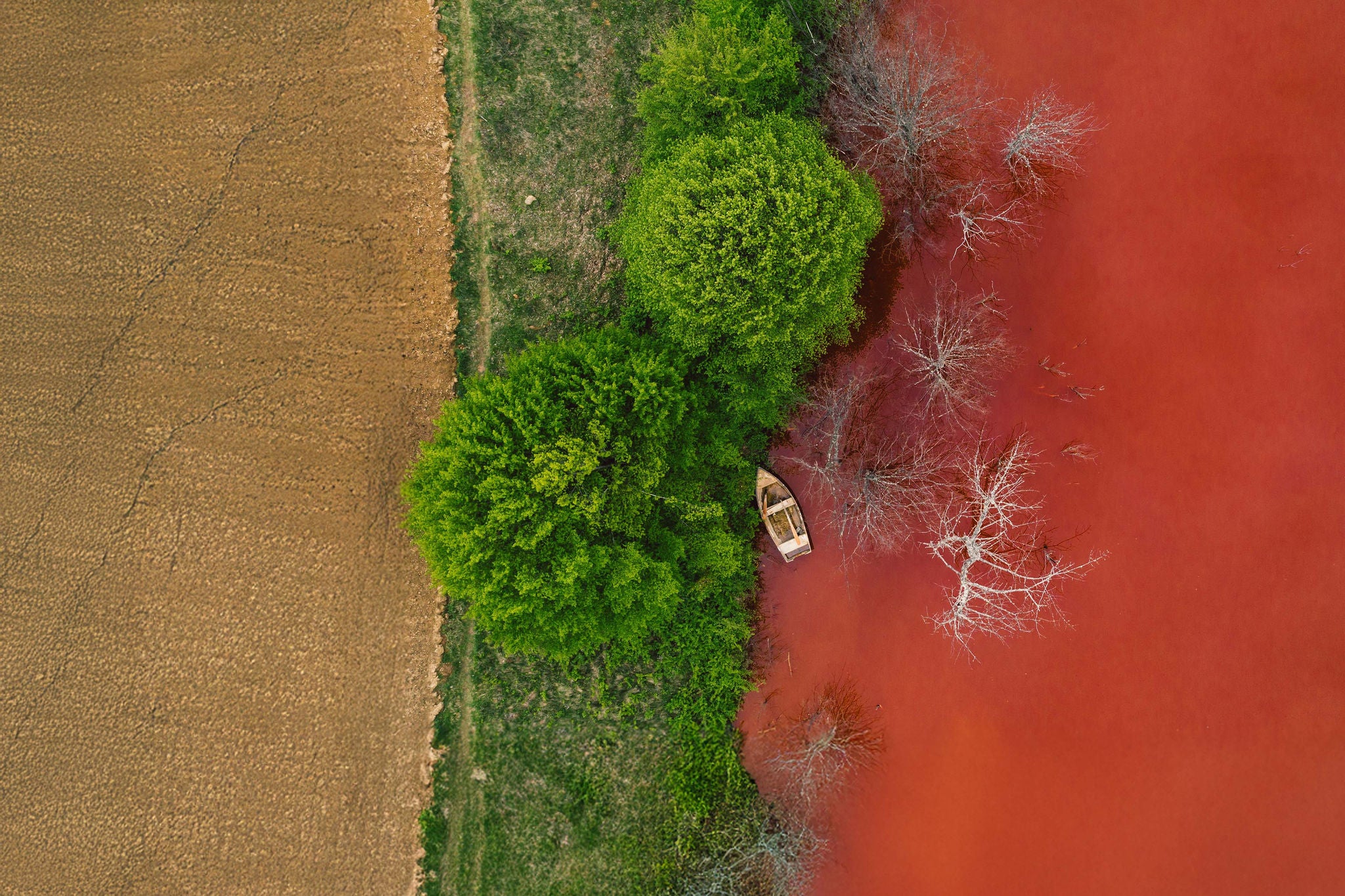






Drone view of contaminated, toxic water stream in Geamana, Romania

How can reporting shape a nature-positive future?

The EY Global Nature Action Barometer suggests that companies have not yet developed sufficiently robust reporting on nature.


In brief

  • 93% of companies reference nature in their public disclosures, but only 26% align with the Taskforce on Nature-related Financial Disclosures (TNFD) recommendations.
  • Just 13% of companies analyzed have either a standalone TNFD report or a TNFD index integrated within their annual or sustainability reports.
  • Less than 3% of companies stated goals with a nature-positive ambition.  

Companies are not yet producing sufficiently detailed reporting to demonstrate how they are addressing nature-related risks and seizing nature-related opportunities. Analysis by EY teams reveals that even companies with relatively high levels of sustainability maturity may not be disclosing the actions they are taking to develop the governance, strategy, metrics and targets to improve their performance on nature.

The inaugural edition of the EY Global Nature Action Barometer, an in-depth analysis of the current state of corporate nature reporting globally, highlights that a large number of companies have not disclosed nature as a material topic for their business and have not disclosed a nature-related strategy. However, the absence of disclosure does not necessarily indicate the absence of a plan. In some cases, companies may be deliberately withholding this information due to concerns about potential litigation if they fail to follow through, or to protect sensitive strategic details that could compromise their competitive advantage. Yet, by choosing not to disclose, these organizations may reduce visibility into their risks, while also undermining their own resilience and missing critical opportunities to evolve their business models. Transparent reporting not only enhances investor confidence but also fosters greater clarity around risks and opportunities — ultimately benefiting both the company and its stakeholders.

Penguins in Antarctica. Port Lockroy. Expedition
1

Part 1

The global state of nature reporting

Despite widespread corporate disclosure on nature, few companies provide sufficiently comprehensive or TNFD-aligned reporting.

The vast majority (93%) of the 435 companies analyzed for the Barometer research cover some aspect of nature in their disclosures. Yet just 26% align their reporting with the recommendations of the Taskforce on Nature-related Financial Disclosures (TNFD), the leading nature disclosure framework. This disconnect suggests that while companies are reporting on the role of nature across their value chains in some way, that information may not be comprehensive.


What’s more, just 13% of companies analyzed have either a standalone TNFD report or a TNFD index integrated within their annual or sustainability reports. Unless they specifically publish a TNFD report or TNFD index, companies may not necessarily be providing market-useful information on nature to stakeholders, including investors responsible for capital allocation decisions.


Out of the four TNFD disclosure pillars (governance, strategy, risk and impact management, and metrics and targets), governance is the pillar where companies score highest on both coverage (87%) and alignment (31%). Governance is often the first step toward action on nature, with companies setting up dedicated steering committees and other processes for monitoring progress.


Companies disclosures are least aligned with TNFD on the metrics and targets pillar (76% for coverage and 22% for alignment). This likely reflects potential challenges with data accessibility, measurement approaches and the extent to which nature is financially material to their business.


At a sector level, disclosures from those in the consumer goods sector (33%) and extractives and minerals processing sector (32%) show the highest levels of alignment with TNFD recommendations. This may potentially reflect the higher materiality of nature impacts, dependencies, risks and opportunities associated with these sectors.

Despite the urgent need to transition to a nature-positive economy, just 3% of companies stated goals with a nature-positive ambition. More encouragingly, however, the companies assessed are beginning to include strategies such as water-positive operations and increased use of regenerative land practices. 

These findings indicate that companies may be taking more action to drive nature-positive outcomes than they are disclosing.

Zhangjiajie National forest park at sunset, Wulingyuan, Hunan, China
2

Part 2

Five steps to strengthen nature reporting

Nature reporting plays a crucial role in strategic business decisions.

The research highlights the importance of companies using nature reporting to inform strategic decision-making and accelerate their own and other stakeholders’ action on nature. In that way, they will help to mitigate potential nature loss while future-proofing their businesses.

Here are five key actions that companies can take to better integrate nature into their strategy and drive action through improved reporting:

  1. Develop a robust understanding of business impacts and dependencies on nature, across the entire value chain. Deeply embed nature into corporate strategy and decision-making, including in managing climate risk.

  2. Build capability and capacity to monitor the business impacts and dependencies on nature, as well as nature-related risks and opportunities. Invest in new technologies, such as tools for assessing impacts and dependencies, and monitoring ecosystems. Collaborate with partners to address challenges.

  3. Improve the quality of disclosures, providing decision-useful information to meet stakeholder requirements. Don’t let perfect be the enemy of good — it’s better to produce imperfect disclosures than no disclosures at all.

  4. Ask for better nature information from stakeholders (e.g., suppliers, financial institutions, data providers). This will help to drive up overall standards of reporting.

  5. Monitor the regulatory landscape around nature and nature reporting. Nature is likely to feature in this fast-moving regulatory environment over the coming years, so companies should track new regulatory developments and assess the implications for their businesses.

Special thanks to the following individuals who significantly contributed to this report and research: Jonah Hessels, Manager, Climate Change and Sustainability Services, Ernst & Young U.S. LLP; Reagan Richmond, Senior Manager, Climate Change and Sustainability Services, Ernst & Young U.S. LLP; Tushar Jindal, Executive Director, Climate Change and Sustainability Services, EY Global Delivery Services India LLP

Summary

If the world is to address the challenge of nature loss — which is itself intrinsically linked to the climate crisis — companies must act quickly. TFND-aligned nature reporting is a critical enabler of a nature-positive future, helping to promote transparency, drive accountability, accelerate learning, and encourage companies to act now to halt and reverse nature loss.

Related content

What makes today’s climate leaders tomorrow’s business leaders?

The 2025 EY Global Climate Action Barometer highlights how proactive climate action can present a valuable strategic opportunity for companies. Read now.

How a climate transition plan can strengthen your business model

Climate transition plans are necessary for companies aiming to achieve ambitious climate targets. Read why.

    About this article