


EY refers to the global organization, and may refer to one or more, of the member firms of Ernst & Young Global Limited, each of which is a separate legal entity. Ernst & Young Global Limited, a UK company limited by guarantee, does not provide services to clients.
Recent Searches
Press release
26 May 2026
|
Singapore, Singapore
Geopolitics tops the CEO agenda as leaders tighten focus on profitability, AI and strategic deals
- Geopolitical risk reshapes the boardroom agenda, as CEOs prioritize disciplined growth and profitability; amid global uncertainties, Singapore respondents remain confident in the country’s growth.
- AI focus shifts from adoption to enterprise impact as 68% of Singapore CEO respondents (global 80%) increase AI spend - though regulation and skills gaps threaten to slow progress.
- Dealmaking becomes a strategic accelerator; top investment destinations are Singapore, China, Malaysia, Switzerland and South Korea.
CEOs are doubling down on disciplined growth and long-term transformation through AI and strategic transactions despite heightened geopolitical risk and macroeconomic uncertainty. This is according to the latest EY-Parthenon CEO Outlook Survey, a quarterly survey of 1,200 global CEOs across 21 countries, which includes 40 from Singapore.
In an environment marked by sustained uncertainty and overlapping external shocks, CEOs are responding not by retreating, but by prioritizing profitability and resilience with targeted growth, drawing on lessons learned from previous crises.
Geopolitical landscape reshapes growth priorities
Unsurprisingly, geopolitical uncertainty has taken center stage in the CEO agenda with more than half of respondents (Singapore 71%, global 56%) identifying it as the most significant risk to their business over the next 12 months, up 28 percentage points (both Singapore and global) since September 2025.
Despite their concerns over geopolitical uncertainty, the survey’s CEO Confidence Index, which is a measure from 1 to 100 quantifying CEO sentiment globally across a wide range of business dimensions, shows that overall confidence among Singapore CEO respondents remain stable at 73.5, compared with 80 three months ago. Singapore CEO respondents are also among the most optimistic about their local country growth, with a confidence score of 81.0 – the second highest globally.
Additionally, respondents cite that the impact is tangible, with nearly half (Singapore and global 46%) reporting that sustained energy price shocks would create significant headwinds for their organization, underlining how geopolitical volatility is translating directly into operational and financial risk.
However, unlike previous crises, CEOs are not viewing current macroeconomic volatility as a reason to retrench. Instead, they are reinforcing resilience and protecting near‑term performance by being more selective about where they invest – signaling a shift towards disciplined growth that is targeted, risk-aware in a rapidly changing environment, and anchored in profitability and resilience.
Eighty-eight percent of Singapore CEO respondents (global 82%) report that they are prioritizing sustainable long-term growth and a clear path to profitability over rapid market expansion. This pragmatic response sees leaders prioritize financial flexibility, streamlined operations, their talent base and a greater reliance on technology to drive productivity, alongside continued investment in digital and AI capabilities.
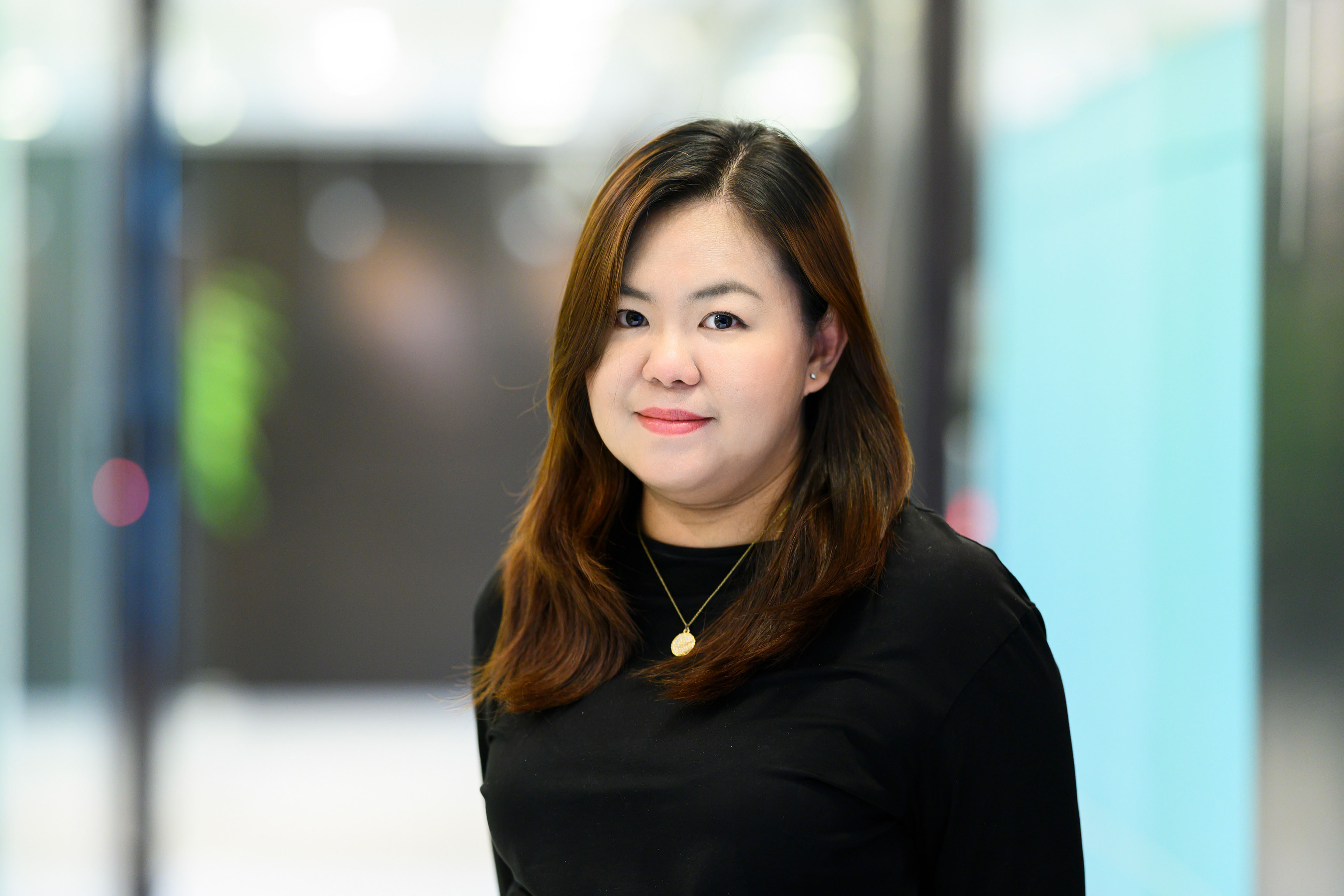
Purandar Rao, EY-Parthenon Asia East, Asean and Singapore Strategy and Transactions Leader, says:
“What stands out in the latest findings is the combination of confidence and clarity around risk. The focus on sustainable long-term growth over rapid expansion reflects a broader shift in mindset, with leaders prioritizing resilience and disciplined execution across the cycle rather than pursuing growth at any cost. Singapore’s stability, connectivity and institutional strength position the country strongly as a base for companies taking this longer-term view.”
AI shifts from adoption to enterprise scale impact
Whether AI valuations prove to signal a bubble or not, AI’s advantage is real and remains the most consistent strategic priority across regions and sectors. Sixty-eight percent of Singapore CEO respondents (global 80%) plan to increase AI investment in 2026, while just 3% (global 1%) expect to reduce spending this year. Fifty-nine percent of Singapore CEO respondents (global 48%) are pursuing acquisitions or divestments to accelerate access to technology or AI capabilities.
Respondents in fact report that AI is now starting to deliver tangible, enterprise impact in growth, driving areas such as customer value creation (Singapore 45%, global 42%) and strategy (Singapore 45%, global 41%), finance and risk management (Singapore 43%, global 37%), and innovation (Singapore 38%, global 40%). Crucially, it remains a driver of CEOs’ confidence with 84% of Singapore CEO respondents (global 83%) surveyed saying that they are optimistic about their company’s investment plans in emerging technologies.
However, challenges remain. While AI is delivering tangible enterprise impact, fragmented and evolving regulatory frameworks are emerging as a key constraint on scale. Twenty-seven percent of Singapore CEO respondents (global 30%) say AI regulatory frameworks are increasing compliance and operational complexity, while 38% (Singapore and global) cite fragmentation and the evolving nature of regulation as a barrier to scaling AI effectively.
Sriram Changali, EY-Parthenon Asean and Singapore Industrials Leader, says:
“The more meaningful story behind the AI investment figures is not the scale of spending, but its direction. AI has moved beyond the technology function to shape decisions across customer value, strategy, finance and innovation. With Singapore companies being further along in the adoption curve, leaders are now making more considered choices about where AI can create genuine enterprise value.”
Talent strategy pivots as AI drives reskilling
Despite public fear that AI will displace human labor, as AI investment accelerates, CEOs are instead reshaping workforce strategies to unlock value rather than reduce headcount. While all respondents (Singapore 100%, global 99%) expect AI to change their workforce strategy over the next three years, less than one in five (Singapore 18%, global 20%) say that AI will lead to a reduction in hiring.
Rather than viewing AI as a substitute for talent, leaders are positioning it as a productivity and growth enabler, with 43% of Singapore CEO respondents (global 42%) anticipating large-scale reskilling and upskilling of existing employees, and 50% (global 44%) actively redesigning roles to combine human and AI capabilities.
However, talent constraints remain one of the most significant barriers to capturing AI value. A quarter of Singapore respondents (Singapore 24%, global 16%) shared that the main people-related challenge faced is cultural resistance to change. This is followed by limited AI and data skills within the existing workforce (Singapore 15%, global 20%) and insufficient leadership capability to manage AI-driven change (Singapore 15%, global 11%), reinforcing the need to invest not only in technology but in leadership, skills and operating models.
Changali says:
“With AI, the talent constraint is shifting. A premium is placed on talent who can combine deep domain knowledge and judgment with the ability to direct AI systems. However, such talent is scarce everywhere, Singapore included.
At the same time, with cultural resistance being cited as the most significant talent-related challenge in Singapore, it is clear that in organizations with long-tenured workforce and hierarchical decision-making cultures, AI adoption is less a technology rollout than a leadership intervention. Ultimately, we cannot reskill our way past underlying permission structures that do not reward experimentation.”
Portfolio decisions driven by AI and long-term strategic fit
Despite this uncertain macroeconomic and geopolitical backdrop, CEOs continue to see transactions as a critical lever for transformation and growth, but with a sharper focus on strategic fit and capability building rather than on scale. Eighty-eight percent of Singapore respondents (global 89%) planning to pursue M&A say they expect their own deal appetite to increase over the next 12 months, even as dealmaking becomes more selective.
Among local CEO respondents, Singapore remains the top investment destination, followed by China, Malaysia, Switzerland and South Korea. For global respondents, the US remains the primary destination for planned M&A activity, followed by India, the UK, Canada and Germany.
Notably, AI capability is shaping portfolio design and capital allocation decisions. A significant number of survey respondents (Singapore 59%, global 48%) say the ability to enhance technology or AI capability is the most important factor influencing decisions around acquisitions or divestments, closely followed by a strategic fit with long-term growth priorities (Singapore 51%, global 47%).
Over the coming year, CEOs plan to actively pursue a range of transaction strategies, with survey respondents pursuing M&A (Singapore 63%, global 62%), focusing on strategic alliances (Singapore 70%, global 57%), exploring joint ventures (Singapore 53%, global 45%) and expecting to undertake “while remaining focused on long‑term growth.
Geophin George, EY-Parthenon Asean Transactions and Corporate Finance Leader, concludes:
“Given that accessing AI capability is a key consideration for M&A pursuits, this marks a notable shift in how transformative technology enters enterprises, and we can expect it to be a defining feature of deal activity in 2026.
At the same time, companies are anchoring their core capability close to home while pursuing growth through alliances and selective M&A. Dealmaking is also becoming more disciplined and the criteria have tightened, as technology and AI capability, strategic fit and long-term growth alignment now dominate the decision. The preference for strategic alliances over outright acquisition underscores this trend: in an environment where the cost of capital is high and integration risk is real, partnerships allow companies to access capability and markets without overcommitting.”
To read the full report, please visit: https://www.ey.com/en_sg/ceo/ceo-outlook-global-report
-ends-
Notes to editors
About EY
EY is building a better working world by creating new value for clients, people, society, and the planet, while building trust in capital markets.
Enabled by data, AI and advanced technology, EY teams help clients shape the future with confidence and develop answers for the most pressing issues of today and tomorrow.
EY teams work across a full spectrum of services in assurance, consulting, tax, strategy and transactions. Fueled by sector insights, a globally connected, multi-disciplinary network and diverse ecosystem partners, EY teams can provide services in more than 150 countries and territories.
All in to shape the future with confidence.
EY refers to the global organization and may refer to one or more of the member firms of Ernst & Young Global Limited, each of which is a separate legal entity. Ernst & Young Global Limited, a UK company limited by guarantee, does not provide services to clients. Information about how EY collects and uses personal data, and a description of the rights individuals have under data protection legislation are available via ey.com/privacy. EY member firms do not practice law where prohibited by local laws. For more information about our organization, please visit ey.com.
This news release has been issued by EY Corporate Advisors Pte. Ltd., a member of the global EY organization.
About the survey
On behalf of the global EY organization, FT Longitude, the specialist research and content marketing division of the Financial Times Group, conducted an anonymous online survey of 1,200 CEOs from large companies around the world in March and April 2026. The survey aims to provide valuable insights on the main trends and developments impacting the world’s leading companies, as well as business leaders’ expectations for future growth and long-term value creation. Respondents represented 21 countries (Brazil, Canada, Mexico, the United States, Belgium, Luxembourg, the Netherlands, France, Germany, Italy, Denmark, Finland, Norway, Sweden, the United Kingdom, Australia, China, India, Japan, Singapore and South Korea) and five industries (consumer and health; financial services; industrials and energy; infrastructure; and technology, media and telecoms). Surveyed companies’ annual global revenues were as follows: less than US$500 million (20%), US$500 million to US$999.9 million (20%), US$1 billion to US$4.9 billion (30%) and greater than US$5 billion (30%).