Recent Searches



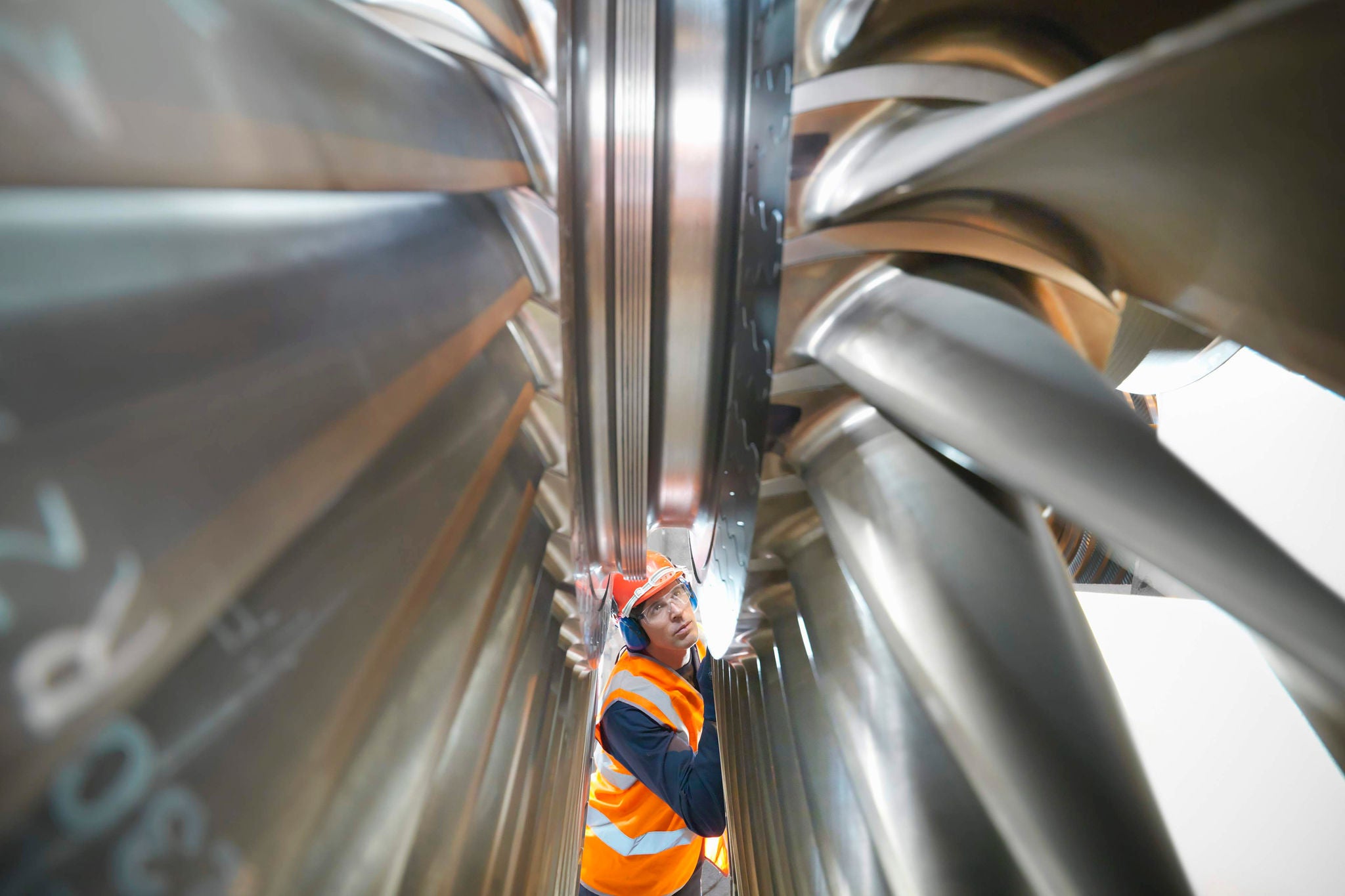
Organizations can improve productivity by better managing environment, health and safety risks. We explore ways to climb the maturity curve.
Managing environment, health and safety (EHS) risk is now recognized globally as fundamental to workplace productivity. The need to comply with organizational and legislative requirements has a solid history in driving EHS activities. However, these activities doesn’t always give an overview of an organization’s maturity in managing an ever-increasing set of EHS risks. Organizations should look at how they can effectively and efficiently manage EHS outcomes.
One aspect that may not be addressed appropriately are employee motivations. Often organizations are only tapping into employees’ extrinsic motivators, leaving the more powerful and sustainable intrinsic motivators untapped.
- Extrinsic motivators relate to the willingness to follow a rule or a procedure mainly because “I have to.” The reliance is on an externally driven energy — for example, avoiding getting into trouble by following the rules when someone is watching.
- Intrinsic motivators are a result of the fundamental understanding of the personal value of a situation. The reliance is on an internally driven energy — for example, gaining the opportunity to go home to my family if I do my work in a safe manner.
It may be time to create a shift and harness the power of employees’ intrinsic motivators to move ahead to a new, and likely more effective, way of managing EHS risks. An organization that is willing to continuously challenge its approach to EHS management and tap into more than extrinsic motivators could not only see EHS performance improvement but also see the EHS function act as a key driver of effective organizational performance.
Therefore, the question is: how do organizations — and more specifically business leaders — create a step change toward an EHS future driven by employees’ intrinsic motivators? The answer starts with the way EHS maturity is assessed.
Chapter 1
The future of EHS maturity
Business leaders need a method to assess their current state of EHS function in order to set a more progressive path forward.
There is evidence that the shift in thinking has already begun, with a number of business leaders now accepting that compliance, although essential to attaining an established level of EHS function, is not the end game. They understand that there is a side to the EHS spectrum that can take them to the next level of maturity and performance.
The challenge is that to move beyond an EHS plateau, business leaders need a method by which to assess their current state of EHS function in order to set a more progressive path forward — a method that is relevant for today’s operational context and focuses on the future of EHS. A method that takes an overall perspective when it comes to EHS and places leadership at the center of the approach is the most effective means to tap into employees’ intrinsic motivators.
Why are leaders so important to an organization’s EHS success? When leaders share knowledge, are open about what they do or do not know, are transparent and provide open access to information, they build trust. When leaders are highly trusted, they will likely in turn receive better and more accurate information, and therefore have more knowledge to make better decisions, reinforcing trust in their leadership.
Organizations that focus their efforts on shared trust and knowledge flow are more likely to experience workforce alignment driven by an intrinsic motivation to advance EHS function and performance. From our experience, EY has identified seven levers that can be drawn on to build shared trust and support knowledge flow.
These seven levers can be used as the basis for an EHS Maturity Model that can help business leaders to gain a more relevant and holistic perspective on their organization’s EHS maturity and more importantly understand the path toward a more effective and efficient EHS function.
Chapter 2
Seven practical levers
EY has identified seven levers that can be drawn on to build shared trust and support knowledge flow.
1. Strategy
The high-level plan that sets out the place, use and interaction of the organization’s major resources in order to achieve specific business goals. A well-formulated and executed strategy, supported by organizational structures, establishes the foundation against which the organization can create, monitor and measure EHS success.
2. People
The manifestation of the organization’s embedded values, governance and strategy into attitudes, behaviors, knowledge and skills that reflect alignment across all levels. Engaging people and increasing their potential are central to building and sustaining a positively aligned HSE culture that is founded on principles of trust, collaboration and learning.
3. Leadership
The translation of the strategy into action by leaders in order to develop a positive and efficient work environment, achieve the vision, and promote a culture of understanding and commitment. Transformational leadership behaviors affect the degree to which employees value EHS, as well as their motivation to create, improve and sustain a positive EHS culture.
4. Governance and assurance
The oversight and decision-making frameworks that establish common goals, support structures to be in place and verify the efficiency and effectiveness of systems of work. The relationship between board members, senior executives and EHS leadership, as well as their understanding of and focus on organizational EHS issues and opportunities, can set the standard for the effective control of EHS risk.
5. Risk and opportunity
The key functional management framework that identifies risk and methods for its mitigation, as well as opportunities for better implementation of the business strategy. A primary responsibility for any organization is to have a systematic approach to risk management and continuous improvement that will likely improve worker health and safety as well as business outcomes by reducing losses and improving opportunities.
6. Systems and structure
The representation of what the organization does and how it does it in the form of established practices and standards, supported by the way the organization is structured. Robust and integrated EHS systems and policies that are easily understood and can help people to get on with the organization’s core business more safely, efficiently and effectively.
7. Digital technology
The integration of all relevant aspects of the organization into a digital platform that is used to automate manual and repetitive tasks and inform risk management and continuous improvement activities. An organization that embraces and effectively uses digital technology and analytics is likely equipped to make better, quicker and smarter decisions to achieve organizational objectives and improve EHS performance.
By understanding how their organization is performing against each of these seven levers, business leaders can proactively and strategically capitalize on the opportunities within each lever to drive intrinsic employee motivators to move beyond compliance. This will likely facilitate an EHS function that can continuously adapt in times of change to improve and sustain its EHS success.
Chapter 3
Three ways to improve intrinsic motivation
Strong leadership, governance and assurance frameworks and digital technology can help drive efficiency and effectiveness across EHS.
Current global trends point directly at three key factors that business leaders should understand to navigate through a changing operational landscape. These factors are most relevant when it comes to EHS success in a fast-evolving business environment.
1. Leadership and reporting
Leaders can help to build a culture of shared trust and knowledge flow to create a more aligned workforce that is internally driven to bring the EHS strategy to life. To date, the focus has been on setting the right commitments at the top level of the organization, and now it is on the right tone from the top. However, more mature organizations have taken this a step further to ensure that leaders, including the board and senior management:
- Have a visible and genuine commitment to EHS and lead by example to demonstrate behaviors they want to see in the workforce
- Engage with employees on EHS issues and inspire and foster a positive EHS culture
- Provide clear and concise performance expectations that are tied to role descriptions and supported with guidance and knowledge sharing
- Consistently recognize and reward behaviors aligned with the EHS vision and the organization’s values and ensure workers value the reward and recognition systems used
- Receive relevant, robust and timely information relating to EHS performance, risks and outcomes of an organization’s assurance activities regularly, and a mix of lead, lag and positive performance indicators are used to measure performance
Mature organizations use a mix of performance indicators including:
- Lag - output measures based on historical data, generally related to incidents (e.g., lost time injury frequency rates)
- Lead - input measures that demonstrate an outcome may be imminent (e.g., predicting near miss events)
- Positive performance - measures of management system compliance (e.g., audit action closures, training completion rates and safety culture survey results)
Case study
EY helped a large energy distributor develop and progress its EHS maturity. The client used maturity assessment data to create a blueprint for a five year EHS maturity advancement strategy with leadership as the key component. EY collaborated with executive and EHS management to execute the EHS transformation strategy. A key component of this was an EHS development program based on shared and transformational leadership.
The EHS leadership program extended to third party partners. The program contributed to this energy distributor advancing its overall EHS culture maturity to a proactive state with a more than 50% reduction in key EHS performance indicators such as Lost Time Injuries (LTIs) over a five year period.
2. Governance and assurance
Once an organization establishes a strong focus on leadership and sets the tone from the top, it is imperative that governance structures and assurance frameworks are established to support the leadership agenda. Mature organizations have:
- A clear governance structure in place that is representative of EHS risks and has clearly defined accountabilities
- A board and executive management that understand the hazards and risks associated with its operations and contribute to the development and communication of the EHS vision and goals
- A clearly designed and defined assurance framework that considers “three lines of defense” and is relevant for the EHS risks associated with the organization’s activities
- Personnel performing EHS assurance activities that are appropriately skilled, qualified and experienced
- Processes that ensure outcomes from EHS assurance activities inform decision-making, are effectively addressed and are used to drive continuous improvement
Better practice EHS assurance frameworks articulate how structure, coverage, approach and resourcing will be considered:
- Structure - where assurance fits within the organization’s structure and functions
- Coverage - the scope of assurance such as operational versus strategic risks, site based risks versus organization-wide
- Approach - methods employed to plan, execute, monitor and report on assurance
- Resourcing - the model used to perform the assurance program (e.g., co-source or out-source)
3. Technology
Not knowing what you don’t know is a major risk to organizations, with the appropriate capture and analysis of EHS data being vital to help reveal blind spots for leaders and the board. Mature EHS organizations are establishing digital strategies to ensure:
- Digital technology is used to capture EHS data and information and are integrated into wider organizational systems in order to identify trends and changes in EHS performance, behaviors and functions.
- The workforce engages effectively with digital technology and knows when it can be used to benefit performance.
- EHS technology is used to capture and analyze data and to predict future performance or incidents.
Case study
EY assisted a global manufacturer with executing an enterprise offering for an EHS management information system (EMIS). The client wished to use the EMIS to collect, manage and analyze thousands of EHS data points, including air and water emissions, safety incidents and site chemical inventories. EY performed design and configuration services to align the technology with current EHS processes and procedures.
We assisted with developing dashboards and analytical reports and performed change management services for over 10,000 employees at nine major manufacturing facilities and 14 distribution and remanufacturing centers. The workflows, notifications and data from this will help the client to streamline and standardize EHS management, track compliance activities better and conduct analysis to identify and address EHS risk.
Business leaders should challenge their approach to EHS by continually performing a holistic assessment. The EY EHS Maturity Model helps organizations to not only create but also drive a new EHS paradigm to tap into what drives human intrinsic motivation. Strong leadership, robust governance and assurance frameworks, and use of digital technology can help drive efficiency and effectiveness across EHS, now and into the future.
Summary
Global trends point directly at three key factors that business leaders should understand to navigate through a changing operational landscape.

Related Articles

How to improve the business with an EHS data analytics strategy
Data and analytics are important to lead environmental, health and safety programs that may help strengthen the reputation of the business.