La Defense business district at sunset

Five forces shaping foreign direct investment in Europe

Confidence in the prospects for the region will help drive growth.


In brief:

  • Foreign direct investment (FDI) in Europe fell 7% in 2025, a relatively moderate decline given the cautious global investment environment.
  • Sixty percent of businesses expect Europe’s attractiveness to improve over the next three years.
  • Geopolitics, energy prices, strategic autonomy, technology innovation and finance will define Europe’s future investment attractiveness.

Businesses executed 5,026 cross-border investment projects in Europe in 2025, creating 200,000 jobs and highlighting the continent’s fundamental resilience. The numbers represent an overall decline from the previous year, but they do so in the context of a cautious investment environment worldwide. They also point to the specific challenges that Europe faces: weaker economic growth, greater exposure to energy price volatility, trade tensions with the US, and the ongoing impact of the war in Ukraine and the conflict in the Middle East.


Against this backdrop, the 7% decline in FDI projects in 2025 is relatively moderate. Although the number of jobs created by FDI projects fell by a more pronounced 25%, in line with a cautious approach to capital-intensive and complex industrial investment, the data reveals a surge of interest in high-potential sectors — AI, defense and low-carbon energy — and clear confidence in the continent’s long-term attractiveness.

The annual EY survey of 500 executives provides insights from both large and small enterprises into how Europe can strengthen and sustain its investment appeal. While this year's survey found that investment intent for 2026 is down from both 2025 and 2024, it also highlighted that 60% of surveyed businesses expect Europe’s attractiveness to improve over the next three years. This is due to the continent’s strengths: a vast consumer market, high-quality infrastructure, and a proactive approach to climate policy and sustainability.

Nonetheless, intensifying global competition for investment, combined with geopolitical fragmentation and technological disruption, means Europe can no longer rely on its historical strengths. Based on the research conducted, we have identified five major forces that will shape Europe’s attractiveness and competitiveness:

  • Rising geopolitical tension
  • Pressure to balance sustainability and energy demands
  • The need for strategic autonomy in critical industries
  • Rapid technological innovation
  • Difficulties unlocking finance and mobilizing investment

This is part two of the EY European Attractiveness Survey 2026 edition. Read the first article here.

Diverse Young Colleagues Working on Computers in a Research Laboratory.
1

Force 1

Geopolitical tension: meeting uncertainty with stability

Geopolitics is now at the center of global investment strategies.

Over the past decade, a succession of shocks, from the COVID-19 pandemic to the war in Ukraine, has profoundly reshaped the environment in which companies make location and investment decisions. Meanwhile, Europe is experiencing political fragmentation, fiscal tension and the rise of populism (pdf) in several countries, creating uncertainty around governance and policy.

This explains why 41% of executives now identify geopolitical tensions and conflicts as the leading risk to Europe’s attractiveness over the next three years, up from 35% in 2025 and 27% in 2024. Trade barriers and tariffs also rank among investors’ most significant concerns.


Businesses can address this by factoring geopolitical risk into location decisions. Important mitigation measures include comprehensive scenario planning and stress-testing, diversifying suppliers, regionalizing production, reducing dependencies on strategic materials, and prioritizing countries perceived as politically stable and operationally predictable.


Businesses are already becoming more selective, favoring projects that strengthen resilience, shorten supply chains, or secure access to critical technologies and energy sources. They are also continuing to execute nearshoring and “friendshoring” strategies, particularly those in the defense, semiconductor, pharmaceuticals, logistics and energy sectors.

Europe’s commitment to the rule of law, institutional continuity and rules-based governance remains a powerful differentiator. Preserving this advantage requires greater unity between countries and faster execution in Brussels, placing a particular responsibility on policymakers. Governments will need to provide more predictable and consistent industrial, trade, energy and regulatory frameworks, while ensuring that Europe remains open to international investment and innovation.

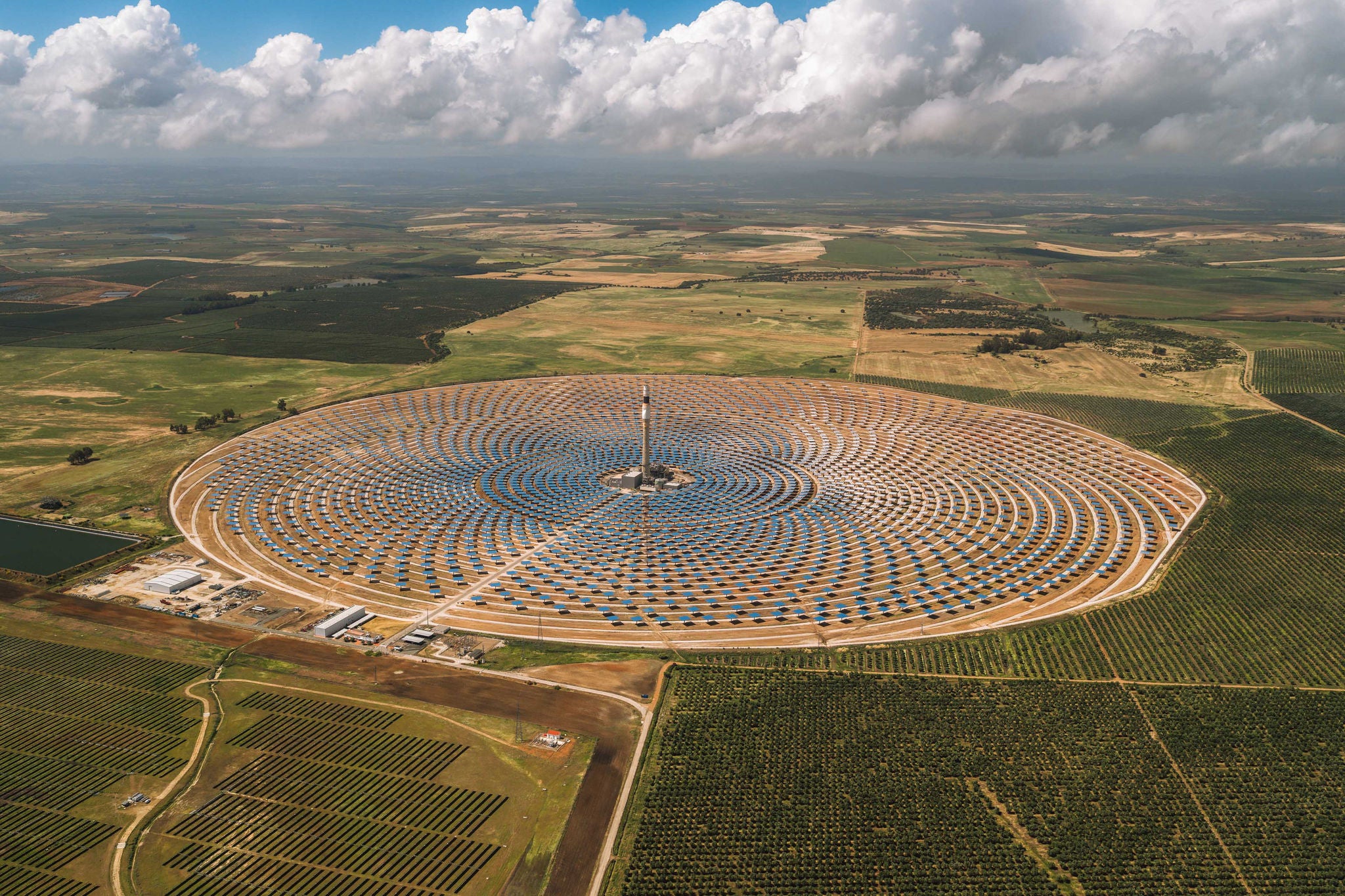
Aerial view of the Torresol Energy Gemasolar plant
2

Force 2

Sustainability and energy: Europe’s challenge and opportunity

With rising climate, industrial and energy pressures, Europe’s ability to combine decarbonization, competitiveness and energy resilience could become a key investment advantage.

Europe’s sustainability ambitions are both a strength and a weakness in attracting investors. Businesses view the continent’s proactive policy approach to climate change and sustainability as its fourth-greatest advantage, while the availability of low-carbon energy ranks seventh. Nearly one-third of EU energy already comes from low-carbon sources, making Europe comparatively attractive for companies with ambitious climate commitments and net-zero strategies.

At the same time, businesses see complex and fragmented sustainability regulations as a competitiveness risk. And Europe also faces the “energy trilemma” of simultaneously attempting to decarbonize its economy, preserve industrial competitiveness and secure its energy supply.

Geopolitical shocks reinforce the probability that price volatility will persist in the medium term. Although Europe has reduced its exposure to imported fossil fuels, it remains vulnerable to gas, shipping and commodity pricing swings. This helps explain why surveyed businesses identify energy costs as Europe’s main investment disadvantage.

Shifting investment plans
37%
37%
of executives in industrial sectors have canceled, delayed or scaled back investments in Europe over the past year.

The survey conducted finds that 37% of executives in industrial sectors have canceled, delayed or scaled back an investment project in Europe over the past 12 months because of energy prices or uncertainty around future costs. In parallel, more than 60% of executives in industrial sectors believe policymakers underestimate the risks that high energy prices pose to European industry, while half say policymakers do not fully understand business concerns.

Building on Europe’s sustainability leadership

Europe could transform sustainability into a source of competitiveness and industrial renewal by building on its significant structural advantages: strong public support for the energy transition, leading industrial capabilities in low-carbon technologies, sophisticated financial markets and growing investor demand for sustainable assets. But execution remains too slow, and administrative issues block progress. For example, 53% of surveyed energy businesses say they canceled, delayed or scaled back an energy infrastructure project in Europe in the past 12 months because of permit issues.

A much faster and more coordinated response is required. Priorities include:

  • Accelerating permit procedures for energy and industrial projects
  • Strengthening electricity grids
  • Scaling renewable and nuclear investment
  • Expanding long-term power purchase agreements (PPAs) and creating more integrated European energy markets
  • Simplifying regulation, including through more coherent European frameworks instead of fragmented national subsidy systems

Foreign direct investment in Europe: turning confidence into growth

Dive deeper into the 25th European Attractiveness Survey findings


Female supervisor talking with machinists in factory
3

Force 3

Critical industries: strengthening Europe’s strategic autonomy

Supporting critical industries is essential for long-term competitiveness.

Geopolitical crises have exposed the economic cost of Europe’s strategic dependencies. As a result, public intervention in coordination with business is essential to protect the continent’s strategic industries and reduce dependence on unreliable or overly dominant international partners.

Europe has an opportunity to identify and support the critical sectors that will drive future growth, exports, innovation and employment. These will likely be semiconductors, AI, CleanTech, biotechnology, cloud computing, quantum technologies and defense. Surveyed businesses agree: They rank the need to support strategic industries among Europe’s top three priorities.

Achieving strategic autonomy

A broad set of initiatives is at Europe’s disposal to support critical industries, including targeted tariffs, tax incentives, public investment support and foreign investment screening mechanisms. It could also pursue regulatory simplification and stronger integration of innovation ecosystems.

But the continent must be careful not to slide into economic nationalism and protectionism. Decisions about strategic autonomy should not be based on businesses’ nationality but on the extent of their long-term commitment to Europe. Foreign investments that contribute to the European economy remain essential.

Reducing supplier dependencies
87%
87%
of industrial company leaders already operating in Europe believe they can reduce reliance on suppliers from other regions.

Growing demands for strategic autonomy will require international businesses operating in critical sectors to establish a long-term presence. This means localizing production capacity and research centers, training local talent and keeping intellectual property within Europe. The survey reveals optimism about such a shift: 87% of industrial company leaders in Europe believe it is possible to reduce dependencies on suppliers from other regions.

Europe’s defense challenge

Defense is a critical sector that needs support. The European Commission (EC) now identifies defense as a priority sector for FDI, particularly in advanced manufacturing, dual-use technologies and critical supply chains. More importantly, Europe’s ambitions are being matched with financial firepower. In March 2025, the EU unveiled an €800 billion plan aimed at strengthening the bloc’s defense capabilities. In addition, Member States can now deviate from EU budgetary rules to increase defense spending without triggering deficit procedures.

Those announcements are already contributing to an increase in defense FDI in Europe, with the number of projects up 84% from 2024. They will create almost 7,000 jobs. This momentum looks set to continue: 59% of defense executives surveyed plan to establish or expand operations in Europe over the next 12 months.

woman wearing augmented reality glasses touching screen
4

Force 4

Innovation and AI: positioning Europe in the digital era

Technology adoption (AI, agentic systems, robotics) is reshaping location decisions and shifting where high-value FDI flows.

Businesses’ ability to innovate at scale plays a critical role in Europe’s long-term investment attractiveness. However, foreign investment in R&D centers, which drive corporate innovation, fell 30% in 2025, reaching its lowest level in four years. The number of jobs created declined 60%.

Encouragingly, there are signs of improvement: R&D is now considered the continent’s third-largest investment advantage, while concerns over the “slow pace of innovation” have fallen from the fifth- to the eighth-biggest perceived risk. This is likely a result of certain positive regulatory developments such as the EU’s Digital Omnibus on AI Regulation Proposal. Made in late 2025, it aims to modify aspects of the EU AI Act to make it easier for businesses to adopt and scale AI.

European AI investment surges

At the same time, FDI into European AI-related projects surged by 96% in 2025, creating more than 14,000 jobs. Investment in this sector grew faster than in any other, rising in France, the UK and Germany even as total FDI declined.


Yet more work is needed to build Europe’s reputation as an innovation hotbed: 43% of businesses view Europe as less attractive than the US and China for AI investment, innovation and deployment. That figure rises to 55% among companies without a European presence. This is due to regulatory complexity, high energy costs compared with the US and China, skills shortages and slow permitting for digital infrastructure.

Policymakers are moving in the right direction, but the pace needs to accelerate if Europe is to close the gap with the US and China. Asked how Europe could improve its AI attractiveness, businesses rank streamlining AI regulation first and improving technology skills second. The EU AI Act could become a global standard for responsible AI. Expanding regulatory sandboxes alongside harmonization would give businesses the space to experiment without bearing full compliance costs upfront.


Digital infrastructure also requires attention. China already has 1.5 times more data center capacity than Europe; the US has three times more. By 2030, the gap will widen. Fast-tracking permits for data centers and grid infrastructure would help close it.

Businesswomen planning strategy with businessman in auditorium.
5

Force 5

Financing the transformation of Europe's attractiveness

Mobilizing capital is a defining challenge for Europe’s attractiveness.

Former Italian Prime Minister Mario Draghi has estimated that Europe needs between €750 billion and €800 billion in additional investment every year to restore its competitiveness, equivalent to 4%–5% of EU GDP1. Government budgets are already stretched, and the financing gap cannot be closed by public spending alone.

However, the conditions to mobilize private capital at the required level do not yet exist. Every year, approximately €300 billion in European savings is invested primarily in the US rather than in European growth.2 Europeans hold approximately €14 trillion in savings deposits, but fragmented capital markets, inconsistent insolvency frameworks and prudential rules that favor low-risk liquid assets prevent those savings from reaching the productive, long-term investments Europe needs.3

The savings and investments union (SIU), designed to channel Europe’s abundant private savings toward its significant investment needs, addresses this directly. But progress has been slow: Insolvency frameworks remain fragmented, supervision inconsistent and cross-border investment processes unnecessarily complex.

Unlocking institutional capital also requires urgent attention. Policymakers, institutional investors and businesses will need to collaborate in designing investment structures that match long-term risk-return expectations. In addition, policymakers must give high-growth businesses access to equity capital markets that match their funding requirements as they scale. A Europe that cannot finance its most promising ventures will continue to lose them to markets that can.

Encouragingly, 52% of all businesses surveyed are confident that Europe will make the strategic decisions required to unlock the investment needed to address its competitiveness and productivity shortcomings. Just 21% lack that confidence.


The role of financial services

Addressing the structural funding gap requires both the architecture to mobilize European savings and the financial institutions capable of deploying them productively. FDI is helping build a financial services sector capable of doing this. It was one of the strongest-performing sectors in European FDI in 2025. Foreign financial services firms executed 355 investment projects, up 21% on 2024, creating 9,762 jobs, a 16% increase on the previous year. The US contributed significantly to this momentum. FDI in Europe from US financial services firms reached a 10-year high in 2025.


Conclusion

Europe today is at a critical turning point. Geopolitical turmoil, the energy transition, the need for strategic autonomy in critical industries, the rise of AI, and the need to mobilize capital at scale are all exerting a significant influence on the continent’s attractiveness to investors.

But businesses have good reasons to believe in Europe’s long-term potential. The continent has qualities that, together, remain unsurpassed: a vast consumer market, high-quality infrastructure and a proactive approach to climate policy. This helps explain why most investors have confidence in the region in the longer term: 60% of surveyed businesses expect Europe’s attractiveness to improve in the next three years.

The task now is to harness Europe’s potential. By building on its strengths, it can emerge from disruption more resilient, more competitive and more attractive to investors.


Summary

Europe remains a compelling destination for foreign investment despite a challenging global environment. The number of FDI projects fell 7% in 2025, yet more than 5,000 investments created 200,000 jobs, reflecting confidence in Europe’s enduring strengths. These include its large market, high-quality infrastructure and its policy approach to climate change and sustainability. The survey and leaders’ interviews identify five forces that will shape future attractiveness: geopolitical tensions, energy and sustainability, strategic autonomy in critical industries, technology innovation and access to finance.

Related articles

How do CEOs reimagine enterprises for a future that keeps rewriting itself?

EY-Parthenon CEO Outlook 2026 explores how leaders use AI, transformation and portfolio strategy to navigate uncertainty and drive sustainable growth.

Geostrategic Analysis: July 2025 edition

Read the July 2025 Geostrategic Analysis for our take on geopolitical developments and the impact of these political risks on international business.

About this article

Authors