





EY refers to the global organization, and may refer to one or more, of the member firms of Ernst & Young Global Limited, each of which is a separate legal entity. Ernst & Young Global Limited, a UK company limited by guarantee, does not provide services to clients.
Recent Searches

Vietnam’s family-owned enterprises are facing a turning point, with experts urging a more strategic and digitally integrated approach to growth, as the government increasingly positions the private sector as the backbone of the national economy.
In-Brief
A well-structured digital transformation strategy that cuts across departments, backed by long-term investment from business owners, will significantly boost competitiveness.
As businesses mature, Vienamese family businesses need to focus on consolidation and regional growth. That requires strategic partnerships and the inclusion of the next generation in leadership roles.
Four key pillars for long-term family business success including a clear plan to expand enterprise value and resist disruption.
Speaking at a media briefing hosted by Ernst & Young Vietnam Limited in Ho Chi Minh City on April 22, Tran Nam Dung, EY Vietnam, Laos, Cambodia, EY Private Leader, emphasised that digital transformation is no longer optional but a critical step for Vietnamese family businesses seeking to remain competitive.
“A well-structured digital transformation strategy that cuts across departments, backed by long-term investment from business owners, will significantly boost competitiveness,” Dung said, adding that this means applying technologies like AI across research and development (R&D), distribution, sales, and financial management.
He noted that digital transformation offers a host of benefits, including cost savings, faster decision-making via big data, and enhanced adaptability in an increasingly volatile global environment.
Despite these opportunities, Vietnam does not yet feature in EY’s Global 500 Family Business Index 2025, which highlights the world’s largest family-run firms. However, local businesses are making strides to close the generational gap and align with global trends.
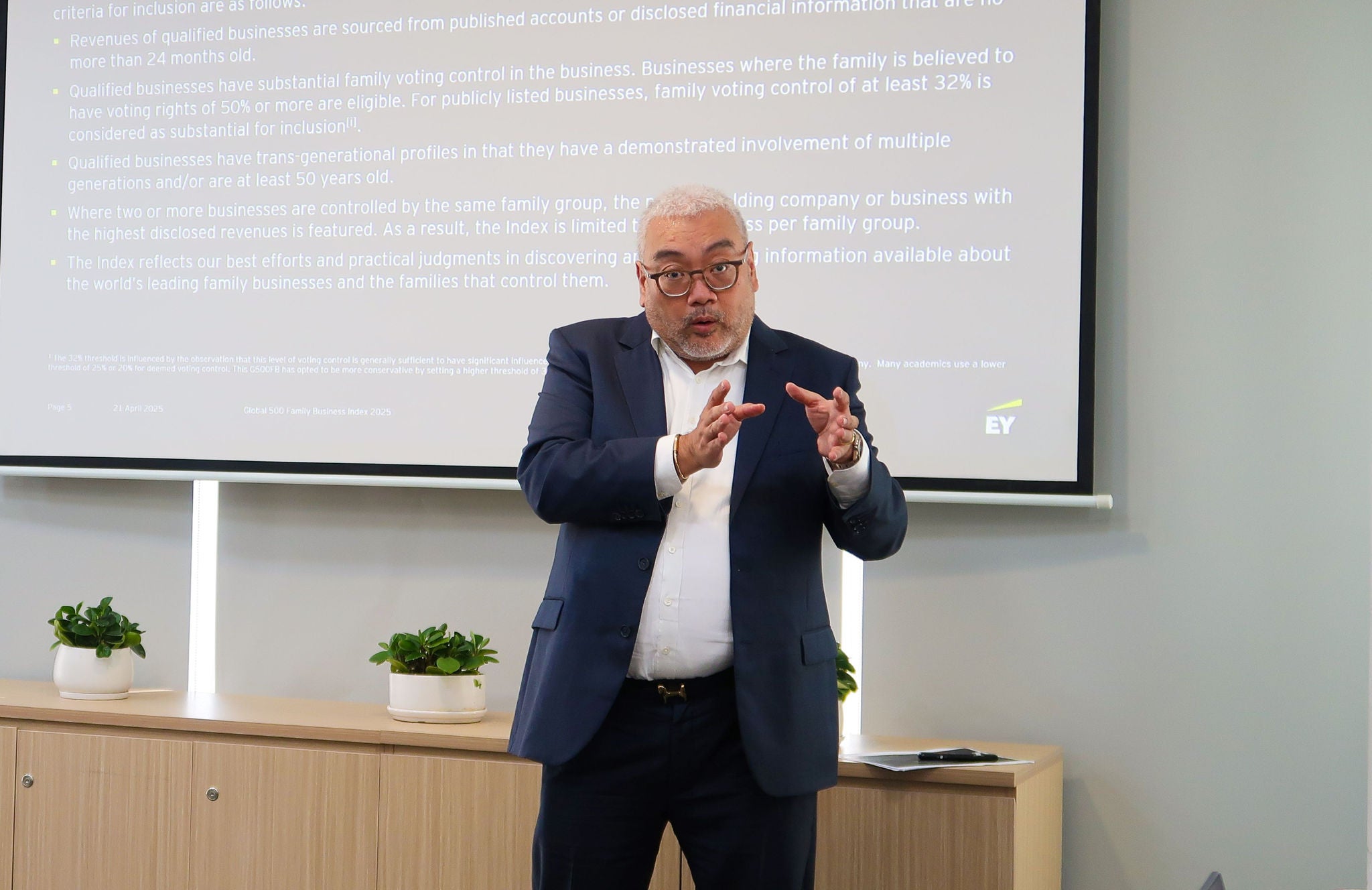
Desmond Teo, EY APAC Family Enterprise leader and ASEAN and APAC EY Private Tax
Desmond Teo, EY APAC Family Enterprise leader and ASEAN and APAC EY Private Tax, noted that most family businesses in Vietnam and ASEAN are relatively young, typically 30 to 40 years old, and must now plan for long-term expansion beyond national borders.
“As these businesses mature, they need to focus on consolidation and regional growth. That requires strategic partnerships and the inclusion of the next generation in leadership roles,” Teo said. “Engaging younger family members is crucial to adapting to changing market dynamics."
EY Vietnam chairman Tran Dinh Cuong pointed out that Vietnam still lacks an official definition of family businesses and has yet to establish comprehensive statistics on the sector. Nonetheless, estimates suggest that family businesses make up around 80 per cent of all companies globally, and potentially an even larger share in Vietnam.
“The role of the private sector has evolved dramatically. Prior to 1986, private enterprises were not formally recognised. But in 2025, through progressive policy reforms, they have become key drivers of Vietnam’s socialist-oriented market economy,” Cuong said.
He noted that the government is prioritising private sector development through legal reforms, support for large conglomerates, participation in strategic sectors, and institutional improvements aimed at reducing state intervention.
Vietnamese private enterprises currently benefit from favourable conditions, including strong growth potential, policy momentum, technological advancements, and emerging opportunities from global geopolitical shifts. Yet, these businesses also face significant challenges.
“Many private firms remain small, with limited access to capital, talent, and land,” Cuong acknowledged. “They often lag in digital adoption, R&D investment, and technological capacity, while labour productivity and competitiveness remain modest.”
Another pressing issue is leadership succession as many founders approach retirement age. EY’s global data shows that 58 per cent of family business owners are over 50, with 35 per cent planning to retire between 2020 and 2025. The proportion in Vietnam is believed to be even higher.
“Succession is a critical moment. Many founders haven’t identified a successor, and over 40 per cent say their business operations still depend entirely on them,” said Cuong. “The next generation must be ready not only to inherit the legacy, but to elevate it.”
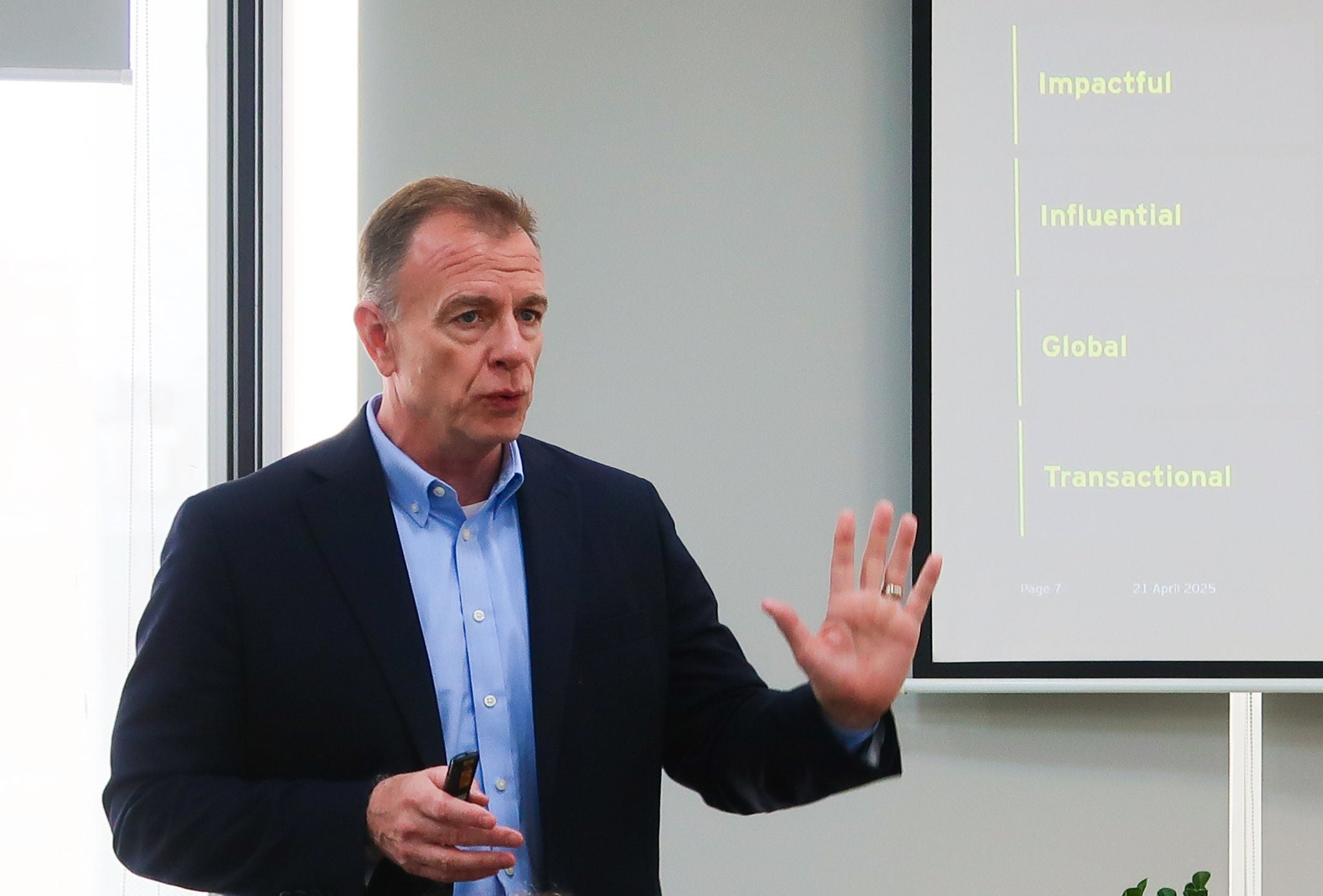
Robert (Bobby) Stover, EY Americas Family Enterprise and Family Office leader
Historically, only 30 per cent of family businesses survive into the second generation, 12 per cent into the third, and a mere 3 per cent beyond the fourth. Failures in succession planning often stem from family disputes, poor communication, or late preparation.
Robert (Bobby) Stover, EY Americas Family Enterprise and Family Office leader outlined four key pillars for long-term family business success including a clear plan to expand enterprise value and resist disruption, sophisticated financing, including private equity or internal funding, to support growth, balancing the financial needs of both the business and family across generations, and robust governance planning for both the business and the family.
“As Vietnam’s family businesses look towards the future, embracing digital transformation and preparing for leadership transitions will be crucial steps in securing their legacy and ensuring long-term success on the global stage,” said Stover.
This article was first published in Vietnam Investment Review on 23 April 2025
Summary
Four key pillars for long-term family business success including a clear plan to expand enterprise value and resist disruption, sophisticated financing, including private equity or internal funding, to support growth, balancing the financial needs of both the business and family across generations, and robust governance planning for both the business and the family.
Our latest thinking
The “Rising Era” demands breakthroughs in R&D
On the occasion of the Lunar New Year, Mr. Cuong Dinh Tran, Chairman of Ernst & Young Vietnam Limited, shared his observations and recommendations for the future of businesses and the country with Vietnam Investment Review.
Navigating a stricter data privacy legal landscape: next and beyond
The impact of Decree 13 on the financial sector and EY solutions to remain compliance. Learn more!
Time to roll out “green carpet" for foreign investors
Recently, Vietnam's Prime Minister Pham Minh Chinh reiterated the country's pledge to achieve net-zero emissions by 2050 at COP28. The business community and foreign investors eagerly await strong and appealing sustainability policies from the government side to foster collaboration towards a sustainable economy.