

EY refers to the global organization, and may refer to one or more, of the member firms of Ernst & Young Global Limited, each of which is a separate legal entity. Ernst & Young Global Limited, a UK company limited by guarantee, does not provide services to clients.
Recent Searches
As low‑cost, long‑tenor, sustainability‑driven green capital increasingly flows into circular business models, the circular economy will move beyond being a “sustainable development concept” to become a new driver of Vietnam’s economic growth.
In brief
- Within ASEAN, Vietnam’s green bond market is considered as a fast mover but remains modest compared with its regional peers
- The two biggest bottlenecks hindering enterprises from transitioning to circular economy models are the cost of capital and the mindset of business leaders.
- Depending on sector and each company’s specific context, companies can adopt a flexible mix of instruments, with the goal of optimizing their cost of capital.
Green Finance Gaps: The Barrier to advancing Circular Economy Models
From the perspective of a sustainable development strategy consultant, how do you assess the current trends in mobilizing capital for sustainable development in Vietnam?
From a market perspective, Vietnam’s green capital flows are clearly entering an acceleration phase. According to the State Bank of Vietnam, green credit maintained an average annual growth rate of around 21% during 2017–20241 and reached VND704 trillion in the first quarter of 2025. This figure underscores the strong demand for capital in green projects across the country. Most green loans are directed toward the renewable energy and green agriculture sectors.
Regarding the capital market, FiinRatings statistics show that in 2024, the market saw a renewed rebound, with the total value of green, social and sustainability bonds issued in Vietnam reaching nearly VND6.9 trillion, accounting for 1.5% of all newly issued corporate bonds since the beginning of the year. The participation of banks and enterprises indicates that the “greening” process has moved beyond slogans and is now being translated into concrete actions.
A noteworthy development is that the policy framework is setting the pace for green businesses. The issuance of the Government’s Decision No. 21/2025/QDTTg (Decision 21) has helped establish a shared understanding among regulators, enterprises, and investors. At the same time, Decision No. 232/QDTTg has outlined a roadmap for piloting a carbon market starting in 2025. This is a timely step, especially as many export markets, including the EU, begin enforcing carbon-related standards.
Where does Vietnam currently stand in the regional race to attract green and sustainable finance? What challenges do Vietnamese enterprises encounter in mobilizing capital for sustainable development and circular economy projects?
Within ASEAN, Vietnam’s green bond market is considered as a fast mover but remains modest compared with its regional peers. Vietnamese businesses face challenges in accessing green finance, including: (i) the lack of a green criteria framework in earlier years, which left many organizations uncertain about how to determine what qualifies as a “green project”; (ii) high issuance costs for green bonds while the organizational capacities of businesses (such as framework development, impact measurement and reporting) remains uneven; (iii) fragmented ESG data and a lack of independent verification, which pose difficulties for international investors and Vietnamese financial institutions to properly assess risks; (iv) high upfront investment costs for enterprises for transition to circular economy models, at a time when access to capital remains extremely limited.
For small and medium-sized enterprises (SMEs), accessing this source of capital is even more challenging, particularly due to collateral requirements and the need to demonstrate project effectiveness. This issue is highlighted in the “Study on the participation of small and medium-sized enterprises (SMEs) in the circular economy,” published by the GIZ in 2025. Meanwhile, circular models often require substantial investments in machinery, process improvements, and supply chain redesign.
In your view, what is the key bottleneck hindering enterprises from transitioning to circular economy models?
From my experience working with businesses, the two biggest bottlenecks are the cost of capital, as mentioned above, and the mindset of business leaders. “Linear” business thinking remains dominant. Many companies, particularly in sectors such as plastics and plastic packaging, still view the Extended Producer Responsibility (EPR) merely as compliance cost rather than an opportunity to redesign products, expand markets, or optimize input material costs.
How can Vietnamese enterprises strengthen their capacity to access green finance?
How do you assess the readiness of ESG data and information transparency among businesses? Do you see this as a key obstacle to attracting international finance?
ESG data and disclosure among local enterprises still have limitations, but there are also encouraging improvements driven by the finance - banking sector.
In recent years, credit institutions have advanced their sustainable development strategies through enhanced credit risk management, issuance of green bonds and development of sustainable finance products. At the same time, banks have been publishing sustainability reports - an essential tool for measuring, disclosing, and monitoring the progress on ESG. According to the Global Reporting Initiative (GRI), a standard sustainability report should include both quantitative and qualitative information on emissions, energy consumption, social policies, and corporate governance. Such reports serve not only as a key communication channel with investors but also function as an important benchmark for assessing an organization’s ESG maturity.
By mid‑2025, according to the State Bank of Vietnam, about 13 - 15 commercial banks had proactively published sustainability reports6, gradually aligning their disclosures with international standards such as GRI, the Task Force on Climate‑related Financial Disclosures (TCFD) and the sustainability disclosure standards issued by the International Sustainability Standards Board (ISSB): General Requirements for Disclosure of Sustainability‑related Financial Information (IFRS S1) and Climate‑related Disclosures (IFRS S2).
This indicates that ESG reporting is gradually becoming a standard practice in the finance–banking sector. It is expected that ESG reporting would function as a catalyst for wider adoption for businesses, especially those that are clients of financial institutions.
Establishing common standards to measure circularity performance is essential. How is EY Vietnam supporting enterprises in setting KPIs and reporting standards that not only meet ESG requirements but also build confidence among investors?
Vietnam currently lacks a unified standard for measuring circularity. Choosing the right framework must go hand‑in‑hand with setting KPIs, building data systems and disclosing information in alignment with corporate strategy and business objectives. This is pivotal, particularly for companies seeking access to green capital. In this context, EY Vietnam is supporting enterprises across key areas, including:
Analyzing circular economy and ESG standards available in the market and helping enterprises in selecting the framework that best aligns with their business orientation and objectives. Building on this foundation, we work with enterprises to develop KPIs with clear, quantifiable indicators that can be tracked over time and integrated into performance management systems. These KPIs typically cover areas such as resource use efficiency, recovery and recycling rates, value chain emission intensity, as well as social responsibility and business ethics within the supply chain.
Developing a Circular Economy and ESG governance framework based on materiality analysis across the value chain, including risks–opportunities mapping and the formulation of sustainability strategies tied to product life cycles, supply chains, and circular business models. This approach ensures that circular economy objectives are embedded within enterprise management systems, enabling businesses to pursue longterm sustainabledevelopment goals while still meeting shortterm profitability requirements.
Standardizing reporting in accordance with internationally recognized circular economy and ESG frameworks – particularly those endorsed by global financial institutions – while also designing and developing circular economy and ESG databases that are integrated with the enterprise’s overall data systems.
EY Vietnam, in collaboration with The Asia Foundation, has developed a “Handbook on ESG Implementation and Disclosure” to provide guidance and reference materials that support Vietnamese enterprises in integrating ESG principles into corporate governance.
About the circular economy, EY Vietnam is also supporting with the Ministry of Finance (formerly the Ministry of Planning and Investment) to develop Vietnam’s Circular Economy Criteria. This set of criteria serves as a foundation for the Ministry of Finance to promote the transition toward a circular economy and provides a practical, voluntary guidance framework for enterprises and financial institutions in Vietnam.

Illustration: The structure of green capital is determined by the enterprise’s respective stage of development.
In your view, which financial structures or instruments are considered suitable for Vietnam’s market today?
Depending on sector and each company’s specific context, companies can adopt a flexible mix of instruments, with the goal of optimizing their cost of capital. Green finance instruments include: (i) green bonds which are suitable for projects with clearly defined assets and infrastructure such as water, waste treatment or renewable energy - where benchmark transactions already exist in the banking sector and infrastructure sectors; (ii) sustainabilitylinked loans for companies in the process of transition, with interest rates directly linked to KPIs on emissions reduction or energy efficiency; (iii) blended finance and impact investment funds can be used to lower the cost of capital for circular economy projects that need earlystage risk sharing; and notably, (iv) carbon credits, which can function as an additional financing instrument as the Emissions Trading System (ETS) allows companies to offset up to 30% of their greenhouse gas emission. When effectively combined, these instruments not only expand access to green finance but also enhance a company’s competitiveness in the emerging green economy.
Highlights in Vietnam’s Circular Economy
Circular economy models are only feasible when supply chain linkages are in place. What does EY Vietnam recommend so that enterprises not only comply but also proactively lead the value chain?
Lead companies in a value chain are typically those that own core technologies possess strong commercial advantages, which enables them to set standards for the other companies within their value chain. In addition, certain circular economy models can give rise to entirely new value chains, such as those built around environmentally friendly or recyclable materials. These companies, in turn, establish “new standards” to guide circular economy linkages, for example by cascading circularity KPIs to their suppliers and turning environmental criteria into a “passport” for participation in the value chain.
To take the leadership role within the value chain, it is recommended that they participate in, or establish, Producer Responsibility Organizations (PROs) within their respective industries. This helps share recycling costs and the standardization of data. In addition, business should prepare Measurement, Reporting and Verification (MRV) systems for greenhousegas emission to be ready for the carbon market and to meet the transparency requirements of multinational corporations.
The transition toward a circular economy may introduce new compliance costs and legal risks. How does EY Vietnam think these risks should be managed and so that they do not become barriers to innovation?
From our experience, the biggest challenge in the transition to circular economy is not the cost of compliance, but the need for enterprises to redesign their operating models to proactively manage risk. To do this, companies need to put in place risksharing mechanisms with suppliers, use performancebased contracts instead of traditional procurement, and leverage financial instruments such as blended finance or green guarantees to lower capital costs in the initial stages. Another crucial factor is the standardization the MRV (measurement–reporting–verification) system, as robust data transparency helps companies mitigate legal risks and build trust with both regulators and investors alike.
In other words, when risks are managed in the right way, businesses not only reduce compliance pressures but also gain more room to test and develop circular models.
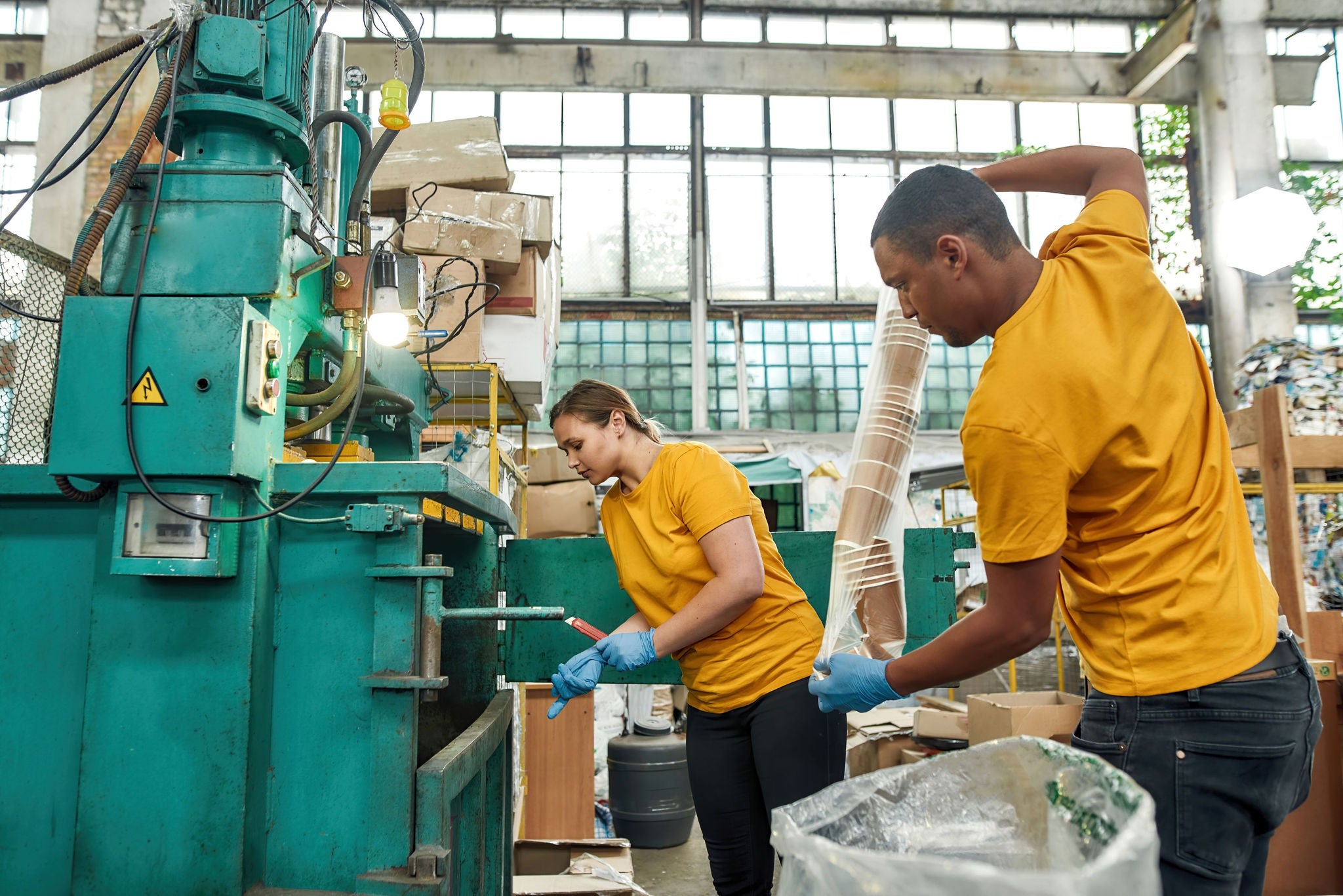
Illustration: Circular waste and materials, a bright spot in circular economy models in the period ahead
If you were to choose one sector that could become the most promising area for circular economy in Vietnam over the next 2–3 years, which would it be and why, especially in terms of commercialization potential and ability to attract finance?
In my view, two sectors have the potential to become “sweet spots” and achieve strong breakthroughs in the medium term: circular waste and materials, and heavy industry.
The waste management and circular materials sector is being strongly driven by clear market demand, particularly through the EPR roadmap set out under the 2020 Law on Environment Protection and its guiding decrees, which define recycling thresholds. As these legal obligations translate into real market drivers, projects involving recycling, material recovery, sorting technology, or resource regeneration will soon become cashflowgenerating assets - making them more attractive to both green finance and impact investors."
Industrial sectors, particularly production of cement and steel, also holds significant potential thanks to the carbon market. A pilot Emissions Trading System (ETS) is already in place for these two industries, creating a clear incentive for companies to invest in circulareconomy solutions such as coprocessing, wasteheat recovery, and emissionsintensity reduction. These circular approaches not only help reduce the use of virgin raw materials and lower emissions but can also generate carbon credit.
These sectors meet three essential conditions - large scale, steady capital needs, and strong potential for quick commercialization - making them the early quick wins of Vietnam’s circular economy transition.
From a longterm perspective, what do you expect will create a turning point for the circular economy to truly become a driver of sustainable development in Vietnam?
In the long term, I believe the real breakthrough will happen when three elements come together: a complete policy framework, transparent data, and strong private sector participation. Once the green taxonomy is widely adopted, the carbon market is fully operational, and ESG reporting standards are harmonized, businesses will have a clear pathway to pursue circular models, instead of navigating in uncertainty as they often do today.
The key point is that the capital market must be able to recognize the economic value of circularity. When affordable, longterm, and sustainabilitylinked capital flows more steadily into circular business models; when carbon credits and ESG data become recognized units of value in commercial transactions; and when global supply chains require credible proof of circular practices as a condition for continued partnership, that is when the circular economy will move beyond being a “sustainable development concept”, but truly becomes a new driver for Vietnam’s economic growth.
This article was first published in Vietnam Investment Review on
How EY can help