



EY refers to the global organization, and may refer to one or more, of the member firms of Ernst & Young Global Limited, each of which is a separate legal entity. Ernst & Young Global Limited, a UK company limited by guarantee, does not provide services to clients.
Recent Searches
How EY equipped GRO leaders to identify and challenge unconscious bias
Explore how EY teams assisted GRO to build unconscious‑bias awareness, strengthen decisions and support fair scaling.
1
The better the question
How can leaders catch unconscious bias early enough to shift outcomes at scale?
EY teams partnered with GRO to help leaders reduce unconscious bias, enabling stronger, fairer and more consistent decisions.
As a growth-oriented investment firm working closely with innovative technology companies, GRO was rapidly scaling its portfolio and evolving its People & Culture practices. With increased hiring, shifting team structures and the introduction of AI-enabled tools into HR workflows, leaders recognized the need to ensure decision-making remains fair, consistent and future-ready.
As companies grow, decisions become more distributed across the organization. Without clear decision frameworks, unconscious bias can easily shape outcomes.
Across the organization, subtle signals prompted deeper reflection. GRO acknowledged that unconscious bias could influence critical moments such as recruitment, performance reviews, opportunity allocation and leadership discussions. These were not signs of acute problems but indicators of a mature organization asking an essential question: Are our talent processes equipped to stay objective and inclusive as we grow?
Unconscious bias isn’t about intent - it’s about the blind spots we’re not aware of, especially when we must make quick judgments with incomplete information and fill in what’s missing.
Understanding unconscious bias and its impact
Unconscious bias refers to the automatic mental shortcuts our brains use to process information quickly. While natural, these shortcuts can unintentionally shape how we interpret behavior, assess potential and make decisions, especially in fast-moving, high-pressure environments. Common examples include confirmation bias (seeking information that reinforces existing views), affinity bias (favoring people who feel familiar) and the halo or horn effect (allowing one positive or negative trait to color overall judgment).
For a company like GRO, operating across a diverse portfolio of software‑driven businesses, understanding and mitigating bias becomes a strategic imperative. Left unchecked, bias can narrow perspectives, influence who advances and shape cultures in ways that ultimately hinder innovation and long‑term value creation.
By raising this question early, GRO aimed to safeguard its portfolio from a familiar risk in rapid-growth settings: that quick decisions or emerging technologies might embed unchecked patterns that persist over time. Left unchecked, these patterns can narrow perspectives, make organizations less resilient and undermine effective leadership.
To strengthen its approach, GRO worked closely with EY, drawing on a long‑standing collaboration in sustainability. Together, the teams designed and delivered an evidence‑based Unconscious Bias workshop grounded in behavioral science, real‑world cases relevant to GRO’s context and practical decision‑making tools.
EY professionals created a structured environment where leaders explored how bias shows up across the employee lifecycle and how AI can unintentionally amplify it. Through relatable scenarios and actionable frameworks, leaders gained deeper clarity on how unconscious bias operates and how to mitigate it through more deliberate, transparent and scalable decision practices.
In scaling organizations, bias rarely appears as a values problem. It usually appears where decisions need to be made fast and the criteria are unclear.
2
The better the answer
A tailored, insight‑driven approach to addressing bias in decisions
EY helped design a bespoke, insight‑driven workshop that built leaders’ capability to recognize and mitigate unconscious bias in fast‑moving organizations.
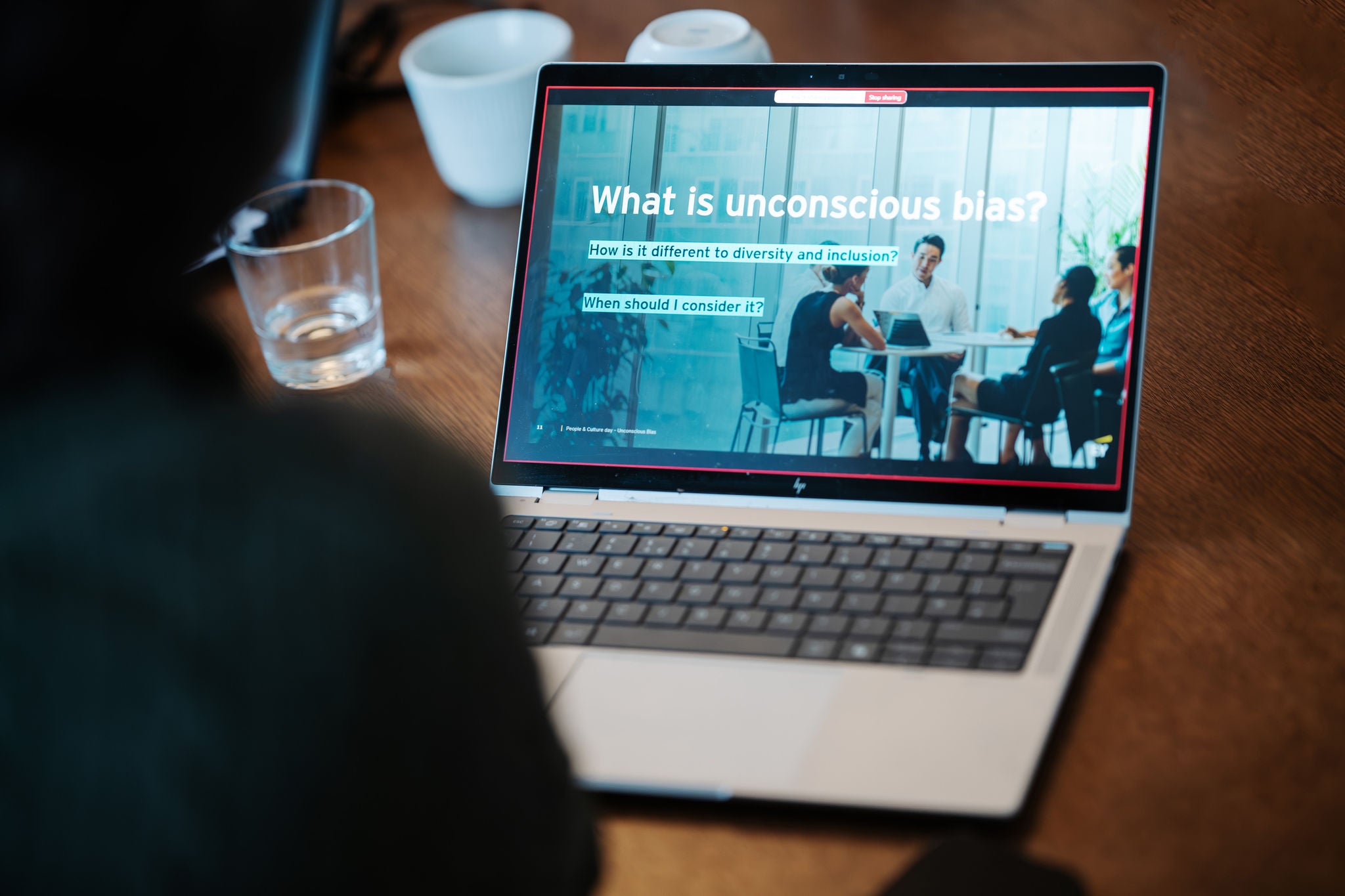
EY teams worked with GRO to design a fully bespoke unconscious bias workshop that addressed the unique challenges of scaling businesses. The workshop was built around a simple but powerful aim: helping People & Culture leaders answer two practical questions — why we have unconscious biases and what we can do about them through active allyship. It was firmly grounded in the reality of fast‑paced decision‑making, where pressure is high, choices are made quickly and instinct often takes over. Rather than delivering a generic training session, EY teams helped develop a solution specifically anchored in these challenges to equip leaders in GRO’s portfolio with practical steps to understand and mitigate unconscious bias.
EY worked with GRO to equip leaders with practical tools to recognize and mitigate unconscious bias. Through tailored insights, real‑world cases and behavioral science, the workshop strengthened fair, consistent and scalable people decisions across their growing portfolio.
The approach: From insights to a practical workshop
Leader perspectives and employee feedback revealed where bias most often occurs, forming the foundation for a targeted, real-world workshop focused on improving decision-making in day-to-day scenarios.

Step 1: Understanding the challenge through leader insights
EY teams began by conducting pre-work interviews with selected people and culture leaders across GRO’s portfolio. These conversations explored the most pressing people-related challenges, the maturity of the broader DEI agenda and the moments when leaders felt decisions were most vulnerable to bias. This essential discovery phase ensured the workshop was grounded in the real experiences of mid-sized, software-driven organizations rather than theoretical concepts. Insights from these interviews also informed the development of post-workshop guidance for the GRO ESG Handbook, making the work both immediately useful and strategically scalable.
Step 2: Capturing perceptions with a pre-workshop questionnaire
To deepen understanding, EY teams helped develop a five-to-ten-minute pre-work questionnaire for all workshop attendees. The questionnaire assessed how employees perceive unconscious bias across key decision points, including recruitment, daily management, performance reviews, strategic decision-making and career progression, providing a clear view of where bias is most likely to surface. The data also produced a maturity indicator snapshot, showing how far each portfolio company had progressed in recognizing and mitigating bias across these parameters. This enabled measurable progress to be reported in the 2025 sustainability report and created a consistent framework for tracking progress in future years.
These insights were integrated into the workshop and structured to support leadership alignment and post‑workshop reporting.
Step 3: Designing a practical, real-world workshop
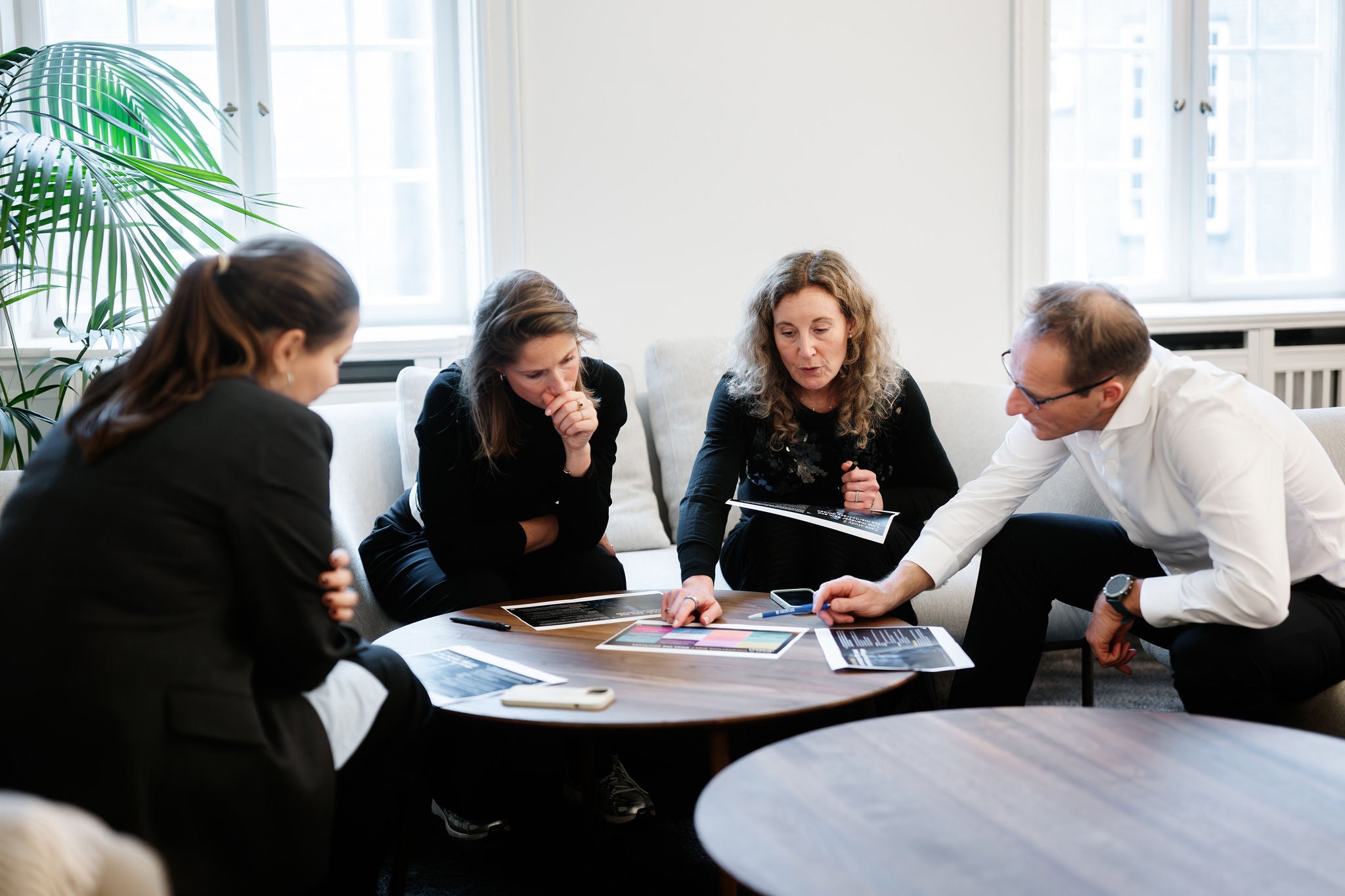
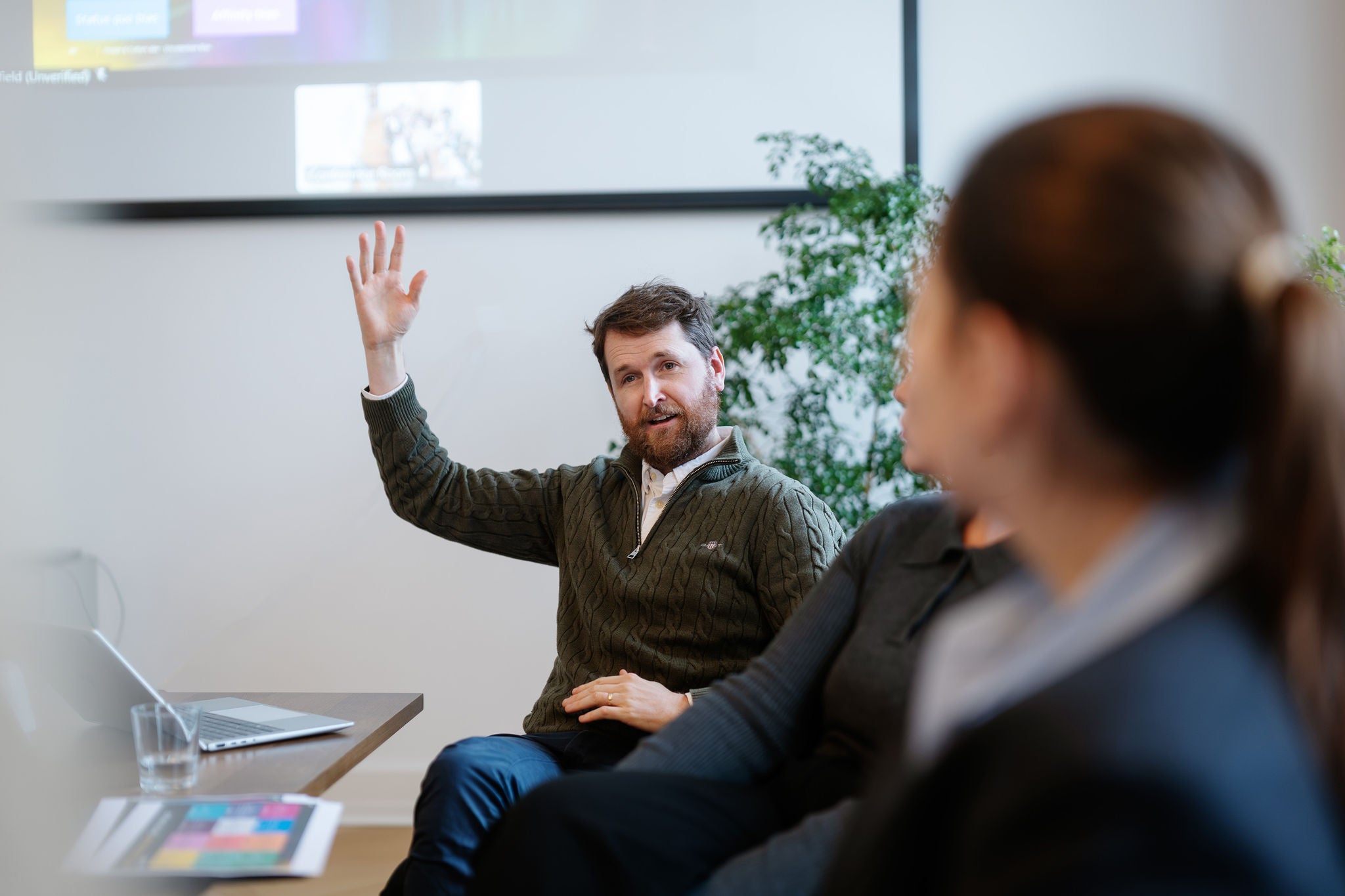
Based on these insights, EY teams crafted a bespoke half-day workshop combining behavioral science, decision-making tools and case examples drawn directly from the pre-work questionnaire. The workshop explored real scenarios to uncover how bias appears in key moments such as recruitment, performance reviews, daily management and career progression, often under time pressure or unclear criteria.
What stayed with me was how openly participants recognized that bias isn’t intentional - it’s built into everyday systems and speed, particularly in fast growing, investor led tech businesses.
Using these lived examples as a foundation, leaders and EY specialists co-created practical strategies to mitigate bias going forward, focusing on routines and decision practices that are deliberate, transparent and repeatable.
Beyond awareness: building allyship and shared language
The workshop moved beyond simply raising awareness of unconscious bias. It equipped leaders with a shared language, practical tools and clear allyship behaviors they could apply immediately in their roles. Rather than just identifying biases, leaders practiced recognizing bias in real time, slowing down pressured decisions and challenging assumptions in moments that matter, whether in hiring, evaluations, career conversations, or strategic discussions.
EY professionals also introduced simple structural routines that make decisions less vulnerable to bias, such as standardizing criteria, increasing transparency in people processes and clarifying expectations around feedback and performance. This combination of behavioral techniques and system-level practices helped teams not only spot bias but actively counter it together.
By grounding the session in real portfolio scenarios and co‑creating practical strategies, the workshop strengthened leadership alignment and built the foundation for a long‑term, bias‑aware approach to decision‑making, critical for any organization scaling quickly.
3
The better the world works
Stronger decisions that build resilient, inclusive organizations
Embedding bias‑aware leadership strengthens cultures, improves decisions and supports long‑term value for businesses and society.
While the program is still in its early stages, GRO is beginning to gain insights into how the work is resonating across its portfolio. Leaders left the workshop with clearer insights into where their people processes were most vulnerable to bias and how everyday decisions, especially those made under pressure, can be strengthened through more consistent structures. Portfolio companies have begun engaging with the approaches introduced in the workshop.
A key outcome was the portfolio-wide insight baseline created through EY teams’ pre-work questionnaire. For the first time, GRO gained a consolidated view of how different companies perceive bias, where decision-making maturity is strongest and where targeted support is needed. This benchmark is now shaping leadership conversations and guiding strategic priorities within the People & Culture agenda within GRO.
Effective leaders don’t pretend to be unbiased; they build governance and cultures that bring in diverse perspectives so blind spots don’t drive decisions.
The insights and solutions co-created during the workshop have also been integrated into the GRO ESG Handbook, enhancing practical guidance for recruitment, performance evaluation and leadership behaviors. This helps extend the impact of the workshop beyond a single event and ensures it becomes embedded in how portfolio companies design and manage their people processes.
While long-term data will develop over time, the direction is clear: the portfolio is becoming more aware of the subtle dynamics shaping decisions and is more confident in implementing fair, transparent and scalable practices. Over time, this contributes to stronger leadership pipelines, healthier cultures and more resilient organizations, outcomes that directly support GRO’s investment philosophy of responsible, long-term value creation.
Interested in hearing more?
If you would like to explore how to strengthen fair, consistent and scalable decision-making in your organization, EY can support you with:
- Building bias-aware leadership: Equip leaders with practical tools and shared language to recognize and address unconscious bias in key decisions.
- Assessing DEI maturity with Global Equality Standard (GES): Diagnose strengths and blind spots through a structured, global framework and prioritize where to act.
How EY can help
-
Sustainability and ESG services that help protect and create value for business, people, society and the world. Explore the depth and breadth of EY services and solutions.
Read more -
EY teams can help address ESG and sustainability issues, investor concerns and improve ESG performance. Find out how.
Read more -
Through enhanced corporate reporting, EY can support finance teams to meet demands for high-quality enhanced financial and nonfinancial information.
Read more