




EY refers to the global organization, and may refer to one or more, of the member firms of Ernst & Young Global Limited, each of which is a separate legal entity. Ernst & Young Global Limited, a UK company limited by guarantee, does not provide services to clients.
Recent Searches

Luxembourg, the main domicile for depositaries in the European Union, has received a positive evaluation by ESMA in its peer review on the supervision of depositary obligations, and suggests recommendations for improvement to both the CSSF and depositaries themselves.
According to the European Fund and Asset Management Association (EFAMA), Luxembourg accounts for the highest share of net assets of liquid funds (so-called UCITS) and alternative investment funds (AIFs) in the European Union, therefore it is no surprise that Luxembourg is also the number one domicile for depositaries in the region.
Depositories are independent financial institutions that safeguard the assets of investment funds and oversee fund operations to ensure compliance with relevant regulations. They are a critical component of investor protection. As such, it is common for market regulators to conduct analyses on the supervision standards of national competent authorities.
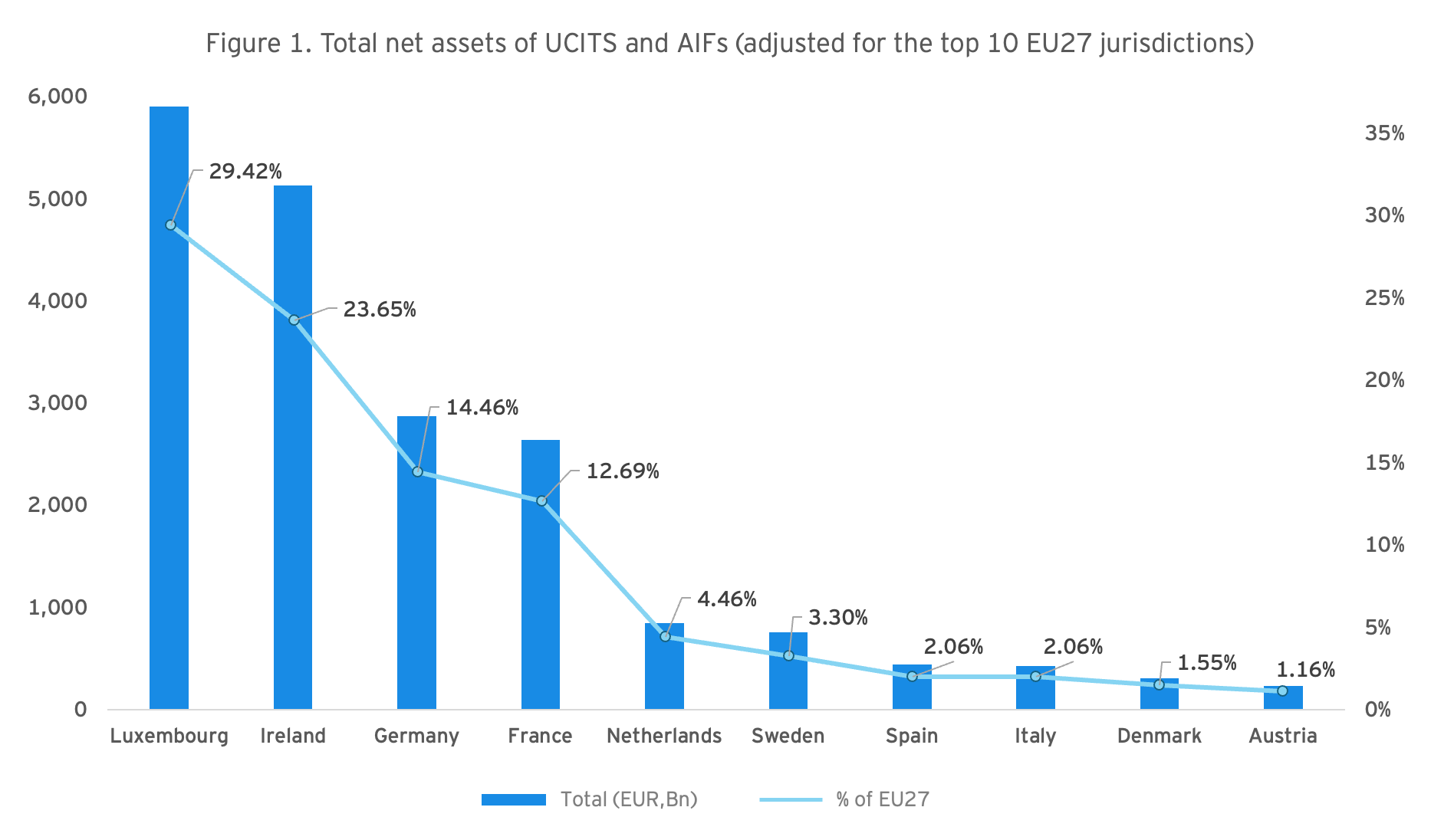
Source: EFAMA, Quarterly Statistical Release Q2 2024.
Due to the size of Luxembourg’s investment management market and level of depositary activity, the European Securities and Markets Authority (ESMA) included the Grand Duchy in its latest Peer Review on the supervision of depositary obligations, published on 17 November 2025. Results were positive.
Does Luxembourg meet ESMA expectations?
In its report, ESMA states that the Luxembourg’s financial authority, the Commission de Surveillance du Secteur Financier (CSSF), fully meets ESMA’s expectations regarding the supervision of valuation obligations and due diligence obligation on safekeeping and asset segregation , largely meets its expectations regarding the supervision of investment restrictions and leverage limits, and partially meets its expectations regarding delegation arrangements.
What did ESMA recommend to the CSSF?
Despite the positive evaluation, ESMA has provided a couple of recommendations:
- In line with the principles of risk-based supervision, where more frequent and intrusive engagement is delivered to higher impact entities, the CSSF is to consider more frequent supervisory schedules for higher risk and/or impact depositaries
- To further strengthen enforcement practices, the criteria/parameters applied in its enforcement matrix and their weightings should be reassessed to ensure the bar is not too high to take enforcement cases
- When following up on identified deficiencies, the rationale for such deficiencies should be requested in order to better identify root causes and/or potential systemic issues
- The CSSF is invited to be more proactive in monitoring the implementation of remedial actions
- The frequency of depositary control checks on valuations should be reviewed to ensure they are consistent with the valuation schedule of the UCI
- The frequency of depositary control checks on investment restrictions and leverage limits should be reviewed to ensure they are proportionate to the nature, scale and complexity of the UCI
- The current supervisory approach which allows depositaries to provide ex-post first-level controls on investment restrictions and leverage limits on a delegation basis should be reassessed
- To ensure depositaries do not delegate oversight functions, the CSSF should more thoroughly assess whether any envisaged arrangements with third-party service providers are in line with the applicable rules, through, for example, the review of sample reports, Key Performance Indicators (KPIs), contracts/SLAs and on-site inspections at large service providers
What are our recommendations to depositaries?
Depositaries should:
- Make sure the delegation arrangements are in line with the applicable regulations
- Make sure the frequency of control checks is proportionate to the UCI
- Be prepared for on-site inspections
All in all, the results of ESMA’s analysis are overwhelmingly positive for Luxembourg, reinforcing the credibility of the country’s investment fund center. That said, even top performers have room to grow. ESMA has outlined targeted recommendations for the CSSF to further strengthen its supervisory framework and for depositaries to ensure full compliance with their obligations.
How EY can help
At EY, we have dedicated specialists to support depositaries and custodians with relevant solutions:
- Valuation training and valuation managed services to support oversight duties
- Digital use cases supporting asset safekeeping and oversight duties to enhance robustness of controls, as well as process transparency and efficiency
- Regulatory compliance of outsourcing frameworks and related substance requirements for depositaries
- CSSF on-site inspection simulation and preparation
Our number one objective is to help depositaries manage their compliance requirements confidently, securely and efficiently.
Furthermore, EY facilitates exchange of best market practices through our AIF Club depositary roundtable events.
Summary
Luxembourg, the main domicile for depositaries in the European Union, has received a positive evaluation by ESMA in its peer review on the supervision of depositary obligations, and suggests recommendations for improvement to both the CSSF and depositaries themselves.

Related articles
Circular CSSF 22/806: An Outsourcing Circular to rule them all
Circular CSSF 22/806: An Outsourcing Circular to rule them all
Know Your Assets: the last update of the CSSF as a wake-up call to all sectors
Know Your Assets (KYA) is a critical process that involves identifying, assessing and managing money-laundering and terrorist financing (ML/TF) risks posed by the investments, to which professionals of the financial sector, in scope of the law of 12 November 2004 on the fight against money laundering and terrorist financing, as well as professionals of the insurance sector, are exposed. The KYA practice is essential not only for compliance with regulatory requirements but also for effective ML/TF risk management.