


EY refers to the global organization, and may refer to one or more, of the member firms of Ernst & Young Global Limited, each of which is a separate legal entity. Ernst & Young Global Limited, a UK company limited by guarantee, does not provide services to clients.
Recent Searches
AI is turning data centers into strategic infrastructure, making power and supply chain resilience critical to future growth.
In brief
- AI data centers are evolving from technical assets to strategic infrastructure that underpins business growth, service scalability and operational resilience.
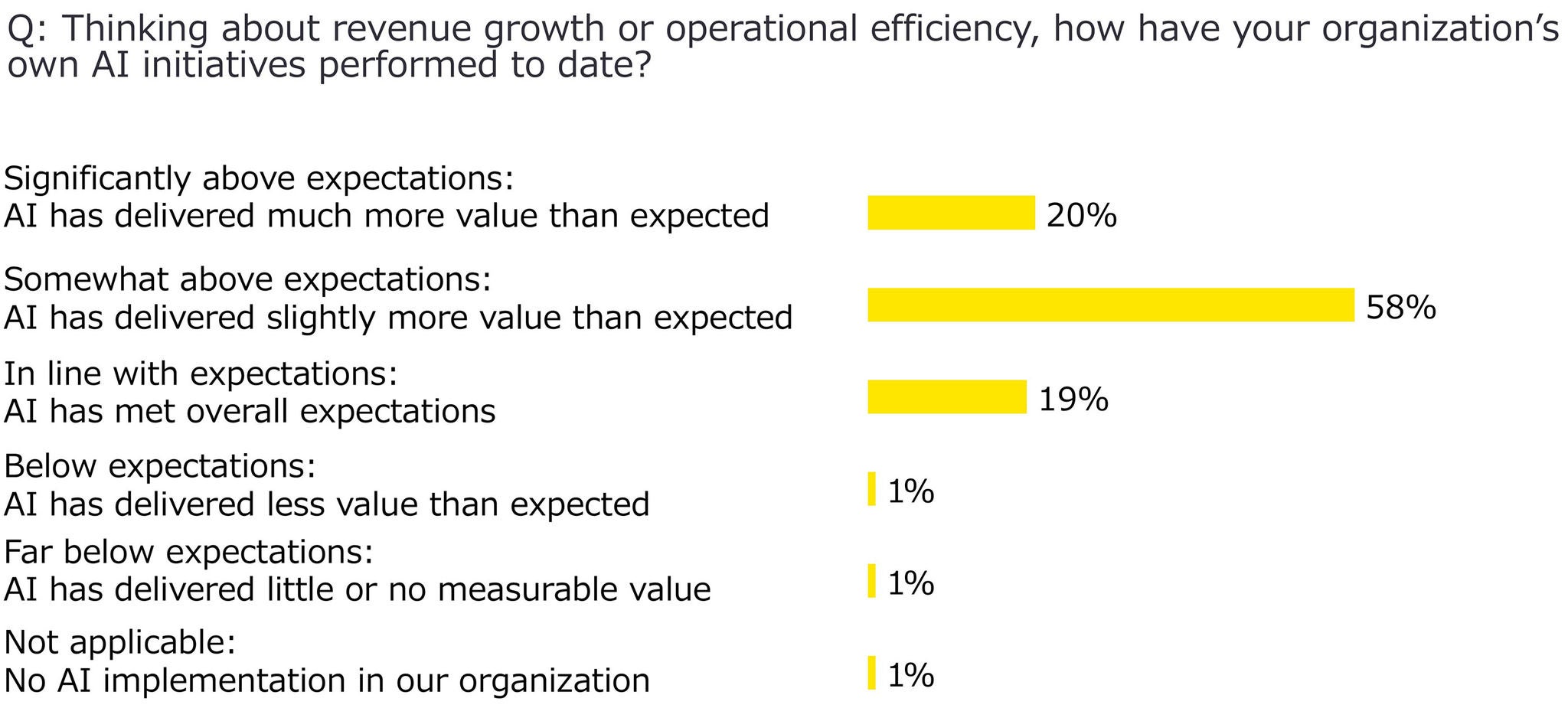
- AI is already delivering value: 78% of CEOs say AI initiatives have performed above expectations, including 20% who report even greater returns.
- As AI moves from experimentation to enterprise-scale deployment, global data center electricity demand could more than double by 2030, making access to power, cooling, compute resources, long-lead equipment and supply chain resilience critical to competitiveness.
AI is redefining the role of data centers
AI is rapidly transforming data centers from backend IT facilities into critical engines of business growth.
Data centers were long perceived and designed to support enterprise systems: hosting servers, storing data, supporting enterprise applications and enabling connectivity. Today, that role is changing. As organizations scale AI across products, operations and customer experiences, data centers are becoming strategic infrastructure with a direct impact on speed to market, cost competitiveness and the ability to create new sources of value.
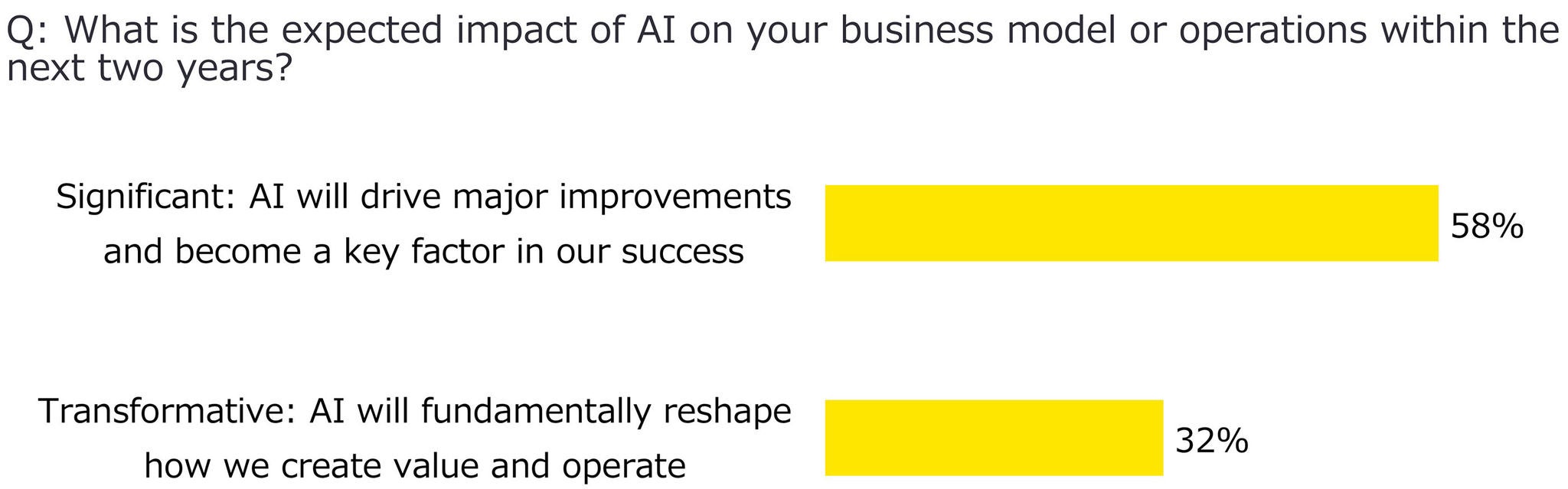
This shift is already evident to C-suite executives. The EY-Parthenon CEO Outlook Survey found that 58% of CEOs expect AI to be a major growth engine over the next two years, while 32% believe AI will fundamentally reshape operations as they scale AI technologies across the enterprise. Yet as ambition accelerates, a new constraint is emerging: the ability to build and operate AI-ready infrastructure at scale.
The challenge is no longer simply about adding capacity. It is about securing the resources that make AI growth possible: reliable power, advanced cooling, specialized hardware and resilient supply chains. These factors are all interconnected and, increasingly, decisive.
In this environment, data center strategy is no longer an IT concern.
It is a business-critical capability where access to power, infrastructure and supply chain resilience can determine which companies succeed or fail.
AI is a major driver of business growth and transformation
For data centers, the implication is significant. AI workloads require high-density compute, advanced cooling, reliable network connectivity and stable power supply. Large-scale model training, fine-tuning and inference all create new demands on infrastructure. As companies embed AI into products, workflows, customer interfaces and decision-making processes, the ability to secure and operate AI-ready data center capacity becomes a direct business issue.
The scale of this shift is already visible in energy demand forecasts. The International Energy Agency*1 estimates that global electricity demand from data centers could more than double from 415 terawatt-hours in 2024 to around 945 terawatt-hours by 2030, with AI identified as a key driver of this growth. This would make data centers not only a digital infrastructure priority, but also an increasingly important part of energy and capital allocation strategies.
In other words, data center strategy is becoming business strategy and, increasingly, power strategy.
AI demand will continue because companies are seeing results
The case for AI-ready infrastructure is not based only on future expectations. It is supported by early results.
In the same EY-Parthenon survey, most CEOs report that their AI initiatives have met or exceeded expectations: 20% of CEOs consider AI has significantly exceeded expectations, 58% say it has delivered somewhat above expectations, and 19% place it in line with expectations. In total, 78% of CEOs report above-expectations outcomes, while a negligible percentage report results below expectations.
AI initiatives already deliver above expectations
This is important for data center strategy because successful AI initiatives tend to create more demand for AI infrastructure. When companies see AI generating value, such as productivity gains, faster decision-making, improved forecasting, automation, enhanced customer experience or new digital services, they are more likely to expand use cases and scale deployment.
That scaling will increase demand across several areas:
- Compute capacity for model training, tuning and inference
- Power and cooling to support high-density workloads
- GPUs and other specialized AI hardware
- Network connectivity and low-latency infrastructure
- Operational resilience for mission-critical AI services
- Regional capacity to meet customer, regulatory and data-sovereignty requirements
Data center construction is not the only constraint on growth
The rapid expansion of AI demand is creating a paradox: the market opportunity for data centers is growing but the ability to supply AI-ready capacity is more constrained.
The expansion of AI-ready data center capacity is no longer a construction issue. As AI workloads become more power-intensive and operationally demanding, the pace of growth is increasingly governed by a broader set of dependencies, ranging from grid access and cooling capacity to specialized equipment, AI hardware availability, permitting timelines and local stakeholder engagement.
These dependencies do not operate in isolation. A site may be commercially attractive and physically available but still constrained by the timing of a grid connection. A project may have a viable power roadmap but face delays in procuring transformers, high-voltage switchgear or other critical electrical infrastructure. Even when power and facilities are secured, deployment can still be slowed by limited access to GPUs and other AI accelerators. In other cases, the technical design may be feasible, but permitting requirements, environmental considerations or community engagement can extend the path to operational readiness.
As a result, the critical question for AI-era data center strategy is shifting from “How quickly can we build capacity?” to “Do we have the ability to orchestrate all the conditions required for AI-scale operations?” Companies that manage these dependencies in an integrated way will be better positioned to convert AI demand into scalable, resilient and commercially viable infrastructure.
Power availability is becoming a defining constraint in the next phase of data center growth. AI-ready facilities require electricity supply that is not only large and reliable, but also available within commercially viable timelines. In major data center hubs, grid connection capacity and time-to-power are determining project feasibility, influencing where companies build, how quickly they can scale and when AI-enabled services can launch. This changes the location strategy. Historically, site selection often focuses on land, connectivity, cost and customer proximity. In the AI era, companies must also ask:
- When can power be delivered?
- Is the grid able to support high-density AI workloads?
- Are there sufficient cooling resources and energy infrastructure?
- Can long-lead electrical equipment be secured in time?
- Are permitting and local approvals manageable?
- Does the location support future expansion beyond the initial deployment?
For TMT companies, hyperscalers, cloud providers, digital platforms and AI-intensive enterprises, these questions directly affect business outcomes. Delays in data center readiness can delay AI service launches, limit regional availability, increase operating costs and reduce the ability to capture market opportunities.
Power is a strategic asset
AI is also changing how companies think about energy.
Power is no longer only an operating cost. It is becoming a strategic asset that determines growth capacity. Companies that can secure reliable, scalable and cost-effective power are better positioned to expand AI services. Companies that cannot will find that their AI ambitions are constrained by availability of infrastructure.
Power is moving from an operating input to a strategic growth enabler. As AI-ready data centers require larger and more reliable energy supply, hyperscalers are pursuing long-term power agreements and exploring new energy sources to secure future capacity. These moves may not solve near-term time-to-power constraints, but they show that energy strategy is becoming central to AI infrastructure expansion.
For global companies, this requires a portfolio approach to power. Short-term actions can include prioritizing locations with higher connection certainty, improving energy efficiency, optimizing workloads and flattening demand peaks. Medium- to long-term actions include Power Purchase Agreements (PPA), renewable energy procurement, participation in new power developments and closer coordination with utilities and grid operators.
The objective goes beyond buying electricity. It is to ensure that power availability, cost, reliability and sustainability are aligned with the company’s AI growth roadmap.
Supply chain resilience is central to AI infrastructure strategy
Power is only part of the challenge. AI-ready data centers also depend on complex supply chains.
Transformers, high-voltage switchgear, cooling systems, backup power systems, networking equipment and GPUs can all become bottlenecks. Critical electrical infrastructure is increasingly shaping the pace of AI-ready data center deployment. Delays in transformers, high-voltage switchgear and other long-lead power equipment have an immediate effect on construction schedules, capital efficiency and the timing of AI-enabled service launches. For companies scaling AI infrastructure, traditional procurement models are no longer sufficient. Buying equipment project by project can expose companies to shortages, price volatility and schedule risk. Instead, companies may need to shift toward:
- multi-year purchase/supply agreements
- earlier procurement of long-lead items
- design standardization across facilities
- modular and prefabricated data center components
- multi-supplier strategies for critical equipment
- closer coordination between business planning, engineering, procurement and finance.
This has particular importance because AI demand can move faster than physical infrastructure. Models, products and customer use cases can scale in months, while grid connections, data center construction and electrical equipment procurement may take years. As a consequence, the gap between digital ambition and physical infrastructure readiness becomes a strategic risk.
Companies need a power and supply chain control tower
The AI infrastructure challenge is not only technical. It is also organizational.
In many companies, the components of data center readiness are managed by different functions. Technology teams plan compute demand. Real estate teams manage sites. Procurement teams purchase equipment. Finance teams determine capital allocation. Sustainability teams manage energy and emissions. Legal and regulatory teams are responsible for permitting. Business units define AI service priorities.
But AI-ready infrastructure requires collaborative decision making.
This is why companies should consider building a power and supply chain control tower, which is an integrated decision-making mechanism that connects power availability, equipment procurement, compute allocation, permitting, capital planning and business launch priorities.
A control tower provides visibility of:
- available and forecast power capacity by site and region
- grid connection timelines and risks
- long-lead equipment status and supplier constraints
- GPU and AI hardware allocation priorities
- permitting and local approval progress
- cooling and energy-efficiency requirements
- dependencies between infrastructure readiness and AI service launches
- capital commitments and expected business impact
The objective is to move from fragmented infrastructure management to integrated growth enablement.
A control tower helps companies to identify bottlenecks earlier, be transparent about trade-offs and align infrastructure investments with business priorities. It also helps executives to compare various scenarios: whether to accelerate a site, shift workloads to another region, reserve supplier capacity, adjust service launch timing or pursue alternative power solutions.
From capacity planning to growth platform management
AI-ready data center strategy requires a different management mindset.
Previously, companies could treat data center expansion as a capacity planning exercise: forecast demand, secure space, procure equipment and operate efficiently. In the AI era, that approach is no longer viable.
The relevant question has shifted from “How much capacity do we need?”
to “What infrastructure conditions must we have to scale AI-enabled growth?”
It requires companies to manage data centers as a growth platform. This means linking infrastructure decisions to business outcomes such as:
- Speed to market for AI-enabled products
- Regional service availability
- Customer experience and service-level commitments
- Operating cost competitiveness
- Capital efficiency
- Resilience and business continuity
- Sustainability and energy transition goals
- Long-term and strategic flexibility
Companies that do this are better positioned to capture AI-driven growth. If they do not, their AI strategies risk being constrained not by algorithms but by power, equipment, permitting and execution capacity.
C-suite decisions
To compete in the AI era, business leaders should consider a five point action plan.
- Reframe data centers as strategic infrastructure
Data centers should be treated as more than technical facilities. They are business-critical infrastructure that supports growth, customer experience and resilience. - Make power availability a core strategic planning input
Power access, grid connection timelines, energy cost, energy mix and sustainability implications should be integrated into data center and AI investment decisions at the earliest opportunity. - Secure long-lead supply chains at an early stage
Companies should identify critical equipment bottlenecks and consider supplier reservations, standardization, modular design and multi-supplier strategies. - Link AI demand planning with infrastructure readiness
AI use case roadmaps should be connected to data center capacity, GPU availability, power readiness and regional deployment plans. - Establish an integrated power and supply chain control tower
Cross-functional governance is needed to connect technology, procurement, real estate, energy, finance, sustainability, risk and business leaders around a single infrastructure roadmap.
Summary
Discover how AI is transforming data centers into critical infrastructure, where power availability, supply chain resilience and integrated planning determine scalability, cost efficiency and competitive advantage.