





EY refers to the global organization, and may refer to one or more, of the member firms of Ernst & Young Global Limited, each of which is a separate legal entity. Ernst & Young Global Limited, a UK company limited by guarantee, does not provide services to clients.
Recent Searches

In keeping with what has become an almost seasonal pattern in the Luxembourg’s fund industry, the Commission de Surveillance du Secteur Financier (CSSF) closed the year with the issuance of the Circular 25/901, bringing substantial consolidation and modernization of the supervisory framework applicable to Part II UCIs, SIFs and SICARs. Alongside the Circular, the CSSF released a compilation of key concepts and terms used in fund industry, a non-binding lexicon designed to harmonize market vocabulary in alternative investment strategies, deal structures and liquidity mechanics. Together, these documents:
- Enhance clarity, consistency and predictability for fund promoters and IFMs
- Streamline previously fragmented requirements
- Provide a more transparent regulatory framework
- Update the current investment and borrowing limits
- Adopt a flexible approach correlating the risks incurred with the investor profile
- Circular 25/901 entered into force on 19 December 2025 and includes grandfathering rules.
Application scope
The Circular applies to Part II UCIs, SIFs and SICARs, except those which are: an ELTIF, an MMF, an EuVECA, an EuSEF, or a closed-ended fund or compartment authorized before 19 December 2025. Note that the Circular does not call into question the rules adopted by the funds or compartments authorized by the CSSF before that date. Moreover, the CSSF may grant further derogations based on duly justified circumstances.
The circular is intended for alternative investment funds that are subject to CSSF authorization; as such, RAIFs are not covered.
Key regulatory topics
1. Diversification & risk-spreading
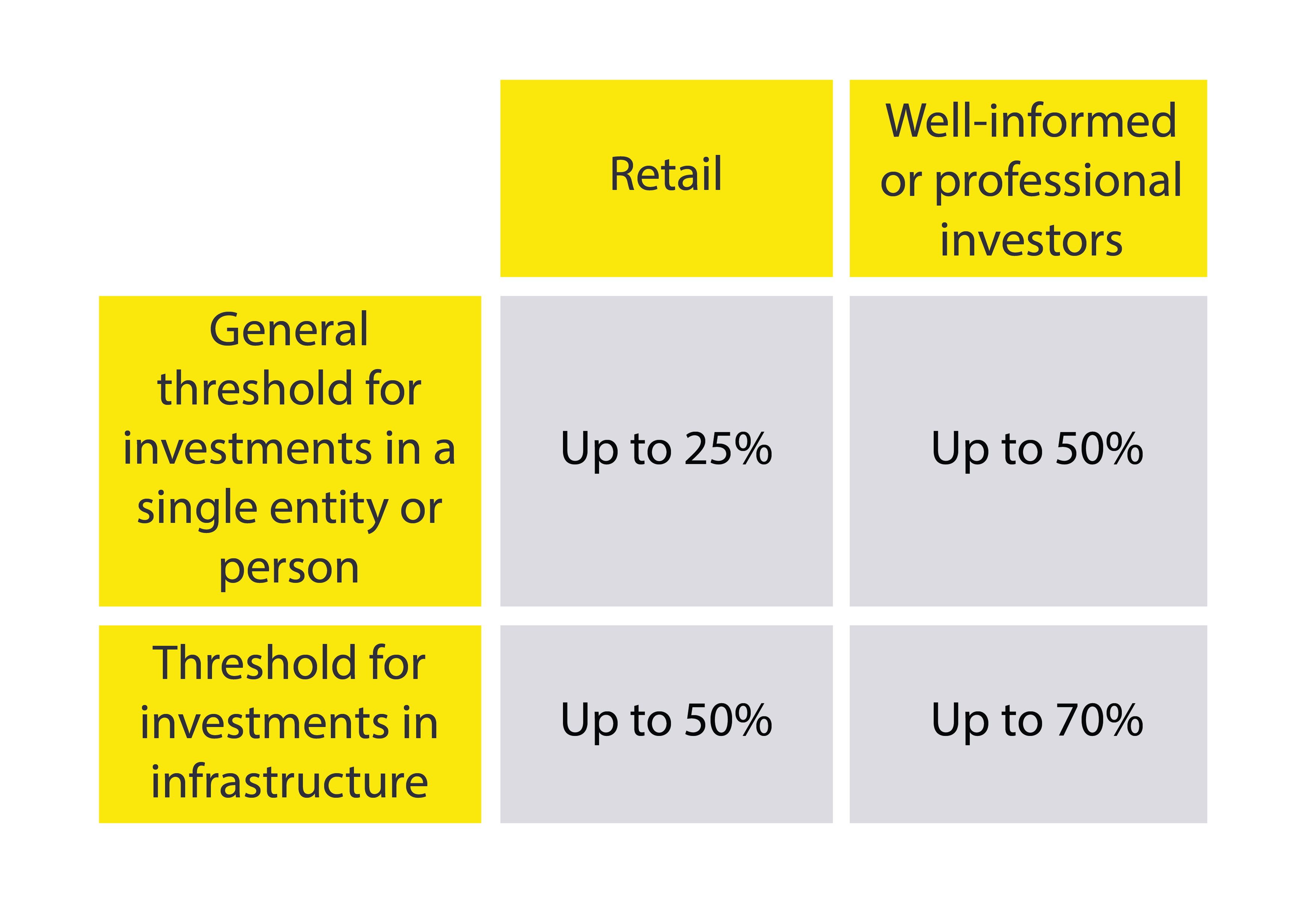
Circular 25/901 introduces amendments to investment limits, increasing flexibility considering the different types of investors and assets:
The Circular also introduces a more pragmatic and strategy-driven approach to temporary diversification exemption during the ramp-up period, as follows:
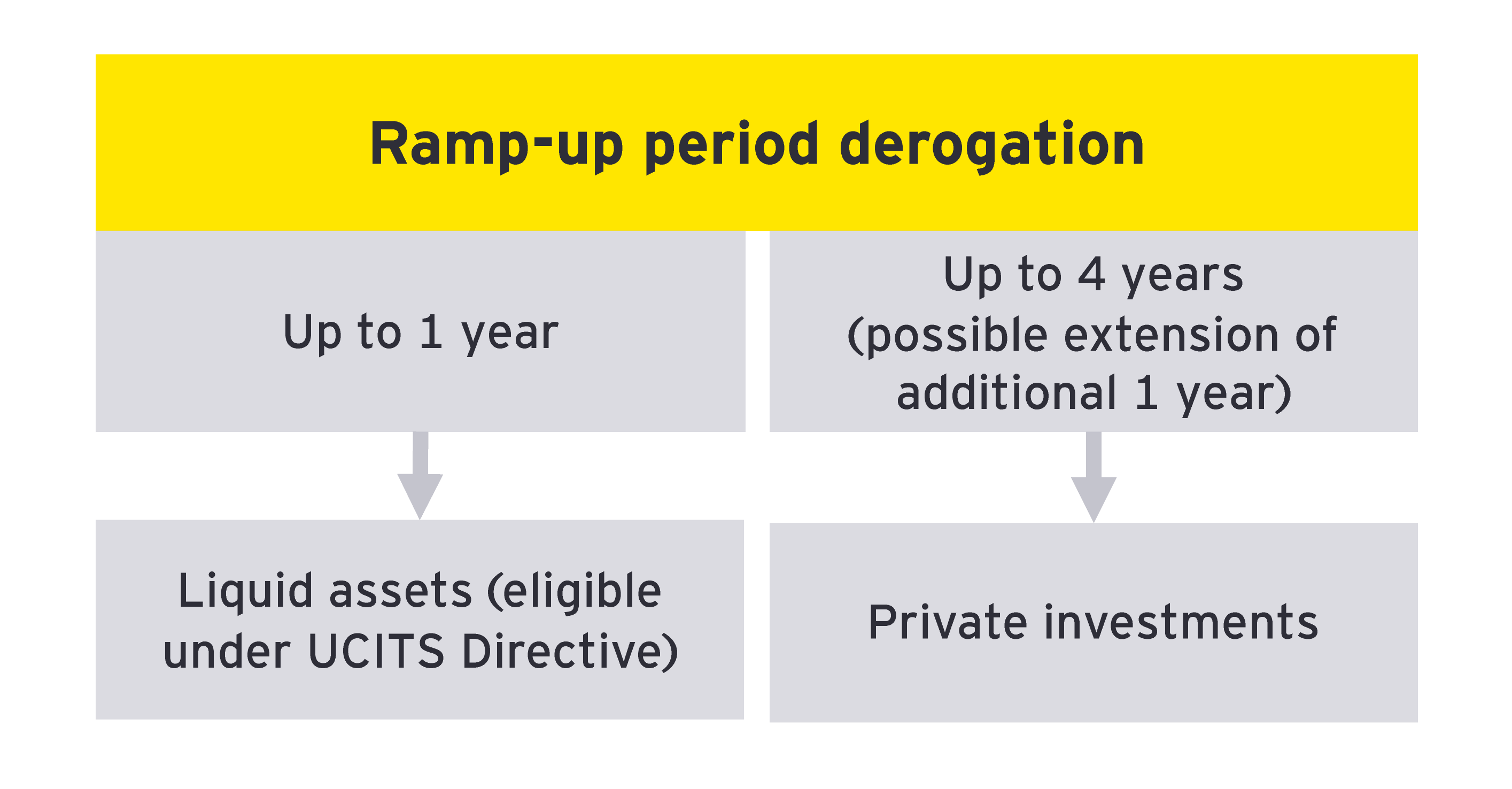
Overview of the investment limits rules under Circular 25/901
2. Borrowing & leverage rules
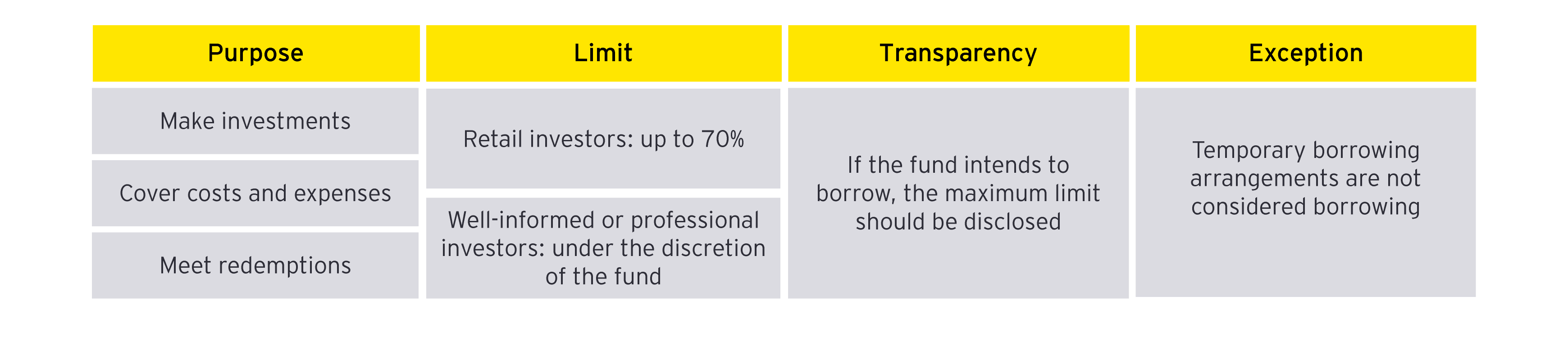
The Circular sets clearer rules in terms of borrowing, including specific thresholds, transparency requirements and exceptions:
- Temporary borrowing fully covered by investor commitments are not considered as borrowings (same applies to debt issuances linked to the performance of the assets in portfolio)
- Retail investors: Borrowing limit capped at 70% of the assets or commitments
- Well-informed or professional investors: the limit is under the discretion of the fund
- Leverage is assessed consistently with the borrowing framework
Overview of borrowing rules
3. Transparency rules
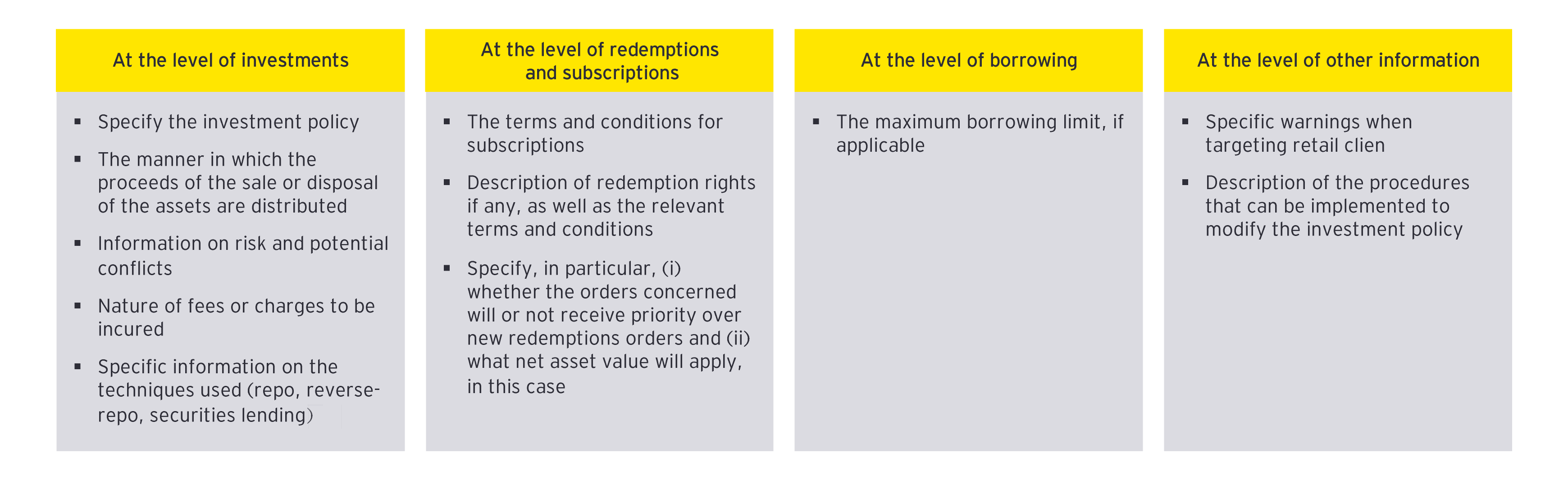
Circular 25/901 sets clearer transparency rules at the level of investments, of redemptions and subscriptions, of borrowing, and other information.
Overview of the transparency requirements
4. Techniques for portfolio management
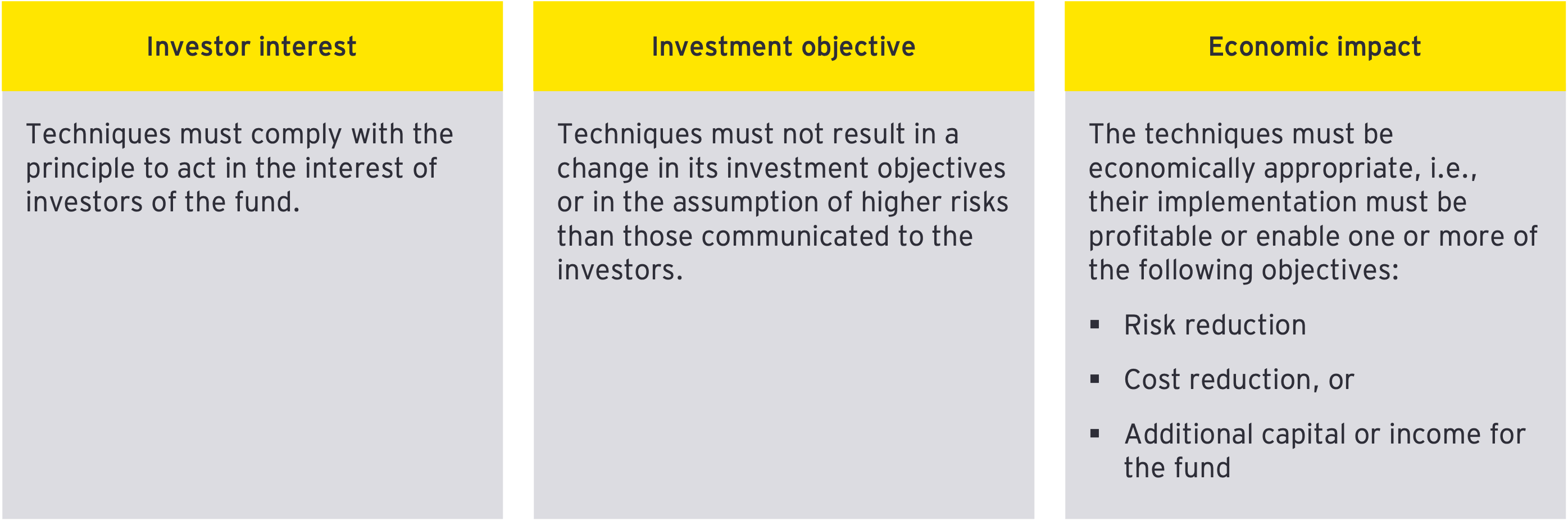
Circular 25/901 clarifies the conditions in which portfolio management techniques (e.g., repurchase or reverse repurchase agreements, securities lending) may be used, as follows:
5. What changes for SICARs
The Circular 25/901 modernizes the SICAR framework by replacing Circular 06/241 and clarifying how “risk capital” must be assessed in practice. The Circular formalizes the three core criteria:
- Development objective: Value creation steps at the level of the tarhet entity must be demonstrated
- High risk profile: The risks associated must go beyond mere market risk
- Exit strategy: The objective of SICAR consists, in principle, in acquiring financial assets in order to resell them with a profit after holding period. The investment must be limited in time.
Moreover, it provides specific restrictions in terms of risk capital, including securities, cash, debt, derivative instruments, real estate assets, infrastructure assets, commodities, UCIs, other investment vehicles, investment through intermediary vehicles. Circular 06/241 did not specify such exclusions.
Practical insights
Circular 25/901 introduces an updated concise framework that goes beyond mere compliance: it reshapes how Luxembourg fund managers can approach investment strategies. By clarifying investment limits, defining borrowing and leverage policies, and strengthening transparency requirements, the Circular aims to enhance investor confidence and market integrity. These changes are not restrictive; they create room for innovation, allowing managers to design tailored ramp-up and wind-down periods, explore flexible financing structures, and differentiate their offerings through clearer disclosures.
For forward-thinking managers, this is an opportunity to position their funds as more transparent, resilient, and investor-centric. Enhanced clarity on risk capital and leverage opens doors to attract both retail and sophisticated investors seeking well-governed vehicles. By embracing these principles proactively, managers can turn regulatory evolution into a competitive advantage, reinforcing Luxembourg’s reputation as a hub for alternative investments.
Key recommendations:
- Review and update fund documentation: Clearly define investment limits, borrowing policies, and disclosure practices to align with the Circular while highlighting strategic flexibility
- Implement robust transparency frameworks: Go beyond minimum disclosure — provide detailed insights on portfolio composition, leverage, and risk management to build investor trust
- Leverage ramp-up and wind-down flexibility: Use permitted periods strategically to optimize portfolio deployment and exit timing without breaching investor expectations
- Enhance risk capital assessment processes: Establish internal criteria and governance to ensure investments meet the Circular’s definition of risk capital, reinforcing credibility
- Communicate opportunities to investors: Position these regulatory changes as a value proposition — emphasize improved governance, flexibility, and long-term stability in marketing materials
How EY can help
EY offers comprehensive support to help organizations navigate the regulatory landscape. At the heart of this support is EY Regulatory Compliance Manager (EY RCM), a platform designed to address the challenges of regulatory compliance across wealth and asset management.
Beyond technology, EY offers a dedicated knowledge team of regulatory experts who provide guidance and insights on all regulatory topics for wealth and asset management. This team ensures you have access to the latest interpretations, best practices, and strategic advice to strengthen your compliance framework.
EY Law Luxembourg advises sponsors and fund managers throughout the entire fund lifecycle beginning with the structuring and establishment process, helping identify the optimal structure tailored to specific investor needs and strategic objectives. EY Law Luxembourg’s expertise covers both regulated (UCITS, Part II UCIs, SIFs, SICARs) and unregulated (RAIFs/AIFs) vehicles, master-feeder structures, parallel fund structures and incentivization/carry vehicles, across all asset classes (PE/VC/RE/debt/infrastructure) and investment strategies (liquid/illiquid).
Together, EY RCM, EY’s regulatory specialists and EY Law Luxembourg empower you to stay ahead of regulatory changes, reduce compliance risk, and make informed decisions with confidence.
Summary
In keeping with what has become an almost seasonal pattern in the Luxembourg’s fund industry, the Commission de Surveillance du Secteur Financier (CSSF) closed the year with the issuance of the Circular 25/901, bringing substantial consolidation and modernization of the supervisory framework applicable to Part II UCIs, SIFs and SICARs.
Related articles
Can Luxembourg once again lead the way in shaping European fund management with AIFMD II?
AIFMD laid the groundwork for Luxembourg’s emergence as a major player in the alternative investment space. The Directive’s implementation was driven by forward-thinking leaders who recognized its potential and rallied to shape a thriving ecosystem. Moving forward, what are the changes that AIFMD II puts forward, and how will it impact fund managers?
AIFMD 2.0: what it means for annex IV reporting
Executive summary. AIFMD 2.0 introduces – amongst others - significant changes to supervisory reporting under Article 24, reshaping the Annex IV content, format, and even reporting frequency and timing through new EU level technical standards. These changes will require AIFMs to manage more granular data, implement stronger governance, and adapt to harmonized processes
The new AIFMD Directive’s roll-out unpacking main impact on IFMs
The proposal reviewing AIFMD and the UCITS Directive (the new Directive) was adopted by the Council on 26 February 2024. EY Luxembourg’s Laurent Capolaghi, Private Equity Leader, and Vincent Remy, Private Debt Leader, highlight some of the main changes impacting investment fund managers.