Recent Searches

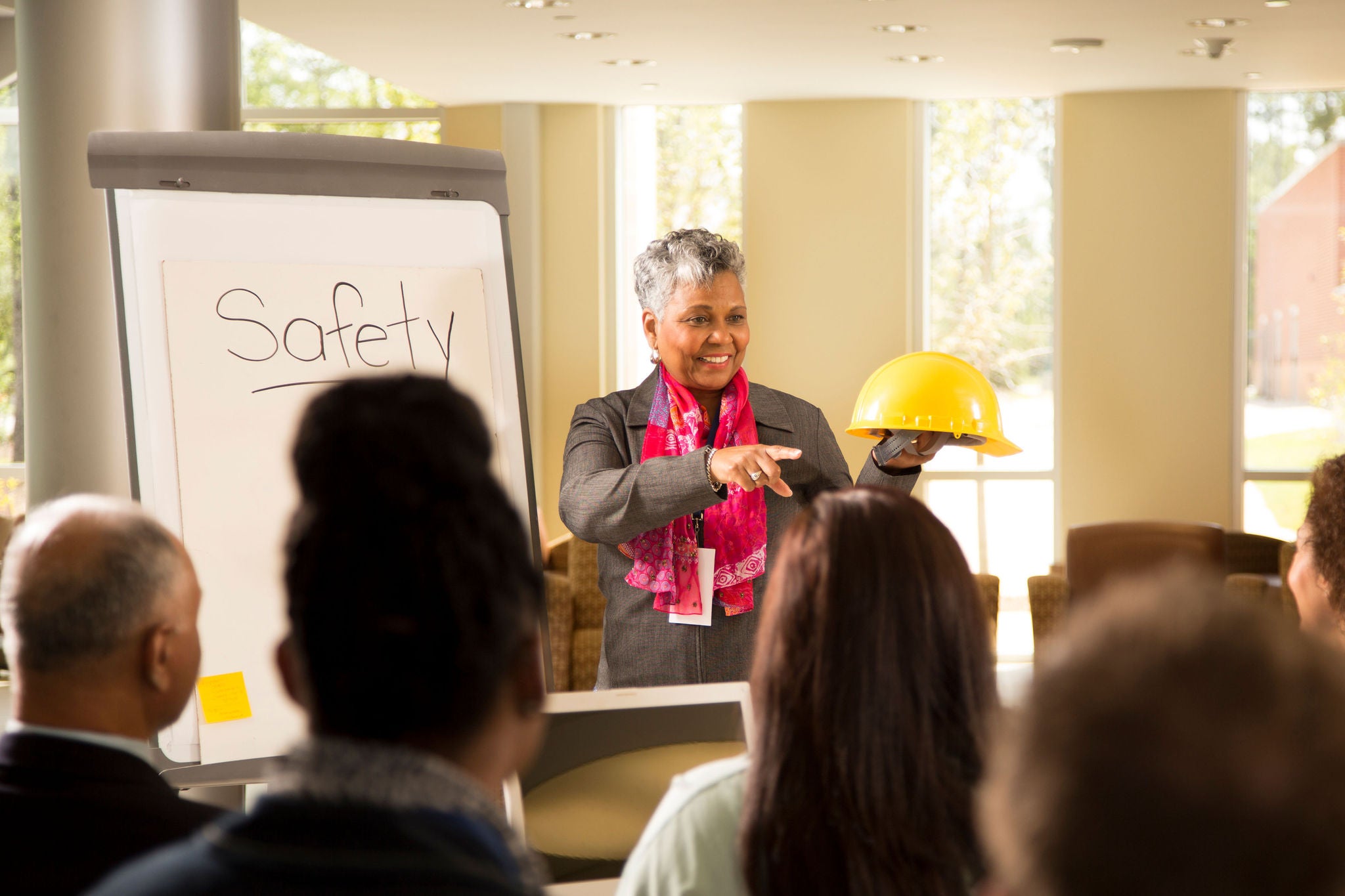
Is it time to reassess your EHS capabilities?
As humans and machines start working side-by-side, traditional environment, health and safety (EHS) models no longer capture every risk.
For decades, the EHS profession has depended on highly regarded and effective models to understand the interaction between systems, people and equipment in order to build a safety culture. The most well-known models are:
1. Bradley Curve
2. HSE UK Safety Culture Maturity Model
3. Hudson Safety Maturity Model
However, the Bradley Curve is more than 20 years’ old, while the Hudson Safety Maturity Model was introduced over a decade ago. In other words, these models were developed when we were just getting acquainted with the internet – when well-being was rarely prioritized and people rarely spoke about mental health.
Yesterday’s thinking won’t help us with tomorrow’s challenges
Fast forward to 2020 and the notion of work has changed, with many jobs now requiring humans to interact with Artificial Intelligence (AI) and robots. As emerging technologies become infused across the workplace, traditional tools of knowledge management are giving way to analytics, algorithms, big data and automation. Rigid organizational models that often inhibit the free flow of ideas and information are being discarded, and replaced with agile teams and cross-disciplinary collaboration.
As a result, our accepted models for safety culture no longer align to leading practice or the latest research on safety and people engagement. They don’t address an organization’s future needs around health, automation and technology and other factors. They don’t consider the growing impact of globalization, diversity, flexible work or of changing demographics. People are working longer and delaying retirement. We will soon have multiple generations working side-by-side.
In a transformed workplace, with new ways of working and new measures of employee well-being, we need to rethink our existing EHS models and their application. This means taking the best of what we know works and augmenting it to meet the realities of digital business models.
According to EHS Partner Andi Csontos, who has worked alongside Professor Patrick Hudson (who developed the Hudson Safety Maturity Model) for a decade, it also requires a different focus. She says, “In my experience, organizations currently place very little emphasis on two key elements of Hudson’s model: increasing trust and informed-ness.” Yet, when efforts are focused on shared trust and knowledge flow, EHS outcomes not only improve but become self-sustaining.
Knowledge needs to flow from the top
Leaders – not just the EHS function – are vital to an organization’s EHS success. Their actions and priorities underscore EHS culture. To understand how to play their part, leaders should seek a method to assess their organization’s current EHS culture and capability against future needs. Only then, can they set a more progressive path forward – a path that is relevant for today’s operational context and focused on the future of EHS.
From experience in supporting hundreds of EHS functions, EY teams believe that there are seven levers that can be drawn on to build shared trust and support knowledge flow:
- Systems and structure – Do you have robust and integrated EHS systems and policies that are easily understood and help people to get on with business as usual safely, efficiently and effectively?
- Strategy – Do you have a high-level plan that establishes the criteria for creating, monitoring and measuring EHS success?
- People – Does your workforce have the right culture and the necessary capability, competency, capacity and motivation to manage EHS risk?
- Risk and opportunity – Does your management framework identify EHS risk and methods for its mitigation, as well as opportunities to improve workers’ health and safety?
- Digital – How are you using digital technology and analytics to make better, quicker and smarter decisions to achieve organizational objectives and improve EHS performance?
- Leadership and governance – What actions do your leaders need to take to develop a positive and efficient work environment, and build and sustain a positive EHS culture?
- Assurance and reporting – Do your oversight and decision-making frameworks align board members, senior executives and the EHS leadership to effectively control EHS risk?
By proactively and strategically capitalizing on each of these levers, organizations can establish trust and knowledge flow. In turn, this can result in a better aligned organization that can continuously adapt in times of change and continue to move towards EHS goals.
Benefits of future-facing EHS maturity
When thinking about everyday health and safety concepts, there are seven areas that organizations should consider.
As organizations improve their EHS maturity along more forward-thinking lines, they may experience:
- Social benefits: Increased EHS value in the social bond created by a workforce where people trust each other, their managers and leaders
- Legal benefits: Decreased EHS legal risk by applying an evidence-based three lines of defense framework to monitor operational risk, systems implementation and design effectiveness
- Commercial benefits: Reduced EHS related costs, stronger reputation and improved efficiency by harnessing technology
Is it time to reassess your EHS capabilities?
Certain services and tools may be restricted for EY audit clients and their affiliates to comply with applicable independence standards. Please ask your EY contact for further information.
Summary
The notion of work is rapidly changing with many jobs now requiring humans to interact with AI and robots. Just as workplaces are becoming increasingly augmented with emerging technologies, traditional knowledge management tools are also giving way to analytics, algorithms, big data and automation. Rigid organizational models that often inhibit the free flow of ideas and information are being discarded and replaced with agile teams and cross-disciplinary collaboration.

How EY can help
-
EY EHS professionals can help your business to transform your EHS management. Learn more.
Read more