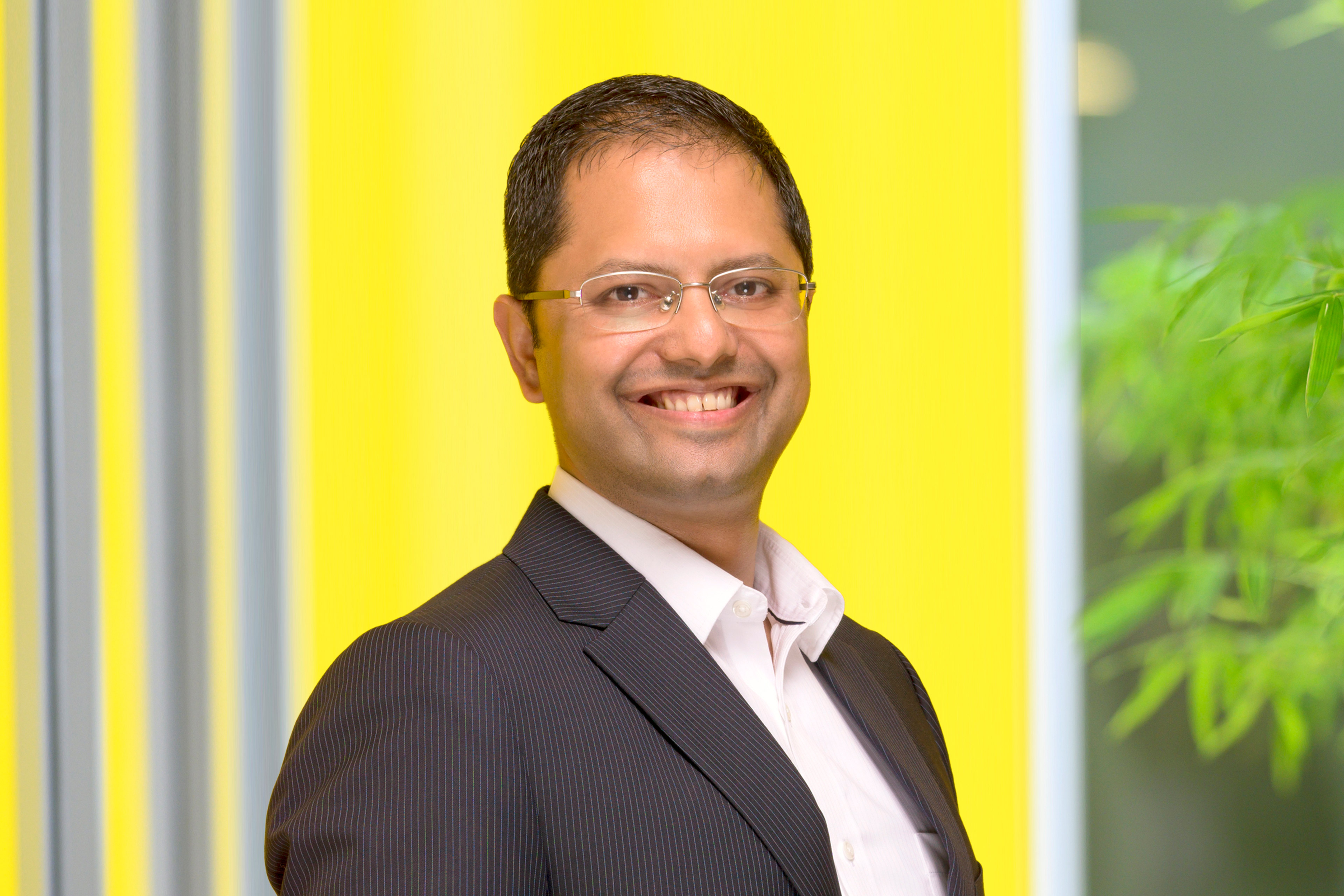
Luke Pais
Welcome to Money Multiple. Sustainability is rapidly becoming a cornerstone in private equity, shaping not only our firm's managed and growth portfolio companies, but also where they choose to invest. With increased attention on environmental, social, and governance issues, PE firms are facing rising expectations from investors, regulators and consumers to embed sustainability into their strategies. This shift isn't just about compliance; it's creating opportunities for new business models and investments in areas like renewable energy, circular economy innovations and sustainable agriculture.
Private equity is channeling capital into companies and technologies that support a more sustainable future, fostering impactful change across industries. Beyond green projects, firms are implementing ESG (environmental, social and governance) metrics and reporting standards to track and drive sustainable outcomes across their portfolios. As sustainability becomes central to value creation, the question arises: How can private equity maximize impact and returns while adapting to these new models?
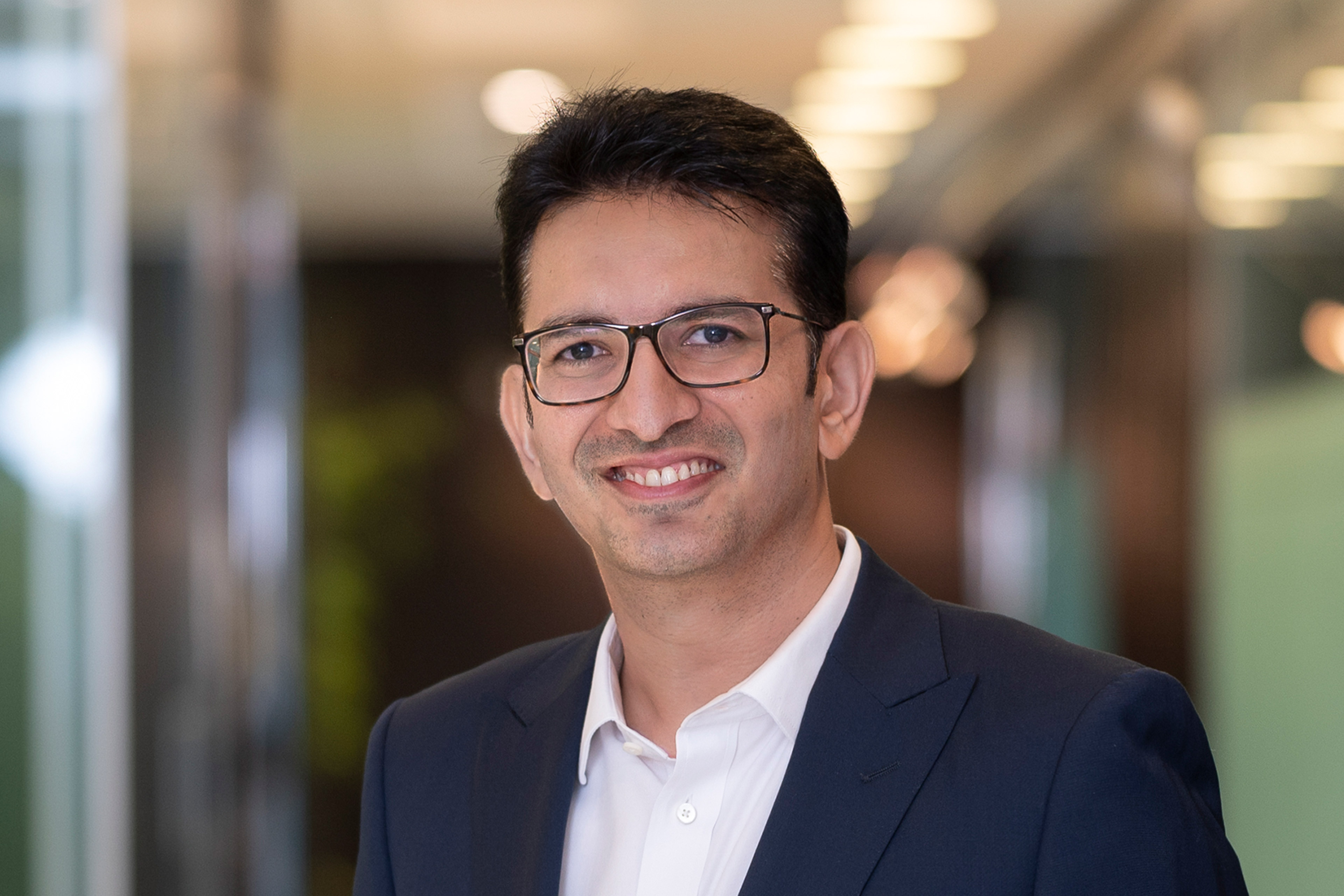
To explore this interesting and important topic, I’m joined by Saurabh Dhingra, EY-Parthenon Strategy and Transactions Partner. Saurabh, welcome to the show.
Saurabh Dhingra
Hi, Luke, and thanks for having me here today.
Luke Pais
Saurabh, to set the context, we understand the increasing importance of global warming and climate change. Can you help us understand the key industries that generate emissions?
Saurabh Dhingra
I think it’s very important to set the base here. When we talk about emission levels, we are actually talking about greenhouse gases, and the gases, which are relevant here are carbon dioxide, methane and nitrous oxide. And just to give you a bit of context, overall, the world has seen a significant increase in these emission levels by around 60% over the last 25 years. And to answer your question about the key industries, as you would wonder, power generation and electricity are definitely one of the largest contributors, about 30% of the global emission levels, followed by agriculture and manufacturing, both contributing 20 plus percent, and then transportation, which is around 15 odd percent, and then building and construction, which is around 6%. Of course, these numbers vary by geographies and the maturity of different markets.
Luke Pais
So clearly, certain industries account for quite a significant percentage of emissions. Let’s talk about what sustainability lever should be prioritized first for investments in these areas to increase investor and shareholder value.
Saurabh Dhingra
As I mentioned, the emission levels obviously vary from different sectors' perspective, and therefore we should focus on the sectors, which are the largest contributors to these GHG (global greenhouse gas) emissions. Let’s look at electricity or power generation. As we all know, there is a significant shift that is required from the fossil fuel-based energy to renewable energy. We are seeing new initiatives and investment opportunities arising in this space, particularly the move to large-scale renewable energy sources such as solar, wind, and hydro. Of course, there are differences in terms of the maturity of the technologies. Particularly, we’ve seen significant progress made under the solar panel as well as battery storage systems.
The other area where we are seeing big initiatives and opportunities for investment is energy-efficient projects such as carbon capture and fuel branding.
Similarly, we are seeing significant investment opportunities across manufacturing and industries. In industries, the two largest sub-sectors, which are contributing the emissions are steel and cement, and we are seeing opportunities to invest into green steel as well as certain industrial practices to improve the way green steel can be generated. So, moving away from the conventional blast furnace-based production to more electric arc furnace-based production.
When we look at cement, we are looking at new industrial practices coming in to make it much more sustainable, both from the carbon capture and storage perspective, but also looking at the supplementary material that’s used to manufacture cement.
The third sector, which I spoke about earlier is agriculture. Multiple initiatives have been driven globally and therefore create investment opportunities from the buyer's perspective. First and foremost, around sustainable farming practices such as precision farming techniques using new technologies, GPS, sensors, analytics to really be able to drive the reduction in the inputs such as fertilizers, which are one of the largest contributors of methane gas.
The second area we will look at from an opportunity perspective is carbon soil sequestration, which has really helped to reduce and improve the quality of the crop and therefore be able to drive towards more sustainable farming practices.
Third area, which I would say is also quite meaningful, especially in the West, is around livestock management, where we are looking at new feeding practices to improve the usage and production of methane.
The other sectors, especially transportation, we are seeing large investments going into electrification and production of EVs (electric vehicles), both for commercial as well as personal usage. In the aviation industry, projects such as sustainable aviation fuel blending would be quite interesting to follow in the coming years. And we are seeing electrification of the commercial vehicles such as trucks using battery electric trucks.
Now coming to the last sector, which is real estate building and construction, I would say there are investments being made in the bio-based materials as well as looking at solutions such as insulators and smart ventilation systems. Those will create good investment opportunities for the buyers.
Luke Pais
That’s fascinating. If you look at the rate of change in each of these industries, firstly all of these changes and this evolution require a significant amount of capital. I think private equity plays quite well to that, but also, you’re talking about potentially a lot of new talent, a lot of innovation, as you mentioned, and potentially a lot of new business models, which might even convert certain industries. So, maybe let’s unpack a little bit the aspect on business models. Can you give us some examples on good business models that you’ve seen implement some of these sustainability levers?
Saurabh Dhingra
As you mentioned, there’s significant investment that needs to go into this space, and we are seeing very good innovation both from the technology developments that are happening and also there are entrepreneurs who are coming with very innovative business models. Most of the models are trying to move away from more capital-intensive solutions to greater accessibility and lowering the cost of adoption.
So, what we have seen—let’s take the power generation and electricity as the first sector where we are seeing emerging models from a renewable perspective and how those models can drive better adoption of renewable energy. There are examples such as community solar projects, where the companies are developing large-scale solar farms and allowing customers to be able to lease the solar energy at a much cheaper and a much accessible cost perspective.
Similarly, we have seen models such as solar-as-a-service where some innovative entrepreneurs are able to come up with installation of solar panels on both the commercial and residential buildings and be able to offer these much cheaper as a fee-based model. We have seen significant support also from some of the governments as well as the development banks, especially in the solar energy space.
Now if I continue that thinking into the other sectors, we have seen some similar models that emerge in the building space as well. Similar to solar-as-a-service, we are seeing energy-as-a-service solution being offered by some of the largest technology infrastructure companies who are looking at energy-efficient solutions and really bringing them as a service to both the businesses and individuals. And that will really allow them to be able to look at a much more cost-efficient solution. In fact, we’ve seen spaces where some of the companies are offering guaranteed cost savings and therefore be able to really embed the better adoption of these solutions.
Another area I can talk about is from the transportation perspective, where we’re seeing EV charging as a service as well, where certain companies have started creating a network of EV charging stations and be able to generate revenue through subscription models rather than a capital incentive model.
So, I would say in all, I think a lot of solutions are coming to the market that are trying to reduce the usage of upfront capital required, and therefore it’s a great space to look into. Maybe if one more area I can talk about, which is, as we all know, we are increasingly moving towards an increase in usage of AI and quantum computing. Although these solutions are much more energy intensive and will go a little bit against the whole sustainability initiative, we are seeing green solutions, such as green data centers, being developed, which will hopefully be able to solve these requirements in the coming year. So, an interesting space to look into, although the technology is still maturing slowly.
Luke Pais
Thanks. You’ve actually covered quite a lot of ground there. What I wanted to do is shift tack a little bit to talk about how private equity is incorporating sustainability into their own business, and there’s probably two or three lenses to that. So, clearly, one big area is around, and it links to what you just said, where private equity actually enables a lot of sustainability investments. But PE also invests in a lot of businesses across sectors where they need to incorporate sustainability practices into these companies. So, maybe let’s start with that. How do you think the industry is doing, incorporating sustainability into their own investment workflow and practices?
Saurabh Dhingra
So, I think we’re seeing significant progress that’s been made in the whole investment cycle, from the LPs (limited partners) to the GPs (general partners). From our recent survey, we have seen that 90% of the respondents from the LPs are saying that they have incorporated or embedded sustainability into their evaluation criteria when looking at GPs. So, progress has been made there. However, when we look at the GPs’ perspective, only two-third of those respondents have said that they are looking at sustainability as a criterion when making decisions on their investments.
When we speak to the various GPs, we have seen most advanced GPs have already developed their own evaluation frameworks, looking at sustainability as one of the key criteria for evaluation of portfolio companies. However, the area where we still feel that there’s further development or progress required is really following through the post-transaction cycle, where the PE should start looking at sustainability as a core driver of value creation and guiding their portfolio companies.
Luke Pais
So, I guess in your view, private equity is doing a good job at the moment in incorporating sustainability agenda into their workflows, and in a way, they’re quite uniquely positioned to lead the charge in helping companies to transform.
Saurabh Dhingra
Of course, there have been developments, but there are areas where private equities can further play an important role in driving this agenda. A few different strategies they can potentially follow, first and foremost, developing more specialized sustainable funds, which could take a form of either focusing on a particular sector or especially some of the sectors we discussed earlier in the conversation, or could be very thematic-based, such as looking at climate tech or let’s say, sustainable agriculture or even circular economy. We have seen some development in this space, but I think PE funds can definitely push more on that agenda.
The second part, I would say, is to also start integrating sustainability in a much more holistic way across the whole investment life cycle. As I mentioned earlier, PE funds have started looking at sustainability from the diligence and investment decision perspective, but what we really believe is PE funds can do that even at the onset from a deal sourcing as well as the opportunity identification perspective. And also, there’s significant room for improvement or push from really working closely with portfolio companies from planning, value creation as well as the monitoring perspective. I think PE can play an important role in setting the right sustainability targets for their portfolio companies, provide them the right guidance, expertise. Given the access that a private equity player would have versus a portfolio company, I think they can play a much more hands-on role and really looking from a long-term value perspective.
And the third area where I feel that we can further push the boundaries is by building broader partnerships and alliances. Some of the large GPs, working along with their LPs, can actually work with the development banks as well as the global organizations such as the World Bank and IFC (International Finance Corporation) to form partnerships to look at some of the long tenure projects, which are heavily capital intensive. Hope that gives you a bit of perspective of where private equity can further push the agenda.
Luke Pais
It certainly does, Saurabh. So, thank you very much. That was very insightful. Let’s talk about a slightly different topic and maybe unpack some of the challenges that are faced in integrating sustainable finance principles. Would you want to comment on what key challenges companies face in incorporating these?
Saurabh Dhingra
So, Luke, I think while we know that there is a very strong correlation that exists between the investment performance and sustainable practices, but there are still a lot of dependencies that exist in the macro environment which create challenges for embedding sustainability into the overall investment principles. And I would say the three key areas where I believe the challenges exist, the first and foremost is from the policy and the regulatory environment. The second is in terms of the financial challenges, such as the tenures and the returns, and so on and so forth. And thirdly is from the availability of data and the reporting requirements.
So, let’s look at the policy and regulation challenges. I think significant progress was made, I think, five years ago, but we have seen a little bit of a pullback from governments across different parts of the world, especially post-COVID as well as the inflationary pressures that the economies have felt, which has slowed down some of the policy changes that were required across the globe. And some of it is also driven by the short-term nature of the governing offices, limited amount of capital available, as well as the industry lobbyists that are quite active in certain parts of the world.
Secondly, as I said, financial challenges, which is, given the nature of the project and the scale of the investments these projects required, it will require larger partnerships from the public and private perspectives. Some of these technologies are still unproven and therefore have a much higher perceived risk leading to a higher cost of capital. Therefore, we see limitations from the capital perspective. We’ll probably require better public-private partnerships to come with new solutions, such as blended finance, where we have seen some progress, but I think a lot more can be done.
The third challenge is around really the availability of standardized data as well as reporting requirements. As we all know that the reporting requirements are still evolving and fast-changing across different geographies as well as different industries. And then that really hinders the transparency that it can bring from a buyer’s perspective, not just from an evaluation at the investment stage, but also during the monitoring phase. So, those are the three big challenges, I would say, that still need to be solved.
Luke Pais
And are you seeing good models to where people work together to overcome some of these key challenges?
Saurabh Dhingra
It requires a concerted effort from industry as well as the key stakeholders across the whole value chain. First and foremost, would be the public-private partnerships where certain governments and states come together with large industry players to be able to fund these long tenure, large capital-intensive projects. Governments can play a very important role from providing the right sort of guarantees, subsidies and other incentives to be able to fund these long-dated, large-scale projects. Some of the examples are also working with development banks, such as World Bank, ADB (Asian Development Bank), who have come forward and are trying to cover the long tenure part of the funding required. These structures are very important, to really drive this agenda forward.
The other area where we’ve seen at least the development is where the large industry players have come together and start forming large collaborative alliances to really drive the agenda in terms of developing new technologies as well as pushing the project from a long-term perspective. I think one good example of that would be oil and gas climate initiative, where some of the largest oil and gas companies globally have come together to solve the problem of carbon capture and storage and are trying to fund that collectively with working with some of the government agencies as well.
Third area where we are seeing at least some right progress being made is from the policy and the regulation perspective where the governments and regulators are coming together at least from a regional perspective, and starting to define some standards. For example, ASEAN has come together to standardize the reporting requirements and hopefully also the data requirement that will be very important to drive the agenda forward.
Luke Pais
So, things are moving forward, and certainly since the Paris Climate Accords, there’s been a lot of focus on this topic. I think there was a lot of momentum as well. How is that momentum today? Is it still at that breakneck pace? Has it kind of calibrated in a certain direction? If I can have your comments on that?
Saurabh Dhingra
As you said, when the Paris Agreement came into foray, the first couple of years were definitely slow, but we had seen a very strong momentum, let’s say four, five years ago, especially led significantly by EU and support from the rest of the Western markets. However, we have seen some deviation or a distraction from the overall sustainability agenda post-COVID, particularly given the high inflationary environment we have been operating over the last few years. If I take a view from Asia perspective, I think Asia has always sort of been looking at the West for guidance. In the last couple of years, we have seen a lot of commitments being made by the government agencies and the respective economies to drive the agenda. So, I would say Asia was always a little behind the curve compared to the European economies, but over the last couple of years, we’ve seen a very good push, especially in ASEAN.
Luke Pais
Saurabh, we’ve covered a lot of ground. Thank you so much for sharing your insights. What would be your advice for private capital investors?
Saurabh Dhingra
We have seen a direct correlation between ESG factors and the performance of portfolio companies. Private equity funds have started making a significant progress to embed sustainability into their journeys. And I think PE funds have a very unique position given they can directly influence the entrepreneurs as well as have access to both the financial as well as sustainability data and visibility into the performance. PE funds can take a long-term view as compared to the publicly traded companies. Therefore, have a significant impact.
What I would recommend as a parting note to the private equity funds is to embed thinking around value creation into the overall lifecycle of your transaction, right from the onset when you are looking at the opportunities and evaluating opportunities to look at ESG as a value creation lever. Another area where I think we can do a greater job is to really work with the GPs as well as the broader ecosystem to be able to drive sustainability as a core agenda and embed into the investment lifecycle.
Luke Pais
Saurabh, thank you very much for joining us.
Saurabh Dhingra
Thanks for having me.
Luke Pais
You have been listening to Money Multiple. If you liked what you've heard, subscribe to our show on Apple Podcast, Spotify, or wherever you listen.