
EY refers to the global organization, and may refer to one or more, of the member firms of Ernst & Young Global Limited, each of which is a separate legal entity. Ernst & Young Global Limited, a UK company limited by guarantee, does not provide services to clients.
Recent Searches
Trending
-
The criterion of sustainability for Ukrainian agribusiness products based on the guidelines of FAO and the EU Taxonomy as a driver for strengthening the country’s position on commodity markets
19 Sep 2023 Climate change and sustainability services -
-
Why Europe’s CEOs are confident but cautious, pushing AI and pausing ESG
09 Jan 2024 CEO agenda

The article was published on Vox Ukraine.
Author of the article:
Yuliia Solomakha, Senior Lawyer, Tax & Law, EY Ukraine
Upon the entry into force on April 23, 2026, of the Law of Ukraine “On Amendments to Certain Laws of Ukraine Regarding the Implementation of European Law on Energy Market Integration, Enhancing Security of Supply and Competitiveness in the Energy Sector” (the “Law No. 4834-IX”), a new phase has begun on the path toward the full integration of the Ukrainian electricity market into the EU’s internal market, which entails operating under common rules.
Along with a number of new provisions aimed at day-ahead and intraday market coupling, joining European balancing platforms, and further developing the market through new forms of participation and the introduction of additional products and services, Law No. 4834-IX changes the approach to shaping the regulatory framework. This includes, in particular, the mechanisms for Ukraine’s implementation of EU network codes and guidelines, as well as the EU-wide, regional, and national terms, conditions or methodologies (TCMs) provided for by them.
Law No. 4834-IX stipulates that EU-wide and regional TCMs approved by the European Union Agency for the Cooperation of Energy Regulators (ACER) or the Energy Community Regulatory Board (ECRB) shall be unconditionally binding on market participants. In practical terms, by incorporating TCMs into its legislation, Ukraine recognizes the binding effect of the relevant ACER and ECRB decisions within its jurisdiction and undertakes to ensure their application. Specifically, the National Energy and Utilities Regulatory Commission (NEURC) must approve a list of TCMs that will become mandatory for market participants. Although TCMs are considered technical documents, their practical implementation has a significant economic impact. Therefore, it is crucial that Ukrainian stakeholders understand the role and significance of these documents, carefully analyze their content and potential market implications, and advocate for national interests during their development and even after approval.
This article examines what TCMs are, how the law provides for their development and application, and the key challenges facing NEURC and market participants.
The Electricity Integration Package and the role of TCMs
Law No. 4834-IX establishes the basis for the implementation of the Electricity Integration Package, a set of EU legislative acts adapted for application within the Energy Community. The full integration of the electricity markets of Energy Community Contracting Parties, including Ukraine, into the EU’s internal market is based on the principle of reciprocity, which provides that EU rules apply to Energy Community entities on equal terms with entities within the EU.
Among the nine acts comprising the Electricity Integration Package, five are EU network codes and guidelines: the Capacity Allocation and Congestion Management Guideline (CACM), Forward Capacity Allocation Guideline (FCA), Electricity Balancing Guideline (EBGL), System Operation Guideline (SOGL), and Network Code on Emergency and Restoration (ER NC). These acts set out specific requirements for the development of more detailed rules and procedures (TCMs) that enable their further implementation in practice.
TCMs are intended to harmonize and operationalize the rules governing the common electricity market and the operation of interconnected power systems provided by the network codes and guidelines. Harmonization through TCMs takes place at three interrelated levels as follows:
EU-wide TCMs govern key processes and mechanisms for the operation of the common electricity market, as well as specific system functions that require full harmonization. They are designed to ensure the operation of common platforms, algorithms, and procedures to be applied across all EU Member States and Energy Community Contracting Parties (for example, day-ahead and intraday market coupling algorithms and European balancing platforms).
Regional TCMs combine harmonization with the possibility of taking regional specifics into account. Regional TCMs cover several countries grouped into regions within the EU and/or the Energy Community. Such regions are configured depending on the specific objectives and market needs set out in the network codes and guidelines. These include, in particular, capacity calculation regions for CACM and FCA or outage coordination regions for SOGL. The configuration of the regions is not static. For example, according to the latest ACER decision on the determination of capacity calculation regions, there are nine main regions in Europe, as well as three additional regions established to integrate Energy Community countries (East-Central Europe, Eastern Europe, and Italy-Montenegro). At the same time, some of the main regions are currently being merged into larger regional configurations.
National TCMs address matters that are to be regulated and implemented at the level of an individual country, including conditions for participation in the electricity market, national aspects of balancing, or power system operation. As a rule, national TCMs do not require cross-border coordination, but they must be consistent with the objectives of the network codes and guidelines and with the principles of competition, transparency, and non-discrimination.
Development, approval, and application of TCMs
TCMs are developed by transmission system operators and/or nominated electricity market operators (NEMOs), which possess the necessary expertise and technical data to propose optimal technical solutions for market integration. Before submission for approval, draft TCMs are subject to mandatory public consultations with stakeholders. Depending on the scope of regulation, proposals for TCMs are submitted for approval to ACER, ECRB, or the relevant national regulators. Thus, the development of TCMs is the result of collaborative work between operators and regulators at different levels, with the involvement of a broad range of stakeholders.
ACER monitors the implementation of TCMs in EU Member States. According to ACER, more than 190 TCMs have been adopted since 2016. Not all of them will apply to Ukraine, but this figure illustrates the scope of the technical rules and procedures that currently govern the operation of the EU electricity market.
However, even within the EU, the implementation of TCMs remains challenging. Based on its monitoring activities, ACER issued recommendations to the European Commission highlighting significant delays in the practical implementation of the EU-wide and regional TCMs, particularly in balancing, system operation, and long-term capacity allocation. According to ACER, such delays may hinder the proper functioning of the European power system and result in economic costs for market participants and consumers.
ACER identifies collective non-compliance as a separate issue. This refers to cases where all transmission system operators or all nominated electricity market operators are jointly required to fulfill a particular obligation related to TCMs, but its implementation is delayed, or the operators collectively fail to fulfill the obligation. ACER notes that there are multiple reasons for such delays, including the technical complexity and interlinkage of TCMs, changes in requirements during their development and implementation, technical and resource constraints, implementation timelines, the number and diversity of entities involved, and the governance framework for regional decision-making. The main challenge in such cases is the lack of a clear allocation of responsibility among operators, as well as differences in national procedures for imposing sanctions for such violations.
For Ukraine, EU-wide and regional TCMs require particular attention because their cross-border nature places them beyond the scope of national regulation. While EU-wide TCMs are to apply in Ukraine in the form approved by ACER (as provided for in the network codes and guidelines adapted for the Energy Community and accordingly reflected in Law No. 4834-IX), the development of regional TCMs requires active participation by national stakeholders and close cooperation, coordination, and alignment of interests among the countries of the region.
Law No. 4834‑IX does not prescribe procedures for developing regional TCMs but instead assigns the transmission system operator (NPC Ukrenergo), nominated electricity market operators (JSC Market Operator), and the Regulator (NEURC) functions, rights, and obligations related to cooperation with the relevant actors in other countries and to the development and approval of regional TCMs. Detailed requirements for the development, consultation, coordination, and approval of TCMs, together with the applicable timelines, interaction arrangements among transmission system operators, nominated electricity market operators, national regulators, ACER, and ECRB, including mechanisms for resolving disagreements, are set out in the network codes and guidelines themselves. Ukrainian stakeholders should therefore follow the provisions of the network codes and guidelines rather than national legislation, in respect of these procedural matters.
Where national regulators fail to reach an agreement on the content of regional TCMs, including because of potentially differing economic implications for the countries concerned (such as effects on cross-border electricity trade, tariffs, and costs for market participants), the procedure provides for escalation to the level of ACER or ECRB, which then decides on the approval of the respective TCMs. The allocation of powers between ACER and ECRB depends on the geographical scope of the relevant TCMs. As a general rule, ACER exercises supranational powers with respect to TCMs covering both EU Member States and Energy Community Contracting Parties, while ECRB’s competence focuses on relations among Energy Community Contracting Parties.
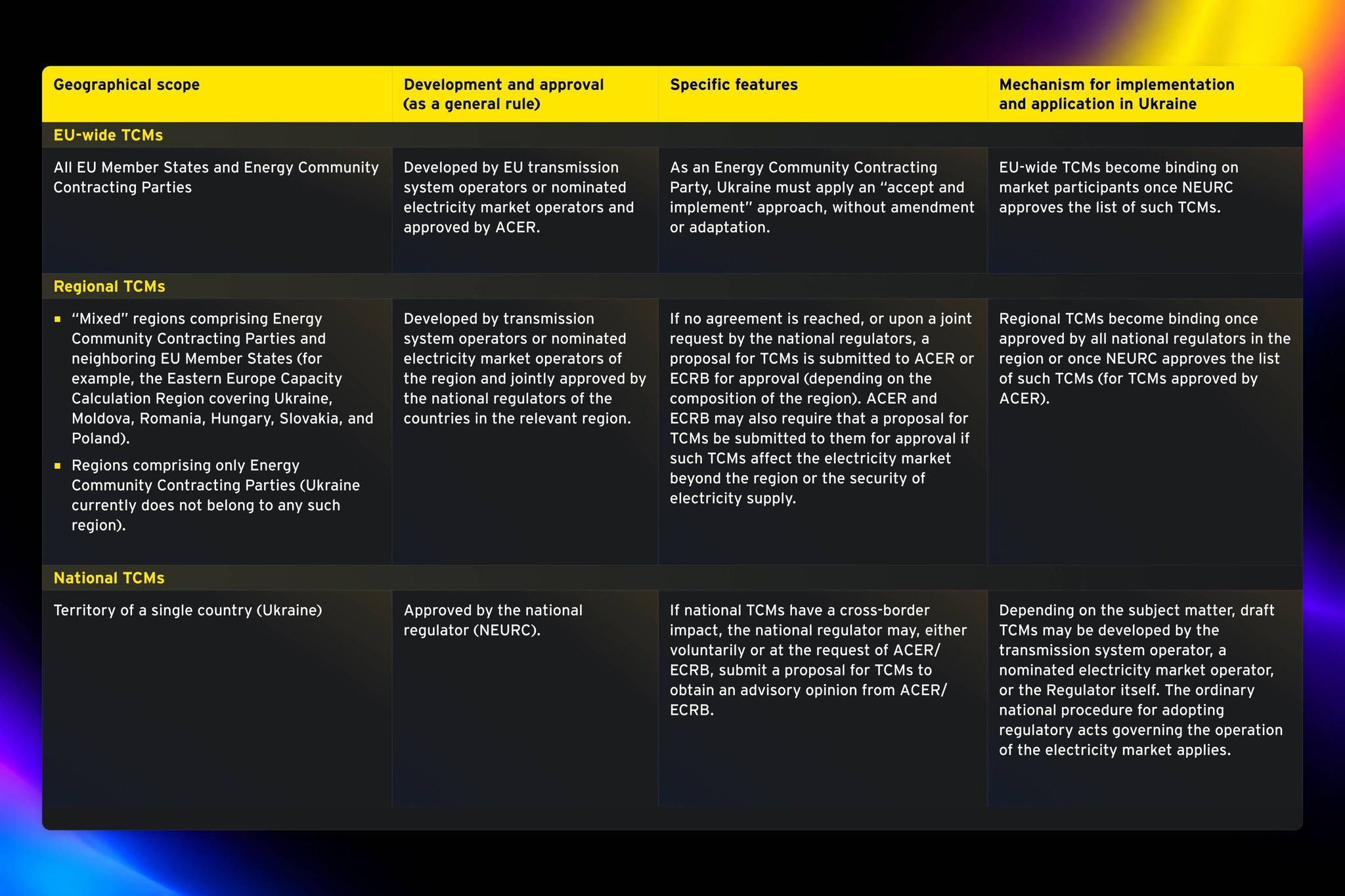
Table 1 summarizes the hierarchy of TCMs, the allocation of powers for their approval, and the approach established by Law No. 4834-IX for their implementation and application in Ukraine.
Organizational challenges and opportunities for participation in TCM development
The practical implementation of the mechanism for incorporating EU-wide and regional TCMs into Ukraine’s regulatory framework through the approval of a list of such TCMs, as provided for by Law No. 4834-IX, will require NEURC to address certain organizational and technical aspects.
Tracking changes and updating. Under the law, the Regulator must update its approved list of EU-wide and regional TCMs in the event of amendments to the Energy Community acquis, primarily the network codes and guidelines that directly determine the list of TCMs.
Even if the list itself remains unchanged, the provisions of TCMs are periodically revised. Practice shows that some EU-wide and regional TCMs have been amended more than once. Such amendments are generally subject to stakeholder consultation and approved by ACER or the regulators of the relevant region. Since Law No. 4834-IX requires the Regulator, the transmission system operator, and nominated electricity market operators to publish the relevant TCMs on their websites, any amendments approved by ACER should also be reflected in updated published versions, even though the law does not expressly require this.
Law No. 4834-IX provides that ACER decisions approving EU-wide and regional TCMs, as well as amendments to them, are binding on market participants and requires the Regulator to ensure application by market participants of the TCMs included in the approved lists. Thus, although EU-wide and regional TCMs are developed and approved at the EU or regional level, their implementation and enforcement take place at the national level. This necessitates strengthening NEURC’s institutional capacity and establishing internal organizational procedures for performing this function, including systematic tracking of changes to TCMs, timely updating of published versions, and monitoring their application by market participants.
Prevailing language in the event of discrepancies. Law No. 4834-IX requires the Regulator to ensure that EU-wide and regional TCMs are translated into Ukrainian. Accordingly, TCMs must be published in both Ukrainian and English on the websites of the Regulator, the transmission system operator, and nominated electricity market operators.
Given that the Regulator approves the list of TCMs rather than their authentic texts, it is reasonable, for the purposes of interpretation and application, to give precedence to the language of the original, i.e., English. The Ukrainian translation nevertheless performs an essential supporting function, in particular, ensuring consistent use of the Ukrainian text by all market participants. In this context, NEURC should formalize in advance an approach to resolving potential discrepancies between the English and Ukrainian versions of TCMs to ensure certainty and predictability (the law currently does not grant NEURC’s translation official status).
Alongside these rather technical organizational arrangements, it is important to strengthen the early involvement of NEURC, the transmission system operator, and nominated electricity market operators in shaping the content of TCMs — wherever such participation is possible and through channels available to Ukrainian stakeholders. The effectiveness of this participation will largely depend on the institutional engagement of the operators and NEURC, as well as their ability to use the available mechanisms and professional forums systematically.
Opportunities to influence the content of EU-wide TCMs, which are developed by EU operators and must be applied in the version approved by ACER, are limited. At present, such participation is likely to relate mainly to amendments to already approved EU-wide TCMs. However, even within this limited framework, Ukrainian stakeholders may engage through working and expert groups, formal and informal discussions, and consultations. Key forums for such participation include:
The European Network of Transmission System Operators for Electricity (ENTSO-E), of which NPC Ukrenergo has been a full member since 2024. Within ENTSO-E, proposals for TCMs and amendments are developed at the industry level in joint working groups. In addition, European Stakeholder Committees, jointly organized by ENTSO-E and ACER, bring together various stakeholders, cover both market and technical areas, and complement formal consultation procedures. Beyond transmission system operators, consultations within these committees are open to other stakeholders, including nominated electricity market operators, distribution system operators, other market participants, national regulators, industry organizations, and associations.
The All NEMO Committee. Ukrainian operators may currently participate in its work as observers. In particular, JSC Market Operator has held observer status in the All NEMO Committee since 2022. This provides an opportunity to participate in meetings, working groups, and subgroups.
ACER working and expert groups, in which NEURC may also participate subject to obtaining observer status.
Active professional participation by Ukrainian stakeholders in developing consolidated positions and proposals through these forums can help influence the content of draft documents that will subsequently be approved by ACER.
For regional TCMs, as noted above, the network codes and guidelines set out in detail the procedures for the participation of operators and the Regulator in their development. Particular attention should be paid to protecting national interests in cases where the approval of regional TCMs is referred to ACER. European practice shows that ACER decisions can be contested and that national regulators and market participants have access to legal remedies, both through ACER’s internal appeal procedures and through judicial review.
Right to appeal ACER decisions
Law No. 4834-IX gives any natural or legal person the right to appeal an ACER decision if the decision is addressed to that person or to another person but affects their rights, obligations, or interests. This applies, in particular, to decisions approving TCMs or amendments to them. The Regulator, the transmission system operator, other market participants concerned, and other stakeholders may also have standing. At the same time, Law No. 4834-IX does not itself establish the procedure for appealing ACER decisions but refers to Energy Community acquis containing the relevant procedure. This primarily concerns the adapted version of Regulation (EU) 2019/942 establishing a European Union Agency for the Cooperation of Energy Regulators.
Appeals are examined by an independent body within ACER, the Board of Appeal. An appeal to the Board of Appeal is the first step before judicial proceedings may be brought. Lodging an appeal does not automatically suspend the contested ACER decision, although the Board of Appeal has the discretion to suspend its application for the duration of the appeal proceedings if it deems the circumstances sufficiently serious. Proceedings may take up to four months, after which the Board of Appeal may either confirm ACER’s decision or remit the case to ACER for reconsideration (with or without specific binding instructions on amendments). Once the appeal procedure before the Board of Appeal has been exhausted, proceedings may be brought before the EU judiciary, specifically the General Court of the European Union, where the case may take several years.
Two recent cases concerning challenges to Board of Appeal decisions relating to TCMs, and indirectly to underlying ACER approval decisions, are illustrative. The cases addressed the limits of ACER’s powers and its approach when approving regional TCMs, including whether ACER may use the approval of technical documents to impose additional substantive requirements (conditions, criteria, and threshold values) that are not expressly provided for in EU regulations or are inconsistent with their provisions.
In Joined Cases T-600/23 and T-612/23 (Germany’s Federal Network Agency (BNetzA) and the Federal Republic of Germany v ACER), the applicants challenged ACER’s approach to the methodology for the calculation of the day-ahead and intraday cross-zonal capacity for the ‘Core’ capacity calculation region (covering 13 countries in Central and Eastern Europe, including Germany).
The contested provisions of the methodology imposed additional conditions on transmission system operators for including internal critical network elements in the capacity calculation. In particular, transmission system operators were required to assess the impact of increasing the threshold for including an element from 5% to 10% or higher (the value of a technical factor indicating how a change in the power flow being transferred affects a particular network element, such as a line or transformer). Operators were also required to provide a detailed analysis demonstrating that including such an internal element in the calculation was the most economically efficient solution to address congestion compared with alternatives such as reconfiguration of bidding zones, application of remedial actions, investments in infrastructure, or a combination of these measures.
The General Court of the European Union annulled the Board of Appeal’s decision insofar as it upheld the contested provisions of the methodology, finding that ACER had exceeded its powers and misinterpreted the provisions of CACM and Regulation (EU) 2019/943 on the internal market for electricity. The Court stated that these acts do not permit the introduction of additional requirements concerning economic efficiency or the examination of alternatives as conditions for including internal network elements in the capacity calculation.
Another case, T-485/21 (BNetzA, supported by the Federal Republic of Germany v ACER), concerned the methodology for cost sharing of redispatching and countertrading for the ‘Core’ capacity calculation region. The challenge concerned the extension of the cost-sharing mechanism to internal network elements, and ACER’s introduction of a temporary uniform threshold for legitimate loop flows at 10% of the maximum capacity of each network element concerned. This threshold was established without the required technical analysis and without determining separate threshold values for each bidding-zone border in the region.
The Court upheld ACER’s approach to including internal transmission lines with a voltage level of 220 kV or higher in the methodology and the admissibility of allocating costs to parties causing excessive loop flows. However, it found the uniform threshold for permissible loop flows unlawful because it was not based on an adequate technical analysis, did not take into account the specific characteristics of individual bidding-zone borders, and failed to comply with the mandatory requirements of Regulation (EU) 2019/943 on the internal market for electricity. The Court also rejected ACER’s reliance on the temporary nature of the threshold and on the need to derogate from clear legal requirements in order to meet the deadline for approving the methodology. Finding that ACER had exceeded its powers, the General Court of the European Union annulled the Board of Appeal’s decision confirming ACER’s original decision approving the methodology and emphasized that strict compliance with EU law takes precedence over pragmatic considerations regarding the speed of the methodology’s approval.
Both cases demonstrate that ACER plays a significant role in approving regional TCMs but may not use that role to impose requirements that, in substance, exceed the scope of its delegated powers. At the same time, the duration of judicial review proceedings (more than two years in the first case and more than three years in the second, during which the relevant TCMs remained in effect) creates additional uncertainty regarding the application of such TCMs. This is because judicial review concerns the decision of the Board of Appeal, while the underlying contested ACER decision is not automatically suspended (interim suspension is possible only upon a separate application and if clearly defined grounds are met).
Thus, TCMs have not only technical but also significant regulatory and economic implications, as they affect cross-border trade, cost allocation, and the balance of interests among countries. For Ukraine, the implementation of EU-wide and regional TCMs means entering a complex and dynamic regulatory environment in which some rules are developed, amended, and tested in practice outside the national legal system, while directly affecting the Ukrainian electricity market.
In this context, NEURC’s role is gradually extending beyond its traditional functions as a Ukrainian regulator. NEURC will need not only to ensure the application of TCMs but also to engage actively in their development through cooperation with ACER, ECRB, and regulators of other countries. At the national level, NEURC will have an important coordination and communication role, which will involve explaining the new regulatory logic to market participants, clarifying how TCMs operate, supporting expert discussion, and facilitating the early involvement of Ukrainian stakeholders in developing positions where such participation is possible.
Effective implementation of TCMs will require strengthening the institutional capacity of the Regulator, the transmission system operator, nominated electricity market operators, other market participants, and the professional community more broadly. Of practical importance will be the further development of expertise among professionals who are equally confident in navigating EU law, the Energy Community acquis, and Ukrainian legislation. The combination of institutional readiness, early participation, and technical and legal expertise will enable Ukraine not only to comply with common European rules but also to systematically and persuasively defend its interests in the course of their development and application.