









CEO Outlook Survey South Africa

How can South Africa’s CEOs turn stability into strategy for growth?

In brief:

  • Many CEOs are focused on operational efficiency, but this alone won’t drive growth.
  • True transformation requires investment in innovation, people, and new business models.
  • Companies that move beyond survival tactics will be best positioned for future success.
ey-lighthouse-sunset-sa-ceo-outlook.jpg
1

Chapter 1

Turning stability into strategy

CEO Confidence Index: How South Africa’s CEOs can lead the next wave of growth

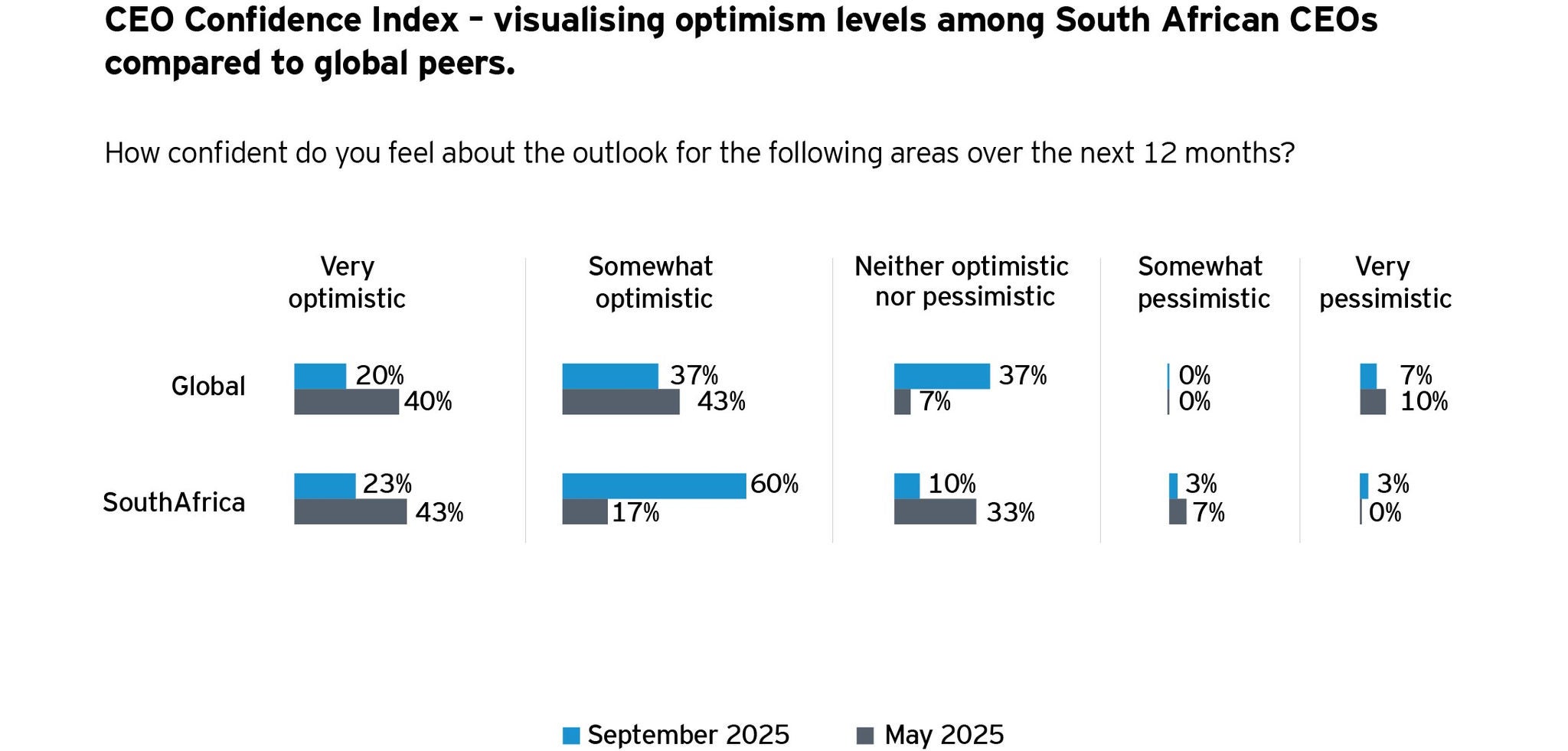
Right now, many South African CEOs are doing what’s necessary to keep their businesses running: managing costs, streamlining operations, and adopting digital tools where possible. In industries like mining, energy, retail, and financial services, the challenges are familiar - inflation, policy instability, and unreliable infrastructure. Simply staying operational is no small achievement. It’s no surprise that, as highlighted in EY’s latest South Africa CEO Outlook Pulse, many leaders feel “cautiously optimistic” about the year ahead. But beneath that optimism is a harder question: are we truly moving forward, or just doing more of the same with fewer resources?

1305_EYP - Thought Leadership CEO Series

Most leaders know that maintaining the status quo isn’t enough. Trimming expenses and managing risk have helped businesses stay afloat, but these are short-term measures. They don’t lead to growth, new revenue, or stronger customer relationships. At best, they create some breathing room. What matters is what companies choose to do with that breathing room.

Efficiency can stabilise a business. But to grow, you need to invest in ideas that stretch beyond what’s familiar.
2

Chapter 2

Transformation realised

Here and now

1305_EYP - Thought Leadership CEO Series

In mining and energy, CEOs are focused on cost management and operational stability, using digital adoption to keep the lights on and the wheels turning. Retail leaders are improving supply chains and efficiency, but innovation is limited. Financial services are optimising risk controls and compliance, with digital tools supporting back-office functions rather than new customer experiences.

South African CEOs must move from survival tactics to strategic innovation to drive long-term growth.

3

Chapter 3

Transformation reimagined

The path forward

Some companies are going further. A 2023 IT-Online report shows that around 20% of South African businesses are “reinventors”—companies redesigning how they work and what they offer, rather than just digitising what they already do. These companies are performing better than their peers, growing faster, and improving efficiency at the same time. It’s a sign that bigger bets can pay off—but also a reminder that not many businesses are taking them.

1305_EYP - Thought Leadership CEO Series

In mining and energy, reimagined transformation means investing in new energy models—renewables, storage, digital twins, and predictive analytics—to reinvent how resources are extracted and managed. Strategic partnerships and new market entries, such as battery minerals, can unlock growth.

1305_EYP - Thought Leadership CEO Series

Retailers can reimagine transformation by investing in omnichannel experiences, personalisation, and data-driven innovation. Launching new formats, leveraging AI for customer insights, and expanding into adjacent markets are ways to move beyond incremental change.

Financial services can create new offerings—fintech, embedded finance, and digital platforms—to reach underserved segments and drive customer-centric innovation. Strategic capital allocation and partnerships will be key to long-term value.

4

Chapter 4

Why many CEOs hold back

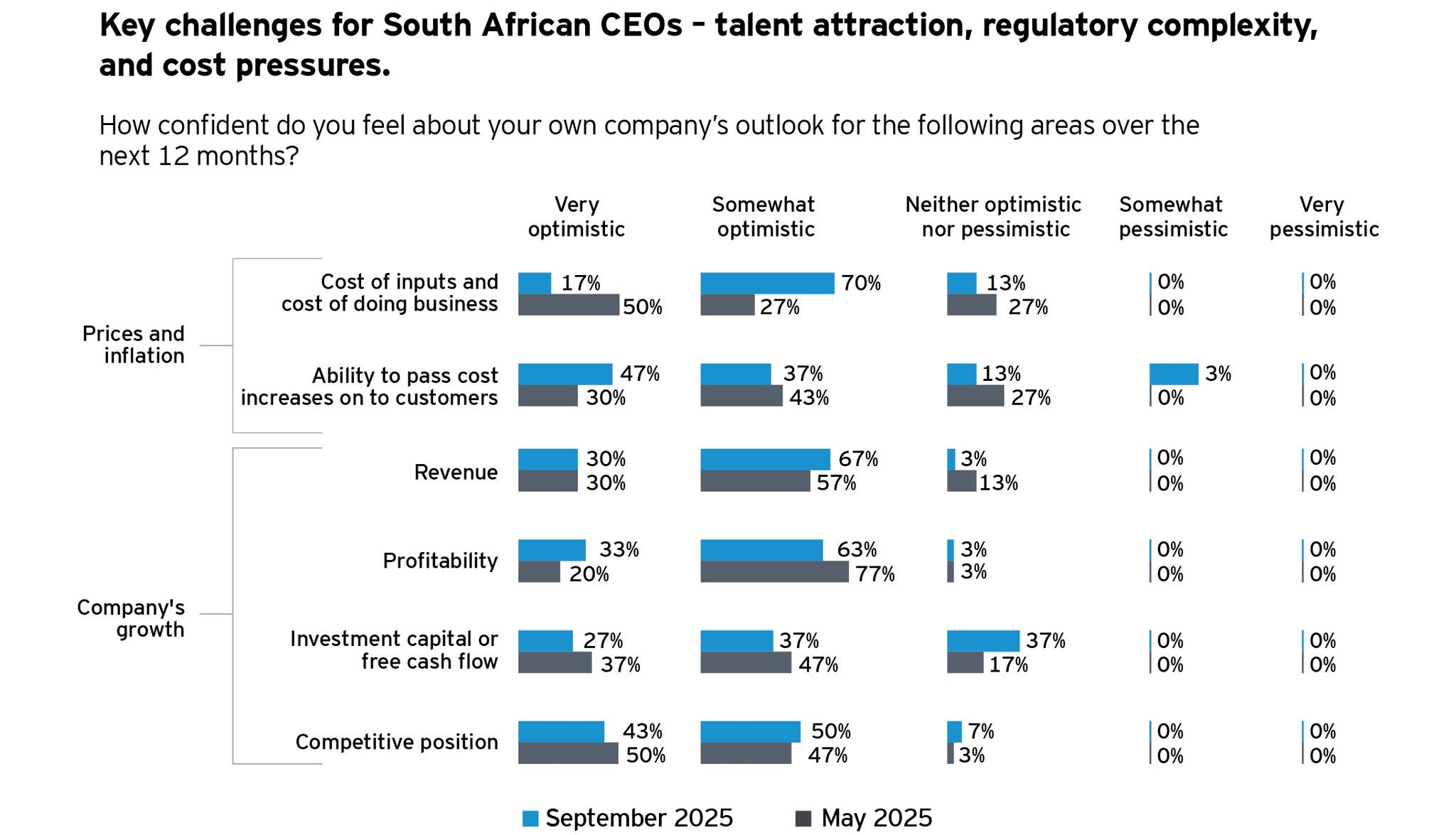
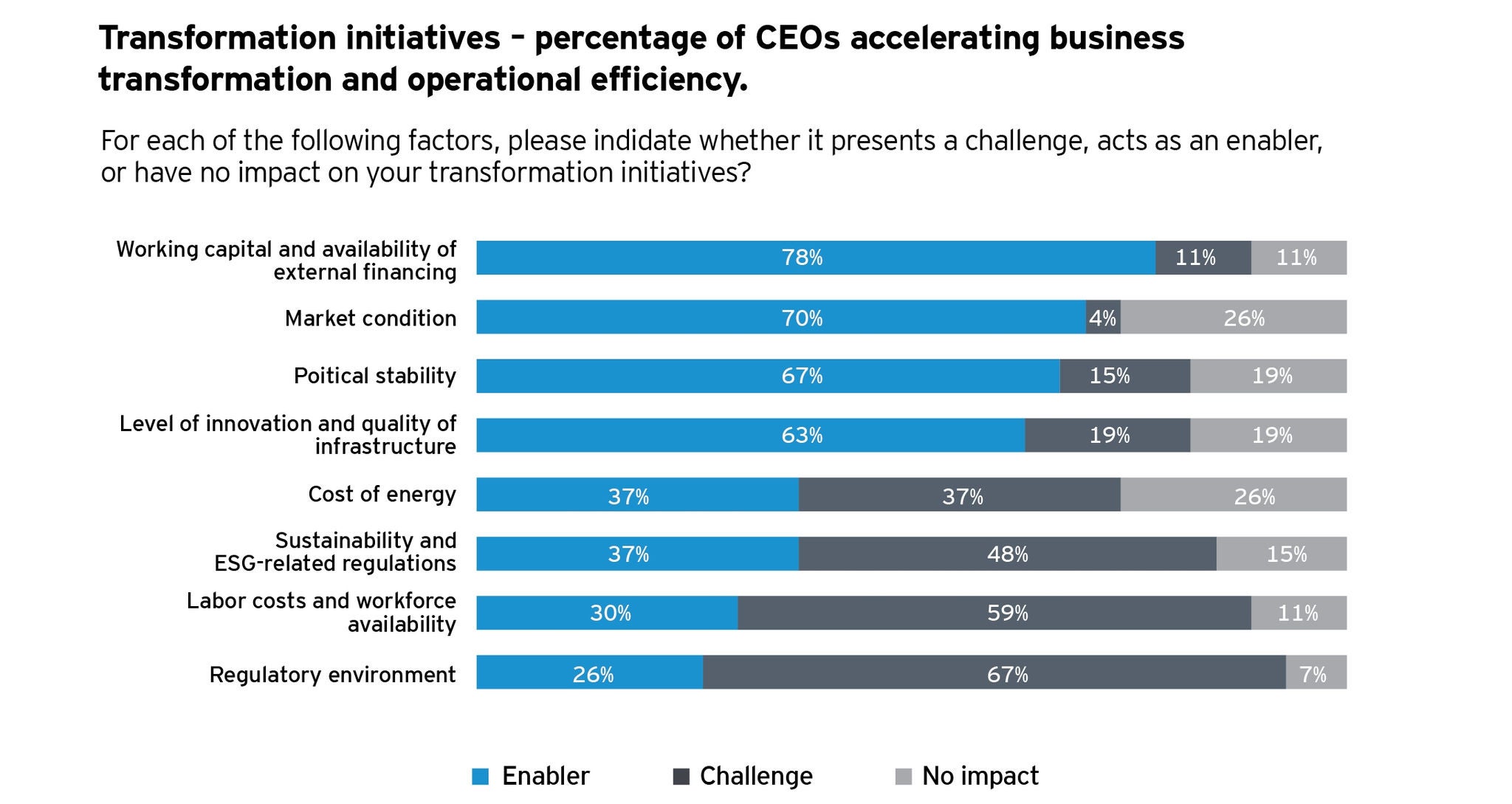
There are valid reasons for caution. The environment for doing business in South Africa is tough. Power instability, regulatory red tape, outdated infrastructure and slow pace of government reforms all make it harder to plan long term. Talent is another major issue. More than 60% of CEOs in the EY survey said it’s hard to find and keep the right skills. Without the right people, even the best ideas can stall before they get off the ground. Add in the pressures of localisation requirements and rising input costs, and it’s clear why many leaders are cautious about making bold moves.

Still, caution has its limits. Playing it safe can become a habit, one that prevents companies from making changes that could drive long-term value. A business that only focuses on running leaner might miss the opportunity to become stronger. Getting better at doing the same thing isn’t the same as doing something better.

5

Chapter 5

From stability to strategy

1305_EYP - Thought Leadership CEO Series

What’s needed now is a shift in mindset. Efficiency should free up capacity to try new things, not be seen as the end goal. Leadership means making decisions that position your company for the future, not just protect it from the present. That could mean entering new markets, launching new offerings, changing how your business is structured, or finding new ways to work with partners and suppliers. It also means backing people, not just systems. Innovation comes with and from technology, yes, but also from teams who can think, adapt, and build.

1305_EYP - Thought Leadership CEO Series


The path forward isn’t simple. But companies that only manage the risks of today will struggle to capture the opportunities of tomorrow. Growth requires more than survival tactics. It calls for strategic action in investment, capital allocation, and leadership.


In summary

South African CEOs have shown that they can guide their companies through incredibly difficult conditions. The next step is to use that same resilience to build something stronger. Efficiency can stabilise a business. But to grow, you need to invest in ideas that stretch beyond what’s familiar. That’s what will separate the businesses that thrive in the years ahead from those that stay treading water.

About this article