How can CEOs deliver stability today while reimagining for a future in flux?

In brief:

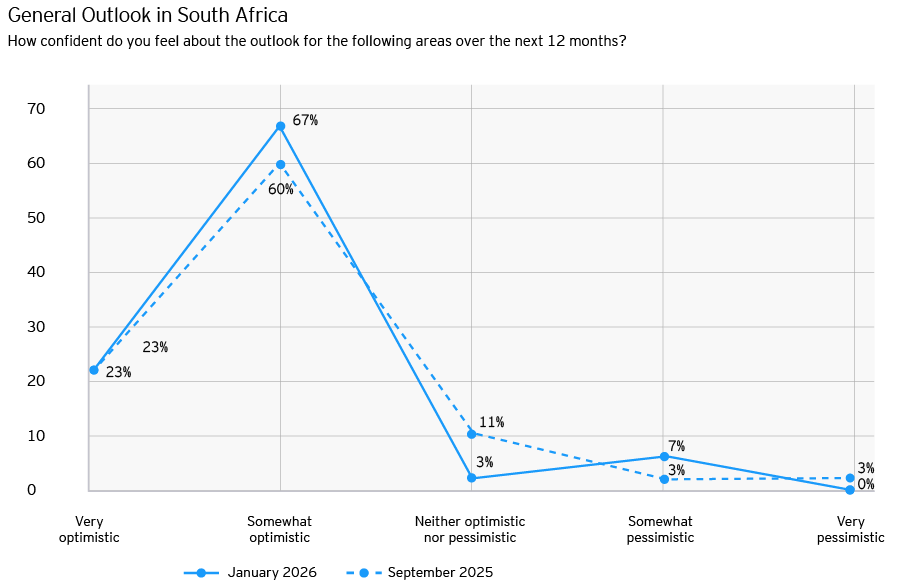
  • South African CEOs enter 2026 with renewed confidence, shifting from stabilising operations to scaling transformation and investment.
  • AI has become a core enterprise engine, driving performance gains while requiring stronger governance, cybersecurity and disciplined value measurement.
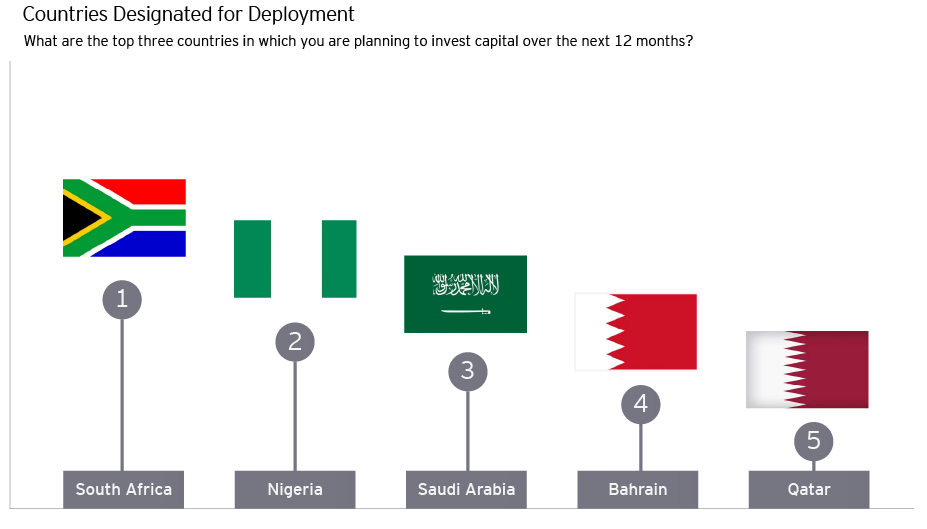
  • CEOs reaffirm South Africa as a priority investment destination, adapting swiftly to geopolitical volatility with agility and strategic clarity.

Shifting from stability to scaled transformation

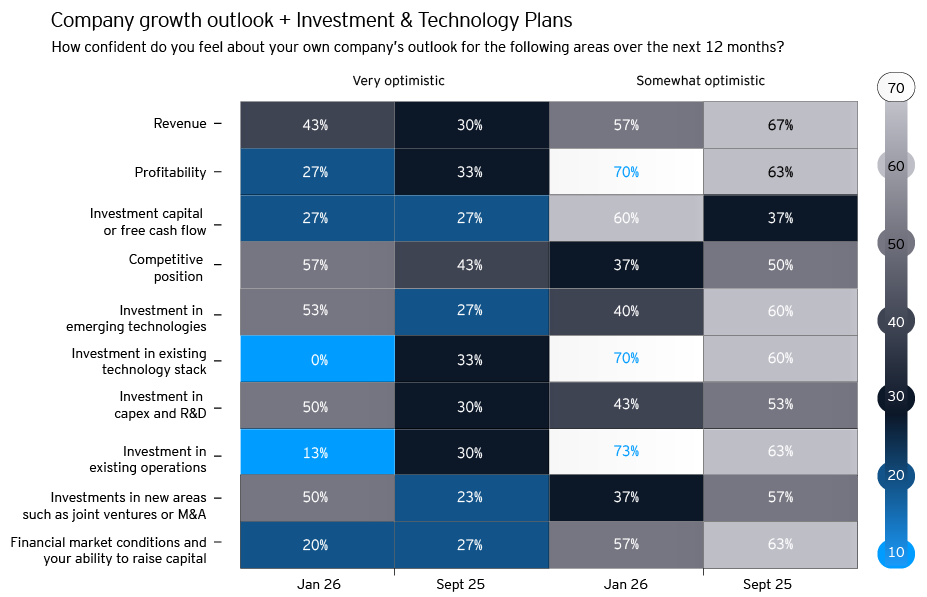
South African CEOs are entering 2026 with a stronger, more expansion‑oriented confidence than in previous cycles. Expectations for revenue growth, profitability and competitive performance have risen, indicating that many organisations now feel sufficiently resilient to pursue bolder strategic moves.

The outlook from leaders reflects a growing belief that South Africa may be entering a phase where improvements in infrastructure, regulatory clarity and sector‑level reforms could unlock new pathways for growth. Many CEOs are positioning their organisations to take advantage of this potential, shifting investment priorities toward scalable technologies, new business models and emerging market opportunities.

This year also brings a clear push toward diversification. Leaders are not merely upgrading existing capabilities — they are investing in adjacent markets, future‑oriented partnerships and capability‑building initiatives designed to broaden their competitive footprint. The tone is increasingly forward‑leaning: transformation is no longer seen as optional or defensive, but as the most reliable route to long‑term competitiveness.

The overarching message is evident: South African businesses are reframing their “base case” for what is possible in 2026.

ey-digital-transformation-global-banner.jpg
1

Chapter 1

AI moves from exploration to enterprise value

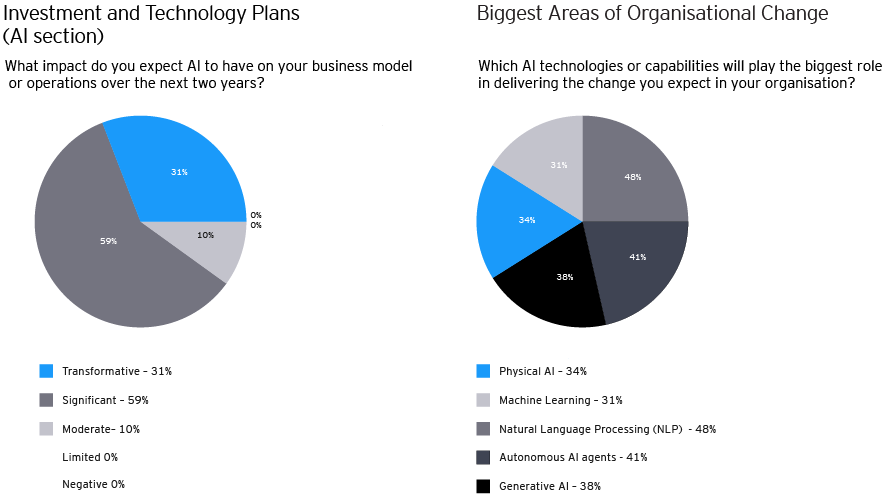
AI has moved into execution mode. Most CEOs indicate that AI investments are already producing tangible value in operations, strategy and customer experience. Leaders expect this momentum to accelerate sharply over the next two years, reflecting how quickly AI has transitioned from a future consideration to a present‑day performance driver.

Organisations are embedding AI into practical, high‑impact use cases such as predictive analytics, customer‑behaviour modelling, operational optimisation and real‑time risk detection. This growing confidence in AI’s business value mirrors the increasing speed at which digital capability is reshaping industry dynamics.

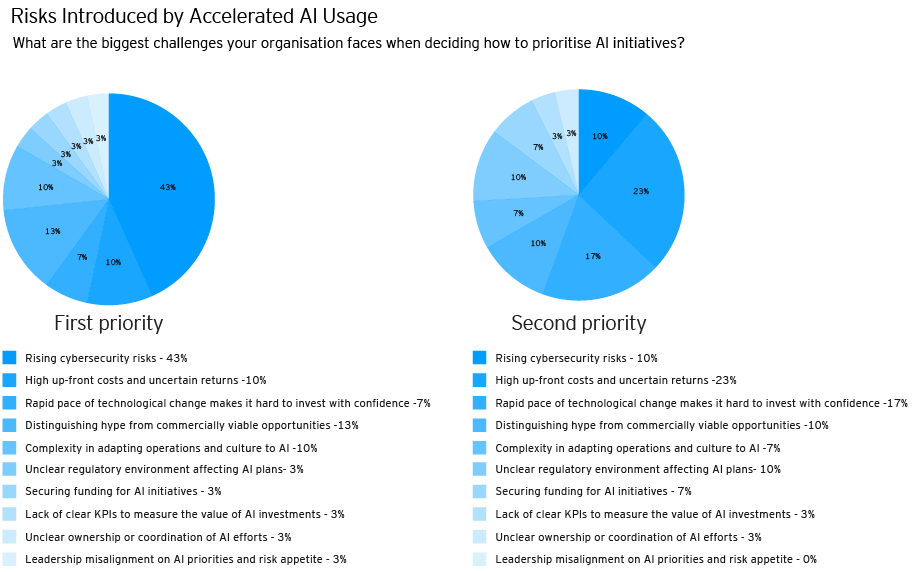
Alongside this momentum is a heightened awareness of risk. CEOs are sharply focused on cybersecurity resilience, acknowledging that increasing digital intensity introduces new vulnerabilities. Concerns around governance, ethical use, regulatory compliance and organisational readiness are shaping a more disciplined approach to AI deployment.

Boards are responding by demanding clearer KPIs, structured oversight and transparent value‑measurement frameworks. AI is no longer treated as an experimental capability — it requires the same rigour and accountability as any other enterprise‑critical investment.

ey-digital-transformation-global-banner.jpg
2

Chapter 2

South Africa regains its position as a primary investment destination

One of the strongest signals from this year’s CEO cohort is a renewed commitment to South Africa as a priority destination for investment. After several years of cautious capital allocation, organisations now see the country’s medium‑term prospects improving — driven by evolving reforms, clearer regulatory direction and accelerating opportunities in areas such as digital infrastructure, energy transition and industrial modernisation.

This renewed optimism aligns with a noticeable increase in corporate deal activity. CEOs are exploring acquisitions, joint ventures and strategic alliances with fresh momentum, viewing them as mechanisms for unlocking growth, accessing new technologies, and strengthening capabilities.

The combination of rising deal appetite and renewed domestic focus reflects a shift in strategic posture: leaders are not simply optimistic about South Africa’s future — they are actively repositioning themselves to participate in it.

Disclaimer: Data reflected in this chapter is based on pre-conflict information and may not fully reflect current market conditions.
ey-digital-transformation-global-banner.jpg
3

Chapter 3

A more assertive response to geopolitical complexity

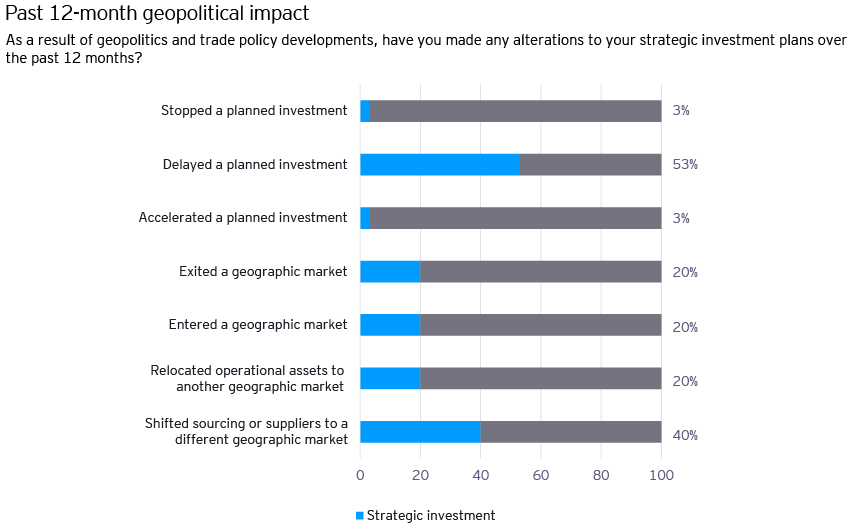
Global and regional geopolitical uncertainty remains a defining external force. Yet CEOs are navigating this complexity with increasing clarity and decisiveness. Many organisations have already adjusted investment timelines, reconfigured supply chains or refined their market strategies to address the evolving landscape.

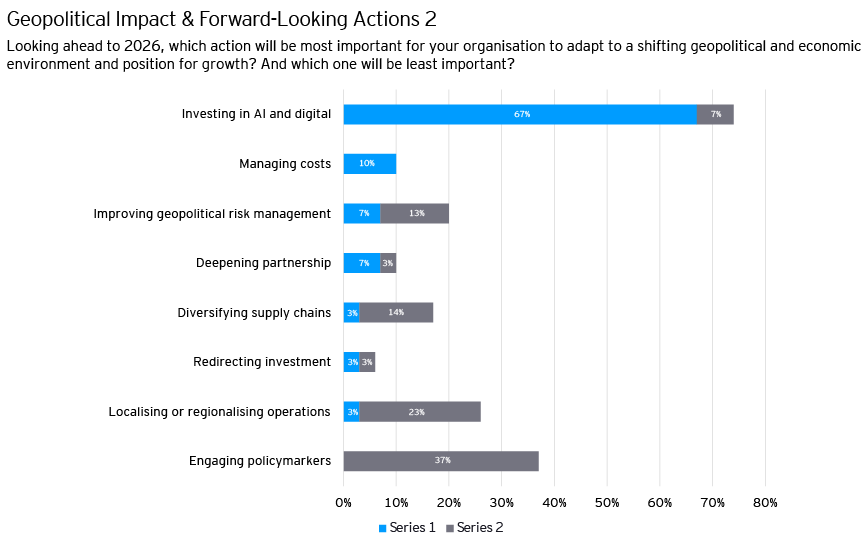
Rather than adopting a wait‑and‑see approach, leaders are prioritising actions that build flexibility and forward‑looking capability: scaling digital investments, strengthening cost resilience, deepening strategic partnerships and doubling down on risk‑management mechanisms. This reflects a broader shift in mindset — uncertainty is no longer viewed solely as a constraint, but as a strategic variable that requires deliberate, confident action.

Technology again emerges as a crucial lever. Where capital deployment may be more carefully staged, AI investment continues to accelerate, offering companies a way to build resilience, efficiency and competitive differentiation despite geopolitical headwinds.

ey-digital-transformation-global-banner.jpg
4

Chapter 4

Transformation with discipline, governance and clear returns

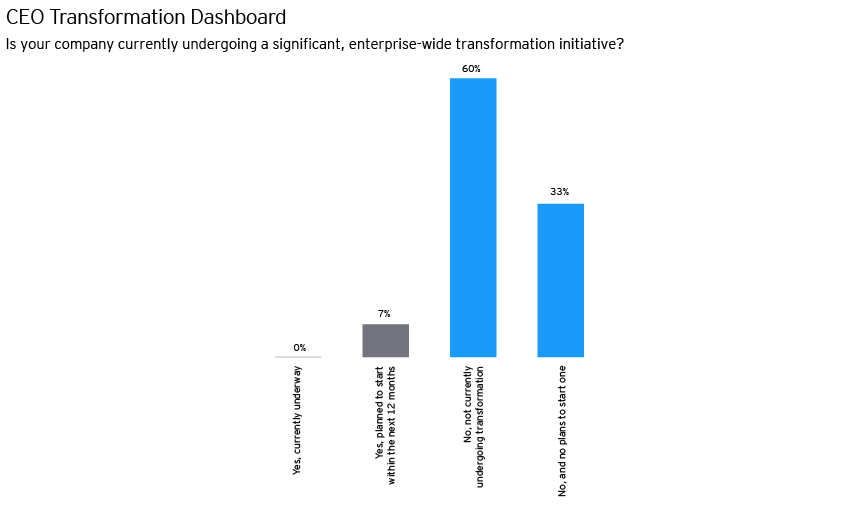
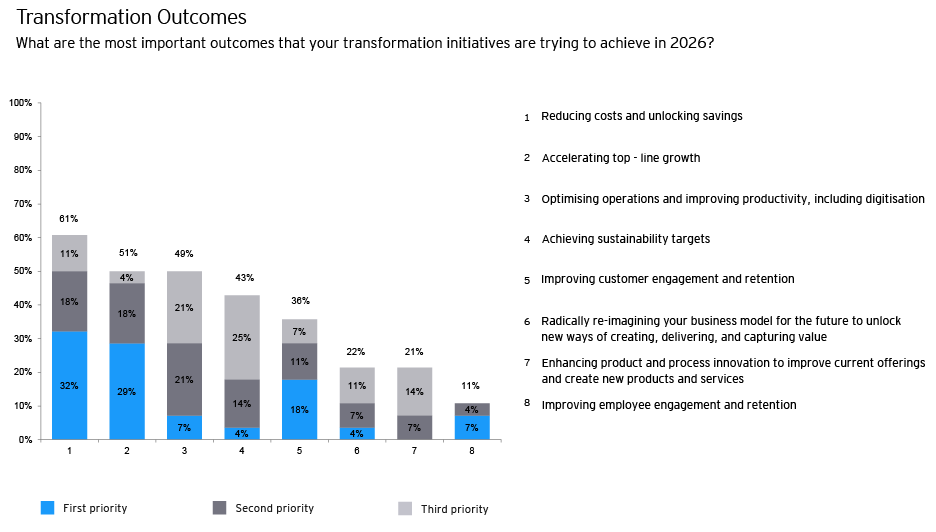
Transformation continues to dominate CEO agendas, but expectations around delivery are significantly more demanding. Boards now require clearer metrics, more rigorous governance structures and frequent progress reviews. Leaders are sharpening their transformation disciplines accordingly.

This shift is rooted in growing confidence that transformation efforts — when well‑designed and effectively governed — can deliver meaningful returns. CEOs point to productivity gains, operational efficiency, customer‑experience improvements, innovation outcomes and workforce stability as expected benefits of ongoing transformation.

Companies are also building stronger internal capabilities to deliver continuous change. Agile execution, empowered transformation committees and more sophisticated measurement frameworks are becoming standard. The transformation narrative for 2026 is therefore not only about ambition — it is about accountability, value realisation and repeatable performance.

ey-digital-transformation-global-banner.jpg
5

Chapter 5

Building a workforce prepared for an AI‑enabled future

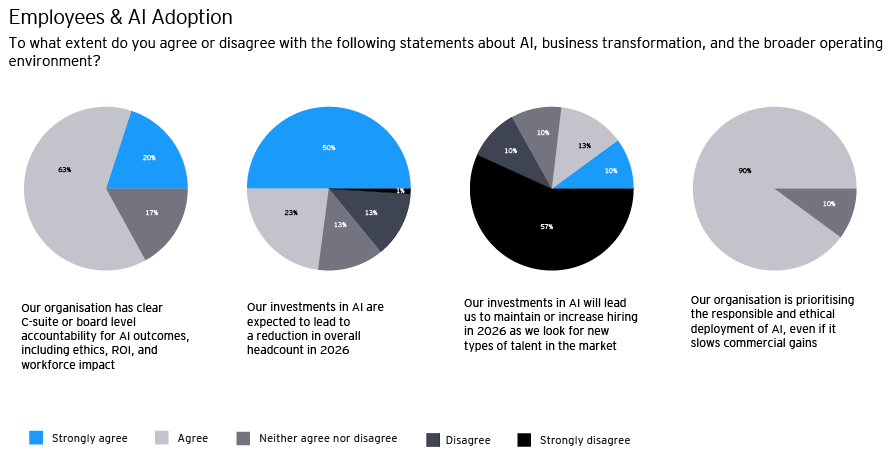
AI’s growing presence in South African organisations is set to have a meaningful impact on workforce structure in 2026. Many CEOs anticipate that AI‑driven efficiencies will result in overall headcount reduction, reflecting a pragmatic view of how automation, intelligent systems and digital workflows will reshape routine and operational roles. This expectation signals a shift toward leaner, more technology‑enabled organisations.

Yet the anticipated reduction in workforce size does not diminish the importance of talent — it reframes it. While fewer roles may be required, the roles that remain become more specialised, more analytical and more digitally intensive. CEOs point to the need for targeted hiring in new technical domains and significant investment in reskilling and upskilling to ensure employees can work effectively alongside AI systems.

This dual reality — contraction in some areas and capability expansion in others — highlights the strategic workforce challenge of the year ahead. The focus is not on growing headcount, but on building a workforce equipped for higher‑value, technology‑enabled work, and ensuring employees have the agility to adapt as AI continues to evolve.

The emerging workforce model is one where human judgement, creativity and domain expertise remain central, supported by AI as an amplifier of productivity and performance.



Closing perspective

South Africa’s CEOs are planning for a world defined by technological acceleration, shifting geopolitical dynamics and evolving domestic reforms. Their responses reflect a blend of confidence and pragmatism: investing more deeply in AI, strengthening cybersecurity, shifting capital back into the country, acting decisively amid uncertainty and pursuing transformation with greater discipline.

The prevailing outlook is clear. South African organisations are not simply preparing for one future — they are equipping themselves to succeed across multiple possible futures, powered by technology, strengthened by talent and grounded in a renewed belief in the country’s growth potential.

About this article