






Sportswoman with a hijab taking a breather during her morning workout session

How digital health is driving more connected care in Saudi Arabia

The EY Future of Health Survey highlights how digital health, AI and health data are shaping a more connected healthcare journey in Saudi Arabia.


In brief

  • Consumers in Saudi Arabia are combining AI tools, healthcare professionals and digital tracking to support proactive health management. 
  • AI is informing health behaviors, decisions to seek medical advice and discussions with healthcare professionals. 
  • Trust in healthcare professionals and willingness to share health data are supporting more personalized care.  

Digital technologies are reshaping healthcare worldwide, changing how individuals access information, monitor health conditions and interact with healthcare providers. The growth of artificial intelligence (AI), mobile health applications, wearable devices and connected health platforms is enabling consumers to play a more active role in managing health and wellbeing.

Saudi Arabia is experiencing this transformation at an accelerated pace. Supported by a digitally connected population and ongoing healthcare modernization initiatives, consumers are turning to digital tools and AI-enabled resources to obtain health information, track health indicators and inform care decisions.

The EY Future of Health Survey report examines the digital health behaviors of healthcare consumers in Saudi Arabia, focusing on AI-enabled tools, digital health tracking technologies and willingness to share personal health data. The findings indicate that consumers are actively incorporating digital channels into health management.

Respondents in Saudi Arabia were more likely than those in other surveyed countries to use AI tools and social media as sources of health information, while maintaining strong engagement with healthcare professionals. This combination of digital and clinical information sources is shaping a more connected and informed healthcare journey. 
 

The survey report follows three connected developments. Digital engagement is supporting proactive health management. AI is influencing health behaviors and interactions with healthcare professionals. Trust, openness to health data sharing and acceptance of innovation are creating conditions for connected, personalized and consumer-centric healthcare. 

Elderly Man using Smart Watch measuring heart rate during walk
1

Chapter 1

Digital engagement supports proactive health management

Digital health tracking is embedded in everyday routines, while consumers combine professional guidance, AI tools and social media for health information.

Digital health tracking is increasingly embedded in everyday routines. Around 60% of respondents tracked health digitally in the past year, while 78% tracked health either recently or previously. This level of engagement exceeds the overall survey average of 57%. 

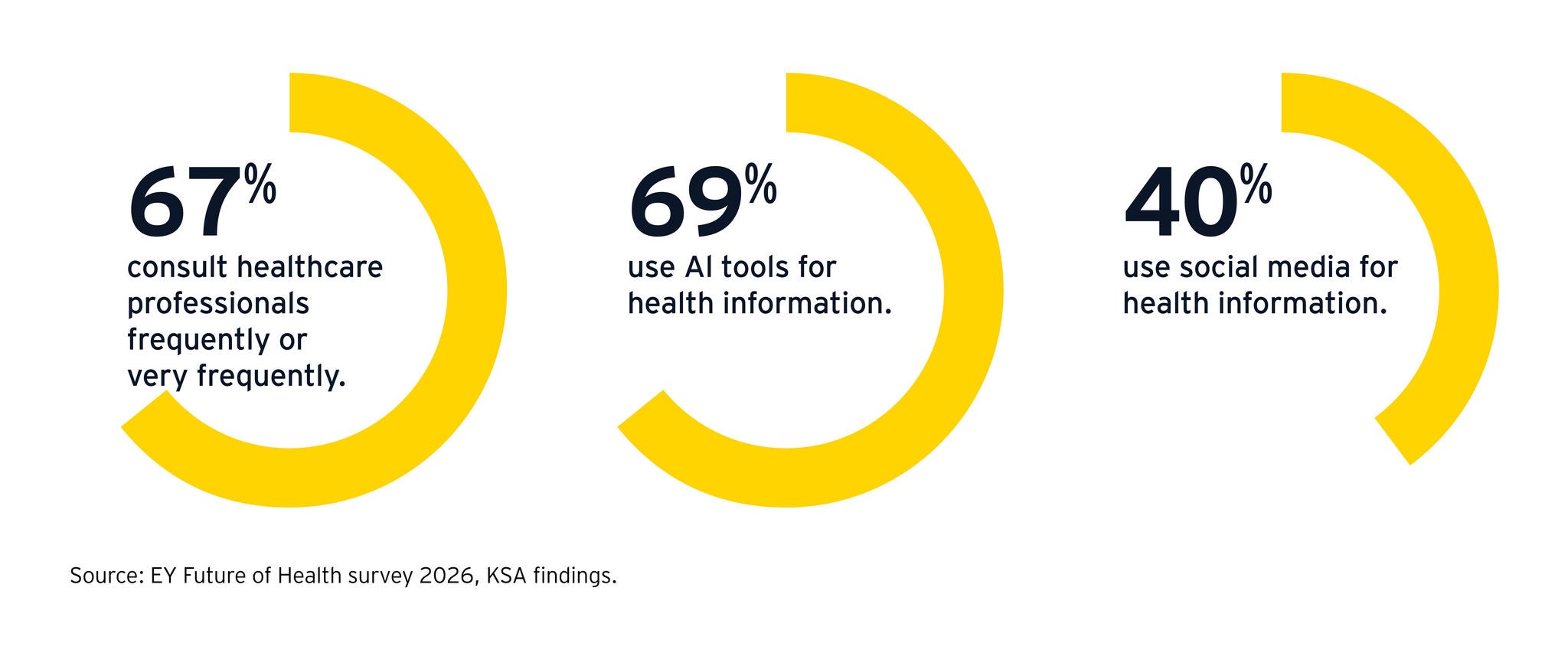
Consumers in Saudi Arabia draw health information from a combination of healthcare professionals, AI-enabled tools and social media channels. The survey found that 67% consult healthcare professionals frequently or very frequently, 69% use AI tools for health information and 40% use social media for health information.

How consumers in Saudi Arabia combine digital and clinical information sources

Health information sources in Saudi Arabia

Saudi Arabia recorded the highest frequency of AI usage among surveyed markets, with respondents more likely than those in any other surveyed country to use AI tools frequently or very frequently. Saudi Arabia also led the surveyed countries in frequent consultation with healthcare professionals.

Momentum in digital tracking remains strong. Among individuals who track health digitally, 53% started within the past year. The tools used include smartphone health applications, blood pressure monitors, smart scales, glucose monitors and at-home testing kits.

Tracking behavior spans a wide range of health indicators. Weight is tracked by 64% of respondents who track health, while 23% track macronutrient intake. These figures indicate a broader approach to health awareness compared with other markets surveyed.

53%
53%
started tracking their health digitally within the past year.
64%
64%
of consumers who track health digitally monitor their weight.

At-home diagnostics extend this trend. Among respondents in Saudi Arabia who track health digitally, 22% use blood glucose monitoring at home, representing the highest level reported across the countries surveyed. Use of other at-home tests was also higher than in many peer markets.

The survey report links this level of digital engagement with growing interest in proactive health management. As individuals adopt a broader range of tracking tools and at-home health technologies, opportunities are emerging to connect consumer-generated insights with care delivery, supporting earlier intervention, preventive care and more personalized healthcare experiences.

Digital tools are also influencing how health information is accessed and used. As AI-enabled platforms become more deeply integrated into everyday health journeys, their influence extends from tracking and monitoring to behaviors, decisions and interactions with healthcare professionals.

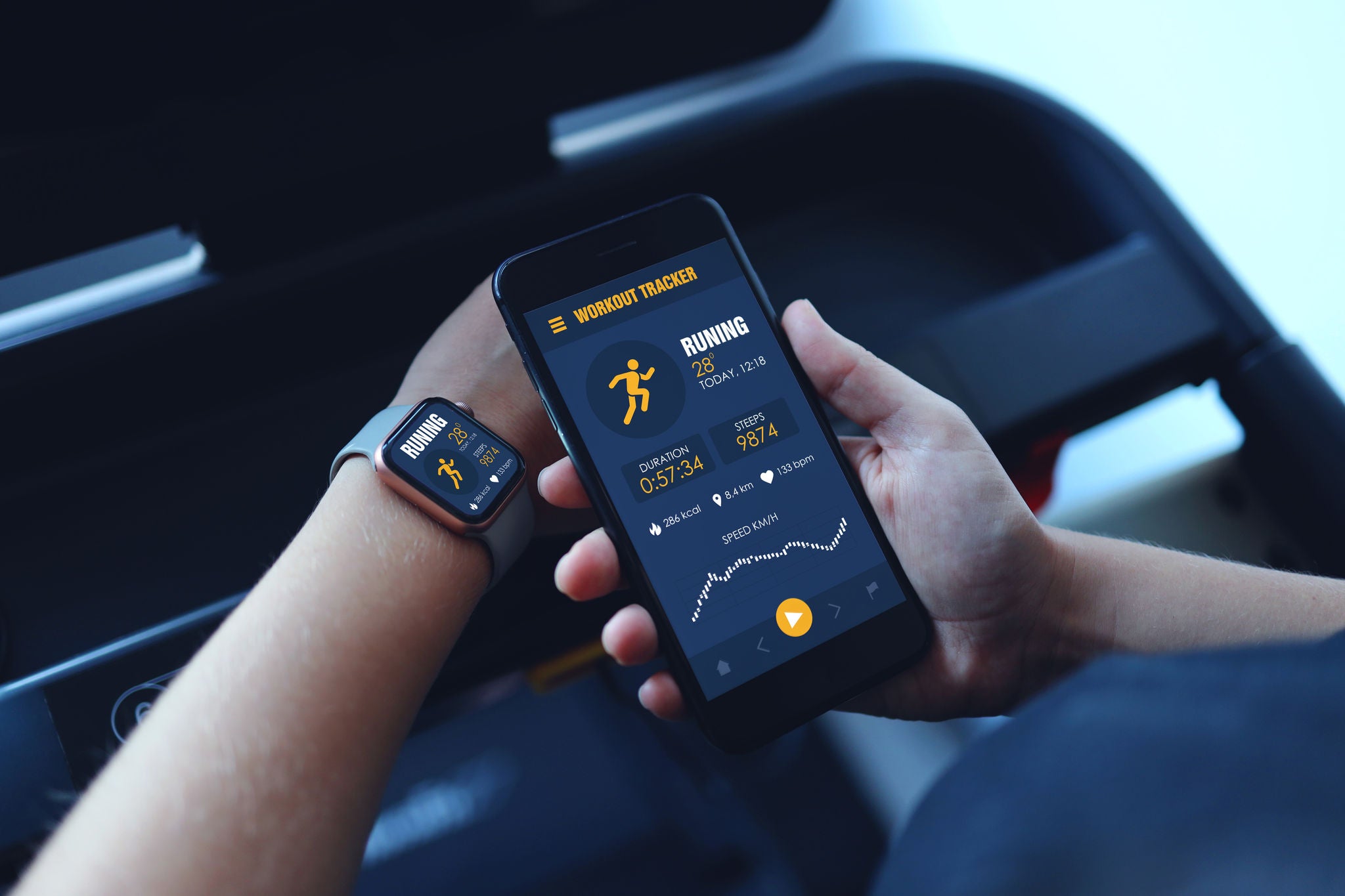
Sport woman running treadmill use smartwatch connect smartphone workout app and listening music. Indoors gym background. Health sport concept
2

Chapter 2

AI is changing health behaviors and clinical interactions

AI-enabled information is influencing physical activity, nutrition, sleep, care-seeking decisions and questions raised during consultations.

AI is becoming an important tool for self-directed health management and healthcare decision-making in Saudi Arabia. Consumers are using AI tools to research health concerns, better understand symptoms and inform decisions about seeking care.

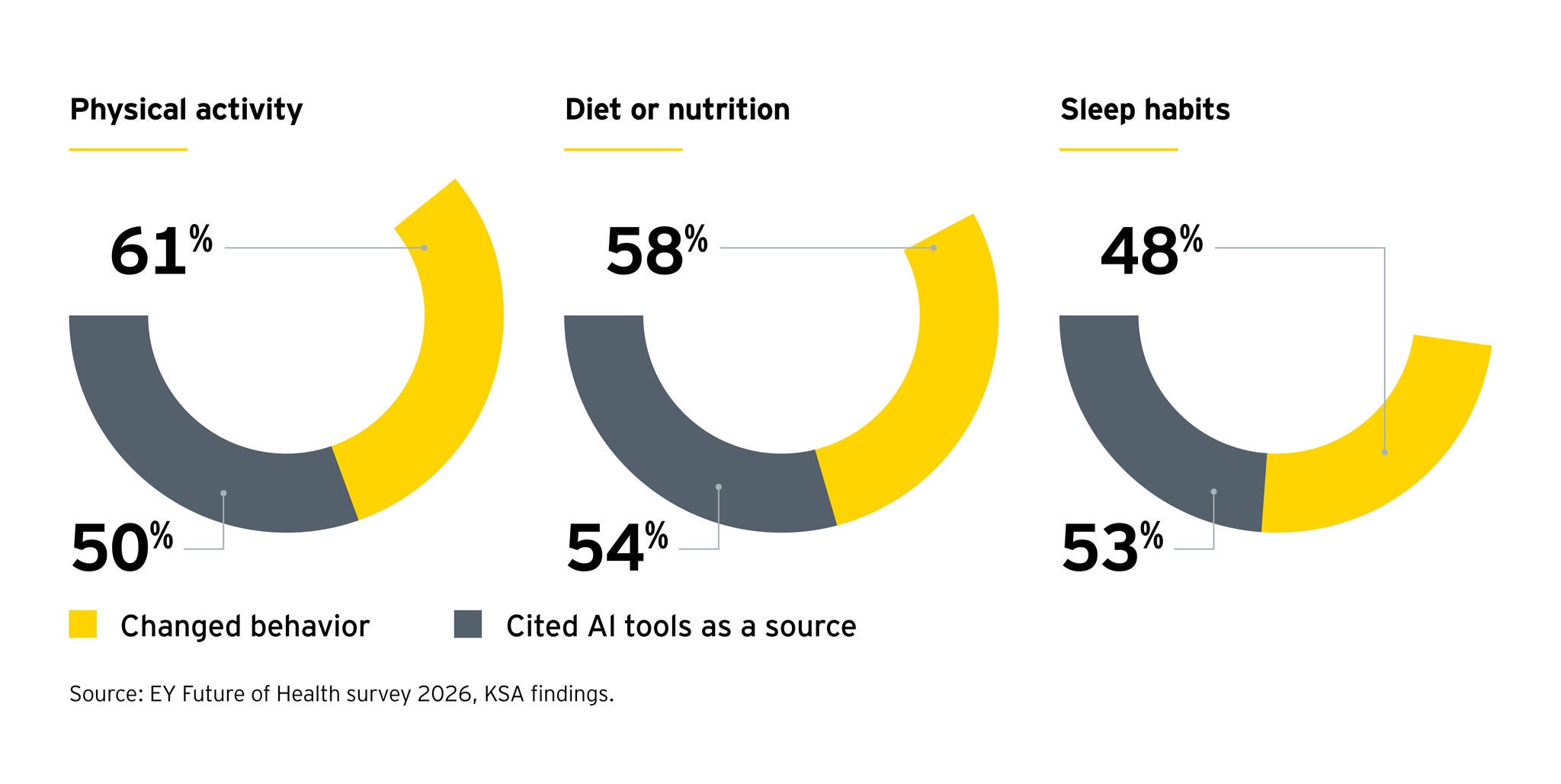
AI-enabled information is translating into health action. The survey reports changes in physical activity for 61% of respondents, diet or nutrition for 58% and sleep habits for 48%. Among respondents who changed each behavior, 50%, 54% and 53%, respectively, cited AI tools as an information source.

How AI is influencing health behaviors and healthcare interactions in Saudi Arabia

AI and health behaviors in Saudi Arabia

The influence of AI continues through the care journey. Nearly half of respondents, 45%, reported that AI-based research influenced their decision to seek medical advice. A further 86% had requested or considered requesting a test, treatment or prescription based on information obtained through AI tools.

More than half of respondents, 55%, said AI informed the questions they asked healthcare professionals. The same percentage reported that AI influenced them to challenge or discuss recommendations received during consultations.

45%
45%
of those surveyed reported Al’s influence on decisions to seek medical advice.
86%
86%
requested or considered tests, treatments or prescriptions based on Al-enabled insights.

The findings describe consumers as taking a more active role in healthcare discussions and decision-making while complementing professional medical advice. Digital insights are informing choices related to physical activity, nutrition and sleep, and consumers are becoming more engaged during consultations. Healthcare interactions are becoming more collaborative, with individuals seeking additional information, asking more informed questions and taking a greater interest in treatment and care options.

As adoption grows, the report identifies the integration of AI-generated insights within trusted clinical pathways as important for giving consumers access to information that is accurate, reliable and supportive of positive health outcomes. The strong use of AI-enabled tools and social media reflects demand for accessible, real-time health information. Together with continued consultation of healthcare professionals, these trends point to a population actively seeking information from clinical and digital sources.

Business Meeting in Modern Office Lobby
3

Chapter 3

Trust, data and innovation are accelerating connected care

Trust in healthcare professionals, willingness to share health data and openness to innovation are supporting more connected care models.

As digital technologies and AI become more prominent in healthcare, trust remains a foundational element of consumer engagement. Healthcare professionals continue to be the most trusted source of health information and guidance, providing an anchor for the adoption and effective use of emerging technologies.

The survey found that 89% of respondents trust healthcare professionals, while 84% feel comfortable engaging in discussions about health concerns, treatment options and care decisions. Consumers continue to value professional guidance and view digital technologies as tools that complement clinical care.

Consumers are also navigating a complex information landscape. Health information now comes from healthcare professionals, AI tools, social media platforms, health applications and online communities. This access can support a more active role in health management, while requiring consumers to evaluate information that may be fragmented, inconsistent or difficult to interpret.

Growing volumes of personal health data from wearable devices, health tracking applications and at-home diagnostic tools add to this complexity. Translating data points into meaningful insights and informed healthcare decisions can be challenging without appropriate guidance and context.

The survey found that 65% of respondents are uncertain about which health information to trust online, and 55% feel overwhelmed by the amount of information available. At the same time, 78% agreed that AI tools help them better understand health issues and support decision-making.

65%
65%
of respondents report uncertainty regarding which health information to trust online.
78%
78%
agreed that AI tools help better understand health issues and support decision-making.

Consumers also show a strong readiness to share personal health data when it can contribute to improved healthcare experiences and outcomes. The survey found that 88% are willing to share health data generated through wearable devices and digital health applications.

Nearly 46% said their healthcare professional is actively using data collected through wearables or health tracking applications, compared with a global average of 30%. Between 75% and 83% expressed comfort with the use of AI across the patient journey, from booking appointments to making treatment recommendations.

The report also examines consumer acceptance of emerging therapies. It found that 15% of respondents currently use GLP-1 therapies, 13% have used them previously and 19% are considering future use. Reported motivations include improving physical appearance, supporting mental wellbeing, reducing future health concerns, and enhancing mobility and daily functioning.

Healthcare professionals remain the primary point of access for GLP-1 therapies, with approximately 66% of respondents obtaining them through healthcare professionals. The report also found that 30% obtain them through informal sources such as friends or family, highlighting the need for strong governance, clinical guidance and patient education for safe and appropriate use.

More broadly, trust, willingness to share health data and openness to innovation are emerging as key enablers of healthcare transformation in Saudi Arabia. Consumers are engaging with digital technologies and new models of care while continuing to rely on healthcare professionals as trusted advisors.


Trust in healthcare professionals provides an important foundation for integrating AI and digital health solutions within connected care models.


Connecting digital innovation with trusted clinical care

Saudi Arabia shows strong momentum toward digitally enabled healthcare. Adoption of tracking tools, use of AI for decision-making and willingness to share health data indicate that consumers are becoming more active participants in managing their health and wellbeing.
 

Digital technologies are playing a greater role in how individuals access information, make health-related decisions and engage with providers. Strong trust in healthcare professionals creates an important foundation for integrating AI and digital health solutions.
 

For healthcare organizations and policymakers, the report identifies an opportunity to connect digital innovation with trusted clinical care. It calls for stronger digital health literacy, responsible use of health data and AI embedded within appropriate governance frameworks.
 

Building on current levels of consumer engagement and confidence in technology, Saudi Arabia is well positioned to advance more connected, predictive and personalized healthcare models that support better experiences, improved outcomes and greater healthcare system efficiency.


Explore the future of health in Saudi Arabia

Read the full survey report for consumer insights on AI-enabled information, digital health tracking, health data sharing and connected care in Saudi Arabia. 

Summary

The EY Future of Health Survey shows how consumers in Saudi Arabia are combining digital tools, AI-enabled information and professional medical guidance across the healthcare journey. Digital tracking supports proactive health management, while AI influences behaviors and clinical conversations. Strong trust in healthcare professionals, openness to health data sharing and acceptance of innovation create a foundation for more connected and personalized care. The findings also point to the importance of digital health literacy, responsible data use and appropriate governance frameworks.

Related articles

How longevity care is reshaping modern healthcare systems

Longevity care is reshaping healthcare through AI, and connected ecosystems — enabling prevention, longer and healthier lives. [Read more]

How GLP-1s and AI are changing the way consumers interact with healthcare

EY research shows consumers are using AI tools to challenge their doctors and ask for new tests and prescriptions.

Primary healthcare and resilient health systems

Discover how strong primary healthcare systems improve equity, resilience and outcomes. and what leaders can do to strengthen PHC worldwide. Read now.

About this article

Authors

Contributors