

EY refers to the global organization, and may refer to one or more, of the member firms of Ernst & Young Global Limited, each of which is a separate legal entity. Ernst & Young Global Limited, a UK company limited by guarantee, does not provide services to clients.
Recent Searches
Confronted with the rapid resurgence of travel demand and the ensuing challenges of overtourism, some Japanese tourist destinations face an urgent need to shift their focus from quantity to quality, for which high added value in tourism is a crucial strategy.
This report analyzes the trends and impacts of high-value travelers while evaluating strategies to develop Japan’s domestic tourism industry and foster a virtuous circle for the local economy.
In brief
- Japan can leverage its strength in wellness and traditional industries/cultural heritage – two powerful trends in tourism – to create high added value.
- High added value is not solely increasing the price of content; it is crucial to extract the essence of the content and to showcase a uniqueness that cannot be found elsewhere.
- Building a value creation process that focuses on people rather than content will enable all stakeholders to participate in high added value business models. It is important to connect this process to the creation of new industries not reliant on conventional thinking.
What does high value creation benefit tourism?
- Exploring innovation in tourism
2024 proved to be a historically profitable year for the tourism industry. According to the Japan National Tourism Organization (JNTO), the number of inbound travelers to Japan reached a record 36.8699 million1, with inbound consumption also hitting a record high of JPY8.1395 trillion2. However, domestic consumption by Japanese travelers also experienced a similar trend, achieving an unprecedented total of 25.1175 trillion yen3 (even while the total number of domestic travelers is yet to recover to pre-pandemic levels).
With the pandemic behind it, the tourism industry is transitioning from recovery to growth. However, the rapid rebound and ongoing expansion in travel demand, particularly among inbound travelers to Japan, has begun to highlight the negative aspects of tourism - often referred to as overtourism4 - in various locations.
There is now an ongoing discussion about the importance of attracting high-value travelers, such as high-spending tourists and repeat visitors, rather than focusing on mass tourism. The shift from quantity to quality is particularly urgent in regions facing labor shortages and capacity issues.
This report explores how "high value creation" can generate a virtuous circle in the regional economy, focusing on high-value travelers5 as defined by the Japan Tourism Agency (JTA)6.
High-value travelers are characterized not only by their high spending per trip but also by an intellectual curiosity and love of learning. They tend to place great importance on deepening their knowledge and gaining inspiration from various experiences during their travels, actively engaging with regional traditions, culture and nature.
1. Japan National Tourism Organization (JNTO) “The number of inbound visitors to Japan (December 2024 result and annual estimate)” (Japanese)
www.jnto.go.jp/news/press/20250115_monthly.html
2. Japan Tourism Agency (JTA) “Results of the 2024 inbound consumption trend survey (preliminary) and the October-December quarter (first preliminary)” (Japanese)
www.mlit.go.jp/kankocho/news02_00024.html
3. Japan Tourism Agency (JTA) “Travel and tourism consumption trend survey: Annual results for 2024 and preliminary results for the October-December quarter of 2024 (preliminary)” (Japanese)
www.mlit.go.jp/kankocho/news02_00031.html
4. For information about overtourism, please refer to the following article: EY Japan “Tourism as a catalyst for Japan’s economic growth and the impact of overtourism” (Japanese)
www.ey.com/en_jp/insights/consulting/tourism-as-a-catalyst-for-japans-economic-growth-and-the-impact-of-overtourism
5. Japan Tourism Agency (JTA) “Action plans for developing high-value inbound tourist destinations in rural regions” (May 2022) (Japanese)
www.mlit.go.jp/kankocho/content/001483864.pdf
6. JNTO defines high-value travelers as “a traveler who spends more than JPY1 million per travel to Japan.”
JNTO “Capturing the major trend in inbound tourism: High-value travelers” (Japanese)
www.jnto.go.jp/projects/regional-support/resources/3808.html
www.jnto.go.jp/news/press/20250115_monthly.html
2. Japan Tourism Agency (JTA) “Results of the 2024 inbound consumption trend survey (preliminary) and the October-December quarter (first preliminary)” (Japanese)
www.mlit.go.jp/kankocho/news02_00024.html
3. Japan Tourism Agency (JTA) “Travel and tourism consumption trend survey: Annual results for 2024 and preliminary results for the October-December quarter of 2024 (preliminary)” (Japanese)
www.mlit.go.jp/kankocho/news02_00031.html
4. For information about overtourism, please refer to the following article: EY Japan “Tourism as a catalyst for Japan’s economic growth and the impact of overtourism” (Japanese)
www.ey.com/en_jp/insights/consulting/tourism-as-a-catalyst-for-japans-economic-growth-and-the-impact-of-overtourism
5. Japan Tourism Agency (JTA) “Action plans for developing high-value inbound tourist destinations in rural regions” (May 2022) (Japanese)
www.mlit.go.jp/kankocho/content/001483864.pdf
6. JNTO defines high-value travelers as “a traveler who spends more than JPY1 million per travel to Japan.”
JNTO “Capturing the major trend in inbound tourism: High-value travelers” (Japanese)
www.jnto.go.jp/projects/regional-support/resources/3808.html
Current status of the high-value travel market
Global high-net-worth individuals
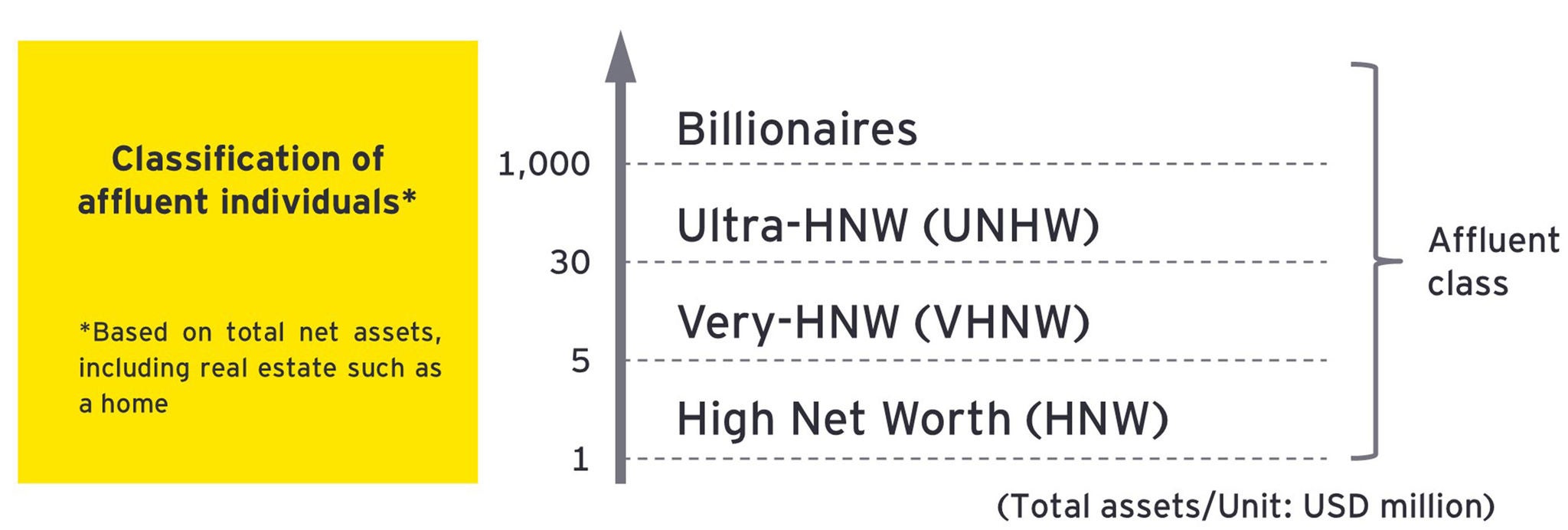
Society often associates high-value travelers with terms such as “the affluent class” or luxury. While the definition of the affluent class varies, a global wealth report that regularly analyzes the status of wealthy individuals around the world defines the affluent class as individuals whose personal assets exceed USD1 million, and categorizes them in the following tiers7:
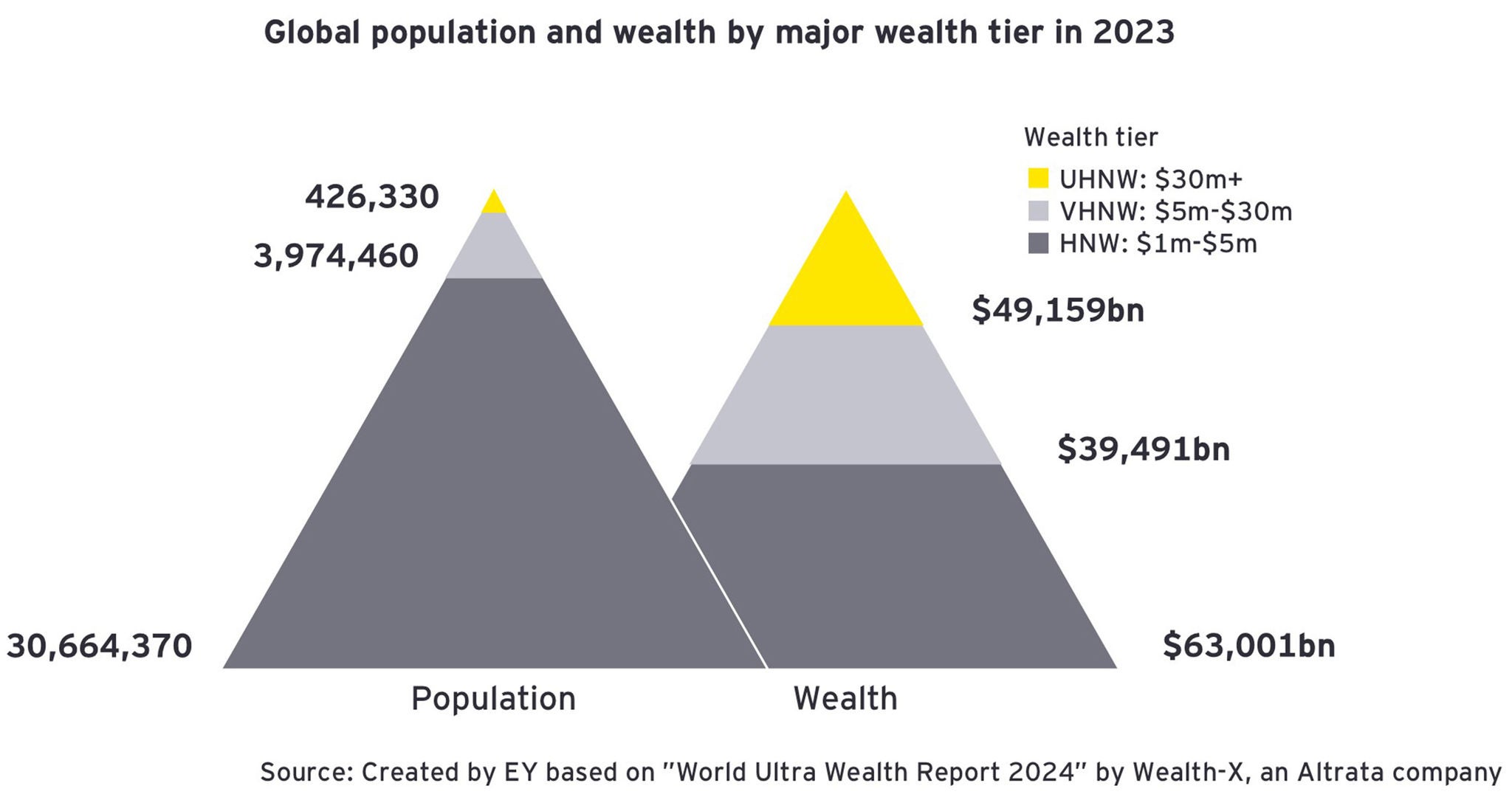
According to this categorization, ultra-high-net-worth (UHNW) individuals, whose financial assets exceed USD30 million, constitute only 1.2% of the entire affluent class population. However, this small segment holds a disproportionate 32.4% of the total wealth held by the global affluent class.8
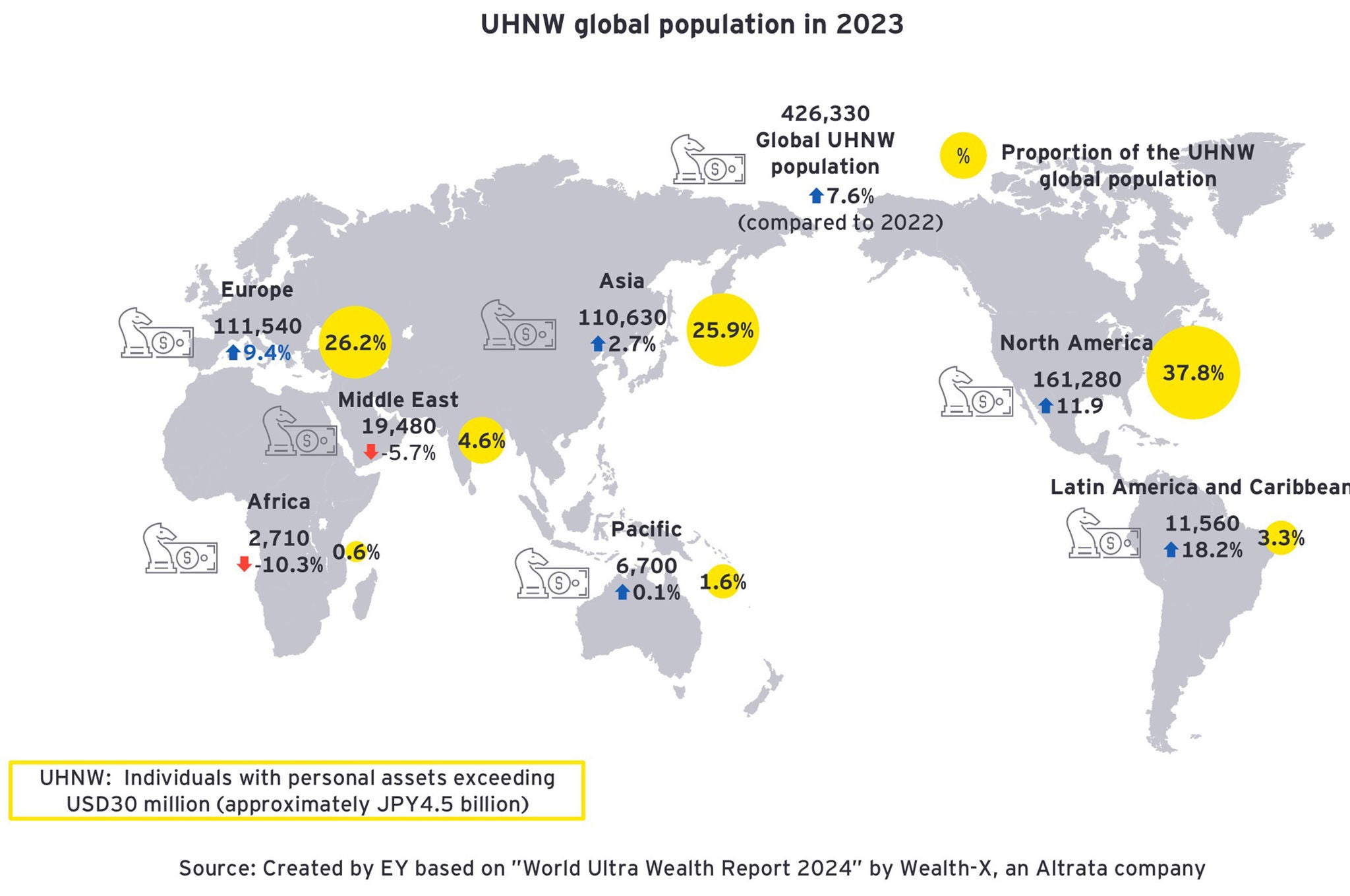
As of 2023, data on the geographic distribution of the UHNWI population suggests that North America has the largest number of affluent individuals, followed by Europe and Asia, although the rankings fluctuate each year due to economic conditions. The Middle East has also shown an upward trend in recent years, despite experiencing a decline relative to 2022 levels. The map reveals that the primary sources of affluent travelers are North America and Europe, while Asia, which represents Japan’s largest customer base, remains an important market.
7. Wealth-X “A Breakdown of the Wealthy Across the Globe”
wealthx.com/articles/a-breakdown-of-the-wealthy-across-the-globe (Accessed on 7 March 2025)
8. The total population of UHNW individuals is projected to reach 528,000 by 2027, demonstrating consistent growth to the present day. With global personal wealth expected to reach USD60.2 trillion, it is estimated that UHNW individuals will account for approximately 11.3% of this total. Reference: Wealth-X, ALTRATA ”World Ultra Wealth Report 2023”
wealthx.com/articles/a-breakdown-of-the-wealthy-across-the-globe (Accessed on 7 March 2025)
8. The total population of UHNW individuals is projected to reach 528,000 by 2027, demonstrating consistent growth to the present day. With global personal wealth expected to reach USD60.2 trillion, it is estimated that UHNW individuals will account for approximately 11.3% of this total. Reference: Wealth-X, ALTRATA ”World Ultra Wealth Report 2023”
High-value travelers to Japan
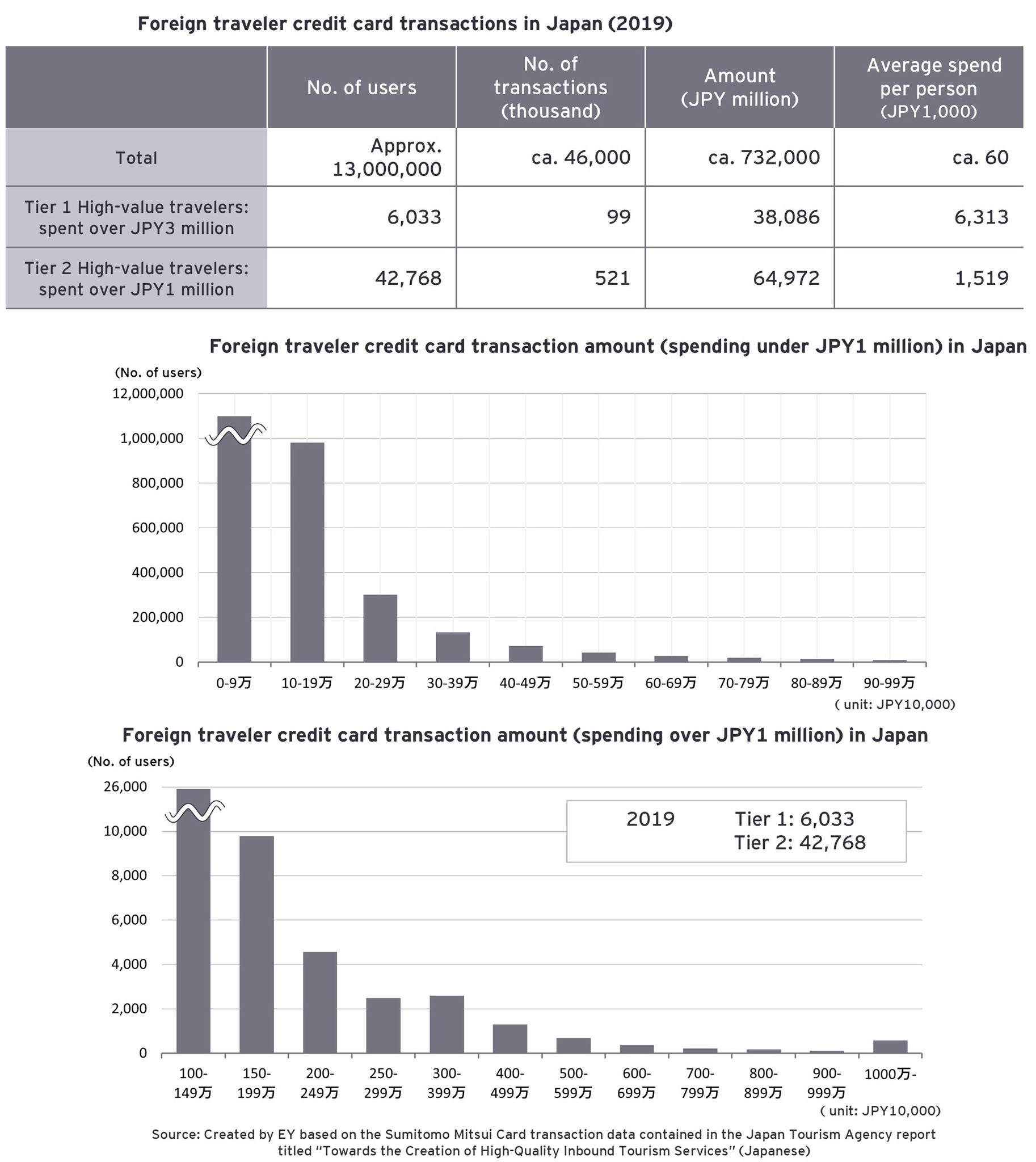
According to 2019 data about high-value travelers to Japan9, average spending per inbound traveler was JPY60,000. As shown in the figure below, Tier 2 travelers spent an average of JPY1.519 million, while Tier 1 travelers spent an average of JPY6.313 million. The current weakness of the Japanese yen has increased these amounts.
9. In this report, a high-value traveler is defined as spending more than JPY1 million per travel to Japan per the definition provided by JNTO.
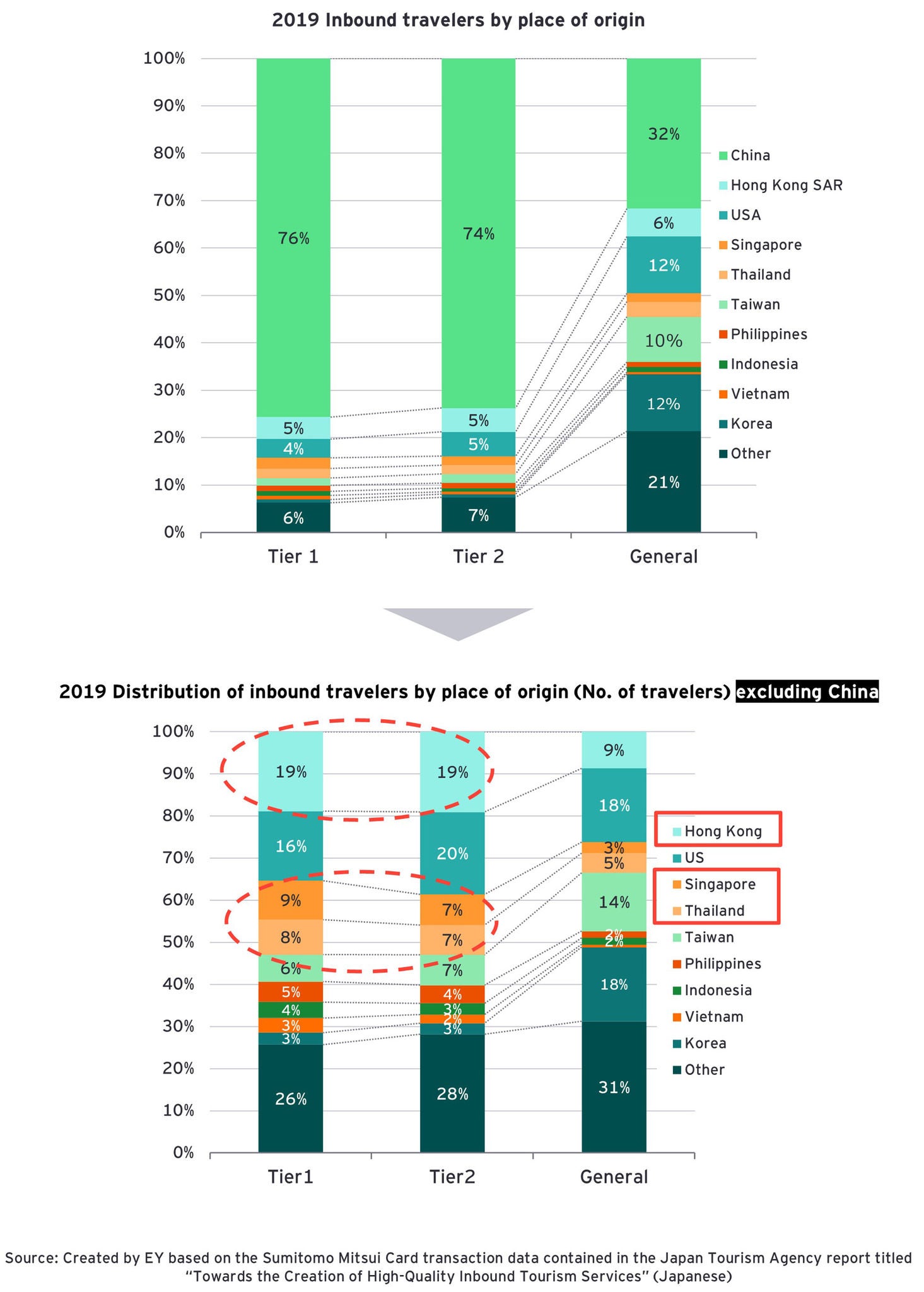
When looking at the data by nationality, visitors from China account for the substantial majority of high-value travelers. Excluding China, travelers from Hong Kong, Singapore and Thailand represent a higher proportion of Tier 1 and Tier 2 travelers compared to their respective rates among general travelers (who spent less than JPY1 million during their visit). The US is second to Hong Kong in the number of visitors to Japan.
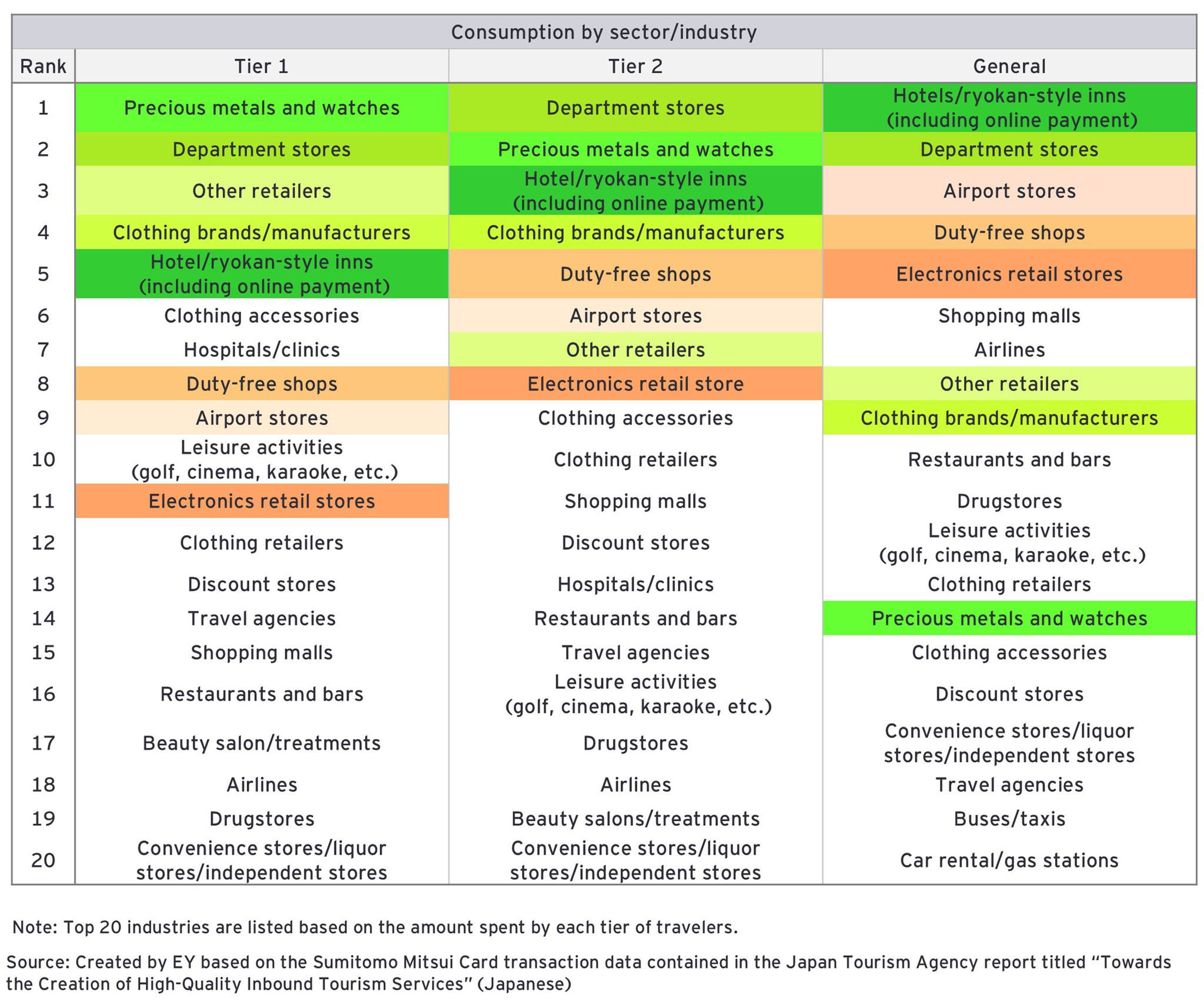
The breakdown of spending indicates precious metals/watches, department stores and clothing brand manufacturers are the most popular destinations for spending. Among Tier 1 travelers, “Other retailers” also ranked highly which suggests some spending on art pieces and local craft products.
As highlighted above, the perceived characteristics of high-value travelers can vary significantly. It is essential, therefore, for local stakeholders seeking to attract visitors to accurately identify their target demographic. Without correct alignment at the regional level in Japan, there is a risk of misjudging product/service designs or pricing strategies, making it difficult to achieve the desired outcomes.
Trends among high-value travelers
As seen above, Tier 1 and Tier 2 high-value travelers place a greater focus on goods in the context of inbound tourism. As a significant proportion of their spending is on shopping for precious metals and watches, and at department stores, this may not benefit local businesses or producers.
While high-spending affluent class consumers are important for increasing local consumption, sales of overseas brands or domestic luxury products in Japan may ultimately reduce the opportunities for local communities to benefit from tourism. Regional communities will not thrive without sales of local goods and experiences.
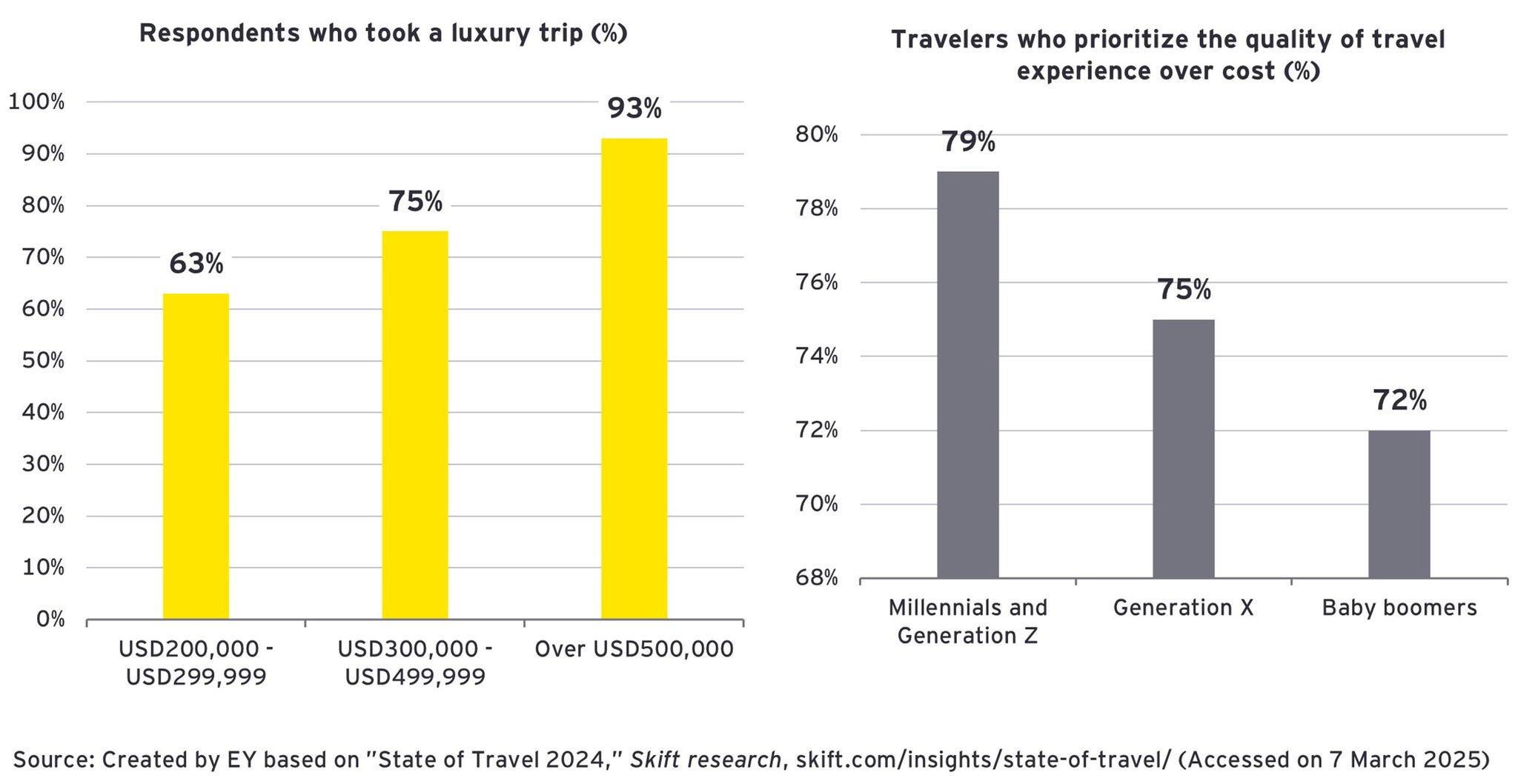
Recent trends among high-value travelers suggest an increasing shift from the consumption of goods to a greater emphasis on experiences.10
There is also a growing trend for "quiet luxury,” rather than conspicuous luxury, with a focus on authentic and essential experiences rather than ostentatious and extravagant signs of wealth.
This change suggests that the affluent demographic has shifted towards more instinctive behaviors as a result of their experiences during the COVID-19 pandemic. The extended period of restricted freedoms sparked a strong desire for travel, often referred to as "revenge travel,” leading to explosive consumption behavior. However, this desire, particularly among an affluent population, may have reached saturation point, prompting a shift towards more usual patterns of behavior.
Improvements in the quality of experience and the pursuit of authenticity are increasingly sought by travelers with higher income levels. Across different age groups, Millennials and Generation Z tend to prioritize quality over cost more than others.
10. Bain & Company “Luxury in Transition: Securing Future Growth”
www.bain.com/insights/luxury-in-transition-securing-future-growth/ (Accessed on 7 March 2025)
11. Skift “A Deep Dive Into Luxury Hotels” (January 2025)
www.bain.com/insights/luxury-in-transition-securing-future-growth/ (Accessed on 7 March 2025)
11. Skift “A Deep Dive Into Luxury Hotels” (January 2025)
The path to high value creation in Japan
As suggested by the growing popularity of "quiet luxury,” it is increasingly important to capture the attention of - and provide value to - not only affluent individuals but also everyone who appreciates authenticity. Efforts for high value creation go beyond merely offering expensive products and content; it also involves extracting their essence by incorporating additional information, such as background stories. This approach aims to elevate and enrich the products and content into something truly unique.
“Authenticity” and “immersion” are considered primary ingredients of high added value. Authenticity refers to originality, rather than imitation. Immersion, meaning fully engaging with something, enables individuals to connect to more local and extraordinary experiences. In Japan, culture, traditional industries and nature are particularly likely to become important keywords associated with these concepts. In addition, as rural areas (rather than urban centers) tend to possess more potential appeal linked to these keywords, they not only have the potential to attract tourists but also to fundamentally revitalize their communities.
This leads to an exploration of how regions can incorporate wellness, which is attracting increasing interest from the affluent class, as well as more local content into the context of high value creation, using traditional industries as an example.
Rising awareness of wellness
Since the pandemic, society has developed a growing awareness of wellness, emphasizing the importance of caring for both physical and mental health. This trend seems to be particularly popular among affluent individuals and those who prefer high-value offerings.12 As an example, a recent report by International Luxury Travel Market (ILTM) highlighted wellness and presented data suggesting that the interest in wellness is rising significantly among many wealthy individuals.13
“Nine in ten individuals expressed a desire to improve their health for the future.”
"Health has become a new form of wealth, and many affluent individuals are actively embracing this concept."
"74% have already incorporated wellness principles into their daily lives, and 61% place greater importance on health since the pandemic."
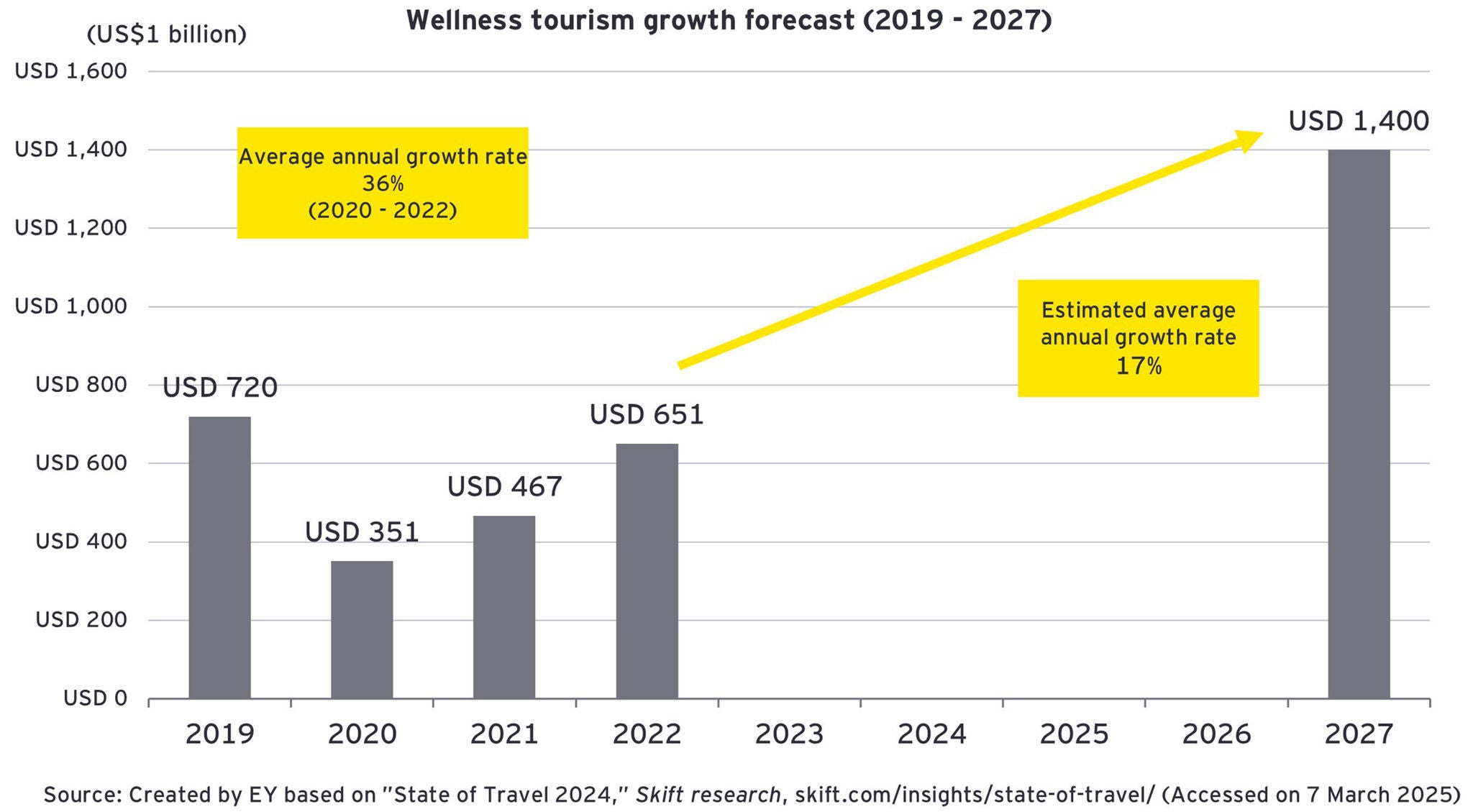
The wellness tourism market is expected to continue its rapid expansion, with the total market size projected to reach USD1.04 trillion (approximately JPY210 trillion) by 2027. It represents a promising market and offers content favored by higher-income demographics.
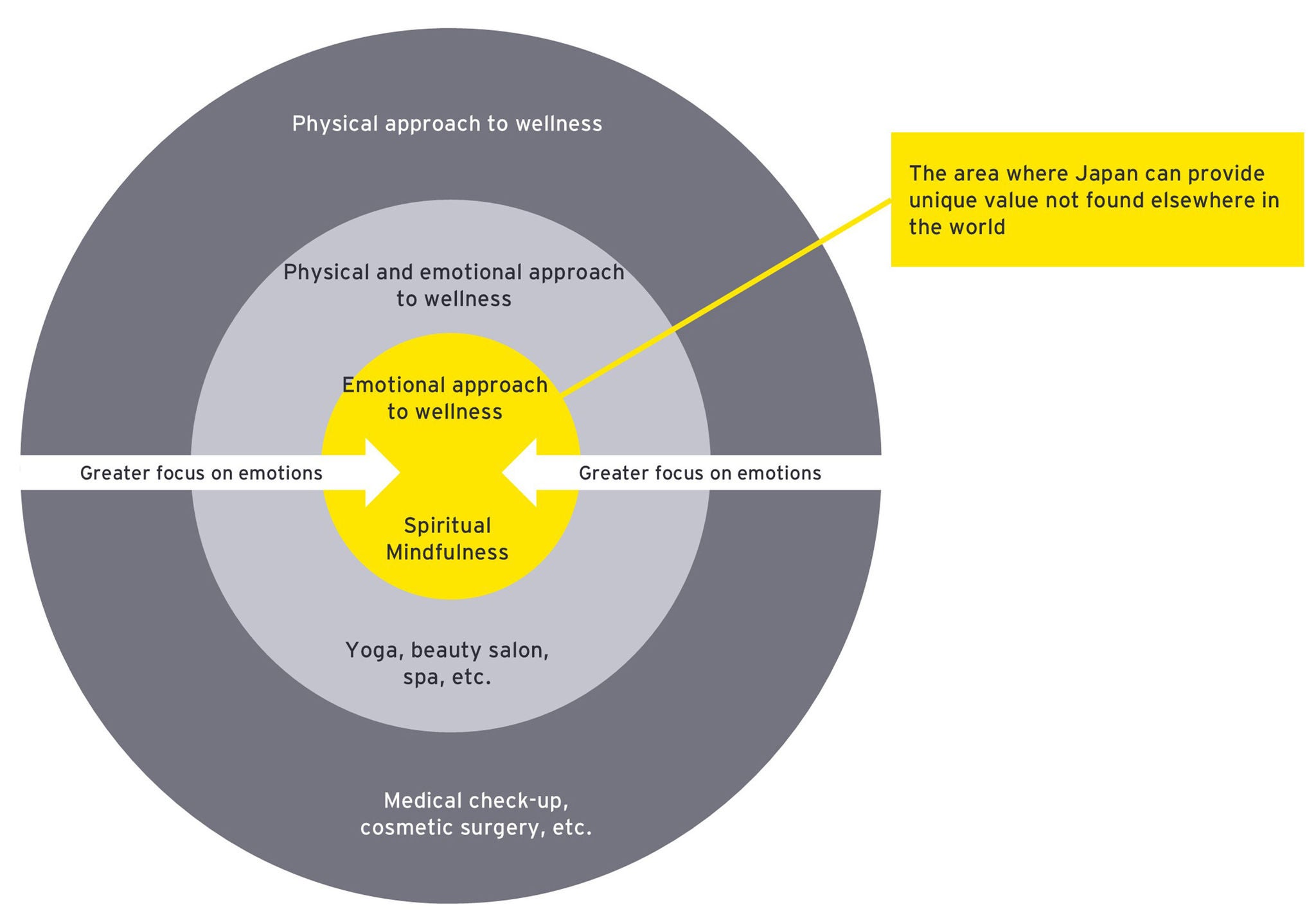
Wellness can be defined in various ways but generally consists of three main concepts: the medical aspect aimed at improving physical health, the spiritual and mindfulness aspect focused on enhancing mental well-being, and the liminal space in between these aspects.
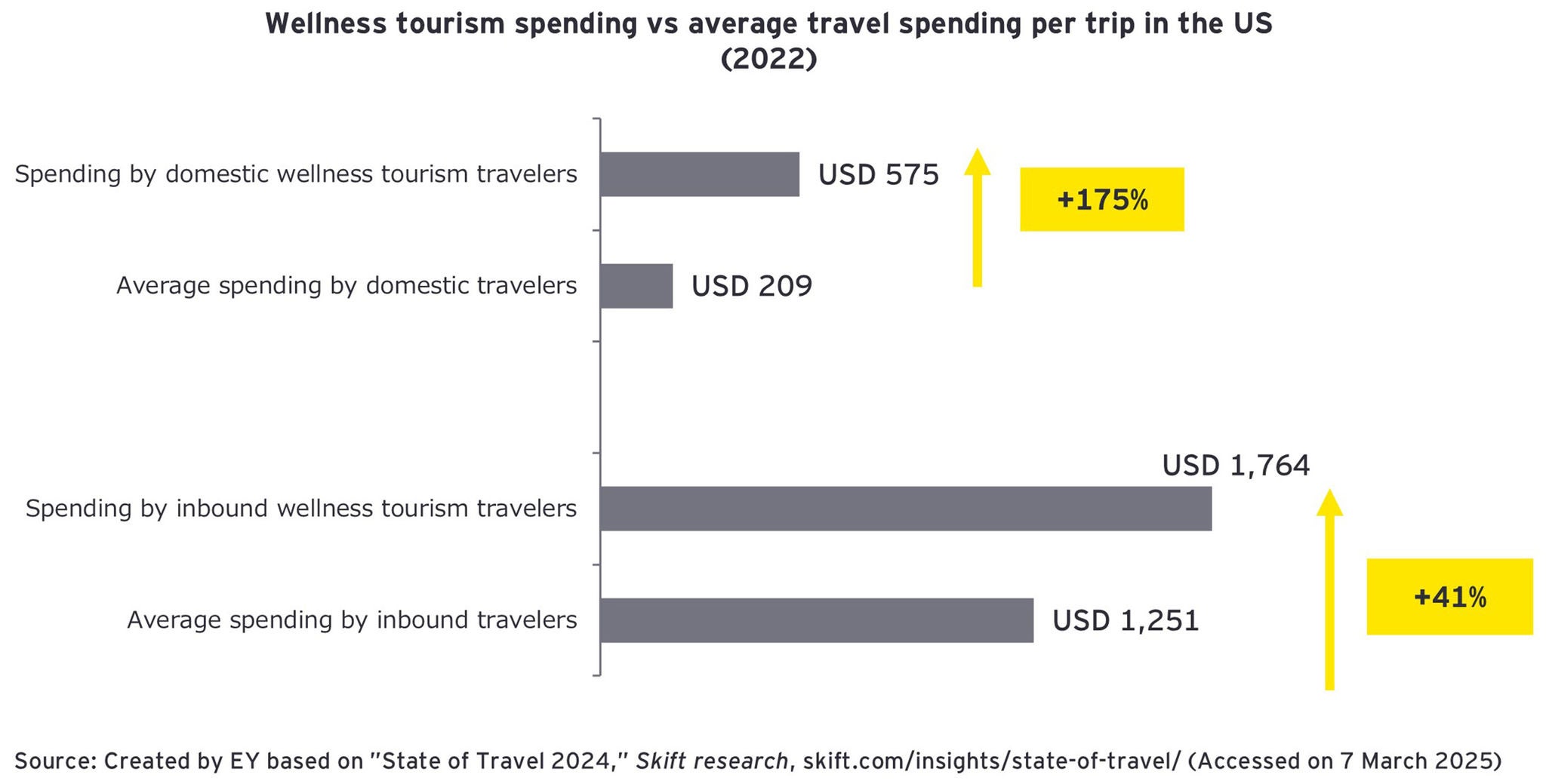
As mentioned earlier, there is greater consumption of wellness by individuals with higher income levels. Consumption by wellness tourists also tends to be higher than the spending by general travelers, suggesting that rural areas tapping into wellness demand have the potential to further contribute to the expansion of local consumption.
In the wellness field, Japan boasts advanced healthcare technology and a wide range of content to support a healthier way of living. At the same time, Japan’s approach to wellness, which appeals to the fundamental spirituality of humans as represented in “Zen” philosophy, is acclaimed globally and attracts the attention of many people, including corporate executives. According to a Japanese startup based in Malaysia that specializes in global wellness business operations, "the global wellness discussion is a blend of medical and spiritual elements. This may be due to the lack of a long-developed holistic spirituality, as compared to what is seen in Japan and other Asian countries. The world is finally beginning to recognize the spiritual aspects of wellness, and wellness content which appeals to spirituality is flourishing.”
This suggests that Japan's wellness market has increasingly high future potential and that much of this potential is concentrated in rural areas.
“Live to 100: Secrets of the Blue Zones,” a Netflix series on the secret of Okinawan longevity and attracting a growing interest since its release, Shintoism, the spirit of Zen, the culture of wabi-sabi and other wellness content that highlights the rich natural environment of Japan represent the essence of the Japanese culture. Japan will be able to attract high-value travelers by leveraging this perspective and providing one-of-a-kind wellness content to the world. The country has the ability to offer wellness programs to enhance physical well-being through advanced healthcare technology, mindfulness experiences that reach into the center of one’s being – something unique to Japan - and activities such as yoga and spa treatments in rich natural settings. This presents significant potential in terms of high value creation which many regions are able to offer.
12. According to a report by Skift, individuals with higher incomes tend to spend more on wellness.
Reference: Skift “The Wellness Travel Boom in 2024 and Beyond What You Need to Know”
13. ILTM “BUZZ VS REALTY Edition#4 Wellness : Exploring the Luxury Traveler’s Mindset”
Reference: Skift “The Wellness Travel Boom in 2024 and Beyond What You Need to Know”
13. ILTM “BUZZ VS REALTY Edition#4 Wellness : Exploring the Luxury Traveler’s Mindset”
Effective use of traditional industries, history and culture
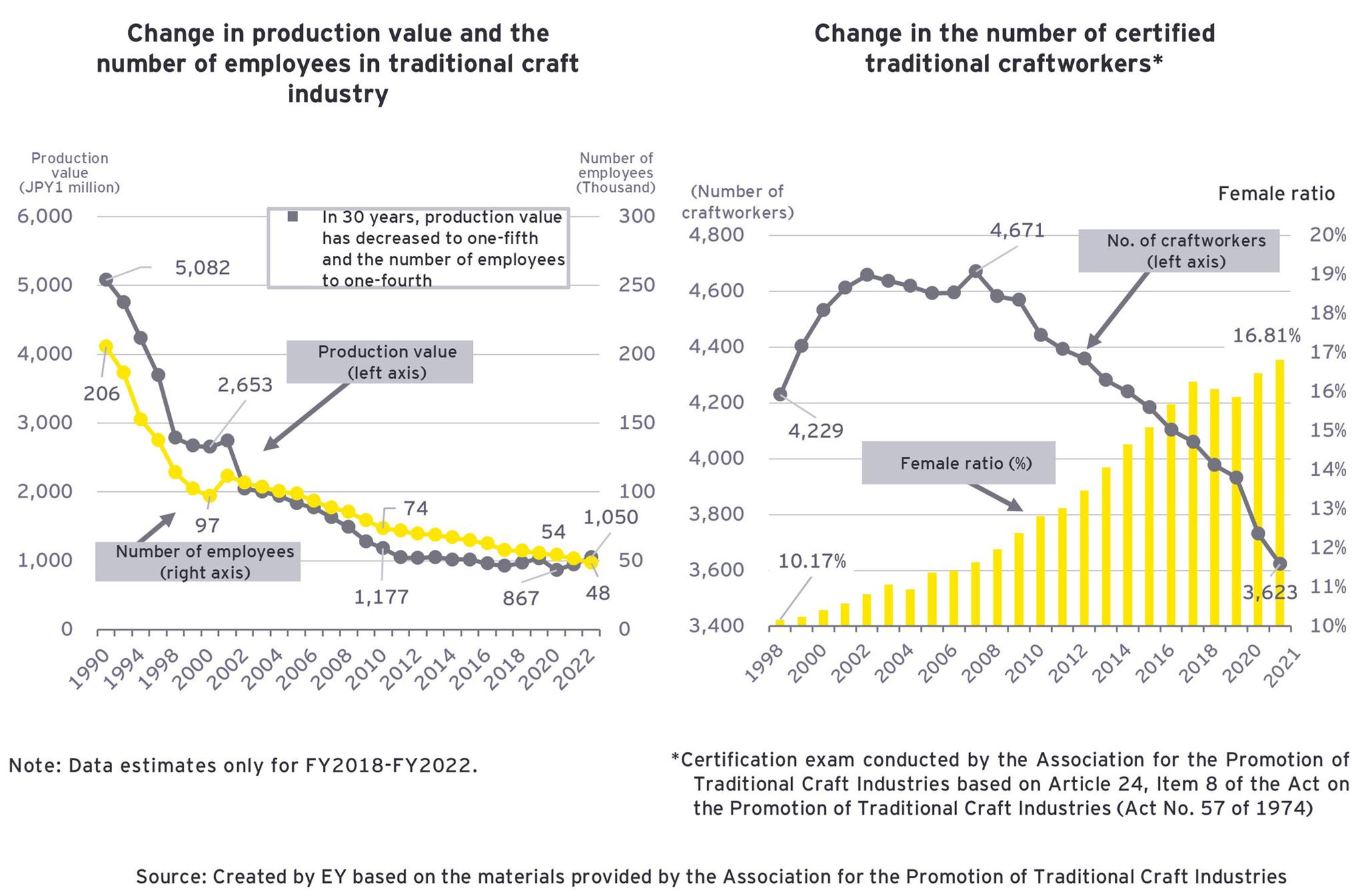
In the context of high value creation, it is important to include the traditional industries, history and culture that each region has cultivated over time. Traditional industries have experienced a notable decline in demand for their products based on their traditional usage, along with a decrease in the number of workers, leading to a rapid contraction in market size. The market size of traditional industries has shrunk to about one-fifth of its size in the 30 years since 1990, and the number of employees has decreased to one-fourth in the same period. The number of certified traditional craftworkers registered with the Association for the Promotion of Traditional Craft Industries has also decreased by 1,000 since peaking in 2007, while the proportion of craftswomen has increased.
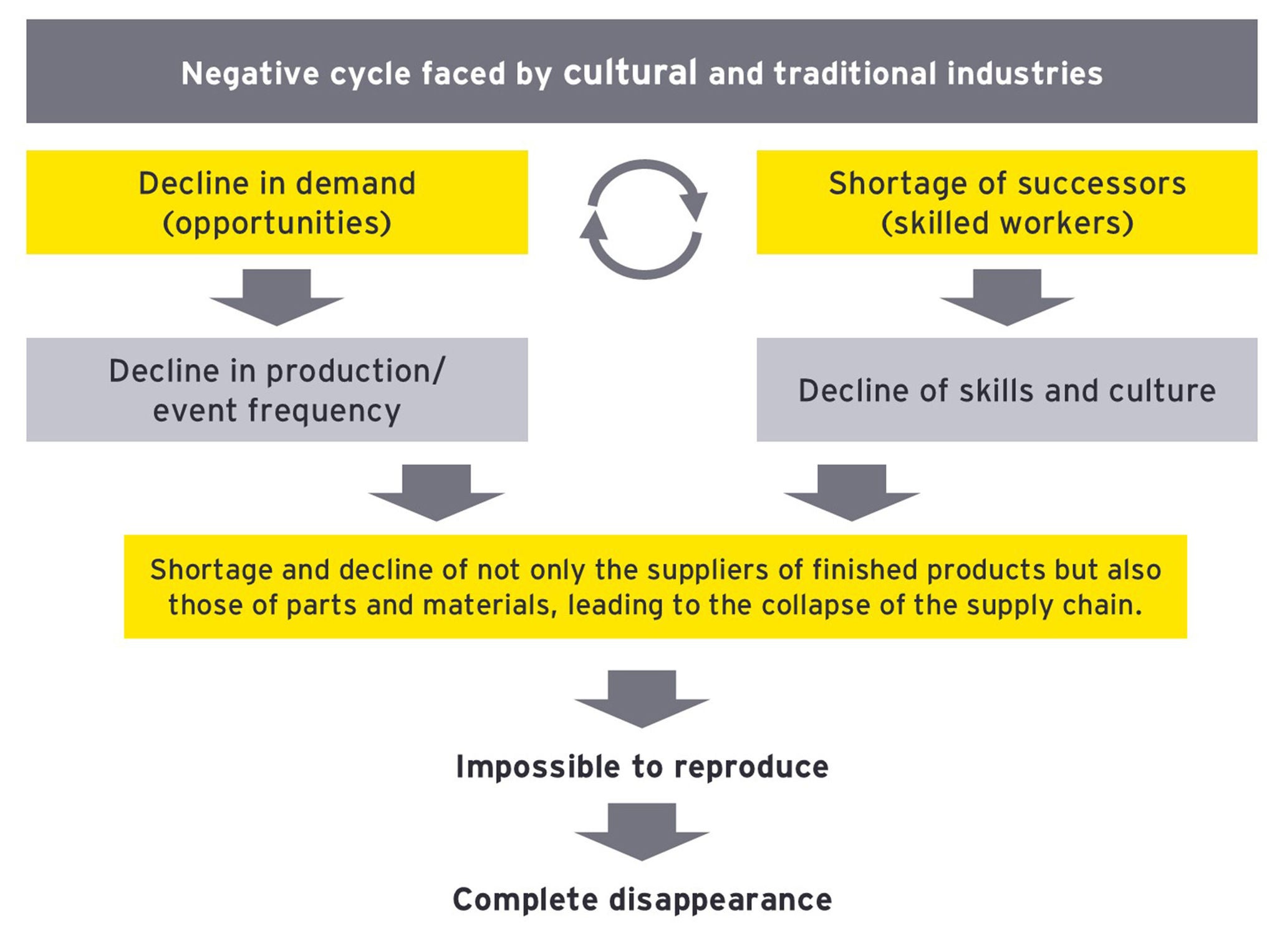
Business succession is a significant challenge for traditional industries where a decline in demand and a shortage of workers are creating a negative cycle. Declining demand for final products is matched by a diminishing workforce responsible for supplying parts and repairs, which has the potential to collapse the supply chain, ultimately making traditional crafts impossible to reproduce and placing the traditional industries at risk of extinction.
Even though the market currently shows a slight recovery, the risk of extinction will only increase in the future unless there are new usage methods and value offerings that align with changes in people’s lifestyles.
Creating new demand can only come with identifying what needs to be preserved and what needs to be changed, and by incorporating new perspectives in place of conventional approaches.
Inbound demand can become a catalyst if viewed from a completely different perspective and with new ideas. While Japanese people may have unconscious bias about traditional industries, inbound travelers have the potential to engage with these industries from a completely different perspective. There are already emerging examples where the designs and techniques of traditional crafts are repurposed, such as kimono sashes being appreciated for their patterns when used as table runners or wall hangings.
Traditional industries will be able to enhance their value by expanding the utility of their products while maintaining the true essence of their techniques. In the context of high value creation, the pursuit of authenticity, development of immersive designs, and the definition of diverse values will be crucial to maintaining traditional techniques.
According to travel designers who arrange trips and experiences for wealthy travelers around the world, the traditional Japanese craft of kintsugi, that involves repairing broken pottery using lacquer and precious metals, enjoys great popularity among affluent travelers, including many corporate executives. Kintsugi enables these executives to develop a mindset which is tolerant of imperfection and to understand that the methods used to correct or repair imperfections in an object add rather than detract from its value, which is also relevant to a management approach.
In this way, many inbound travelers are embodying the value within traditional Japanese industries. In future, there may be a scenario where inbound travelers engage with traditional industries as transmitters or the new bearers of traditions. If so, it may also help Japan’s younger generations to re-find their pride and recognition of Japanese traditional industries as national assets attracting global attention, potentially encouraging their role as participants and successors in these industries. 14
14 In a previous EY survey on overtourism which asked about the positive impacts of booming tourism for local residents, some respondents indicated that they “became interested/more interested in local attractions such as nature, history, culture and cuisine” and “are proud that their cities attract so many tourists.” On that basis, there is a strong likelihood for this to occur.
EY Strategy and Consulting Co., Ltd. “Tourism as a catalyst for Japan’s economic growth and the impact of overtourism”
www.ey.com/en_jp/insights/consulting/tourism-as-a-catalyst-for-japans-economic-growth-and-the-impact-of-overtourism (Accessed on 7 March 2025)
EY Strategy and Consulting Co., Ltd. “Tourism as a catalyst for Japan’s economic growth and the impact of overtourism”
www.ey.com/en_jp/insights/consulting/tourism-as-a-catalyst-for-japans-economic-growth-and-the-impact-of-overtourism (Accessed on 7 March 2025)
Steps to creating high value
Branding is one shortcut to achieving high value creation. Once a dominant brand is established, the value of a region/experience/content naturally increases. As more people aspire to the brand and desire to experience it, the brand’s value rises even further.
However, establishing a brand and gaining recognition among an audience requires time. Each region must develop its own "one of a kind" positioning in the branding process. Creating truly unique content calls for highlighting rarity and relevant background information to elevate and enrich local content to the level of something genuinely distinctive. The history of each region is original and unmatched.
Additionally, once people have enjoyed a high-quality experience, they find it difficult to engage with experiences that fall short of that standard (the ratchet effect in luxury). This suggests that knowing how to provide high-quality experiences to travelers is ultimately a crucial factor in nurturing that target audience for the region and encouraging them to make repeated return visits.
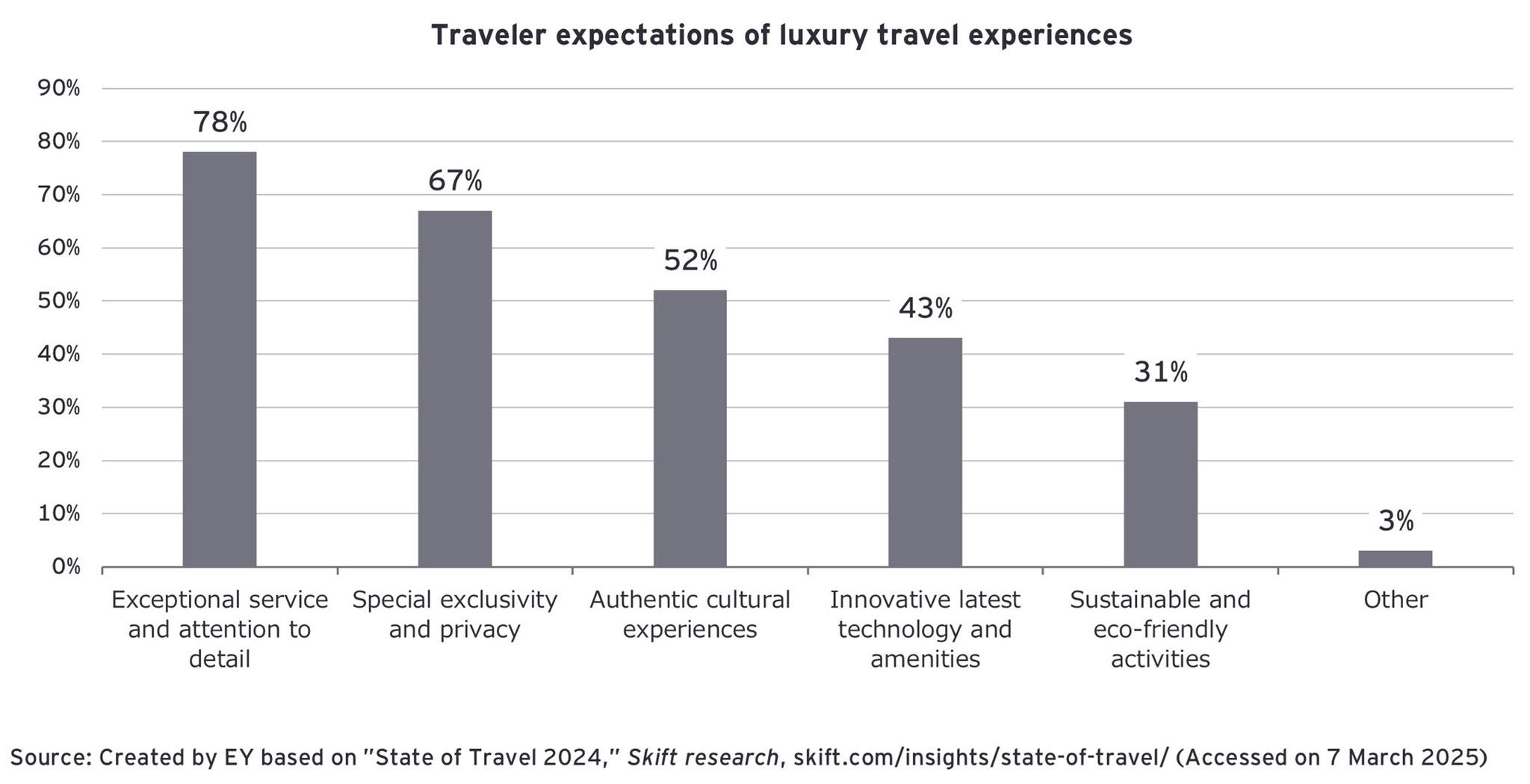
So what constitutes a high-quality experience for tourists? Tourists seem to define "high value/high quality" or "luxurious" experiences as expertly crafted and customed services and activities, particularly when they are authentic to the culture and locale and require some effort on the part of the visitor. Limited access viewings, events at unique venues, uninterrupted panoramic views are typical examples of these experiences. However, as discussed in the context of wellness, high-quality experiences also emphasize the importance of inspiring one's inner self. Similarly, spending time with "special people" such as Japan’s Living National Treasures (government-certified expert artisans), writers and artists, and witnessing their way of life and thoughts firsthand can be considered a special experience.
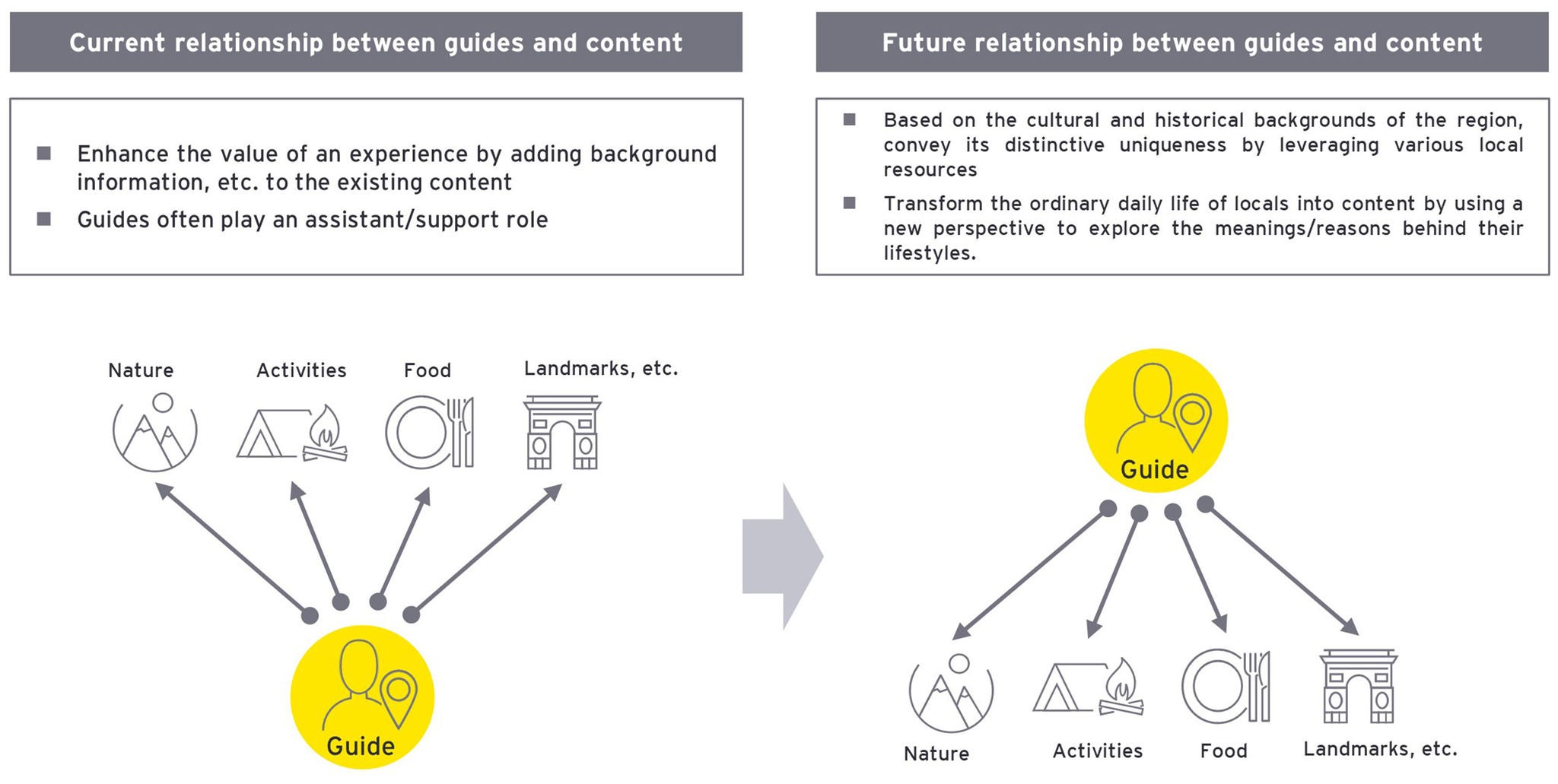
Historical and cultural stories unique to the area have to be incorporated in local content to enrich and elevate them to a unique and exclusive experience not be found in other regions. However, simply organizing information and adding details to content introductions is insufficient. This is because people rarely seek as much information as might be expected. When this supplementary information is presented in a two-dimensional format, it tends to have weak appeal for travelers and is not effective in deepening their understanding through experience.
When background information about the content is presented on-site in a visual format and spoken information is provided in real-time, there is a significant increase in the audience’s understanding and engagement with the content. For example, during a recent visit to Ise Shrine, the author learned initially about the significance of Kagura (ceremonial dance) and participated in a Kagura workshop at Kogakkan (University) then attended a Kagura performance at Ise Shrine the following day. This prior knowledge allowed him to understand the meaning of every gesture, including the act of offering food and drink to the Shinto god and the later associated ritual of consuming these offerings. He found this was a powerful and moving immersive experience.
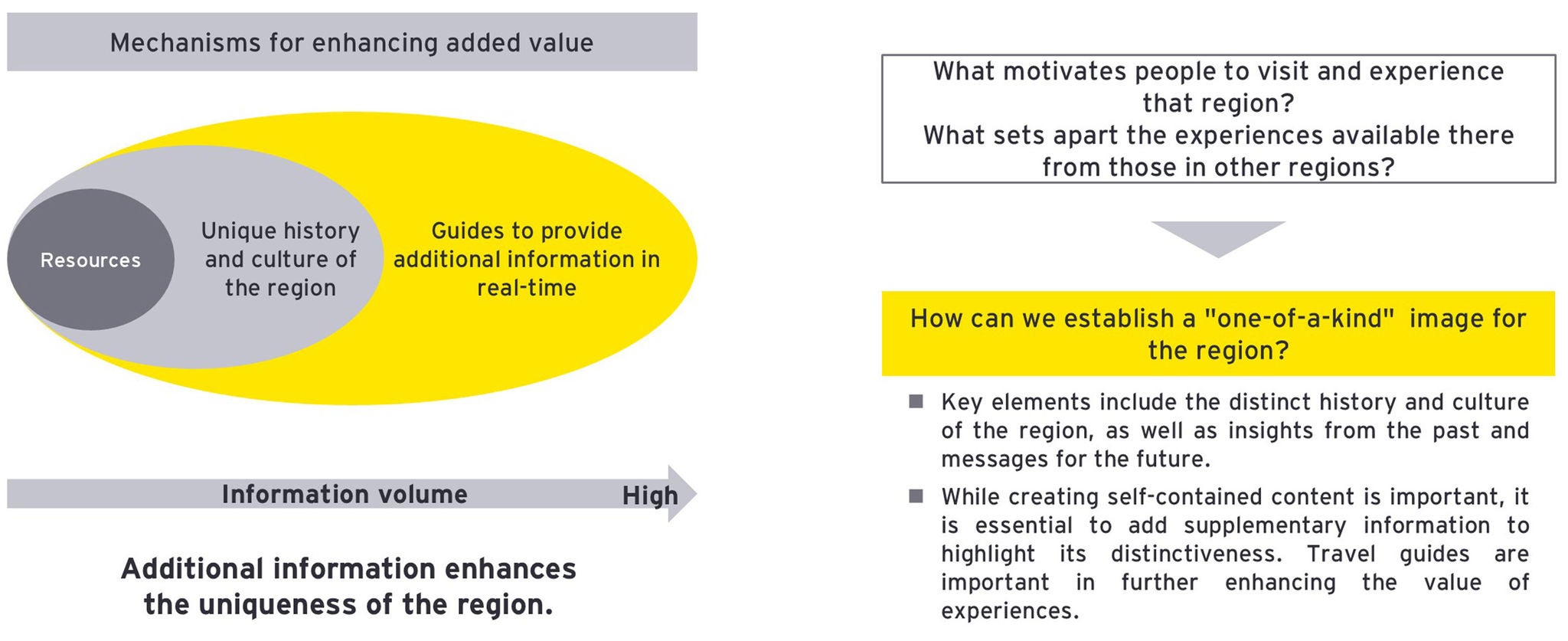
The role of guides is also becoming increasingly important in enhancing experiential value. However, to ensure high added value, guides should not only provide supplementary explanations but also curate and organize regional content to meet the needs of high-value travelers, which enhances the overall value of the experience.
New perspectives to create new industries
As seen so far, high value creation is not merely providing content at a higher price. In fact, it involves defining and conveying the uniqueness of content by adding background stories about topics such as local history and culture.
This suggests that what we have taken for granted in our daily lives can have a completely different appeal when viewed from a new perspective. EY has previously identified "the touristification of everyday life" as one of the future megatrends in tourism.15 This indicates that the daily lives of local people can be seen as an "extraordinary" experience for outside visitors to a region, creating entirely new value. Even regions that have been considered devoid of tourist attractions can offer something meaningful and valuable to non-locals and visitors through this shift of perspective.
Given that studies suggest that high-value travelers have a strong interest in gaining inspiration from history and culture, it is important to provide customized experiences for them. However, there is an additional layer to consider: the positive impacts that these experiences can have on travelers. Instead of merely offering enjoyment in the moment, how can these experiences make a positive contribution to their lives at a later date? Reflecting on and conveying these elements to travelers is integral to providing valuable experiences. This is also evident in the growing popularity of wellness tourism, where people seek experiences which allow them to delve deeper into their inner self.
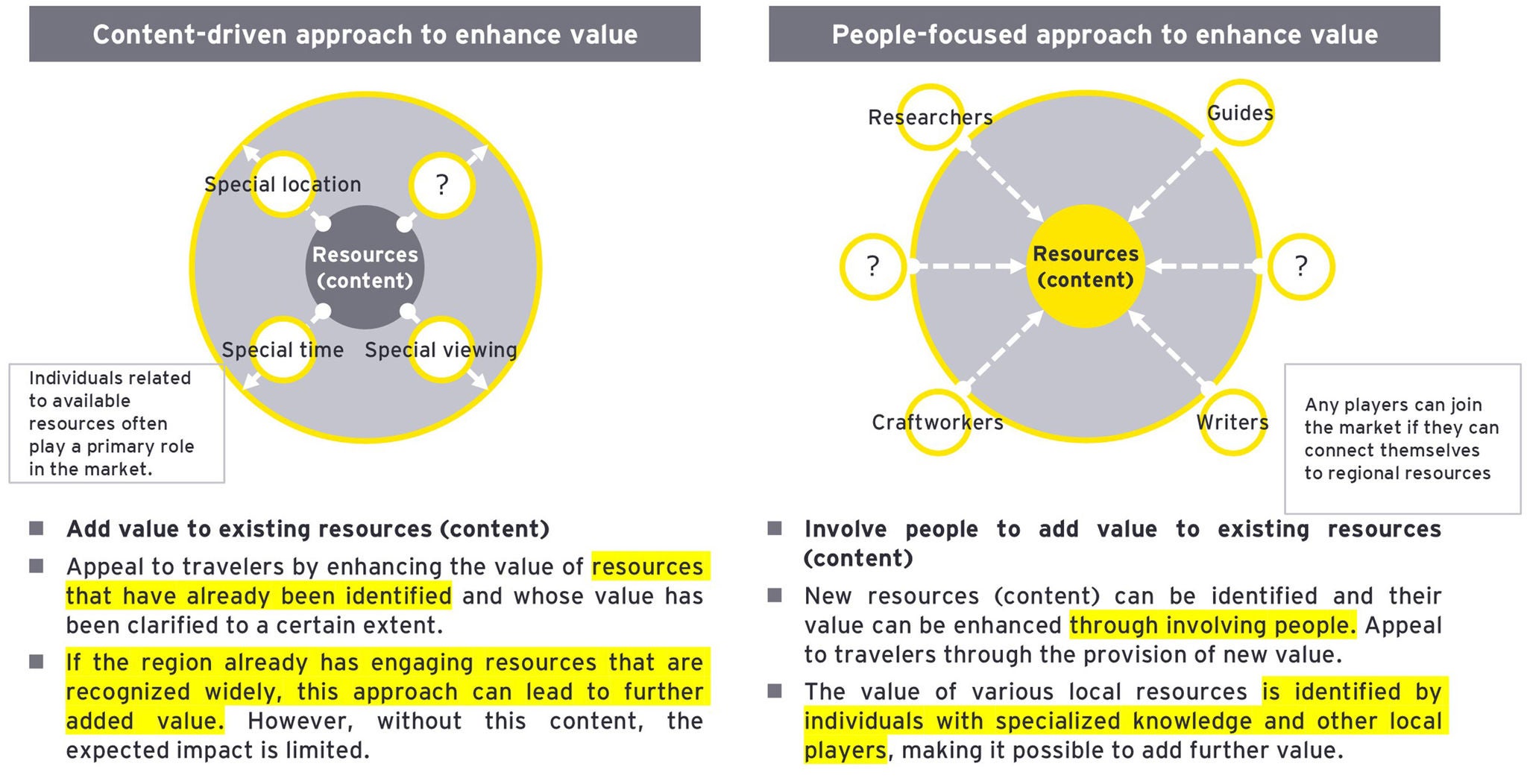
As a result, the effort to create high value goes beyond the development of tourism content: it requires a deep exploration of regional characteristics and the spirituality of travelers which depends on entirely new ideas and approaches. Until now, it has been rare for individuals with specialized knowledge and skills, such as writers, artists, curators and researchers, to provide value. However, in the context of high added value, anything that can provide inspiration and insights can contribute to value creation. By shifting perspective and focusing on the value of what is on offer, it becomes possible to create high-value businesses, providing all stakeholders with opportunities for participation and success.
15. EY Strategy & Consulting Co., Ltd. “The future of tourism 2022-2031” (Nikkei BP 2021)
High-value travel requires “accelerated personalized reaction”
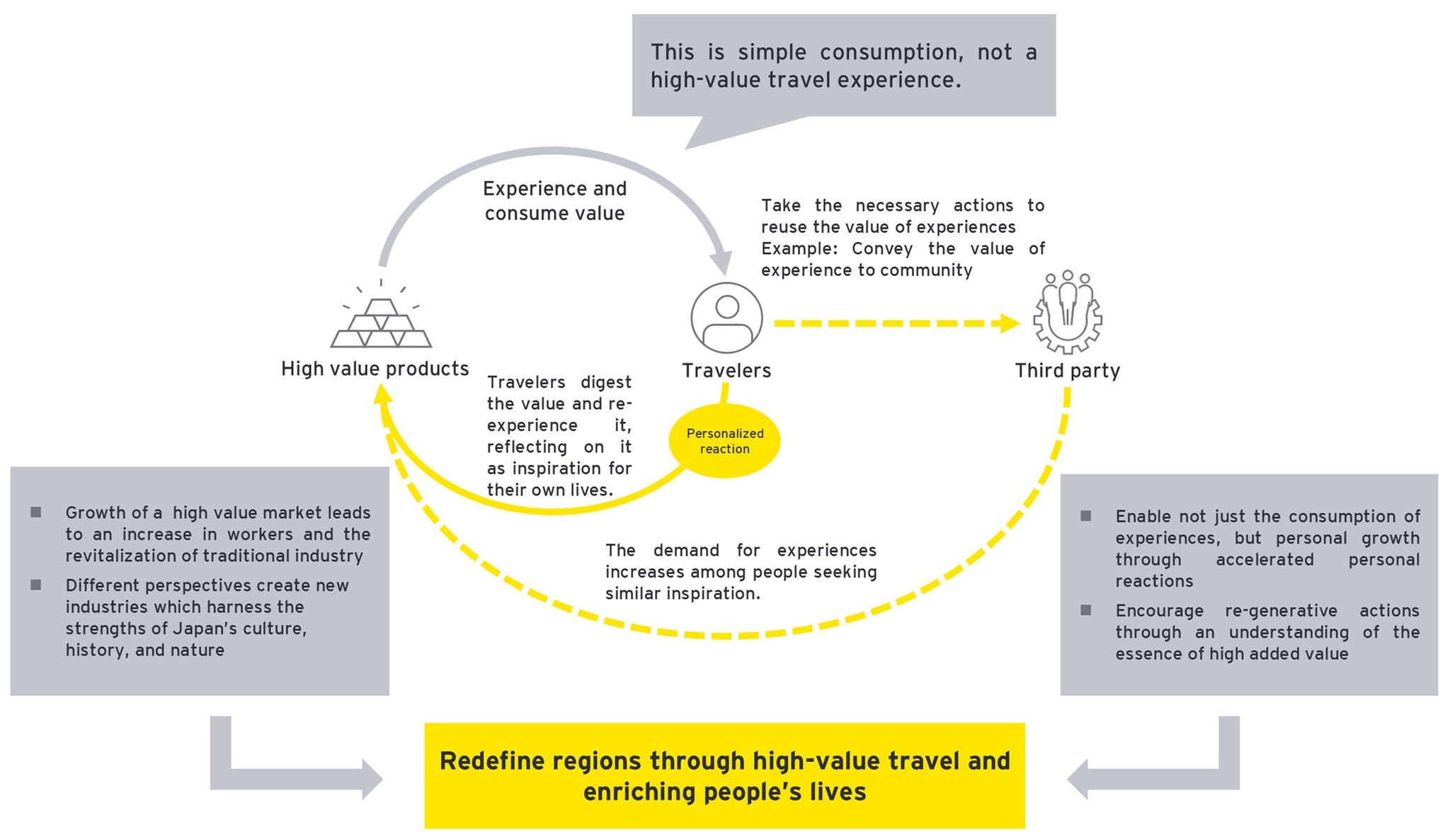
As discussed, to create attractive content and value for high-value travelers, it is essential to incorporate additional elements, such as the region's history and heritage, and to enhance its distinctiveness. However, merely offering an "experience" is no guarantee of further engagement with travelers, similarly to the limited effect of "consumption." The key lies in transforming the experience into a cycle of value creation that fosters future engagement.
As the example of traditional industries and cultures indicates, offering outstanding value through experience can encourage individuals to consider what that value means to them, what they can do to experience it again or how to pass it on to the next generation. This process of "accelerated personalized reaction" to experiential value, where individuals think about how they can carry that value forward, can be considered "high-value travel."
At EY, we define this process of personalized reaction as "re-generation.”16 The rapidly progressing damage to the global environment and social systems is creating a sense of urgency because solely aiming to maintain the status quo is insufficient to even restore previous conditions. This has led to a shift in focus from sustainability to re-generation, emphasizing the need to create positive change and impact.
In high-value travel, providing new value through the exploration and redefinition of regional assets (including history, culture, and natural landscapes) has become mainstream. By ensuring that the value provided is engaged with on a personal level and not simply consumed by travelers, we can create opportunities for the reevaluation of disappearing traditional industries in Japan and also facilitate change through the creation of new demand. In addition, by spreading the spirit of Zen, which is embedded in Japan's DNA, we can enhance global recognition of the value and excellence of Japan and its regions, elevating their positioning to be unique destinations that offer unparalleled value. Providing high added value, therefore, can be considered a process of value creation and represents a new initiative that can serve as a catalyst for further growth in Japan and its regions.
16 EY Strategy and Consulting Co., Ltd. “Future business 2024-2033” (Nikkei BP, February 2024) EY Strategy and Consulting Co., Ltd. “Future business 2024-2033 All industries” publication anniversary seminar : Future business in 2033 - Regenerative business for creating innovation
www.ey.com/ja_jp/insights/consulting/future-business-in-2033-exploring-the-concept-of-re-generative-business-that-drives-innovation,
EEY Strategy and Consulting Co., Ltd. “Reflecting on a Year Since the Easing of Border Restrictions: What is 'Regenerative Tourism' and the 'Reformation of Travel Value' Towards Sustainability?"
www.ey.com/en_jp/insights/consulting/thinking-about-regenerative-tourism-beyond-sustainability
www.ey.com/ja_jp/insights/consulting/future-business-in-2033-exploring-the-concept-of-re-generative-business-that-drives-innovation,
EEY Strategy and Consulting Co., Ltd. “Reflecting on a Year Since the Easing of Border Restrictions: What is 'Regenerative Tourism' and the 'Reformation of Travel Value' Towards Sustainability?"
www.ey.com/en_jp/insights/consulting/thinking-about-regenerative-tourism-beyond-sustainability
Summary
2024 proved to be a historically profitable year for the Japanese tourism industry. According to the Japan National Tourism Organization (JNTO), the number of inbound travelers to Japan hit a record high of 36,869,900, with inbound consumption reaching JPY8.1395 trillion. Domestic consumption by Japanese travelers also reached a record JPY25.1175 trillion. However, confronted by the rapid resurgence of travel demand and the ensuing challenges of overtourism, some Japanese tourist destinations face an urgent need to shift their focus from quantity to quality, which they are addressing with a strategy for high added value in tourism.
How EY can Help
-
Due to the COVID-19 pandemic, redefining local communities has become an urgent issue in various regions. To support this, EY has made it our mission to develop “data-driven” strategies and ecosystems in business. With this in mind, we develop a framework for collecting and utilizing data, focusing on regional revitalization and tourism industry to promote digital transformation (DX) in tourism, make policy recommendations, and help the formulation of corporate strategies.
Read more