
EY refers to the global organisation, and may refer to one or more, of the member firms of Ernst & Young Global Limited, each of which is a separate legal entity. Ernst & Young Global Limited, a UK company limited by guarantee, does not provide services to clients.
Recent Searches
Geoff Henshaw
Aeroqual
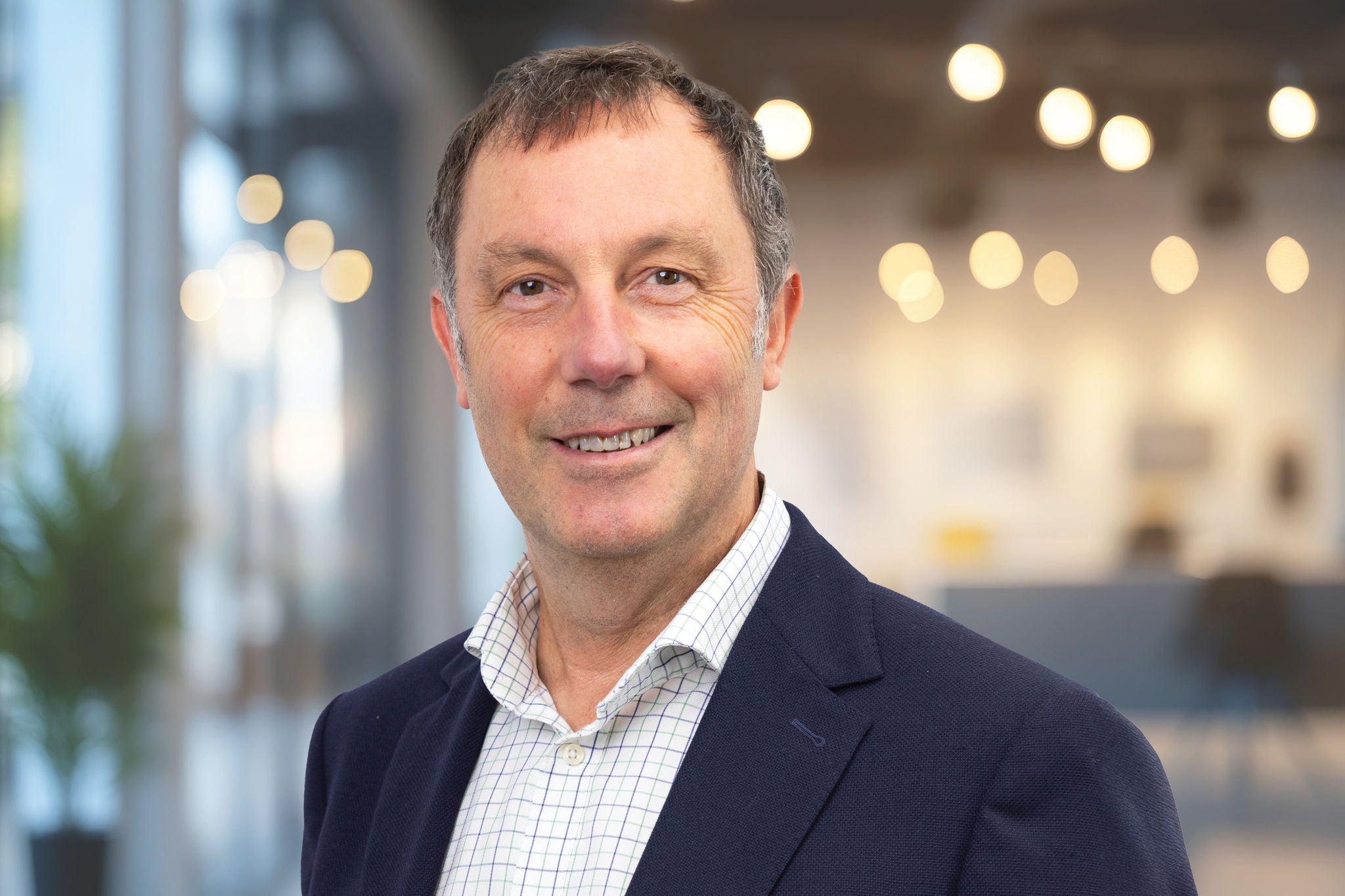
Geoff Henshaw hasn’t always taken the easy path in life. While he had an opportunity to carve out an academic career, researching gas sensors at University College London, he was instead motivated by the challenge of taking technology out of the research laboratory. He set out to chase his vision; however, needed to bring a group of collaborators and investors together first, teaming up with Auckland-based physicist Professor David Williams to create Aeroqual.
Their first product was an ozone sensor, launched within 18 months. From there, Aeroqual steadily evolved from a local technology venture into a global player in air quality monitoring. Geoff was deliberate about the strategic path, focusing on performance and reliability, particularly in the underserved field of industrial remediation. The result was a platform trusted by industry leaders and researchers alike, delivering accurate, real-world data where it matters most.
Led by Geoff’s approach of combining technical depth with market pragmatism, Aeroqual’s instruments are now used in more than 100 countries and capture over 10 billion data points a year. Geoff pioneered modular systems that work in real-world conditions and coined the phrase ‘near reference' to describe Aeroqual’s high performing, low cost of ownership products - a term now used by competitors. He also led the development of software that allows customers to collect and interpret data in real time, helping improve decision-making from the ground up.
Aeroqual customers include researchers, governments, mine sites, and even community health groups trying to protect vulnerable residents from air pollution. Data is used to control industrial emissions, determine whether a daycare can be built near a busy road, alert residents to wildfire smoke, or keep workers safe on mining sites – anything Geoff sees will help people breathe cleaner air through science people can trust.