


EY refers to the global organisation, and may refer to one or more, of the member firms of Ernst & Young Global Limited, each of which is a separate legal entity. Ernst & Young Global Limited, a UK company limited by guarantee, does not provide services to clients.
Recent Searches
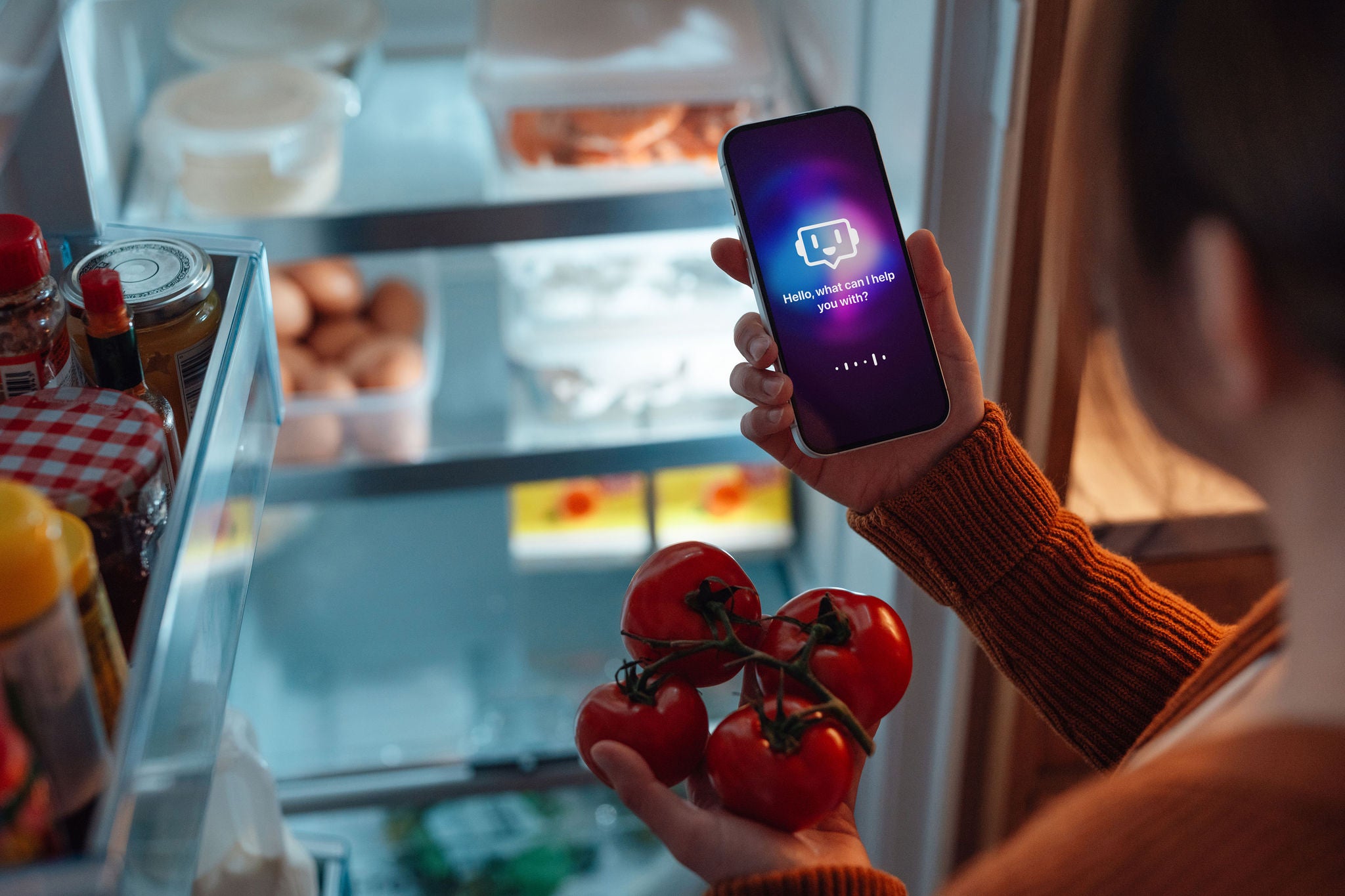
More than one in ten New Zealand consumers expect AI to manage most or all of their grocery shopping within the next 12 months. But what, exactly, do they want AI to manage?
In brief:
- A growing number of New Zealand consumers are ready to hand AI the shopping list, but not a blank cheque.
- Delegation depends on a fair value exchange and a hierarchy of trust – AI can buy the biscuits before the baby food.
- For 72% of New Zealanders, shopping is simply a means to an end, so AI’s real job may be to help people achieve life goals, not fill baskets.
Grocery shopping is one of the most routine decisions we make, yet it involves hundreds of choices each week: what to cook, where to shop, how to spend, which brands to buy and which ones to leave behind.
EY surveyed 1,000 New Zealand consumers to understand whether they are prepared to hand some of those decisions to agentic AI. Three quarters (75%) could identify at least one AI capability that would persuade them to consider AI-assisted grocery shopping. More than 1 in 10 (12%) expect AI to manage most or all of their grocery shopping within the next 12 months.
These findings have implications well beyond the shopping trolley. Grocery shopping is likely to be the first area where consumers hand over routine purchasing decisions to AI, but the same questions around trust, value and control will shape how people shop across a range of retail categories.
Importantly, Kiwi consumers aren’t giving AI agents a blank cheque. They want better value, they want to understand why AI has made its recommendations, and they want the final say at the checkout. AI may be arriving quickly, but trust still has to be earned.
The price of delegation
55%
say AI would need to help them find the best prices or value for money across brands and retailers before they would consider using it.
37%
…the % discount consumers expect to save on the docket from a large grocery shop.
24
…the number of minutes they want to save during a large grocery shop, either instore or online.
Trust in AI has a price tag
At first glance, the findings seem straightforward. A sizeable percentage of New Zealand grocery shoppers are prepared to hand at least some grocery decisions to AI, provided there is a fair value exchange.
There is a clear willingness for shoppers to delegate low-risk items long before handing over purchases that affect their family’s health or wellbeing. Bin liners and dishwashing liquid can be delegated. Parents will probably keep choosing the baby formula.
The cost-of-living crisis continues to cast a long shadow, so it is no surprise consumers are looking for a discount. The 2025 EY Future Consumer Index found New Zealanders were among the most price-conscious globally. This latest research suggests they are driving a hard bargain with AI, expecting an average 37% saving before they’ll let it influence a large grocery shop.
This finding may reflect the AI hype cycle as much as economics. Consumers are being told AI will transform almost every aspect of their lives, yet most have little sense of what that transformation will actually look like. The expectation of saving more than a third at the till may be a response to an over-promise rather than an understanding of what can be delivered.
It also reveals insights into the psychology of trust. Asking AI to take responsibility for purchasing decisions is different from using it to search for information or draft an email. Consumers may therefore be applying a risk premium rather than making a rational assessment of value. The finding that 53% of consumers are concerned that AI would encourage them to spend more money than they need supports this thesis.
The survey also found consumers expect AI to save them around 24 minutes on each large grocery shop. But perhaps 24 minutes isn’t the prize. What consumers are wanting is one less thing to think about. Planning meals. Comparing prices. Remembering what’s in the fridge. Answering the incessant question: “What’s for dinner?” An AI agent may shave a few minutes off the shopping task, but its biggest benefit might be lightening the cognitive load that comes before it.
What consumers will hand over first
For 72% of New Zealanders, shopping is already a means to an end. Retailers have long responded by making shopping faster, easier and more convenient. AI takes this a step further.
The research suggests consumers won’t embrace autonomous purchasing everywhere, all at once. Instead, they are creating a hierarchy of trust.
Some categories are already “agentic ready”: routine grocery purchases, subscription services, entertainment and media, toys and games. Other categories, including health, finance and housing, remain firmly recommendation-first, where people are not even comfortable with AI-recommendations.
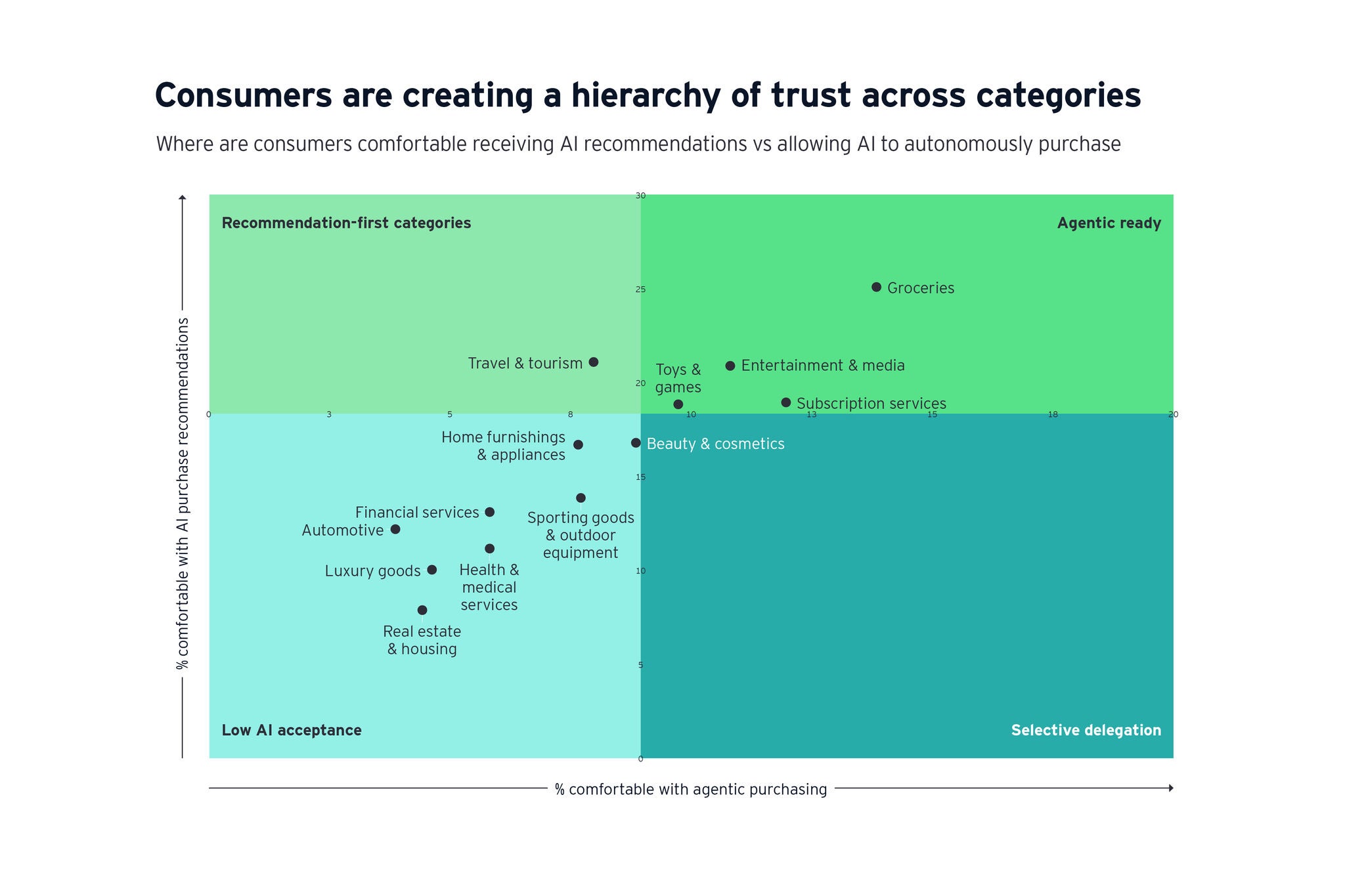
This suggests retailers shouldn’t think about AI as a single strategy. The immediate opportunity is to introduce AI where consumers already see value, while building trust gradually in categories where judgement matters.
Even in the most agentic-ready categories, consumers are far from surrendering control. For toys and games, for instance, 23% of Kiwi consumers already use AI-assisted decision-making, including conversational AI, online recommendations based on previous purchases or browsing behaviour, and AI-powered social media influencers. Another 22% rely on online reviews, comparison tools or human social media influencers. Yet 40% still say they decide entirely on their own.
The instinct for many retailers will be to build their own AI assistants. But shoppers are unlikely to want dozens of retailer-specific agents. The tools are available for every consumer to build their own trusted AI agent that compares products, prices and promotions across the market.
The takeaway? Retailers must prepare for AI to become another influence in an increasingly complex purchase journey.
Beyond today’s shopping list
The EY research offers insights into the price New Zealand consumers place on handing over shopping decisions to AI and the types of purchases they are willing to delegate first. These findings stand on their own.
But the research also points to something much harder to pin down. We are asking consumers to imagine the future of shopping using today’s experience of shopping. They can tell us what frustrates them now. They are far less able to describe what is possible when the technology itself changes the way shopping works.
Few people buying their first smartphone expected it to become their camera, map, wallet, travel agent, music player, television, diary and social life. They simply wanted a better phone. Autonomous shopping agents could follow a similar pattern. Today, consumers see AI as a way to compare prices or save time. Tomorrow, AI could fundamentally change where grocery decisions are made, who makes them and how retailers compete.
The role of the innovator is to connect technology, design and unmet needs before customers can articulate them. What can retail innovators do now? Start with the same principle they always have: know your customer.
Summary
Grocery shopping may be ground zero for agentic AI, but every retail category now has a new influencer. The challenge is not to build an AI that helps customers find products. It is understanding where AI fits into the decisions consumers are willing to hand over.