Case Study

Rivada is reimagining wireless internet as a commodity

As data demand surges, Rivada's innovative marketplace aims to help transform wireless connectivity into a dynamic, valuable resource for all.

1

The better the question

How do you turn networks into markets?

Rivada Networks is redefining the economics of wireless connectivity markets.

Mobile data demand is expanding exponentially, driven by the internet of things (IoT), machine-to-machine communication and mobile AI applications, then accelerated by 5G and other technologies. As a result, wireless connectivity is fast becoming one of the planet’s most valuable commodities.

But the current system for distributing capacity, which is based on spectrum auctions – the process by which specific radio frequencies are auctioned off to companies – is not equipped to handle the demands of this rapidly evolving, interconnected world. Network operators are chasing an ever-decreasing share of an increasingly saturated market and are losing revenue on significant unused capacity. Meanwhile, enterprises and governments face limited options for scalable, affordable connectivity.

Rivada Networks, which has its roots in crisis communications systems, has been challenging this model for some time. It was while setting up emergency cell towers in New Orleans in the wake of Hurricane Katrina in the United States in 2005 that founder and CEO Declan Ganley had a realization.
 

“When all wireless communications have been wiped out, as they were after Katrina, it really shines a light on the value of communications,” explains Ganley. “The experience of restoring communications to New Orleans really focused our minds on how we could use networks and wireless spectrum more efficiently. And that in turn led us to the idea that bandwidth should be tradeable like any other commodity - because when something is valuable, and scarce, and especially when it can’t be stored, it shouldn’t be wasted.”

In the years following Hurricane Katrina, Rivada worked on developing technologies and patents that would allow it to move forward with this concept. The company’s analysis of existing terrestrial wireless networks supported the hypothesis that the networks were built to handle peak demand, but were seriously underutilized.

A study of one carrier’s cell towers in Mexico’s Mexico City revealed that utilization over a 24-hour day was just 25–30%. The potential efficiencies offered by even small shifts of traffic to lower demand periods were significant. With video accounting for more than 85% of wireless data use, time-shifting just 1% of demand could increase network utilization by 30%.

Reimagining the marketplace

According to Ken Fields, Rivada board member, co-founder, and Director of Market Development, there were two key issues that had to be addressed. The first was how to leverage the infrastructure investment that network operators had already made. The second was how to entice operators to sell their excess capacity. Put simply, “We had to find a way to turn networks into markets,” he says.

The solution was an open-access marketplace. To develop it, Rivada brought Professor Peter Cramton of the University of Maryland on board. An economist and leading authority on market design, he identified parallels with restructured electricity markets — where supply and demand are balanced in real-time spot markets supported by dynamic forward markets. Together, Professor Cramton and Rivada developed a new model for wireless connectivity markets. Built on the principles of open access, dynamic allocation and tokenized transactions, the model prioritizes efficiency, transparency and scalability.

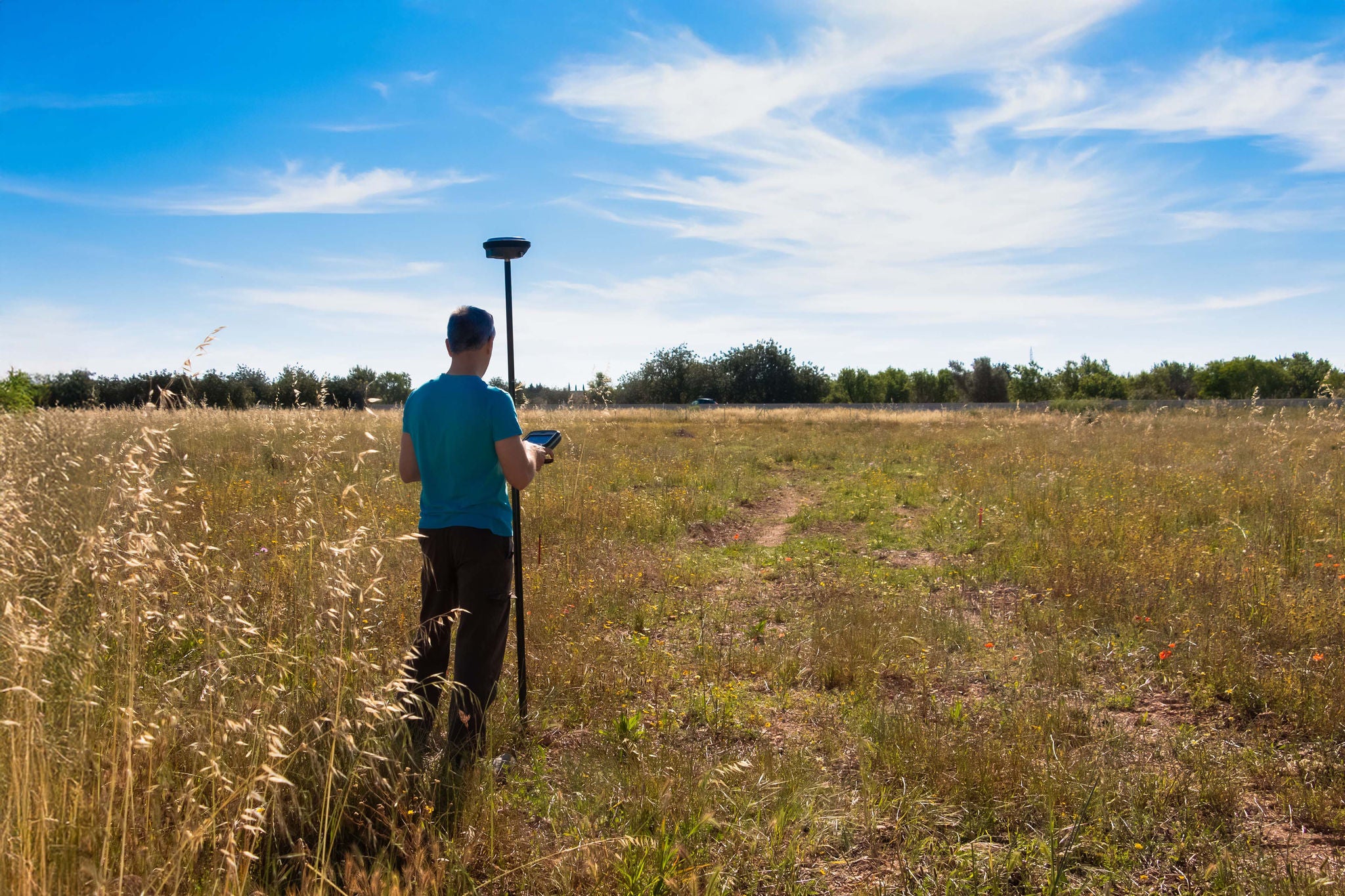
Surveyor working with a gps instrument taking data from the surface
2

The better the answers

Leveraging the potential of Web3

Rivada's ROAM platform reimagines wireless trading, merging creativity and tech expertise to tackle complex connectivity challenges.

As part of its vision, Rivada is developing an innovative technology platform, Rivada Open Access Market (ROAM), to trade wireless connectivity.
 

Creating a single trading platform for terrestrial and satellite connectivity poses enormous challenges around allocation, pricing and delivery of capacity. To refine and scale the concept, Rivada needed an advisor with a deep knowledge of wireless communications, FinTech, digital assets and tokenization. But it also had to be a business with a creative mindset – one that will be able to envisage how this combination could shape the future of the sector.
 

Fields acknowledged the complexity of the challenge. “Resolving the inherent issues in developing a tokenized marketplace and marrying all the different elements requires tremendous design and thought leadership,” he says.
 

Rivada connected with an EY-Parthenon team led by Igor Mikhalev, EY-Parthenon Europe West Head of Emerging Technologies Strategy. Rivada recognized that the EY team had highly applicable experience of using emerging and disruptive technologies to help solve complex business challenges. This experience, coupled with a cross-disciplinary, cross-industry approach, made EY-Parthenon teams the right choice for a project of this scope and ambition. 
 

A structured yet creative approach
 

Working closely with Professor Cramton and the Rivada team, EY-Parthenon teams leveraged the full potential of Web3 to help drive the platform’s development from initial insight to a roadmap for ongoing implementation. It was a process that demanded what Mikhalev describes as “disciplined imagination.”
 

“Each time emerging technologies come around, the typical thinking is to try and replace existing processes with what new technologies offer. But the biggest unlock is to be able to rewire your business model and do it with conviction, placing big bets on your future,” he explains.
 

Tackling projects of this complexity required a robust strategic framework. The EY-Parthenon team applied an approach that can be defined in four steps. “The first is gaining a deep understanding of how the industry is evolving,” explains Mikhalev. “The second is the deeper conviction-based thinking, where the industry is going and what it means for the client. The third step is creative hypothesis forming — what could a new generation business model look like based on our understanding of the client, of emerging technologies. And finally, the fourth step is testing those hypotheses.”
 

Forensic analysis with a focus on the future
 

Applying this approach to ROAM, the team began by analyzing the current landscape, focusing on trends and emerging technologies affecting wireless capacity trading. They also considered how changes in regulation and evolving industry standards could impact collaboration, competition and demand.
 

Looking at how broadband and 5G developments might shape telecoms in the future, the EY-Parthenon team was able to gauge how ROAM could evolve as new players enter the market. They also helped identify emerging needs, such as on‑demand capacity sharing and data transmission for AI‑driven applications, which Rivada could target with new services.
 

Having established the industry context, the team explored how a blockchain‑powered trading platform could help streamline network capacity allocation. They drilled down into how alternative pricing models, shared token‑based incentives and smart‑contract real-time pricing and settlement could be configured in a future digital ecosystem. Learnings from other telecom marketplaces — and parallel sectors like energy trading — around potential partnerships and points of differentiation were brought into play.

 

What we’re building is inherently complex — the challenge is not just creating a solution but finding an elegant way to help address all of that complexity.

These insights helped identify key market segments and revenue streams ­and, crucially, the point at which ROAM could shift from niche project to mainstream adoption. The team modeled use cases with data‑hungry enterprises that needed high throughput on short notice. The testing also incorporated telecom partners monetizing idle capacity by temporarily offloading it onto the network. 

Finally, the team arrived at a roadmap, with a high‑level blueprint of the modules, APIs and governance needed for secure, transparent bandwidth trading. The roadmap also featured designs for a target minimum viable ecosystem and a target operating model.

ROAM is now in beta, allowing Rivada to showcase a solution that can help bring efficiency, transparency and flexibility to network capacity management.

“Had we worked with anyone else, we wouldn’t be where we are today. What we’re building is inherently complex - the challenge is not just creating a solution but finding an elegant way to help address all of that complexity. That’s exactly where Igor and the EY team excelled,” says Fields.

Sunset silhouettes of telecommunication antennas
3

The better the world works

A new framework for global connectivity

EY-Parthenon teams are helping Rivada transform wireless connectivity, creating an open-access marketplace that democratizes capacity and fosters innovation.

Cloud computing has revolutionized how organizations approach the buying of computer power and storage. An open-access marketplace with dynamic pricing has the potential to help effect a similar transformation in wireless connectivity.
 

The ability to purchase affordable capacity during times and in locations where networks are currently underused will greatly benefit many businesses. That is especially true of enterprises using data-hungry IoT applications and machine-to-machine communications.
 

At the same time, ROAM allows operators to extend existing networks through shared infrastructure and to better utilize fallow capacity - positioning them for the next generation of wireless connectivity. 

Rivada’s vision is to enable permissionless innovation in the wireless space so that anyone, and not just the chosen few, can build a business using the wireless spectrum that is all around us.

The next generation of low Earth orbit (LEO) satellites will further democratize connectivity and help bridge the digital divide by providing coverage in areas that are uneconomic for terrestrial networks. As Fields says, “Cellular networks are inherently local. So, the combination of virtualized ROAM capacity with the glue provided by ubiquitous satellite capacity, allows wireless networks to become fully global.”

This includes Rivada’s Outernet, a ground-breaking network of 600 LEO satellites currently in development that will provide low latency, high security pole-to-pole coverage. The Outernet utilizes a unique configuration where the transmission is in space, never touching the internet or ground infrastructure, making it an especially secure network. This “orbital network” will cover every square inch on earth, Fields points out, filling in gaps in rural and underserved areas.

Ganley reflects that “Rivada’s vision is to enable permissionless innovation in the wireless space so that anyone, not just the chosen few, can build a business using the wireless spectrum that is all around us. I believe that this will unleash a wave of innovation that will drive prices down, increase capacity and open up new uses for spectrum that you and I probably can’t even imagine.”

With this platform, Rivada Networks and EY-Parthenon teams are reimagining wireless connectivity markets — helping transform network capacity from a static commodity to a dynamic, globally accessible resource.  

Contact us

Like what you’ve seen? Get in touch to connect with our specialized teams and learn more.

Explore case studies

Learn how EY teams help our clients solve their toughest issues and shape their future with confidence.